Why Room-by-Room Organization Works
Trying to organize an entire home in one sweep is the fastest path to burnout. A room-by-room approach works because it creates immediate, visible wins that build momentum. Finishing one space also gives you a mental model to carry into the next.
If you're brand new to this process, our beginner's guide to home organization covers foundational principles before you dive in. For everyone else, this walkthrough picks up where those basics leave off — offering a structured method for each distinct space in your home.
25%
Time spent searching for misplaced items
Research from the National Association of Professional Organizers suggests Americans spend a meaningful portion of their day looking for things they own.
3 in 10
Adults report clutter causes daily stress
Multiple surveys on household stress consistently find that physical clutter is a top environmental stressor for American adults.
Before entering any room, gather four containers: keep, donate, trash, and relocate. This sorting ritual is the same regardless of the room and keeps decision-making simple.
Kitchen: Command Central
The kitchen sees more daily use than almost any other room, which is why disorganization here creates the most friction. Start by pulling everything out of cabinets and drawers — yes, everything. Group items by function: cooking tools, baking supplies, everyday dishes, and rarely used appliances.
Apply the frequency rule: items used daily go within arm's reach, weekly items go on accessible shelves, and seasonal or specialty items move to high shelves or a pantry. Countertops should hold only what you use every single morning.
Organize your kitchen in reverse: clear the counters completely first, then only return what you use every single day. Everything else finds a cabinet home.
Counter clutter is the most visually disruptive form of kitchen disorder and directly slows meal prep — removing it first delivers an immediate functional and psychological payoff.
When building any storage system, leave 20% of the space empty. A full system has nowhere to absorb new items and collapses quickly.
Organization professionals widely observe that systems filled to capacity are fragile — the buffer space is what makes a system sustainable over months and years.
Drawer dividers and shelf risers cost very little and double usable space immediately. Decant dry goods into uniform containers to make pantry contents visible at a glance — this also reduces duplicate purchases.
Label everything. Even if you know where items live today, labels help other household members maintain the system without asking.
Bedroom: Your Rest Zone
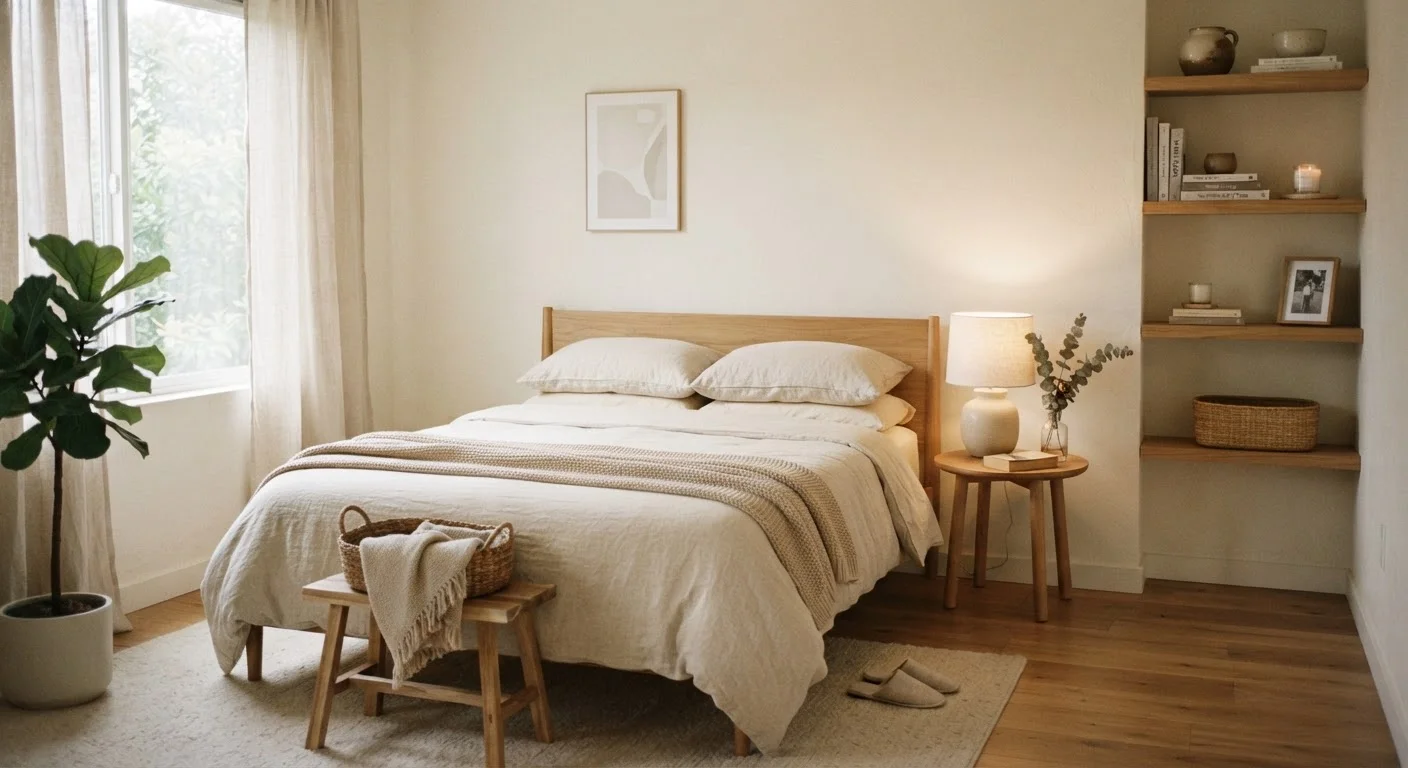
A cluttered bedroom disrupts sleep and increases background stress. The goal here is to keep the room reserved for rest and personal routines — nothing that belongs to work, exercise equipment that doesn't get used, or overflow storage from other rooms.
Start with the closet. Use the bedroom clutter audit method: evaluate every item and ask whether it earns its space. Clothes not worn in the past year are strong candidates for donation.
Avoid Buying Storage Before Sorting
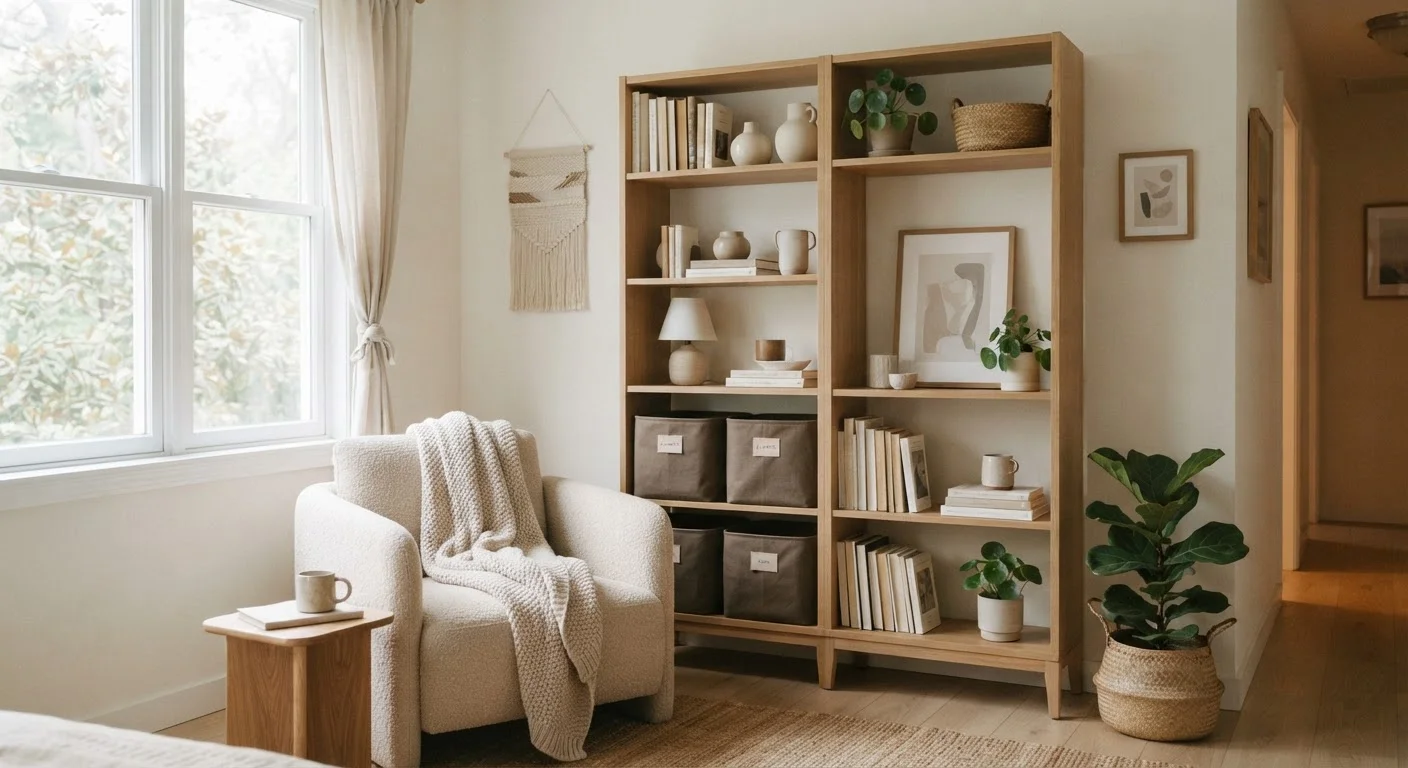
A common and costly mistake is purchasing bins, baskets, and organizers before knowing what you actually have and need to store. Always complete the declutter phase first. Buying storage too early often means buying the wrong sizes — and filling containers with items that shouldn't have been kept at all.
Under the bed tends to become a catch-all. If you use that space, commit to clear storage bins with lids and labels — loose items underneath a bed collect dust and make the habit hard to reset.
Nightstand surfaces deserve the same scrutiny as kitchen counters. Keep only what you genuinely reach for at night: a lamp, something to read, and perhaps a glass of water.
Living and Common Areas
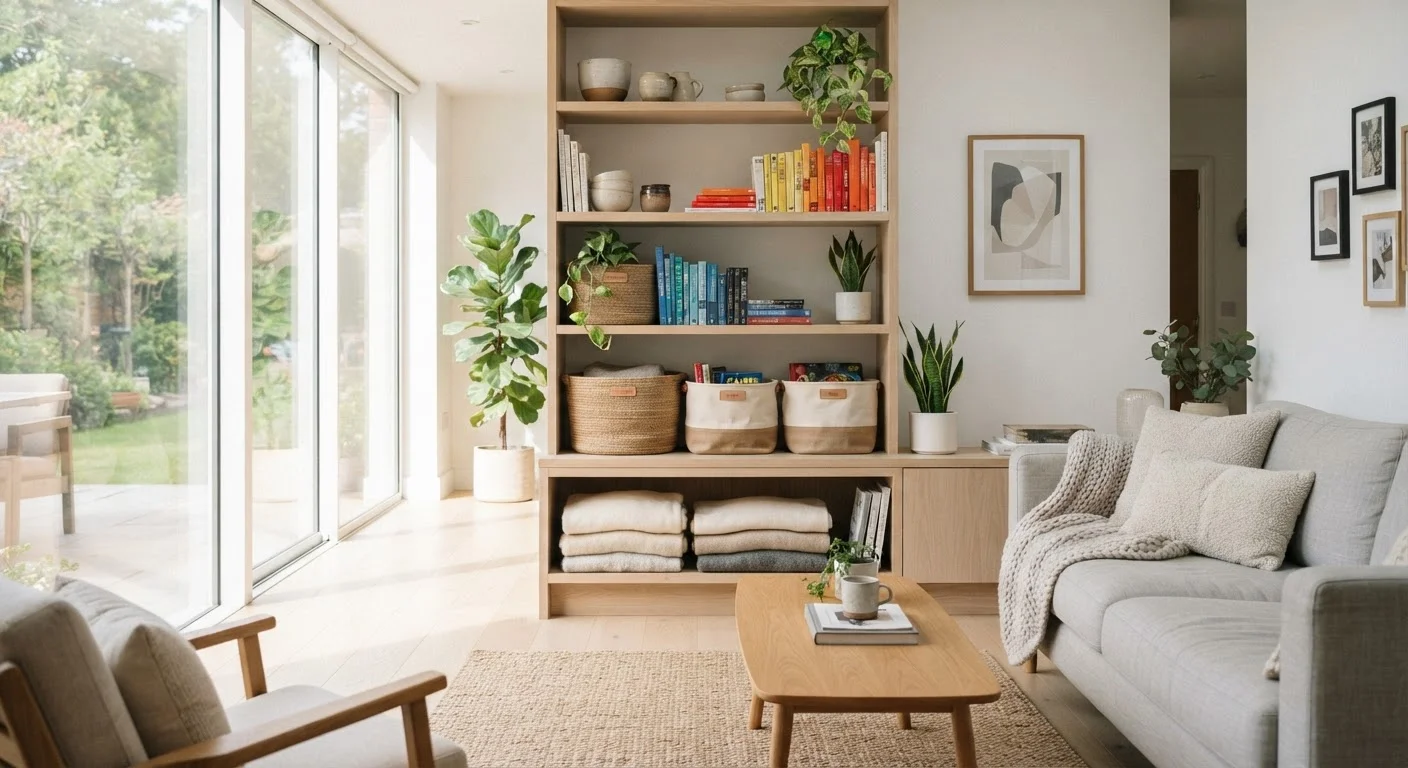
Living rooms and family rooms serve multiple people with competing needs — reading, watching TV, homework, hobbies. The key is zoning: giving each activity a defined home so items don't migrate across the room.
A media console keeps entertainment-related items contained. A basket or ottoman with storage corrals blankets and remotes. A designated homework or reading nook prevents papers and books from spreading across every surface.
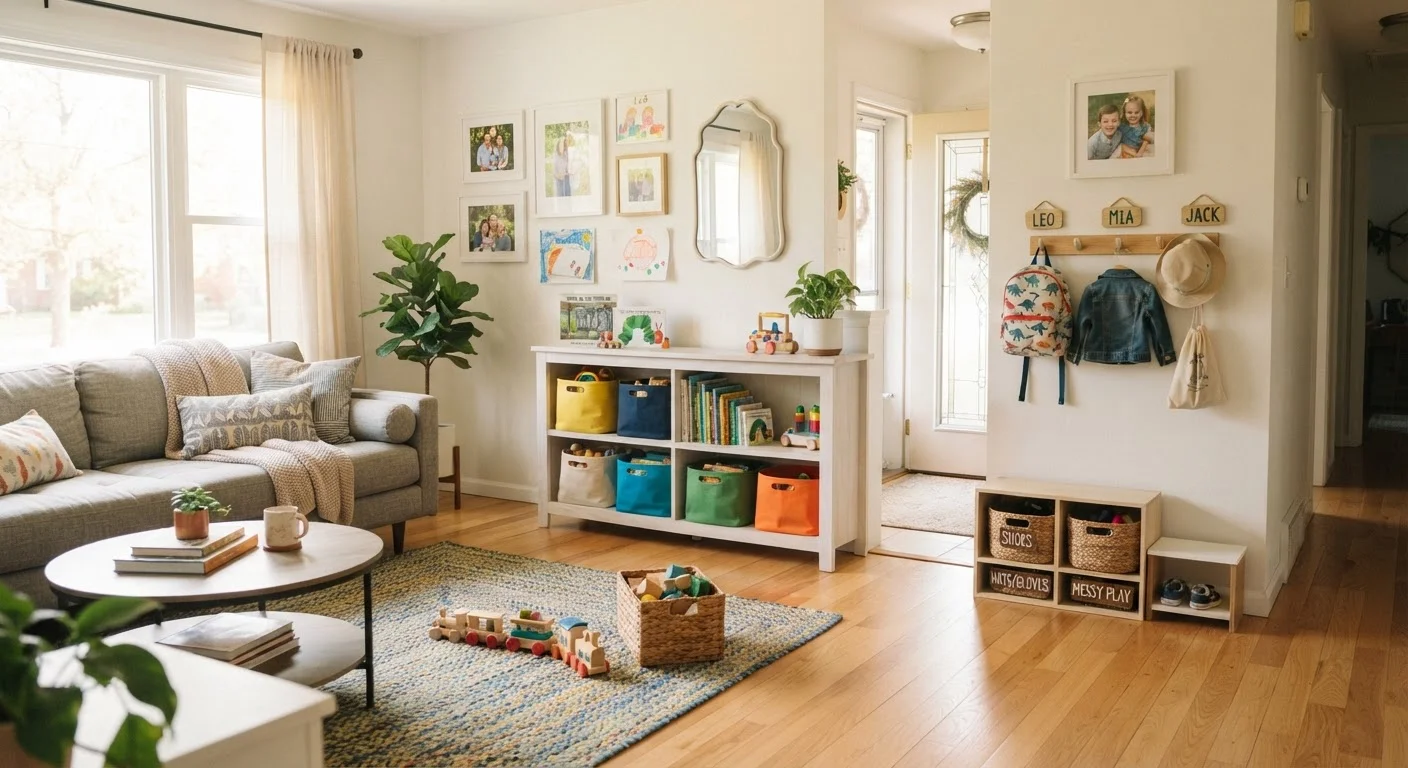
If you have children, organization strategies designed for family life offer systems simple enough for kids to follow independently — a critical factor in whether a system survives daily use.
In open-plan spaces, visual anchors like rugs and shelving units help define zones without walls. Explore how layered lighting can further reinforce zone separation in a shared space.
Bathrooms and Hallways
Bathrooms are small, so every inch counts. Remove expired products first — medicine cabinets and under-sink cabinets accumulate outdated items quickly. Group what remains: daily skin care, hair tools, cleaning supplies, and medications stored separately and safely out of reach of children.
Make the Entryway Do the Heavy Lifting
An organized entryway is your home's first line of defense against clutter spreading inward. Install one hook per household member at a reachable height, add a dedicated drop zone for mail, and choose a single consistent spot for keys. When everything has a place right at the door, items rarely make it to the kitchen counter or the bedroom floor.
Hallways and entryways are high-traffic transition zones. A wall-mounted hook system, a narrow bench with storage, or a set of clearly labeled cubbies keeps incoming items — bags, shoes, keys, mail — from spreading into the rest of the home.
The entryway is also where good habits either form or fail. A hook for every household member, a consistent spot for keys, and a small tray for mail dramatically reduce the daily search for misplaced items.
Garage and Storage Spaces
The garage is where organization efforts often stall because the volume of items feels unmanageable. The same four-container sorting method applies here, but expect it to take longer. Work in sections — one wall at a time — rather than trying to address the full space at once.
Create functional zones: automotive supplies, gardening tools, sports equipment, seasonal decor. Wall-mounted storage keeps floor space clear, which matters for both function and safety.
For a comprehensive approach, our dedicated garage organization guide walks through the full process step by step, including how to handle items that don't fit neatly into any category.
Safety First in the Garage
Garages often contain hazardous materials — fuels, pesticides, paints, and power tools. These must be stored in clearly labeled, sealed containers and kept out of reach of children and pets. Check local regulations for disposal of chemicals and old paint; many municipalities offer designated drop-off programs. Never store flammable materials near heat sources or in sealed, unventilated areas.
Keeping Your Systems Running
The hardest part of home organization isn't the initial sort — it's the ongoing maintenance. Systems slip when they're too complicated, when only one person understands them, or when there's no reset routine in place.
Build small habits into existing routines: a ten-minute tidy before bed, a weekly check of high-traffic surfaces, and a seasonal pass through closets and storage areas. These micro-sessions prevent the gradual drift that leads back to full-scale clutter.
Understanding why organization efforts tend to break down can help you spot warning signs early and correct course before things unravel.
Finally, a well-organized home pairs naturally with thoughtful upgrades. The Smart Home Living hub explores how simple technology additions can reinforce daily routines — from automated lighting to voice-controlled reminders that support household systems.