What Makes an Expense Fixed or Variable?
Every dollar you spend falls into one of two broad categories: fixed or variable. The distinction isn't about importance — rent and groceries are both essential — it's about predictability.
| Fixed expense definition | A recurring cost that stays the same amount each period |
| Variable expense definition | A cost whose amount changes based on usage or behavior |
| Semi-variable expense | Has both a fixed base component and a fluctuating portion |
| Primary budgeting advantage of fixed costs | Predictability — known in advance, easy to schedule |
| Primary budgeting advantage of variable costs | Flexibility — can be reduced when income is tight |
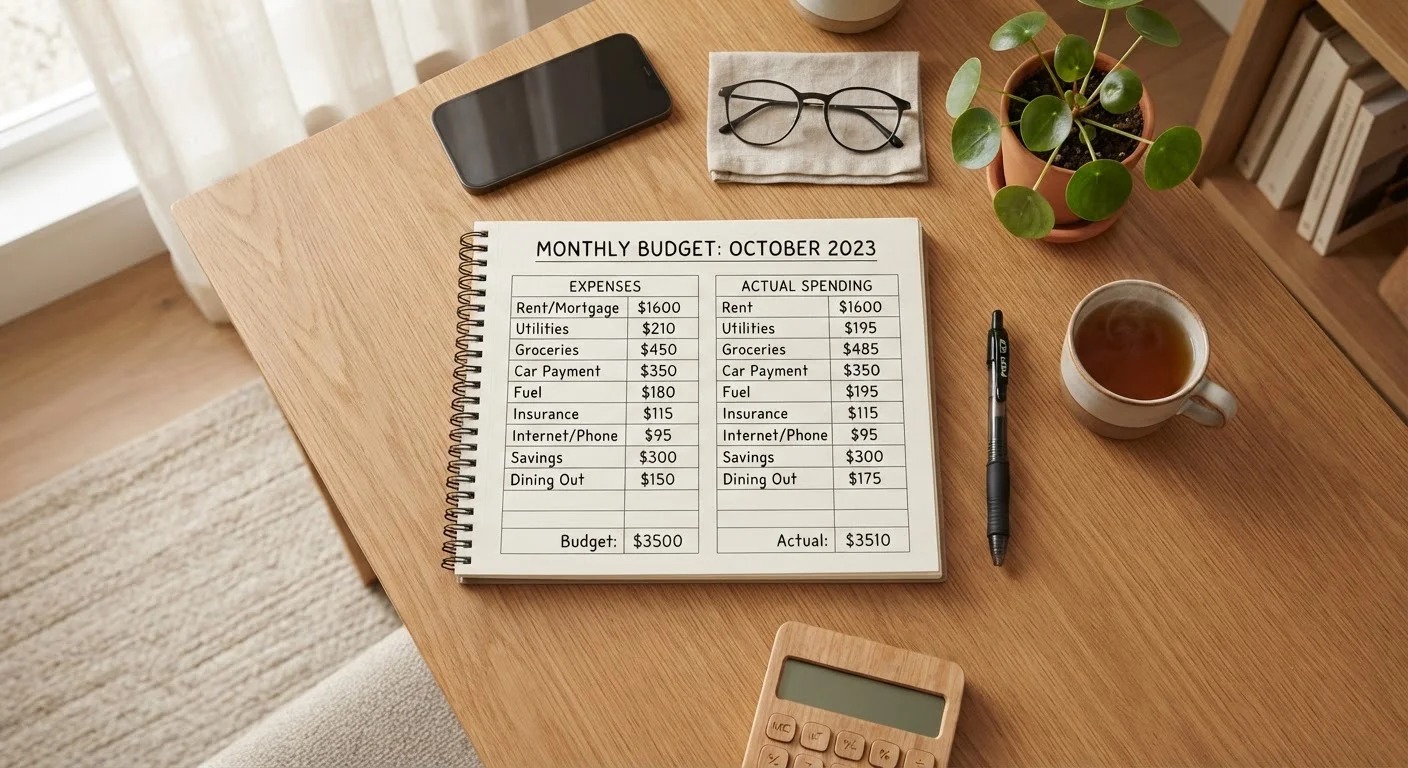
A fixed expense is a cost that stays the same amount each billing period. Your mortgage or rent payment, car loan installment, and most insurance premiums land here. You know the number before the month begins, which makes these easy to plug into any budget template.
A variable expense is a cost whose amount changes from period to period. Utility bills, fuel, dining out, and grocery spending all fluctuate based on your behavior, usage, or circumstances. They require more active tracking because the total is never guaranteed.
A useful working definition: if you could schedule a bank transfer for the same amount every month without checking, it's probably fixed. If you have to look at the bill first, it's likely variable. For a deeper look at how this distinction shapes your entire spending plan, see why separating fixed and variable expenses matters.
This article is for general informational and educational purposes only. It is not personalized financial advice. For guidance specific to your situation, consult a qualified financial professional.
Common Examples in Each Category
Seeing concrete examples helps most people categorize their own spending quickly.
Fixed expense
A recurring cost that remains the same dollar amount each billing cycle, regardless of usage or behavior. Examples include rent, car loan payments, and flat-rate subscriptions.
Variable expense
A cost that changes in amount from period to period, typically tied to usage, consumption, or discretionary choices. Groceries and utility bills are common examples.
Semi-variable expense
A cost with both a predictable fixed component and a fluctuating variable component. A phone plan with a set base rate plus usage-based overage charges is a classic example.
Discretionary spending
Spending on non-essential items or experiences — dining out, entertainment, clothing — that can be reduced or eliminated without affecting basic needs. Most discretionary costs are variable.
Non-discretionary spending
Spending on necessities you cannot reasonably eliminate, such as housing, food, and insurance. These costs may be fixed or variable in nature.
Typical Fixed Expenses
- Rent or mortgage payment
- Car loan or lease payment Annual auto, home, or renters insurance premiums (often billed monthly at a set amount)
- Subscription services billed at a flat rate (streaming, gym memberships with locked-in contracts)
- Student loan minimum payments on a standard repayment plan
- Child support or alimony obligations
Typical Variable Expenses
- Groceries and household supplies
- Gas and transportation costs
- Utility bills (electricity, water, gas)
- Dining out and entertainment
- Clothing and personal care
- Medical copays and out-of-pocket costs
- Home or car repairs
The Gray Zone: Semi-Variable Expenses
Some costs don't fit neatly into either bucket. A phone plan with a fixed base rate plus variable data overage charges is one example. So is a credit card minimum payment that shifts as your balance changes. Budget practitioners sometimes call these semi-variable or mixed costs. The practical move: budget the known fixed portion as fixed, then estimate the variable portion conservatively on the high side.
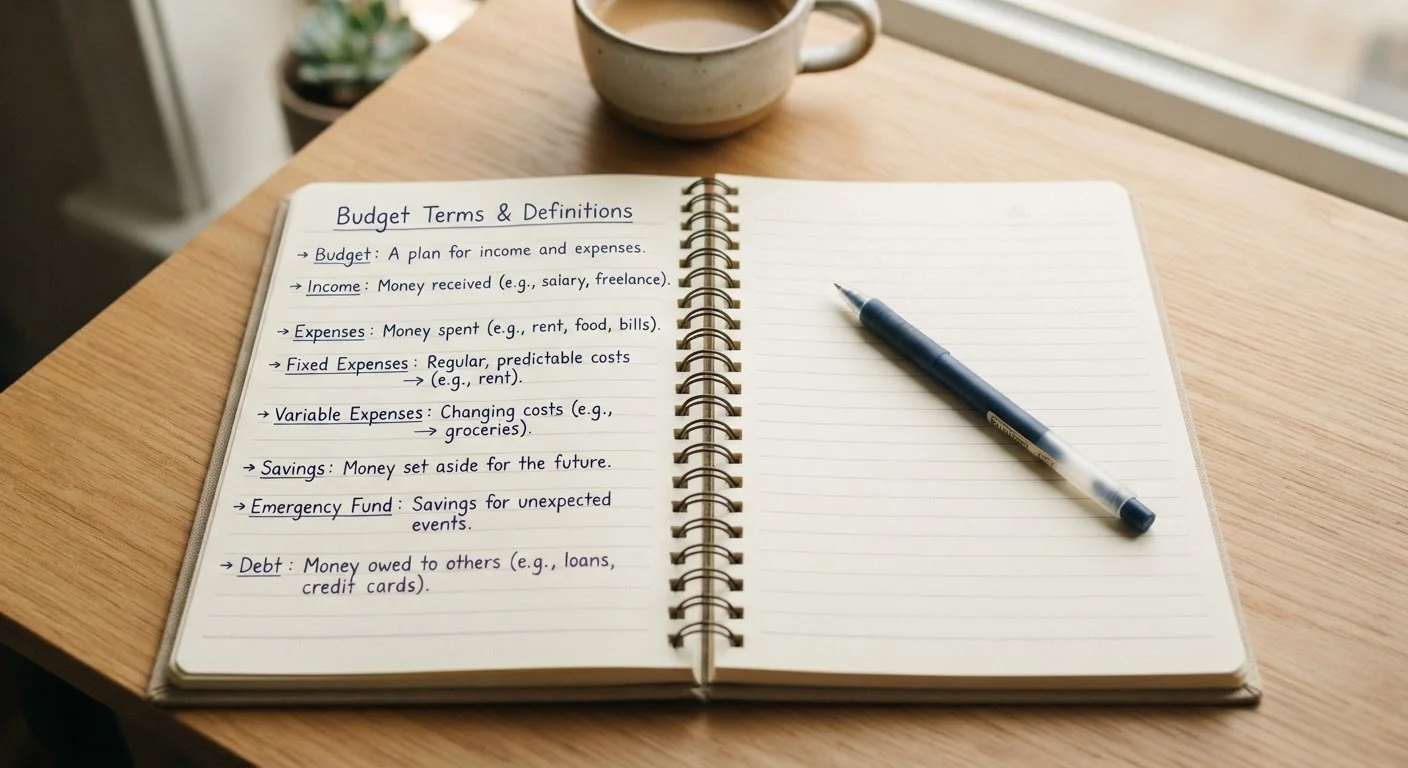
If you're building a budget from scratch, a plain-English glossary of budgeting terms can help you get comfortable with the full vocabulary before you start assigning categories.
Why the Distinction Matters for Your Budget
Knowing which expenses are fixed versus variable changes how you manage them — not just how you label them.
50–60%
Typical share of income going to fixed costs
Financial planning practitioners commonly estimate that housing, insurance, and loan payments consume roughly half of a household's take-home pay, though this varies widely by location and income level.
1 Step
Starting point for any budget
Most budgeting frameworks — whether zero-based or percentage-based — begin by listing and totaling fixed expenses before addressing variable or discretionary spending.
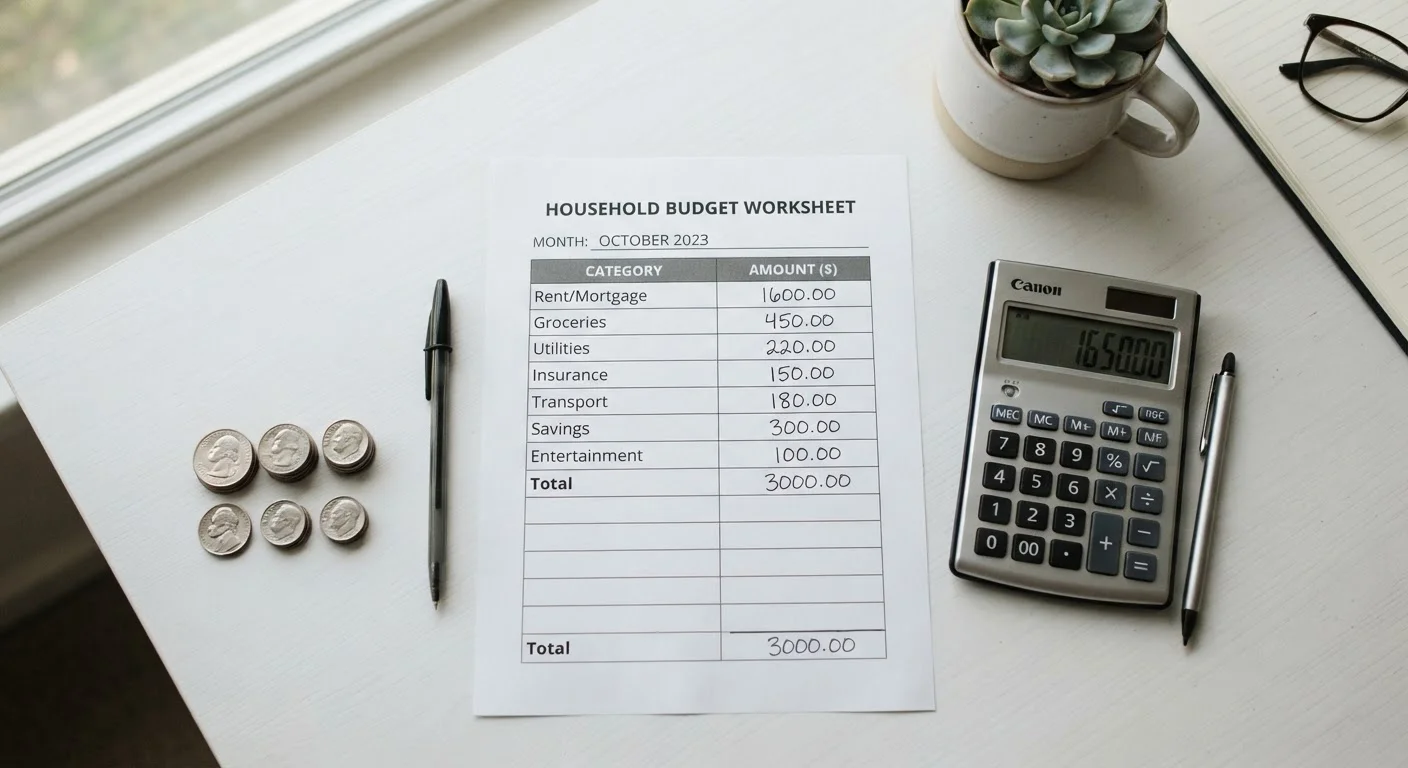
Fixed expenses set your floor. Add them up and you immediately know the minimum amount of income you must bring in each month just to keep the lights on and a roof over your head. This number is your non-negotiable baseline.
Variable expenses are where flexibility lives. When cash is tight, cutting variable costs — cooking at home instead of dining out, delaying a clothing purchase — is faster and more actionable than trying to renegotiate a lease. This is also where small daily habits compound over time into meaningful savings or deficits.
Understanding this split becomes especially important if your income isn't steady month to month. See how to budget on irregular income for a framework designed around that reality. And if you want to choose a formal budgeting method that works with both expense types, zero-based vs. percentage-based budgeting compares two of the most widely used approaches.
One more use case worth knowing: building an emergency fund or monthly cash buffer becomes much easier once you know your fixed floor — it tells you exactly how many months of expenses you're aiming to cover.