
Why Misconceptions About Life Insurance Are Costly
Life insurance is one of those topics most people know they should deal with — and then put off indefinitely. Part of what fuels that delay is a set of persistent misconceptions: assumptions that feel reasonable but are often wrong in ways that matter. When those assumptions drive decisions, families can end up financially exposed at exactly the moment they can least afford it.
This article breaks down the most common life insurance myths, corrects the record with accurate information, and explains what each misconception means in practical terms. As always, this is general educational information — not personalized insurance or financial advice. For decisions specific to your situation, a licensed insurance professional is your best resource.
For a broader look at how assumptions create gaps across different types of coverage, see Insurance Myths That Lead to Costly Assumptions.
Myth
My employer's life insurance policy is enough coverage for my family.
Fact
Employer-provided group life insurance typically covers one to two times your annual salary — far below the commonly recommended 10–12 times figure — and it generally disappears if you leave your job.
Group life insurance through an employer is a useful starting point, but it has two serious limitations. First, the benefit amount is usually modest — often just one or two times your annual salary. Second, it's tied to your employment. If you're laid off, change jobs, or retire, coverage typically ends. Policies can sometimes be converted, but at significantly higher premiums. Relying solely on employer coverage leaves a family vulnerable to both an underinsured death benefit and a gap in protection during job transitions.
Myth
Life insurance is only necessary if you're the primary breadwinner.
Fact
Stay-at-home parents and non-employed spouses provide substantial economic value — childcare, household management, elder care — that would cost real money to replace.
The economic contributions of a stay-at-home parent are frequently underestimated. Childcare, transportation, household management, and caregiving represent services that surviving spouses would need to purchase or absorb. Estimates of the annual replacement cost of these services vary, but they can run into tens of thousands of dollars per year depending on the household's circumstances. A life insurance policy on a non-income-earning spouse can help cover those real costs during an already difficult time.
Myth
Life insurance is too expensive for most families to afford.
Fact
Term life insurance is often significantly less expensive than people expect, particularly for younger, healthier applicants — and most people overestimate the cost by a wide margin.
Survey data from industry research organizations has consistently shown that consumers — especially younger adults — dramatically overestimate the cost of term life insurance. A healthy person in their 30s may qualify for a 20-year term policy with a meaningful death benefit at a monthly premium lower than a streaming subscription. Cost varies based on age, health, coverage amount, and term length, so no specific number applies universally. The point is that cost assumptions alone shouldn't be the reason to forgo coverage without actually getting a quote.
Myth
Once you buy a life insurance policy, you don't need to revisit it.
Fact
Life circumstances change — marriage, children, a home purchase, a new business — and each change can make an existing policy inadequate or leave new gaps unaddressed.
A policy purchased at 28 and never reviewed may be entirely mismatched with the financial realities of life at 42. Coverage that seemed sufficient before a mortgage or a second child may now represent only a fraction of actual financial exposure. Most insurance professionals recommend reviewing life insurance coverage after major life events and on a periodic basis regardless. Insurance Coverage Gaps: What They Are and Why They Matter explains how this drift happens across policy types.
Myth
The death benefit is always paid out in full, no questions asked.
Fact
Policies include exclusions, contestability periods, and sometimes rider conditions that can affect or delay benefit payment.
Most life insurance policies contain a contestability period — typically the first two years — during which the insurer can investigate and potentially deny a claim if material misrepresentation was made on the application. Common exclusions can include suicide within a specified period and, in some policies, certain high-risk activities. Riders added to a policy may carry their own conditions. None of this means claims are routinely denied; most valid claims are paid. But reading the actual policy document matters. Things People Get Wrong About What Their Policy Covers covers exclusion-related misconceptions in more detail.
How to Check Whether Your Coverage Actually Matches Your Risk
Correcting these misconceptions is a starting point, not a finish line. Once you understand what life insurance is and isn't, the next step is evaluating whether your current coverage — or lack of it — lines up with your actual financial exposure.
3x
How much consumers overestimate life insurance cost
LIMRA's Insurance Barometer Study has found that consumers consistently overestimate the cost of term life insurance by roughly three times or more compared to actual market rates.
52%
Americans with no individual life insurance policy
According to LIMRA research, roughly half of Americans rely solely on group coverage or have no life insurance at all outside of employer-sponsored plans.
10–12x
Commonly cited income multiplier for coverage amount
Many financial educators use 10 to 12 times annual income as a starting benchmark for life insurance coverage, though individual needs vary based on debt, dependents, and expenses.
A few practical questions worth asking: If your income disappeared tomorrow, how long could your household maintain its current obligations? Does your coverage account for debts like a mortgage, student loans, or childcare costs? Has anything changed since you last reviewed your policy — a new child, a home purchase, a change in income?
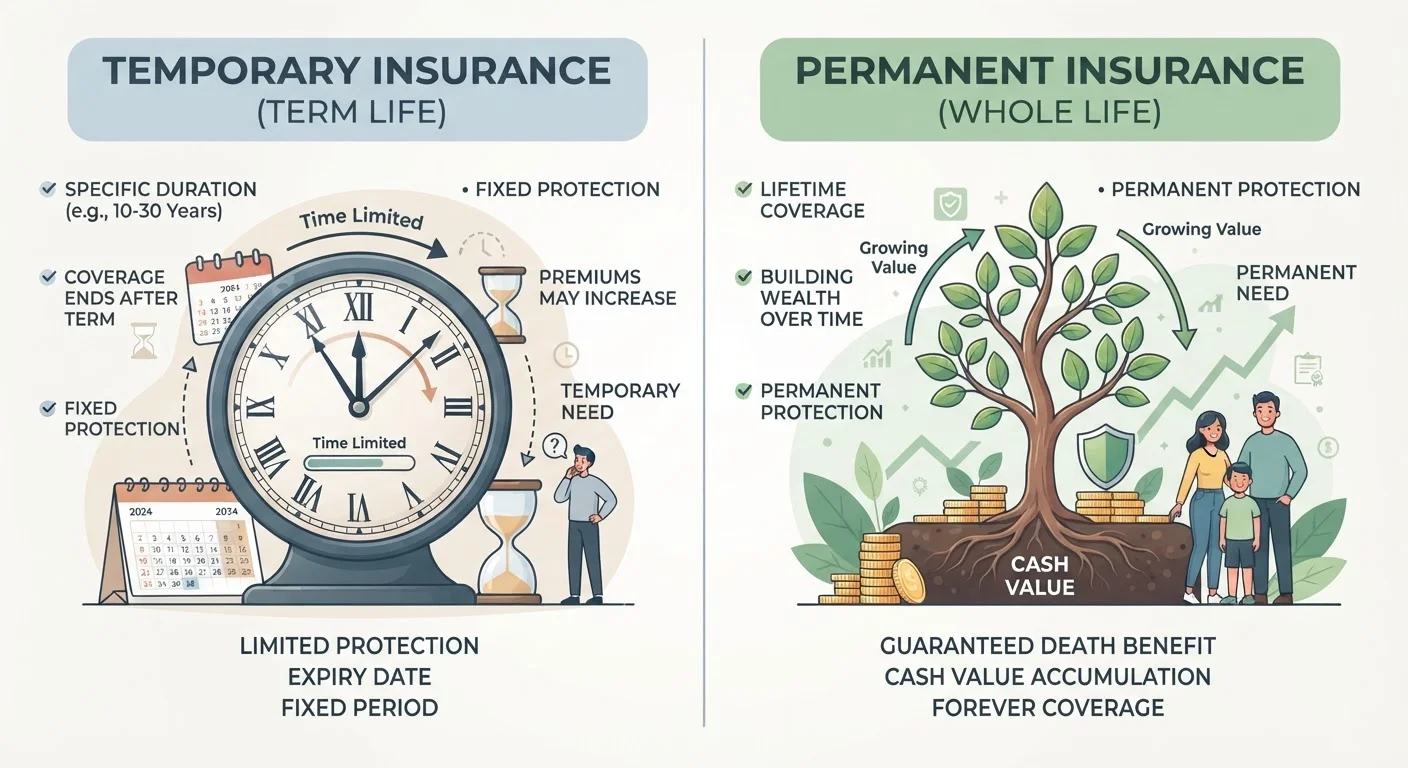
Coverage amounts that made sense five years ago may not reflect today's picture. Why Your Coverage Amount and Your Actual Risk May Not Match explores this drift in more depth. And if you're still working out which type of policy fits your situation, Term Life vs. Whole Life Insurance: Understanding the Structural Difference provides a clear side-by-side comparison.
Don't Assume Employer Coverage Is Your Safety Net
Group life insurance through an employer is better than nothing, but it's rarely sufficient on its own and ends when employment does. If your household depends on your income, an individual policy held outside of work provides continuity and typically more appropriate coverage levels. Review both what you have and what would happen to that coverage if your employment situation changed.
This article is for general informational purposes only and does not constitute personalized insurance, financial, or legal advice. Coverage terms, eligibility, and pricing vary by provider and state. Consult a licensed insurance professional before making decisions about your own coverage.