Why One Light Source Is Never Enough
Most rooms are lit by a single overhead fixture — a ceiling light switched on when you enter and switched off when you leave. It's functional, but it produces flat, shadowless light that makes spaces feel either clinical or gloomy depending on bulb intensity. Good lighting design works differently: it layers multiple source types so the room can serve different needs at different times of day.
Interior lighting professionals typically organize light sources into three categories: ambient (general fill light), task (focused working light), and accent (decorative or highlighting light). Each layer does a specific job, and together they create rooms that feel both comfortable and versatile. The goal isn't more fixtures — it's the right fixtures in the right places.
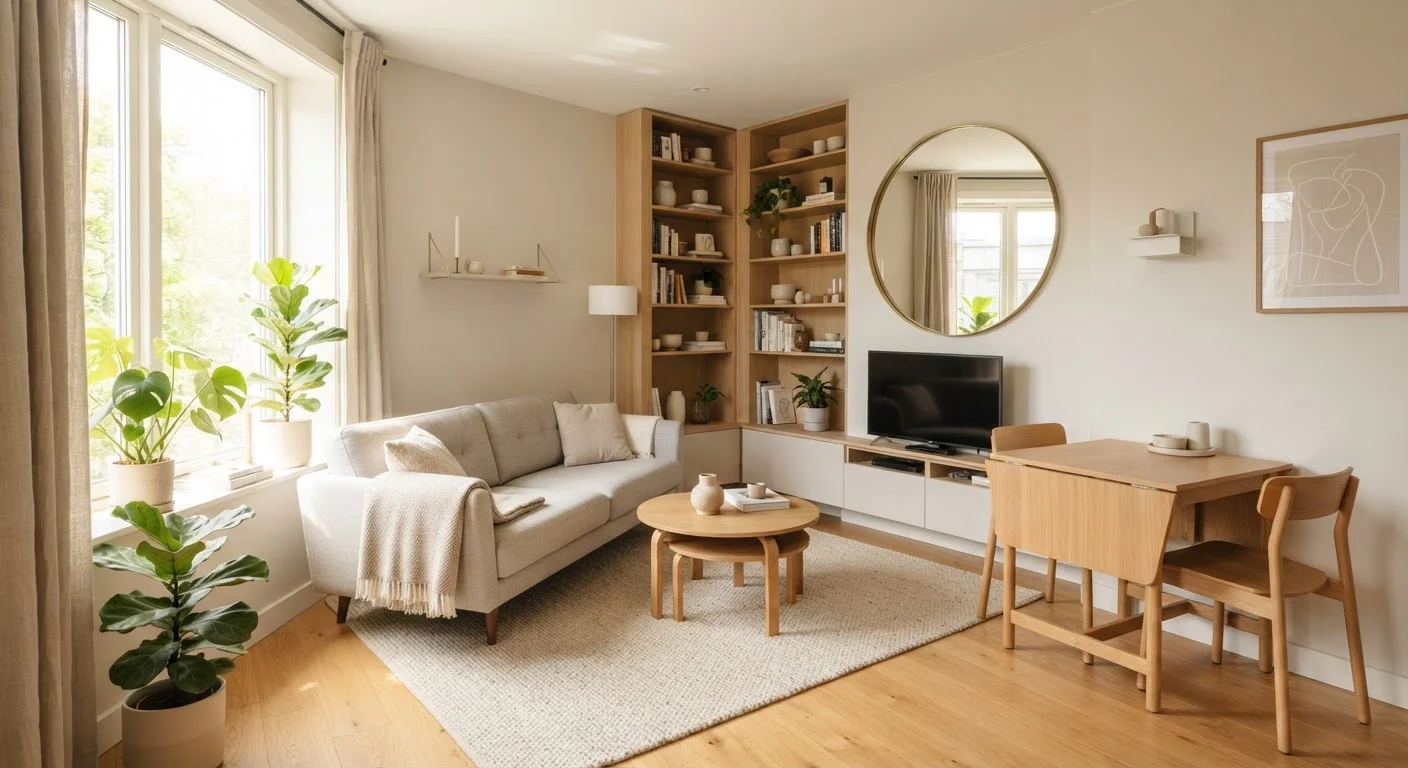
For readers working on compact spaces, the same principles apply. See our renovation strategies for compact rooms for ways to make lighting choices that also help a room feel larger and more open.
The Three Layers Explained
Ambient Light
Ambient light is the base layer — the general illumination that lets you move safely through a space. Ceiling-mounted fixtures, recessed downlights, and flush-mount lights all contribute ambient light. The key is coverage: a single central fixture often leaves corners dim. A grid of recessed lights or a larger flush-mount combined with wall sconces distributes light more evenly.
Task Light
Task light is directed, brighter illumination aimed at a specific activity area — a kitchen counter, a reading chair, a desk, or a bathroom mirror. Under-cabinet strips in a kitchen, a swing-arm lamp beside a bed, and a pendant light over an island are all task-lighting solutions. Task light reduces eye strain by matching light intensity to the visual demand of an activity.
Accent Light
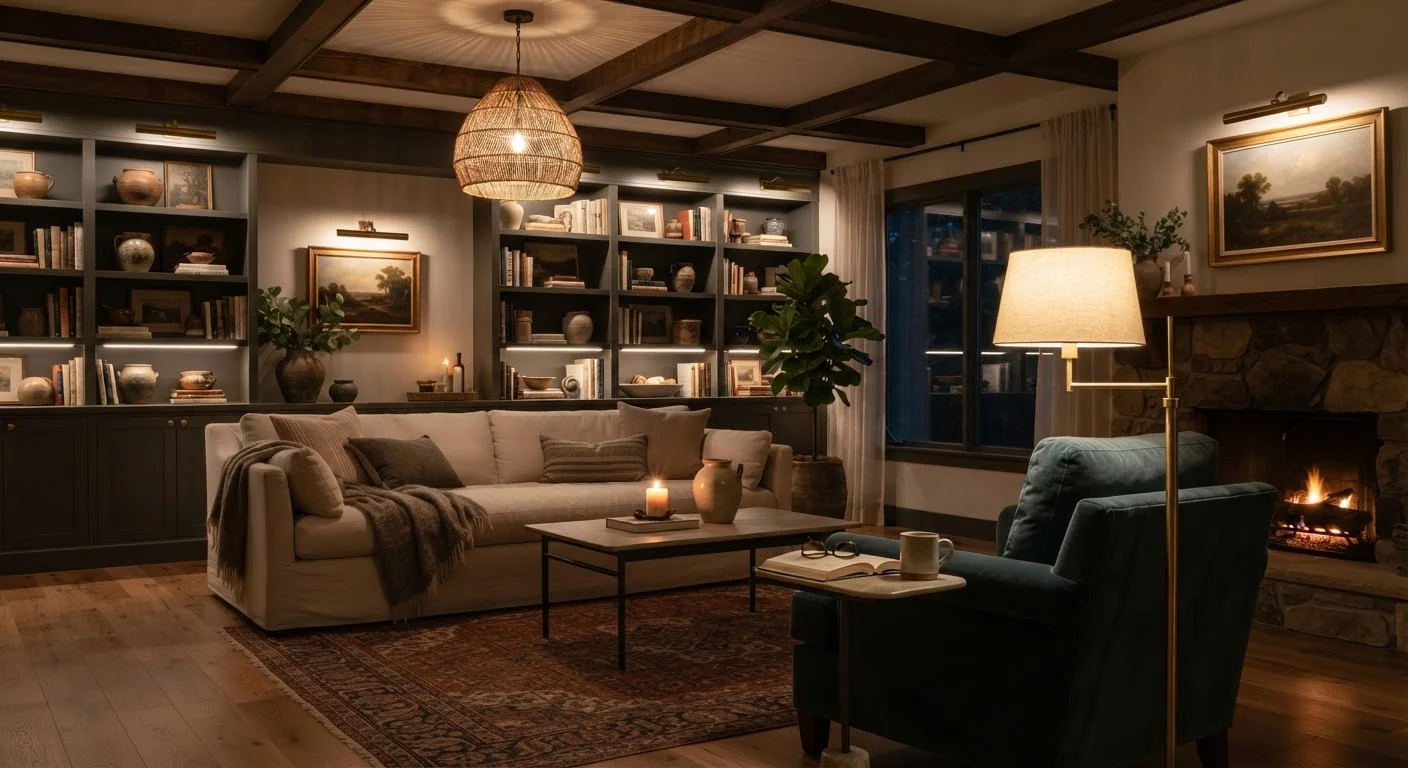
Accent light is the layer most people skip, and it's the one that makes a room feel finished. Track lights aimed at artwork, LED strip lighting inside shelving, toe-kick lights under cabinetry, or a small uplight behind a plant all fall into this category. Accent light draws the eye to points of interest and adds visual depth that overhead ambient light flattens out.
Plan lighting zones around activities, not room perimeter.
Lighting placed to match where people actually read, cook, or work is far more useful than fixtures distributed symmetrically around the walls. Activity-based placement prevents under-lit work areas and over-lit unused zones.
Install dimmer switches on at least your main ambient circuit.
A single brightness level forces you to compromise between what the room needs for different tasks and times of day. Dimmers give you range without requiring multiple fixtures or rewiring.
Layer at least two distinct height levels of light in every room.
When all light sources sit at the same height — typically ceiling level — a room looks flat. Mixing ceiling, mid-height (table lamps, sconces), and low-level sources creates visual depth and a more comfortable atmosphere.
Choose bulb color temperature deliberately by room function.
Color temperature shapes how a space feels and how well you can perform tasks in it. Warm bulbs support relaxation; cooler bulbs support alertness and detail work. Mismatches create rooms that feel uncomfortable without any obvious reason.
Use accent lighting to define focal points and add perceived depth.
Accent light gives the eye somewhere to travel within a room, which makes spaces feel larger and more intentional. Without it, walls and surfaces blend into a uniform background.
Planning Your Lighting Before You Buy or Install
A quick sketch of the room — with dimensions, furniture placement, windows, and existing outlets marked — goes a long way before purchasing any fixture. Walk through the activities that happen in the space and note where each one takes place. Reading, cooking, grooming, and video calls each have different light requirements. Identifying those zones first means you choose fixtures with purpose rather than filling space.
3
Distinct lighting layers needed for a well-designed room
Interior design guidelines consistently identify ambient, task, and accent as the three foundational layers for functional residential lighting.
2700K–3000K
Ideal bulb color temperature range for living and bedroom spaces
Lighting industry standards recommend warm white bulbs in this Kelvin range for rooms where relaxation and comfort are the primary goals.
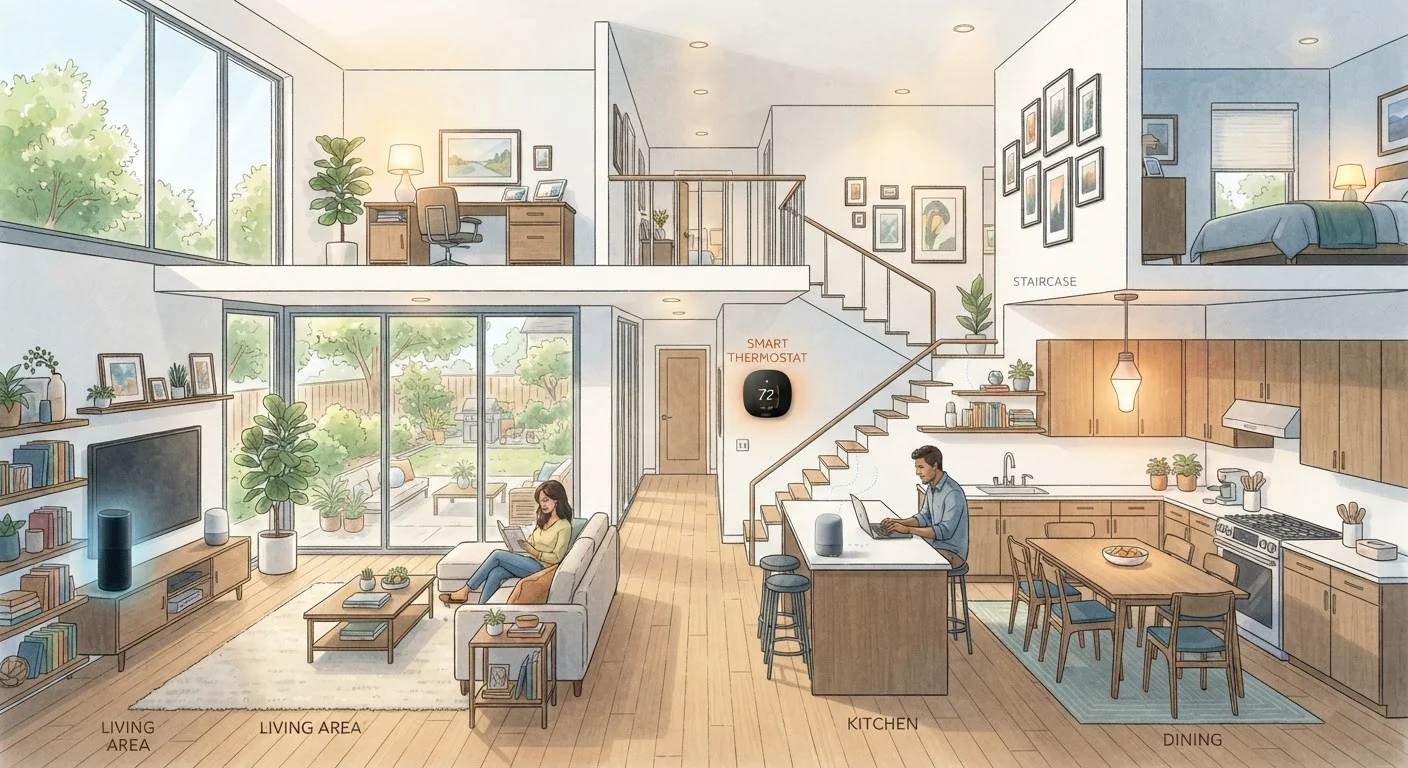
Once zones are mapped, consider controls. A single wall switch that operates all fixtures together eliminates the flexibility you're designing for. Dimmer switches — which work with most LED bulbs today, though compatibility varies, so check product specifications — let you adjust ambient light intensity without changing a single bulb. Smart bulbs and smart switches can go further, allowing you to set scenes and schedules through an app or voice control. Our room-by-room smart device guide covers which lighting control categories are available for each space.
Start With Controls, Then Choose Fixtures
Many people select fixtures first and add controls as an afterthought. Reversing this order pays off: knowing whether you want dimming, smart scheduling, or separate circuits for different zones tells you which fixtures and wiring configurations to plan for. Retrofitting controls after fixtures are installed can be more costly and disruptive than incorporating them from the start.
Renters who can't install hardwired fixtures aren't locked out of layered lighting. Plug-in pendants, battery-powered puck lights, and floor lamps can build most of the same layers without touching a wall. Focus on a strong task light and at least one accent source, and the ambient layer becomes less critical.
Common Mistakes and How to Avoid Them
The most frequent error is relying solely on overhead ambient light set to full brightness. This creates harsh shadows on faces and eliminates the sense of warmth that lower, layered sources provide. If you can only make one change in a room, adding a lamp at a lower height — between table and floor level — immediately improves the feel.
A second common mistake is choosing bulb color temperature without considering the room's function. Bulbs are rated in Kelvin (K): lower numbers (2700K–3000K) produce warm, yellowish light suited to living spaces and bedrooms; higher numbers (4000K–5000K) produce cooler, bluer light better suited to kitchens, bathrooms, and workspaces. Mixing very different color temperatures in the same room can create visual tension, though deliberate warm-cool contrast can work in large open-plan spaces when done intentionally.
Finally, ignoring glare is a consistent oversight. A bare bulb at eye level — whether in a pendant or a floor lamp — causes discomfort. Shades, diffusers, and directional fixtures all reduce glare while still delivering light where it's needed. If you're building out a broader home refresh, our room-by-room home organization walkthrough pairs well with a lighting plan, since storage decisions and surface placement directly affect where task and accent lights need to go.