What Makes Each Type Different
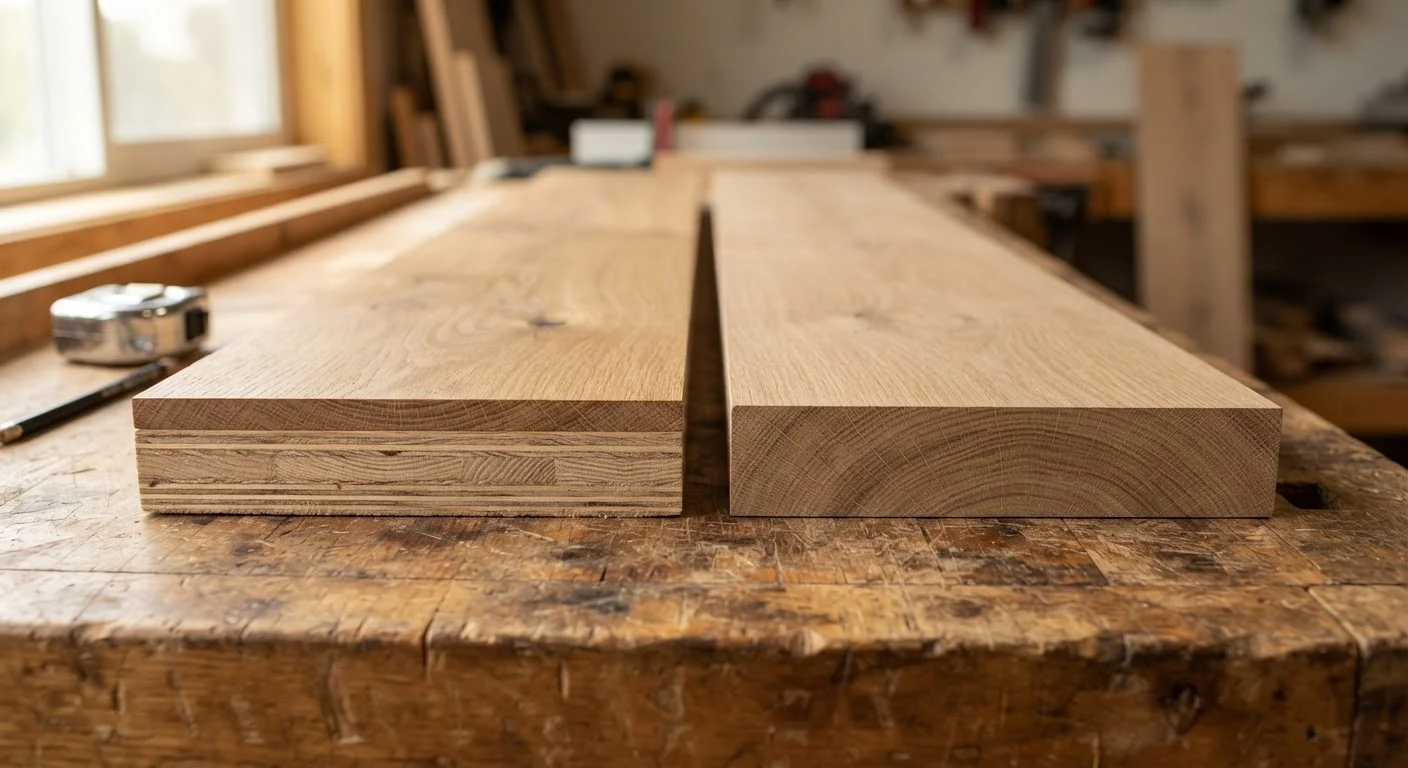
Despite looking nearly identical once installed, engineered and solid hardwood are built in fundamentally different ways. Solid hardwood is exactly what the name implies — a single, uniform piece of wood milled to a consistent thickness, typically ¾ inch. Every layer is the same species throughout.
Engineered hardwood is a layered product: a real hardwood veneer on top, bonded to several layers of cross-directional plywood or high-density fiberboard underneath. This cross-ply core is the key structural difference. Wood naturally expands and contracts with changes in moisture and temperature; by running each layer in alternating directions, engineered hardwood resists that movement far more effectively than a solid plank can.
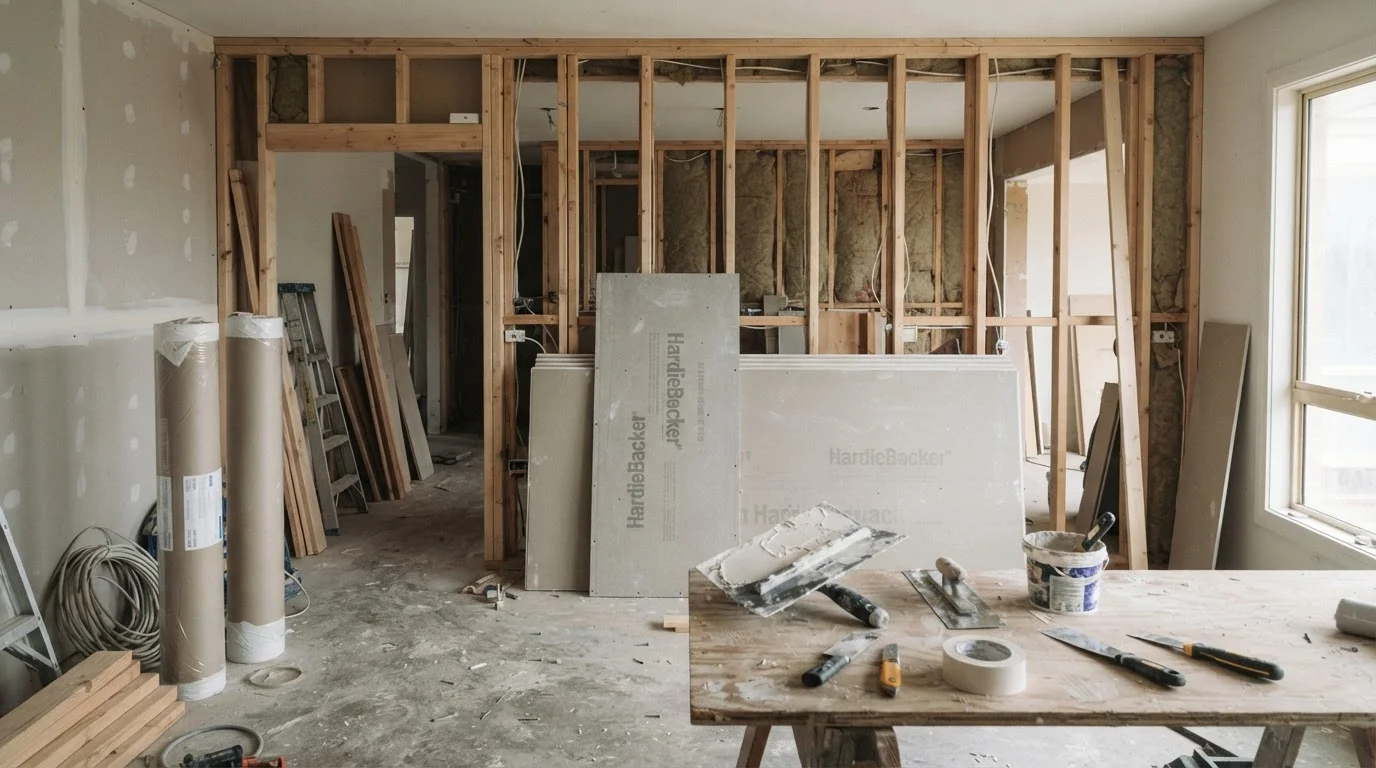
That construction difference — not the surface appearance — is what drives every practical distinction between the two options. For context on how material construction shapes performance in other home decisions, see our guide on choosing the right wall material.
| Criterion | Engineered Hardwood | Solid Hardwood |
|---|---|---|
| Core construction | Hardwood veneer over cross-ply base | Single solid wood plank |
| Moisture resistance | Good — resists expansion well | Limited — vulnerable to humidity |
| Below-grade installation | Generally compatible | Not recommended |
| Over concrete subfloor | Yes (glue-down or float) | Only with added wood subfloor |
| Refinishing potential | 1–2 times (veneer-dependent) | 3–5+ times (thickness-dependent) |
| Typical plank thickness | 3/8 inch to 9/16 inch | 3/4 inch standard |
| Installation methods | Float, glue, or nail | Nail or staple (wood subfloor only) |
Where Each Type Belongs in Your Home
Location is the single biggest decision driver here. Below-grade spaces (basements) and rooms built directly on concrete slabs introduce moisture vapor that solid hardwood simply cannot tolerate over time. Cupping — where plank edges lift higher than the center — and buckling are common failure modes when solid hardwood is installed where moisture levels are unpredictable. Engineered hardwood was specifically designed to perform in these conditions.
Above-grade rooms with wood subfloors and stable indoor humidity are where solid hardwood genuinely excels. Bedrooms, living rooms, and hallways on the first or second floor of a home with a working HVAC system provide the controlled environment solid wood needs. In these spaces, its deeper wear layer becomes a real advantage: solid hardwood can typically be sanded and refinished anywhere from three to five times or more, depending on plank thickness, while engineered hardwood's veneer layer — usually between 2mm and 6mm — limits refinishing cycles to one or two at most.
2mm–6mm
Typical engineered hardwood veneer thickness
Veneer thickness directly determines how many times an engineered floor can be sanded and refinished — thinner veneers allow fewer cycles.
¾ inch
Standard solid hardwood plank thickness
This consistent thickness is what allows solid hardwood to support multiple refinishing cycles across its lifespan.
A common misconception is that engineered hardwood is a lesser or temporary option. In appropriate settings, quality engineered flooring can last just as long as solid hardwood — the tradeoff is simply refinishing flexibility versus environmental resilience.
Installation and Subfloor Compatibility
Installation method is another practical factor. Solid hardwood traditionally requires nail-down or staple-down installation into a wood subfloor. It is not suitable for direct installation over concrete unless a separate wood subfloor is first constructed — adding cost and raising floor height.
Engineered hardwood offers more flexibility: it can be glued down over concrete, floated over a foam underlayment, or nailed to a wood subfloor depending on the specific product. This adaptability makes it easier to work with in renovation projects where the subfloor type is fixed.
Acclimation Applies to Both Types
Both engineered and solid hardwood should be acclimated to the room's temperature and humidity before installation. Manufacturers typically recommend leaving planks in the installation space for 48 to 72 hours. Skipping this step can lead to post-installation expansion or contraction regardless of which type you choose. Always follow the specific acclimation instructions provided by your product manufacturer.
Regardless of which type you choose, subfloor preparation matters enormously. Both options require a flat, clean, dry subfloor. Uneven subfloors — more than 3/16 inch variation over a 10-foot span is a common industry benchmark — should be corrected before any hardwood installation. Always check the manufacturer's installation guidelines for the specific product you select, and consider consulting a licensed flooring contractor for large or complex projects.