What Accessories Actually Do for an Outfit
At their most functional, accessories serve a purpose beyond decoration. A belt defines a waistline. Shoes signal occasion — sneakers say casual, a structured heel says polished. A bag determines how much you can carry and quietly communicates context. Jewelry catches light and draws the eye. These aren't trivial contributions.
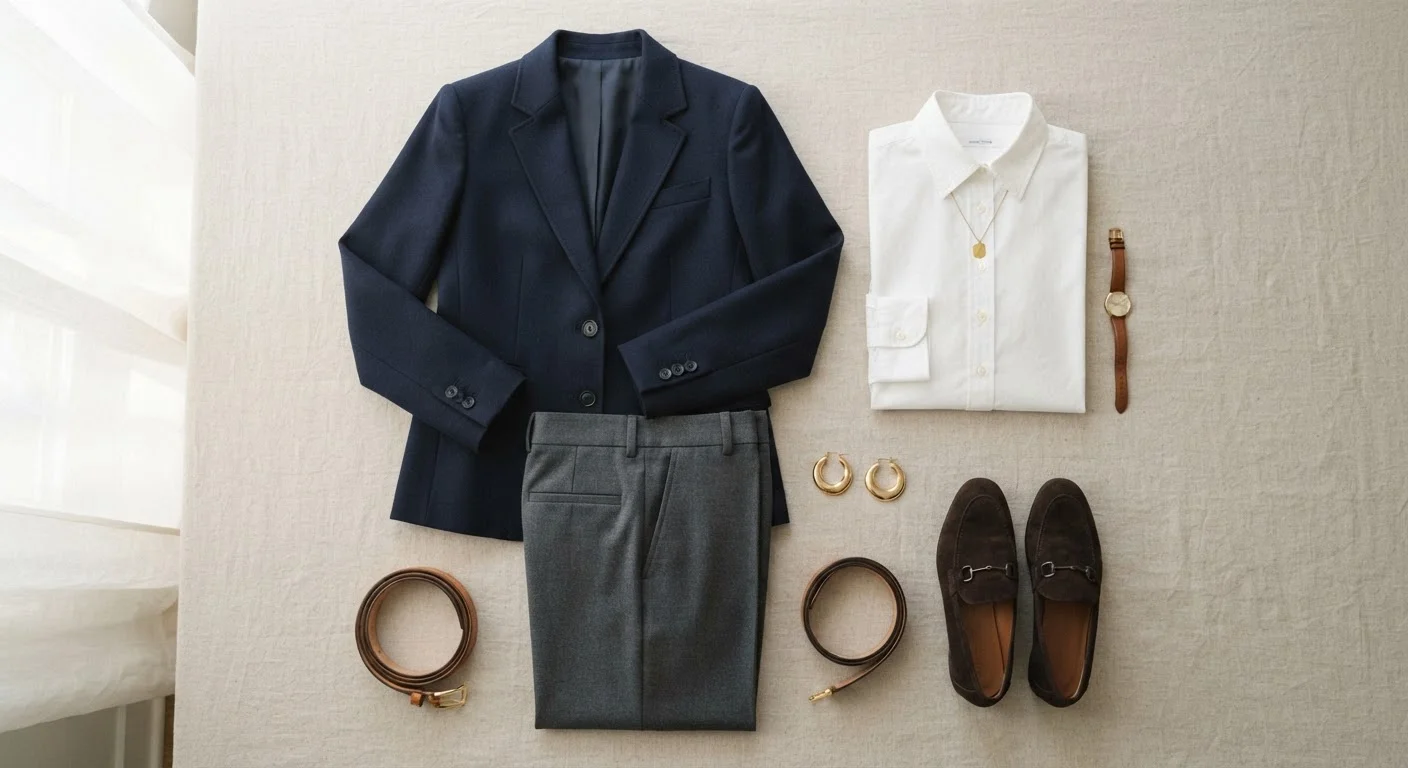
Where accessories genuinely shine is in shifting the tone of an outfit without touching the clothes themselves. A plain white button-down can read as office-ready, weekend-relaxed, or evening-appropriate depending on whether you pair it with a blazer and loafers, a crossbody and sandals, or a silk scarf and statement earrings. That flexibility is real and worth leaning into — especially if you're trying to get more mileage from what you already own.
Accessories also let you introduce personality without committing to a bold clothing purchase. A pair of sculptural earrings or a brightly colored tote can express something about your taste without overhauling your whole wardrobe.
Shift outfit tone without changing clothes
Swapping shoes or adding a scarf can move the same outfit from casual to polished in under a minute — making accessories one of the most efficient tools in everyday styling.
Extend the life of a limited wardrobe
A small collection of versatile accessories multiplies outfit combinations significantly, allowing fewer clothing items to work harder across different occasions.
Low-stakes way to express personality
Accessories let you experiment with color, texture, and trend without the commitment of a full clothing purchase — easier to try, easier to set aside.
Functional as well as decorative
Bags carry your essentials, belts shape silhouette, shoes protect and ground the look — accessories serve real practical purposes alongside their visual ones.
Easy to adjust for dress code changes
Removing jewelry or swapping a tote for a structured bag can quickly recalibrate an outfit for an unexpected formal or casual setting mid-day.
Where Accessories Fall Short
Here's the honest part: accessories are amplifiers, not fixers. If an outfit has foundational problems, adding more pieces tends to amplify the noise rather than quiet it.
The most common mismatch is using accessories to compensate for poor fit. A statement necklace won't redirect attention away from a blazer that pulls across the shoulders or trousers that bunch at the ankle. As we explore in why clothing fit matters more than brand or price, fit is the foundation everything else builds on — and accessories can't substitute for it.
Accessories also can't resolve a dress code mismatch. Wearing formal jewelry with truly casual clothes doesn't elevate the outfit to formal — it just creates visual tension. Similarly, accessories won't fix color clashes in the base outfit. Understanding how colors interact is worth developing separately; color coordination doesn't require formal training, but it does require some intentionality.
Cannot compensate for poor clothing fit
No accessory draws attention away from a garment that doesn't fit properly. A well-fitting basic outfit will always look more put-together than an ill-fitting one loaded with accessories.
Risk of visual clutter when overdone
Stacking too many accessories — multiple statement pieces, competing textures, mismatched metals — creates noise rather than intention, and the overall look suffers for it.
Cannot bridge a genuine dress code mismatch
Pairing formal earrings with ultra-casual clothes creates tension rather than elevation. Accessories work within the dress code the clothes already establish, not against it.
Won't fix underlying color clashes
If the base outfit has colors working against each other, an accessory adds another variable to manage rather than resolving the original conflict.
How to Use Accessories Intentionally
The most effective approach is to treat accessories as one decision, not several. If your outfit is already doing a lot — a pattern, a bold color, an interesting silhouette — one accessory is enough. If the outfit is simple and neutral, you have more room to layer.
Start With the Outfit, Not the Accessories
A common habit is to assemble an outfit and then search for accessories to complete it — but the more useful question is: what does this outfit already communicate, and what does it still need? If it needs structure, reach for a belt. If it needs occasion-appropriateness, start with shoes. Accessories chosen in response to a specific gap are almost always more effective than those chosen out of habit or decoration alone.
It also helps to think about accessories by category rather than as a single pile to sort through:
- Shoes and bags carry the most weight in signaling occasion and formality — start here when building an outfit.
- Belts are structural tools that define proportion and work especially well with looser or longer tops.
- Jewelry is most flexible — it can be added, layered, or stripped back quickly depending on the vibe you need.
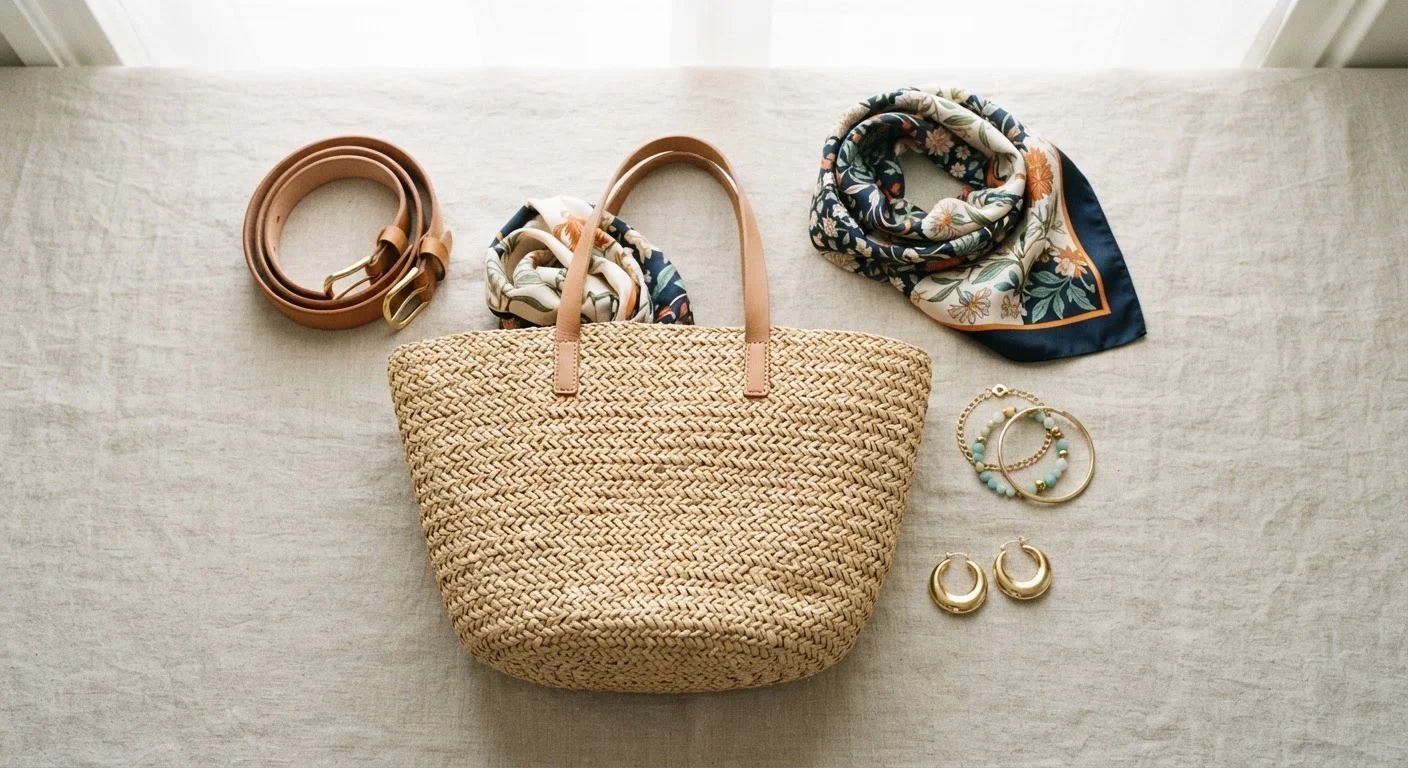
- Scarves and hats introduce texture and work well for transitioning outfits between seasons without buying new pieces.
When in doubt, aim for balance: if the accessories are the loudest element, make sure the rest of the outfit is quiet. That's the same logic that applies to balancing neutral and statement pieces more broadly.
80%
Wardrobe pieces rarely worn by most people
Wardrobe research commonly suggests that most people regularly wear only around 20% of what they own, leaving significant room to rework existing pieces with smarter accessory choices.
1–2
Intentional accessories per outfit for best results
Style educators consistently recommend anchoring each look to one or two deliberate accessory choices rather than layering many pieces, which tends to dilute rather than strengthen the overall effect.