What Each Format Actually Contains
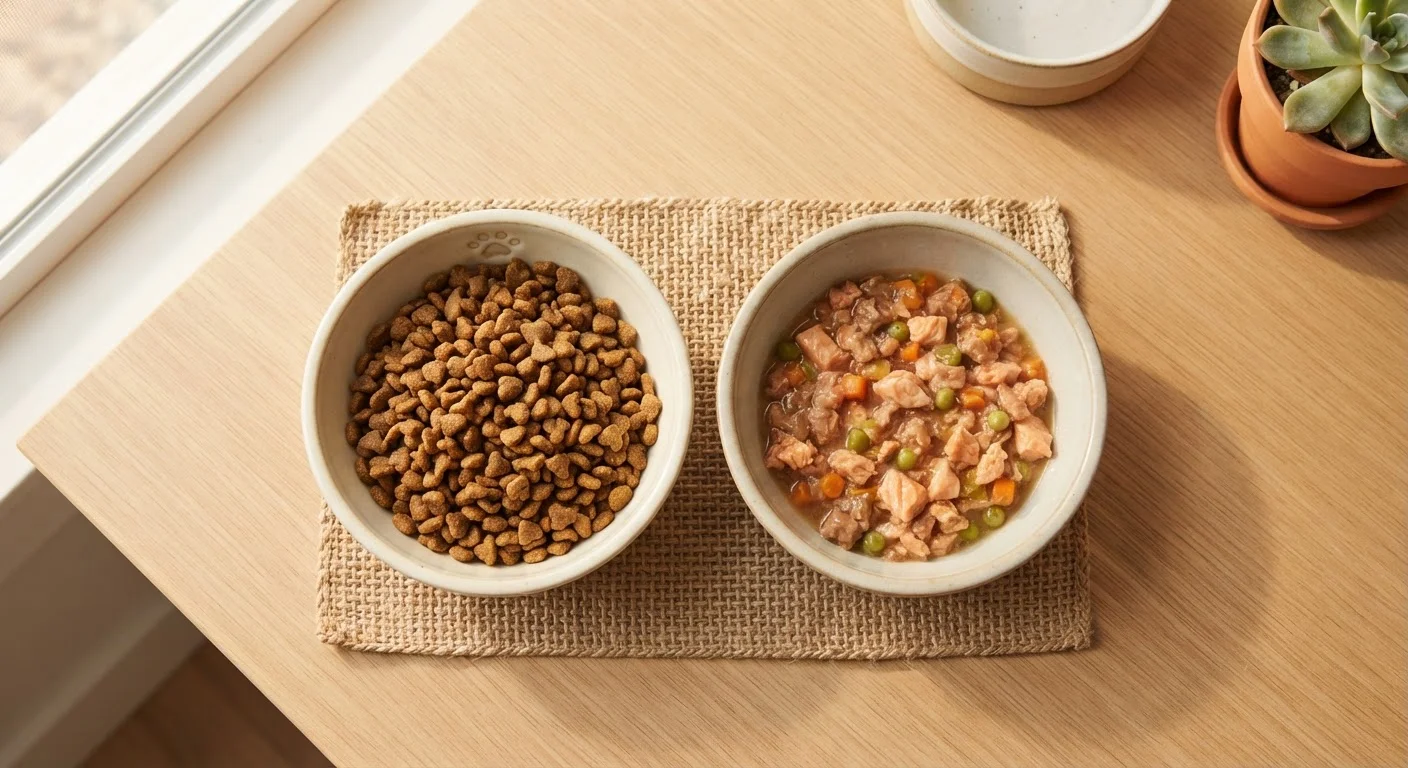
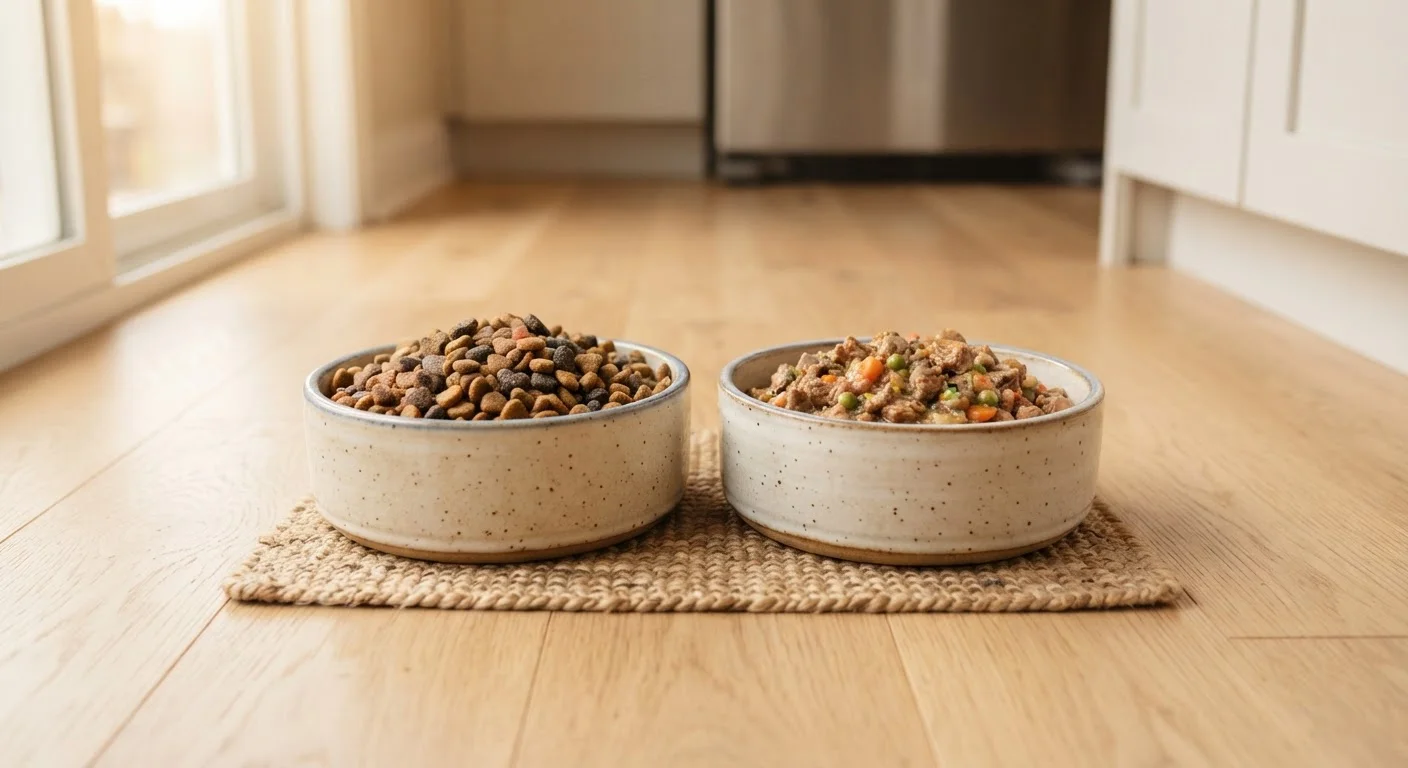
Dry kibble typically contains around 6–10% moisture, with the bulk of its calories coming from proteins, carbohydrates, and fats compressed into shelf-stable pellets. Wet food, by contrast, is usually 70–80% water, which dramatically changes the calorie density per ounce. This difference matters more than most owners realize.
Both formats can be nutritionally complete when they meet the AAFCO standards for the appropriate life stage. What varies is the ratio of macronutrients and how your dog's body processes them. Wet food generally delivers more protein relative to carbohydrates, while kibble often relies more heavily on starches to hold its structure. Neither is inherently problematic, but these differences can matter for dogs with specific metabolic or digestive needs.
For a broader look at how these trade-offs apply to cats, see our comparison for feline diets — the considerations overlap in some areas but diverge significantly in others.
| Criterion | Dry Kibble | Wet Food |
|---|---|---|
| Moisture content | ~6–10% | ~70–80% |
| Calorie density per ounce | High | Low |
| Dental benefit | Some mechanical tartar reduction | Minimal dental benefit |
| Palatability | Moderate | High |
| Shelf life (opened) | Weeks in airtight container | 24–48 hours refrigerated |
| Cost per meal | Generally lower | Generally higher |
| Protein-to-carb ratio | Varies; often higher carbs | Typically higher protein ratio |
| Suitable for picky eaters | Less reliably | More reliably |
How Age and Health Conditions Should Guide Your Choice
Puppies, adults, and senior dogs have genuinely different nutritional needs. Puppies need calorie-dense diets to support rapid growth — kibble formulated for puppies can meet this efficiently. Adults on maintenance diets generally do well on either format. Where the choice becomes more clinically meaningful is in senior dogs.
As dogs age past seven, many develop dental sensitivity, reduced kidney function, or decreased appetite. Wet food's soft texture reduces the mechanical effort required to eat, and its moisture content supports kidney health. Learn more about how senior dogs' needs shift, including why hydration becomes increasingly critical.
Dogs with urinary tract conditions often benefit from the higher moisture content in wet food, which supports urine dilution. Conversely, dogs prone to obesity may do better with precisely portioned kibble, since wet food's palatability can make overeating more likely. Dogs with gastrointestinal sensitivity sometimes respond better to one texture over another — this is worth tracking closely and discussing with a vet.
70–80%
Moisture content in wet dog food
This high water content can meaningfully contribute to daily hydration, particularly in dogs who do not drink freely.
~10%
Moisture content in dry kibble
Dogs fed exclusively kibble rely almost entirely on their water bowl for hydration, making fresh water access essential.
7 years
Age at which senior dog nutrition becomes relevant
Veterinary guidance commonly classifies dogs as seniors around age seven, when dietary adjustments may become appropriate.
This article provides general nutritional information for educational purposes and is not a substitute for personalized veterinary advice. Always consult your veterinarian before changing your dog's diet, especially if they have an existing health condition.
Practical Considerations: Cost, Storage, and Feeding Habits
Beyond nutrition, day-to-day logistics matter. Dry kibble remains open for weeks when stored in an airtight container and does not require refrigeration. Wet food, once opened, typically needs to be used within 24–48 hours and stored covered in the refrigerator, which adds a layer of planning for multi-dog households or irregular feeding schedules.
Cost per meal is another real factor. Ounce for ounce, wet food tends to cost more — partly because water weight is included and partly because production costs are higher. A dog fed exclusively wet food may cost noticeably more per month than one on kibble, particularly for larger breeds.
A middle path that many veterinarians and owners find practical is mixing: using kibble as a base and adding a small portion of wet food for palatability and moisture. This can be especially useful for dogs who are reluctant eaters or transitioning between diets. Whatever approach you take, gradual transitions — introducing new food over 7–10 days — reduce the risk of digestive upset.
Diet is just one piece of your dog's overall wellness picture. Separating dog nutrition fact from fiction can help you filter out marketing noise and focus on evidence-based choices. And remember, a well-fed dog still needs appropriate exercise — activity needs vary widely by breed and life stage and should be considered alongside diet for a complete health plan.
When to Ask Your Vet About Food Format
If your dog has a diagnosed condition such as kidney disease, diabetes, or inflammatory bowel disease, the format of their food is a medical question — not just a preference. Your veterinarian may recommend a specific moisture level, protein concentration, or even a prescription diet. Routine annual wellness exams are a good time to revisit whether your dog's current food format still suits their changing health needs.