Why Crate Training Works — When Done Correctly
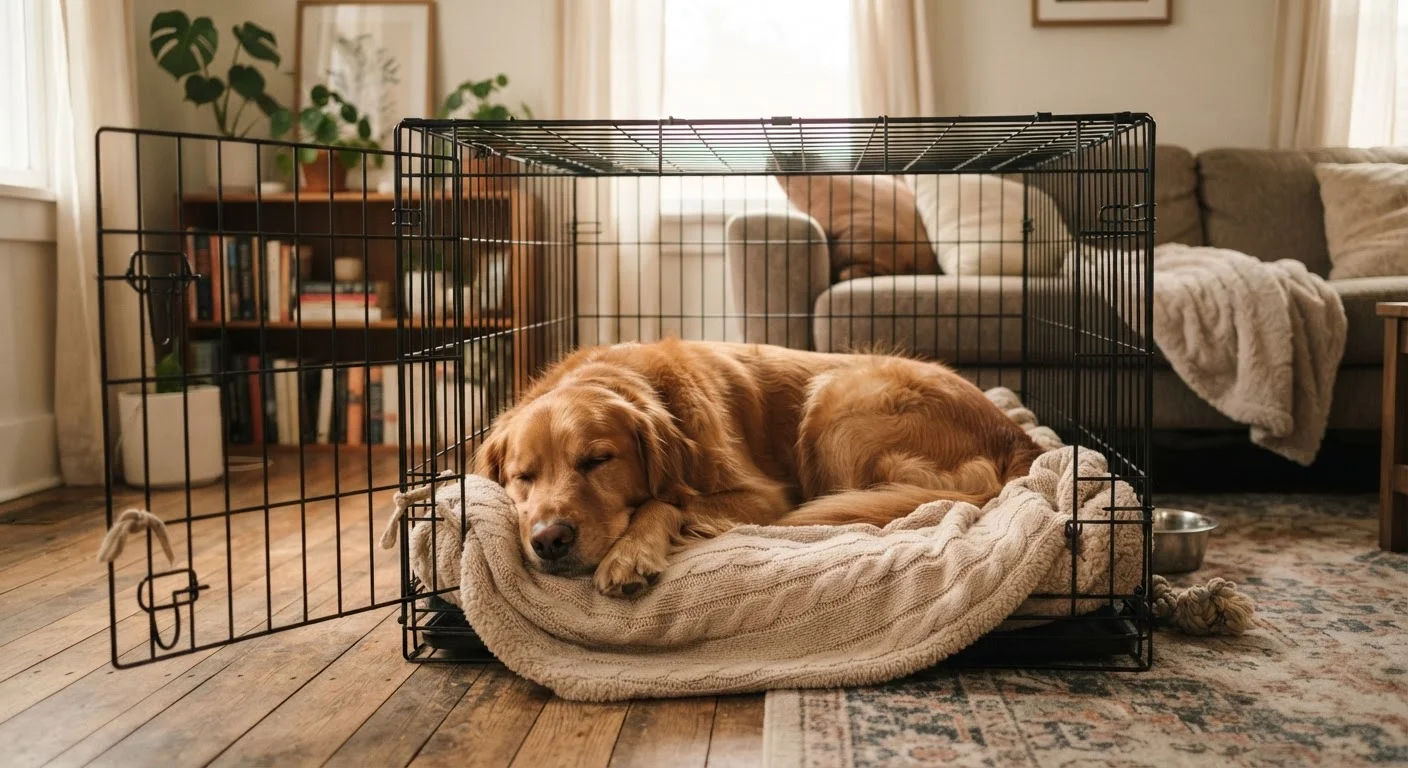
Dogs are descended from den-dwelling animals, and many naturally seek small, enclosed spaces when they want to rest or feel secure. A well-introduced crate channels that instinct — offering a personal space your dog controls and associates with calm.
Crate training also supports housetraining, since dogs generally avoid soiling their sleeping area. It provides a safe environment when you cannot supervise directly, and it prepares dogs for travel, veterinary visits, and recovery stays where confinement may be necessary. If you are bringing a dog home for the first time, establishing a crate routine early sets a strong behavioral foundation.
The key distinction is this: a crate used as a refuge builds trust. A crate used as a consequence or a storage solution builds avoidance. The process below is designed to achieve the former.
What you will need
Wire or plastic dog crate
Provides a secure, enclosed space that mimics a natural den environment for the dog.
Crate mat or washable blanket
Makes the crate interior comfortable and inviting for the dog to rest in.
High-value treats
Used to reward calm, voluntary entry into the crate during training sessions.
Food-stuffed chew toy (such as a rubber puzzle feeder)
Gives the dog something engaging to do inside the crate, building a positive association.
Crate cover or breathable kennel cover
Reduces visual stimulation and creates a darker, den-like atmosphere that many dogs find calming.
Step-by-Step Crate Training
Choose and Position the Right Crate
Select a crate sized so your dog can stand fully upright, turn around, and stretch out — but not so large that they can use one corner as a bathroom. If you have a growing puppy, consider a crate with an adjustable divider panel so you can expand the space over time.
Place the crate in a room where your family spends regular time — a living room or bedroom works well. Dogs are social animals and are more comfortable when they can see or hear household activity, even while resting.
Make the Interior Inviting
Line the crate with a soft mat or washable blanket. If your dog is a determined chewer, choose a more durable option and supervise early use. Place a worn item of your clothing inside — familiar scent is reassuring, especially for puppies.
Leave the crate door open during this setup phase and allow your dog to investigate it freely, on their own terms. Do not push or lure them inside yet.
Introduce the Crate with Positive Associations
Begin tossing high-value treats near the crate entrance, then just inside the doorway, then toward the back — letting your dog follow at their own pace. Use a consistent, upbeat cue word like "crate" or "place" each time. Never force entry.
Repeat this in short sessions — five to ten minutes — several times a day. The goal is voluntary entry driven by curiosity and reward, not pressure.
Practice Closing the Door Briefly
Once your dog enters willingly, begin closing the crate door for just a few seconds while they eat a treat or chew a stuffed toy. Open it before they finish and before any signs of distress appear.
Gradually extend the duration — a few more seconds each session — always ending before anxiety sets in. Build duration slowly over several days, not hours.
Build Up to Longer Stays and Routine Use
Once your dog can relax in a closed crate for 15–20 minutes with you present, begin practicing short departures from the room. Return calmly and without fanfare to avoid building excitement around your comings and goings.
Incorporate the crate into your dog's daily routine — for naps, mealtimes, or quiet time — so it becomes a predictable, unremarkable part of the day. Consistency builds confidence faster than any single training session.
Feed Meals Near and Inside the Crate
One of the most effective ways to build a positive association is to feed your dog their regular meals just outside the crate door, then gradually move the bowl to the back interior over several sessions. This links the crate with something your dog already values — food — without any pressure or force.
Never Use the Crate as Punishment
Sending a dog to their crate after scolding or during stressful situations undermines the entire training process. If the crate becomes associated with negative emotions, your dog may resist entering it, show signs of anxiety, or develop a lasting aversion. Keep the crate a neutral-to-positive space at all times.
Crate Time Has Real Limits
Dogs should not be crated for more hours than they can reasonably hold their bladder — generally one hour per month of age for puppies, with a maximum of around four to five hours for young dogs during the day. Overnight crating is acceptable once a dog is comfortable, but extended daytime confinement without exercise, interaction, and mental stimulation can contribute to stress and behavioral problems. If your schedule requires long absences, arrange for a dog walker or trusted sitter.
Troubleshooting Common Crate Challenges
Even with a careful introduction, some dogs resist crate training more than others. Here is how to interpret and respond to common difficulties:
- Whining or barking when the door closes: This usually signals that the training has moved too fast. Return to shorter closed-door intervals and rebuild duration gradually. Do not open the door in response to barking, as this teaches the dog that vocalizing ends confinement.
- Refusing to enter at all: Try placing meals near, then inside, the crate over several days. Remove any pressure and give the dog time to investigate freely. Some dogs need a week or more before they approach voluntarily.
- Excessive distress when left alone: If your dog shows signs of panic — panting, frantic escape attempts, prolonged vocalization — this may indicate separation anxiety rather than a crate training issue. Consult a veterinarian or certified behavior professional before continuing.
Crate training is also most effective when it complements broader socialization and routine-building. If you have a young puppy, see our guide on socializing a puppy during the critical developmental window to understand how early experiences shape long-term behavior.
This article is for general informational and educational purposes only and does not constitute veterinary or behavioral advice. If your dog shows significant distress, consult a licensed veterinarian or certified animal behaviorist for guidance tailored to your pet's individual needs.