
Why These Three Terms Work as a System
When you file a property or auto insurance claim, the dollar amount you receive isn't arbitrary. It flows from three interlocking concepts baked into your policy: the coverage limit, the valuation method (either actual cash value or replacement cost), and how those two figures interact. Miss one, and you can misread your coverage entirely.
Think of it this way: the valuation method determines the calculated value of your loss, while the coverage limit acts as a ceiling. Your payout is whichever number is lower. Understanding all three — and how they fit together — is the foundation for knowing what to expect when a claim happens. For a deeper look at how coverage limits differ from policy limits, it's worth reviewing that distinction separately, since the two terms are often confused.
This article provides general insurance education and is not personalized insurance, financial, or legal advice. Policy terms, coverage, and regulations vary by provider and state. Always read your actual policy documents and consult a licensed insurance professional for guidance specific to your situation.
Coverage Limits: The Ceiling on Every Claim
A coverage limit is the maximum dollar amount your insurer agrees to pay for a covered loss under a specific portion of your policy. You'll typically see separate limits for different categories — dwelling, personal property, liability, and so on — and those limits apply independently.
Coverage limits are set when you buy or renew a policy, usually based on an estimate of what it would cost to rebuild your home, replace your belongings, or cover a liability judgment. The problem is that those estimates can drift out of sync with reality over time. Construction costs rise. Home values change. Personal property accumulates. A limit that was accurate three years ago may leave you underinsured today.
~⅔
U.S. homes estimated to be underinsured
Industry analyses have consistently found that a large share of insured homes carry coverage limits below what it would cost to fully rebuild them at current prices.
20–30%
Typical premium difference: ACV vs. replacement cost
Replacement cost policies generally cost more in annual premiums than ACV policies, with the gap varying by insurer, property type, and location.
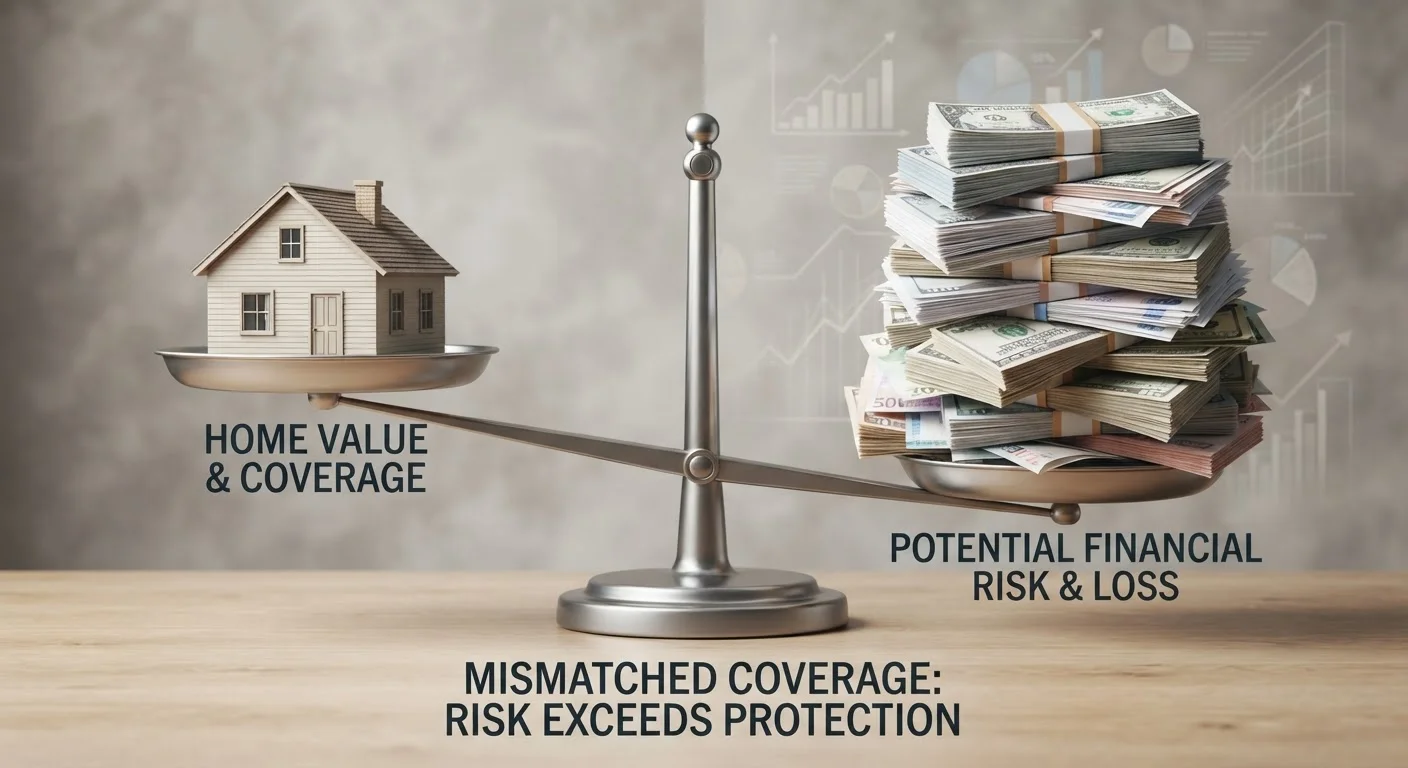
Because the limit acts as an absolute cap, it can override even the most generous valuation method. If your replacement cost is $180,000 but your coverage limit is $150,000, you receive $150,000 — regardless of what it actually costs to restore what you lost. The article Why Your Coverage Amount and Your Actual Risk May Not Match explains the common ways limits fall behind real exposure.
Actual Cash Value: What It Was Worth, Not What It Costs
Actual cash value (ACV) is a valuation method that calculates a claim payment by taking the replacement cost of the damaged item and subtracting depreciation. Depreciation accounts for age, wear and tear, and obsolescence. The formula is often summarized as:
ACV = Replacement Cost − Depreciation
A five-year-old laptop that costs $1,200 to replace new might be worth only $400 under ACV if insurers determine it has lost two-thirds of its value. That gap — $800 in this example — comes out of your pocket.
ACV policies generally carry lower premiums than replacement cost policies, which makes them attractive if budget is a constraint. But the trade-off is real: after a significant loss involving multiple items or major structural damage, the depreciation deductions add up quickly. How the settlement math works in practice is worth understanding before you choose this option.
Check Whether Your Policy Uses ACV for Personal Property
Many standard homeowners policies default to actual cash value for personal property even when the dwelling is covered at replacement cost. This split approach is easy to overlook. Look specifically for the words 'actual cash value' or 'replacement cost' in the personal property section of your policy — not just on the declarations page — to confirm which method applies to your belongings.
Replacement Cost: Paying for What It Takes to Start Over
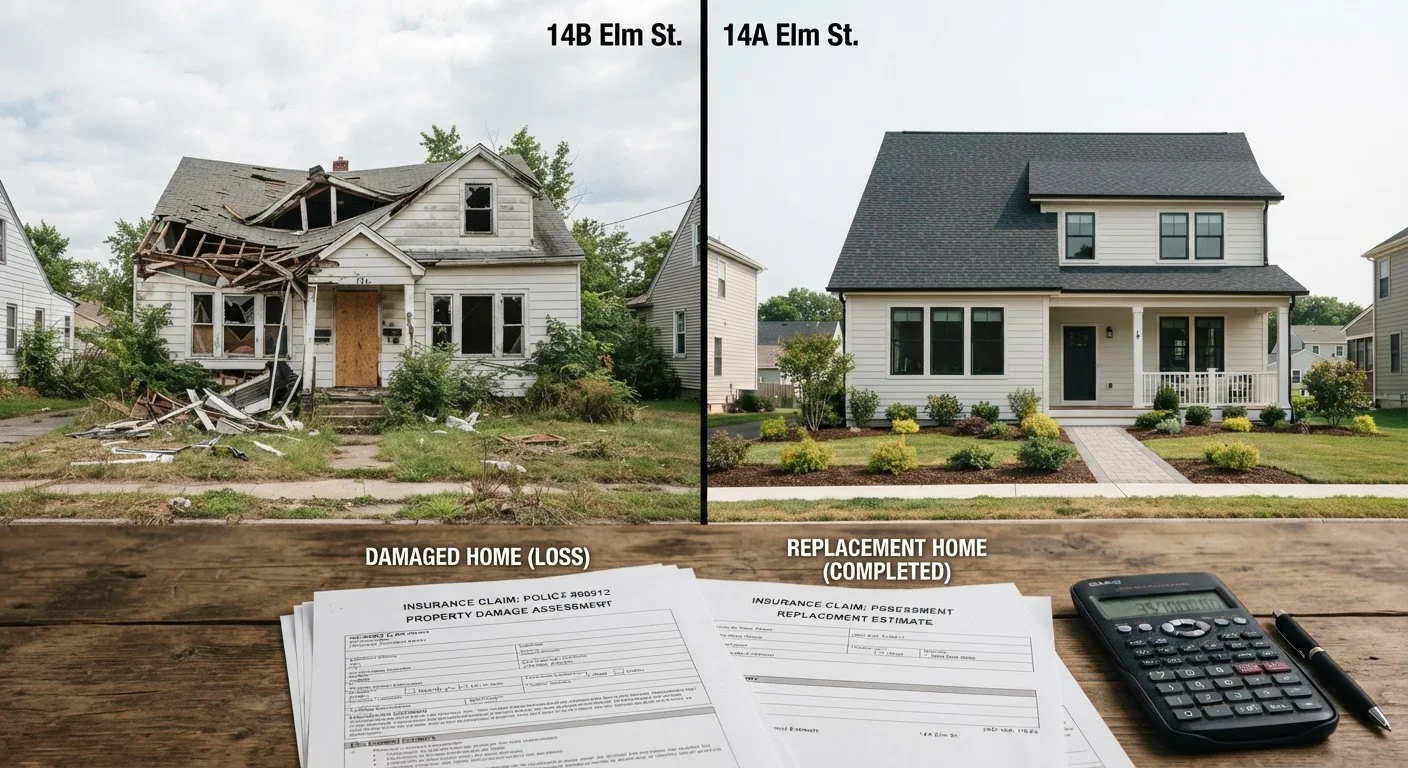
Replacement cost coverage values a loss based on what it would cost — at today's prices — to repair or replace the damaged item with one of similar kind and quality, without deducting for depreciation. Using the same laptop example, a replacement cost policy would pay the full $1,200 to replace it, not the $400 ACV figure.
For homeowners, replacement cost on the dwelling means the insurer pays to rebuild using comparable materials at current labor and material prices, up to the policy limit. This matters because construction costs can increase substantially between the time you set your coverage limit and the time you actually need to use it.
Replacement cost coverage costs more in premiums, and some policies use a two-step payment process: the insurer pays ACV first, then releases the remaining depreciation amount (called a holdback) once you've completed repairs or replacement and submitted proof. Check your policy language carefully to understand how and when the full amount becomes available.
| Actual Cash Value (ACV) | Replacement Cost | |
|---|---|---|
| How loss is valued | Replacement cost minus depreciation | Cost to replace with similar item today |
| Effect of depreciation | Reduces payout significantly for older items | No depreciation deducted |
| Typical premium cost | Lower | Higher |
| Out-of-pocket gap after loss | Often substantial | Minimal if limit is adequate |
| Payment timing | Single payment at settlement | May involve holdback until repairs complete |
| Best suited for | Budget-conscious buyers, older assets | Homeowners wanting full recovery after loss |
How to Read Your Policy for These Terms
These three concepts don't always appear in obvious places. Here's where to look:
- Declarations page: Lists your coverage limits for each category. Review this annually.
- Coverage section: Specifies whether losses are settled on an ACV or replacement cost basis. Some policies use ACV for personal property but replacement cost for the dwelling — or vice versa.
- Conditions section: May describe how depreciation is calculated, what documentation is required to claim the holdback on replacement cost policies, and any co-insurance requirements.
Insurers are required to explain coverage terms, and a licensed agent can walk you through the specific language in your policy. Understanding how core policy terms shape your real-world coverage can help you ask the right questions. Also worth reviewing: how insurers assess risk, since that process directly influences the limits and terms you're offered.