Why Your Bedroom Deserves Its Own Audit
The bedroom is the one room that directly affects how well you sleep, which in turn affects how you function every day. Yet it often becomes a dumping ground for items that don't belong there — unread mail, exercise equipment, work laptops, laundry in limbo. Research consistently links physical environment to perceived stress, and a cluttered bedroom is one of the easier problems to address at home.
This checklist gives you a structured way to evaluate everything in your bedroom and make a confident decision about each item: keep it here, store it elsewhere, or let it go entirely. If you're interested in the broader picture, our room-by-room home organization walkthrough covers every space in your home using the same practical lens.
Before you begin, gather three containers or bags — one for items to relocate within the home, one for donations, and one for trash. Work through each category below at your own pace.
Three sorting containers
Label one for relocating items within the home, one for donations, and one for trash — keeps decisions physical and immediate.
Sticky notes or labels
Mark storage bins or shelves so relocated items have a clearly defined home and are easy to find later.
Flat storage bins with lids
Ideal for under-bed storage of seasonal items; lids keep contents dust-free and stacking-friendly.
A timer
Set focused work intervals of 15–20 minutes to maintain momentum without feeling overwhelmed.
The Bedroom Clutter Checklist
Work through each group in order. For every item you encounter, ask yourself: Does this support rest, or does it compete with it? If it creates a mental to-do list just by being visible, it probably belongs somewhere else — or nowhere at all.
Surfaces (Nightstands, Dressers, Windowsills)
Clothing and Textiles
Under the Bed
Electronics and Cables
Miscellaneous and Out-of-Place Items
Don't Turn Storage Into a Holding Pattern
The 'store it' category is useful for seasonal items or things genuinely needed elsewhere — but it can become a way to avoid decisions. If you've placed something in storage before and never retrieved it, that's a strong signal it can be donated or discarded. Storing items indefinitely doesn't reduce clutter; it relocates it.
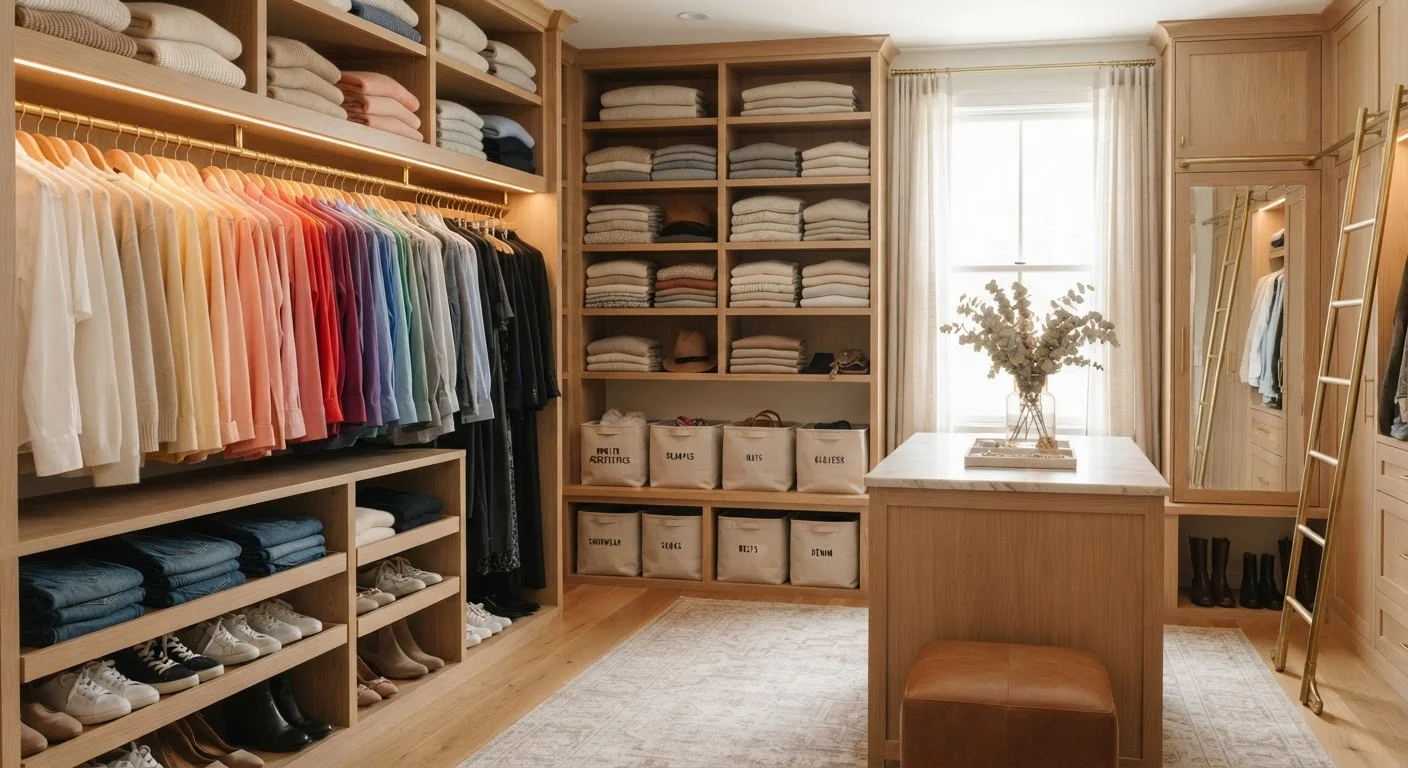
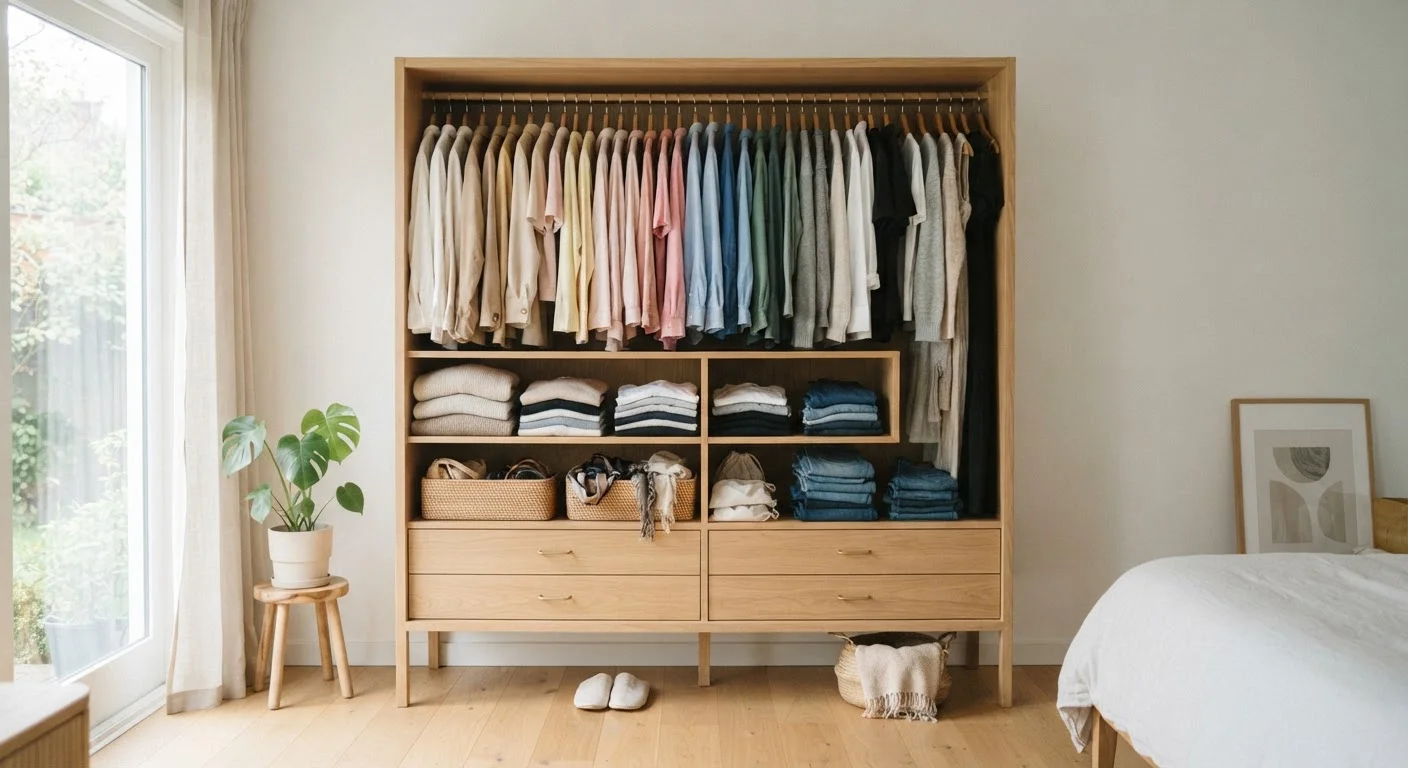
Clothes are often the biggest obstacle in a bedroom audit. Once you've sorted what stays, the next natural step is a more thorough closet review. Our closet organization methods guide walks through proven sorting and categorizing approaches that stay functional over time. And if you're sorting clothes specifically, the wardrobe audit checklist offers a complementary item-by-item evaluation process.
After the Audit: Keeping It Clear
Finishing an audit feels good — but the real win is preventing the pile-up from happening again. A few habits make the difference between a bedroom that stays organized and one that reverts within a week.
First, give every category of item a designated home outside the bedroom wherever possible. Work materials go in a home office or bag. Hobby supplies go in a dedicated bin in another room. When items don't have a home, they migrate to the bedroom by default.
Second, build a brief reset into your routine — even five minutes before bed to return misplaced items to their proper spots. This isn't about perfection; it's about preventing accumulation.
It's also worth noting that physical clutter and mental clutter are often connected. If you find the process of letting go difficult, our personal mental wellness audit offers a reflective framework that may help you examine what's driving the tendency to hold on.
Finally, don't let common misconceptions slow you down. The idea that decluttering requires an entire free weekend is one of many decluttering myths worth questioning — small, focused sessions like this one are often more effective and sustainable.