Why Sequence Is the Real Skill in Renovation
Most weekend renovation mistakes aren't about craftsmanship — they're about order. Painting a wall before fixing a plumbing leak behind it, or installing new flooring before completing drywall repairs, creates expensive rework that could have been avoided with a clear sequence. Professionals don't just know how to do tasks; they know when to do them relative to everything else.
A well-sequenced project also keeps your household functional. Tearing apart two bathrooms simultaneously leaves your family without options. Gutting a kitchen while waiting on cabinet delivery stalls the whole timeline. Thoughtful scheduling prevents these bottlenecks.
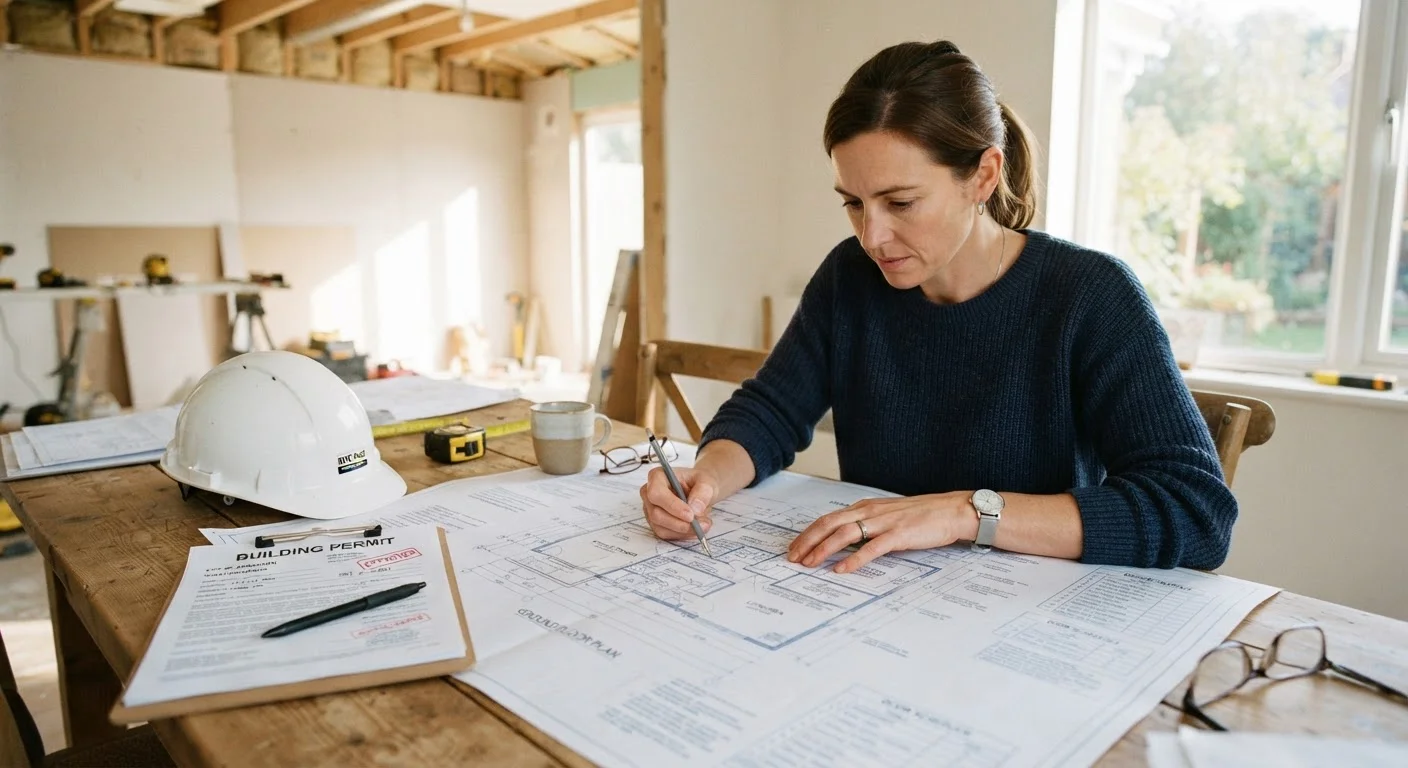
Before any tool touches a wall, confirm whether your project requires permits. Many structural, electrical, and plumbing changes legally require inspection at specific stages. See our homeowner's road map to permits and inspections to understand what triggers that requirement in most jurisdictions.
The Professional Renovation Sequence
Contractors follow a hierarchy that flows from hidden infrastructure outward to visible surfaces. Adopt the same approach, regardless of project scale.
Address structural issues before anything else
Foundation cracks, sagging joists, or rotted framing compromise every improvement built on top of them. Fixing structural problems first means your cosmetic work rests on a solid, stable base. Skipping this step can void insurance claims and create safety risks.
Rough-in mechanical systems before closing walls
Electrical, plumbing, and HVAC work must be completed — and inspected where required — before drywall goes up. Opening finished walls to add an outlet or move a vent is one of the most avoidable renovation costs.
Complete drywall and major repairs before painting
Patching, sanding, and priming create dust and debris that settles on freshly painted surfaces. Finishing all wall repairs first gives you a clean, stable canvas and eliminates the need to repaint patched spots.
Paint walls and ceilings before installing trim and flooring
Painting before trim means you can cut loosely at the wall edge and cover any overlap when trim is nailed in place. Installing floors last protects them from dropped tools, paint drips, and foot traffic during the rest of the work.
Plan material delivery to match your work sequence
Materials staged too early get in the way, accumulate damage, and may acclimatize improperly. Hardwood flooring, for example, needs time to adjust to indoor humidity before installation — but should arrive close to its installation date, not weeks prior.
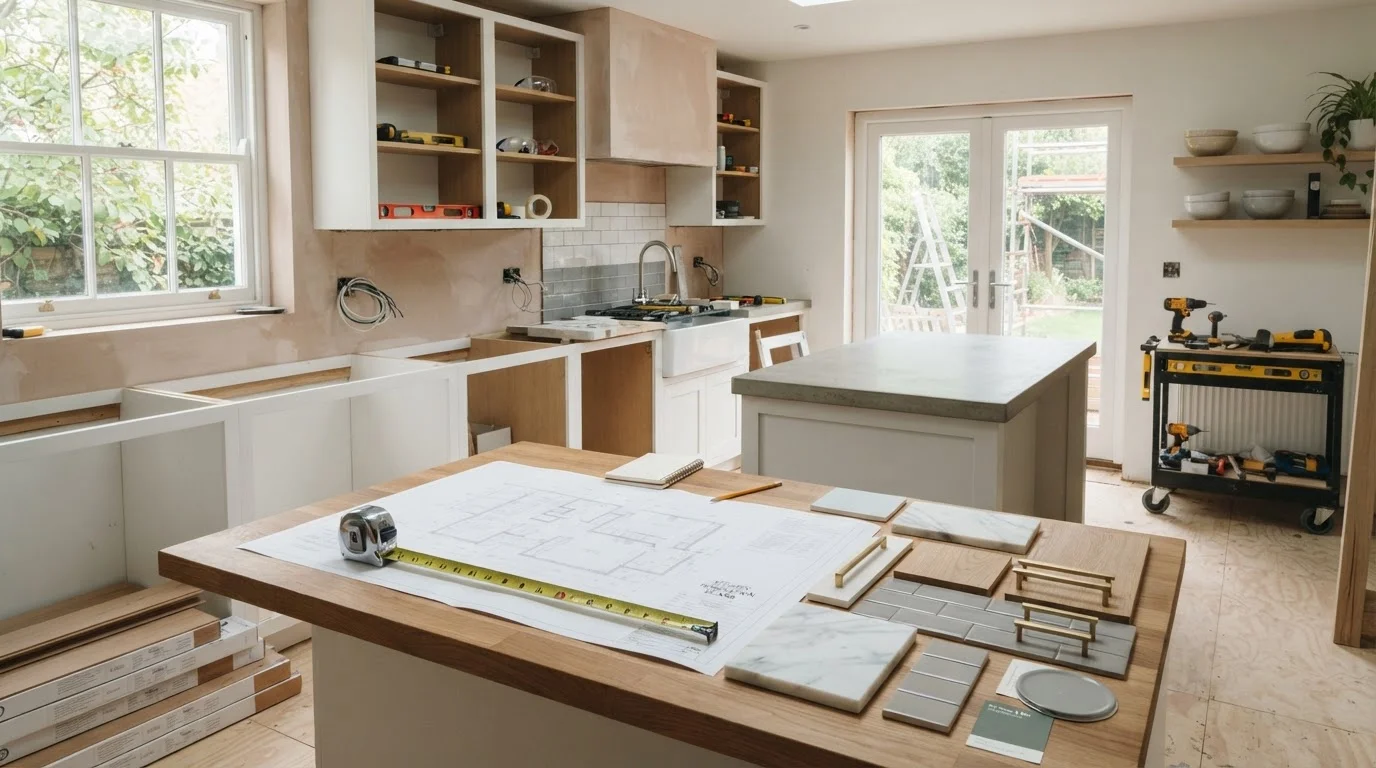
Following this sequence protects every layer of work you complete. For a deeper pre-project checklist — especially for kitchens — the Kitchen Remodel Pre-Start Checklist walks through exactly what to confirm before demolition day.
Quick Wins You Can Start This Weekend
Not every renovation phase requires a contractor or a permit. Some high-impact tasks are genuinely weekend-sized and fit neatly into the correct sequence without disrupting larger phases.
If your project involves a smaller or more constrained space, the strategies in Small Space, Big Impact show how to maximize scope even when square footage is limited.
Where Budget Decisions Intersect with Sequencing
Sequencing and budget are deeply connected. When you do work in the right order, you avoid paying twice for the same surface. Skipping structural fixes to save money upfront often means removing brand-new finishes later — an outcome far more costly than the original repair.
Up to 30%
Rework costs as share of total project budget
Industry estimates from construction research groups suggest rework from poor sequencing or planning can consume a significant portion of residential renovation budgets.
3–5 days
Hardwood flooring acclimation time before installation
Flooring manufacturers commonly recommend this acclimation window to reduce post-installation gaps and buckling caused by humidity changes.
Understand which line items deserve full investment and which allow flexibility. Our article on where cutting renovation costs helps vs. hurts gives a clear breakdown. And when it comes time to paint — which always comes before trim installation but after drywall work — surface preparation is the whole job.
Write Your Sequence Before Buying Anything
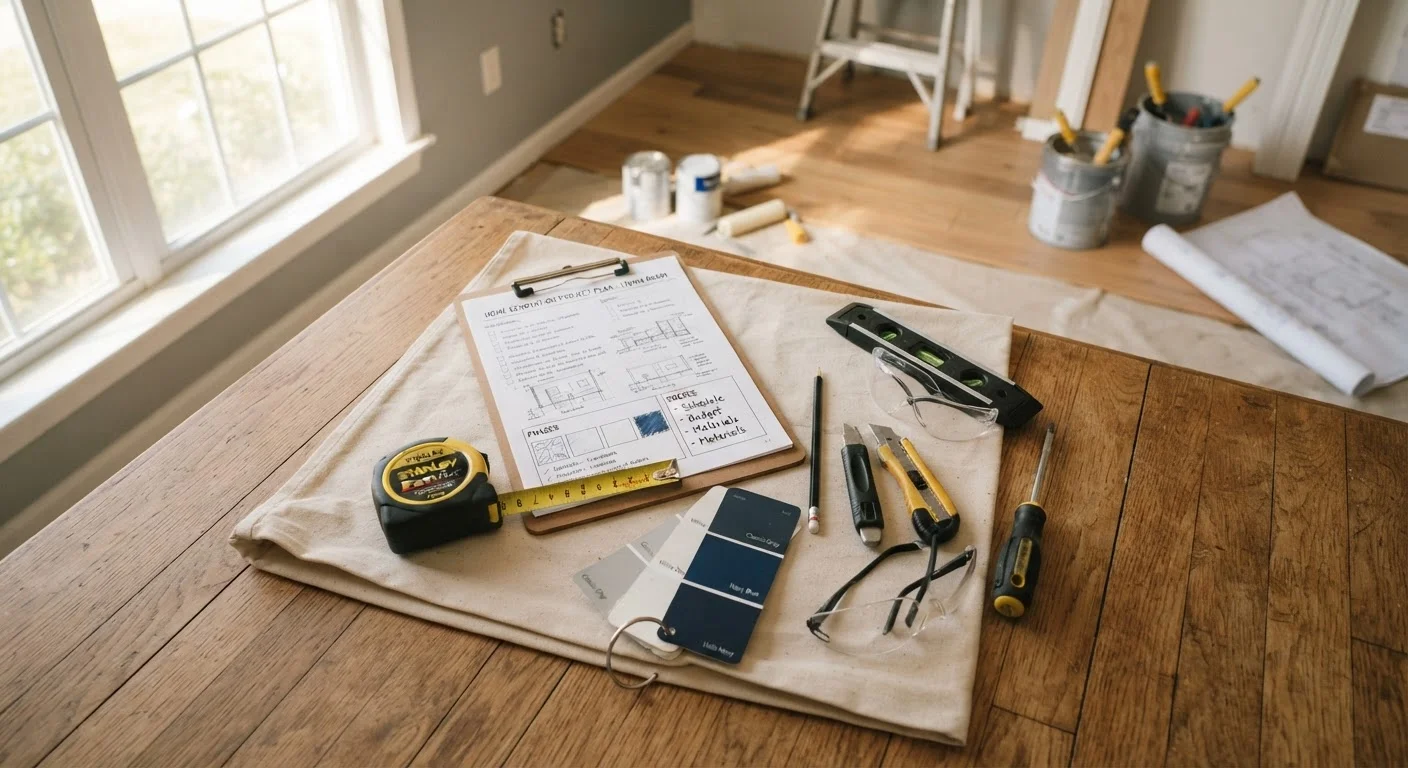
Before purchasing a single material, sketch out your room's renovation order from structural to cosmetic. Tape the list to the wall where you're working. This simple habit prevents the impulse to start a visible, satisfying task before a hidden, necessary one is complete. It also helps you batch supply runs so you're not making daily hardware store trips.
Sequencing isn't about slowing down; it's about making every hour count. A weekend spent in the right order moves a project forward more reliably than two weekends spent correcting missteps.