What Data Smart Home Devices Actually Collect
The term "smart" in smart home tech refers to a device's ability to process information, respond to commands, and often share data with a remote server. Understanding what smart home technology really does helps clarify what data collection actually looks like in practice.
Different device types collect different categories of data:
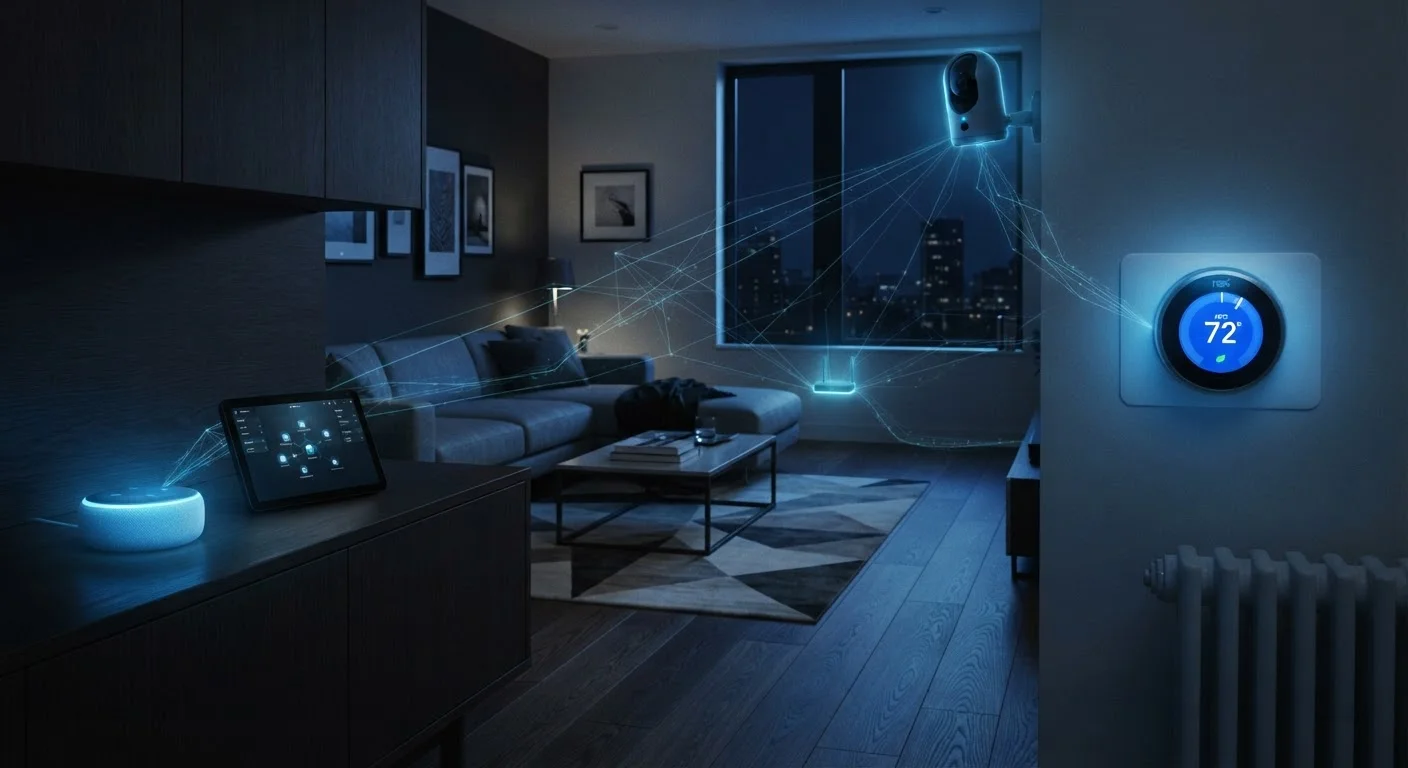
- Voice assistants use always-on microphones that listen for a wake word, then record and transmit audio clips to cloud servers for processing.
- Smart cameras capture continuous or motion-triggered video, often stored in the cloud — sometimes indefinitely depending on subscription tier.
- Smart thermostats log occupancy patterns, temperature preferences, and scheduling habits over time.
- Smart locks and doorbells record entry and exit events, visitor footage, and sometimes share data with third-party platforms, including in some cases law enforcement, depending on the manufacturer's policy.
This data isn't always anonymized, and it may be retained longer than users expect. The privacy questions most people skip when setting up a device are often the most consequential ones.
Data Practices Vary Widely by Manufacturer
There is no single universal standard governing what smart home manufacturers must disclose or delete. Privacy policies differ substantially between companies — and can change after a product update or corporate acquisition. Before purchasing any connected device, it's worth reading that company's current privacy policy, not just the product description. Look specifically for what data is collected, how long it's retained, and whether it's shared with third parties.
Pros: Real Benefits Worth Acknowledging
Privacy concerns are legitimate, but so are the practical advantages that drive millions of households to adopt smart home technology. A balanced view means taking both seriously.
Remote monitoring improves home security awareness
Smart cameras and doorbells let homeowners check on their property from anywhere, which can deter break-ins and provide useful footage when incidents do occur.
Automation reduces daily decision fatigue
Lights, thermostats, and locks that respond to routines or presence eliminate repetitive manual tasks, freeing attention for higher-priority activities.
Energy usage becomes visible and adjustable
Smart thermostats and plugs surface consumption data that most households never had before, making it easier to identify waste and adjust habits accordingly.
Accessibility improves for some users significantly
Voice-controlled devices and automated routines can meaningfully expand independence for people with mobility limitations or certain disabilities.
Rapid response to emergencies through alerts
Smoke detectors, leak sensors, and security cameras can send real-time alerts that allow faster response than discovering a problem after the fact.
These advantages are real and, for many households, genuinely improve daily life. The key is understanding that they don't cancel out the privacy considerations — they coexist with them.
Cons: The Privacy Trade-Offs to Weigh
The data that makes smart devices "smart" doesn't disappear after it's used. Here's what that means in practice.
Always-on microphones create persistent listening risk
Wake-word detection requires constant audio monitoring, and false activations — where a device records unintended conversation — are well-documented across major platforms.
Cloud storage puts footage outside your control
Video recorded to manufacturer servers is subject to that company's data policies, retention timelines, and legal obligations — not yours.
Behavioral data builds detailed household profiles
Over time, patterns from thermostats, lights, and locks reveal when you sleep, when you leave, and daily routines — information that carries real sensitivity.
Third-party data sharing is common and often opaque
Many manufacturers share anonymized or aggregated user data with advertising partners or analytics firms; the definition of "anonymized" varies widely and is difficult to verify.
Security vulnerabilities can expose private data
Poorly secured devices or unchanged default credentials can allow unauthorized access to camera feeds or stored data — a risk that grows with each connected device added.
Data retention policies are rarely user-friendly
Manufacturers often retain usage data for months or years, and deleting an account doesn't always guarantee deletion of associated data under all policies.
69%
U.S. adults with at least one smart home device
According to Pew Research Center survey data, a substantial majority of American adults live in homes with at least one internet-connected device beyond phones and computers.
~1 in 4
Smart speaker owners unaware of always-on listening
Consumer surveys have consistently found that a significant share of smart speaker owners underestimate how often their device is actively capturing audio.
For a deeper look at how these vulnerabilities compound over time, see our guide to keeping your connected home safer.
Practical Steps to Limit Your Exposure
You don't have to choose between smart home convenience and all privacy protections. A few targeted habits reduce risk significantly:
- Review privacy settings at setup — most devices bury data-sharing options in menus. Opt out of data collection for product improvement where available.
- Disable features you don't use — if you don't use voice commands, disable the microphone. Cameras you aren't monitoring actively may be candidates for removal.
- Segment your network — placing smart devices on a separate Wi-Fi network (sometimes called a guest network) limits what they can access if compromised.
- Read the privacy policy before purchasing — specifically look for data retention periods, third-party sharing clauses, and what happens to your data if the company is acquired or shuts down.
- Keep firmware updated — outdated software is a common vulnerability. See our piece on keeping a smart home running well over time for a practical maintenance routine.
If you're evaluating camera setups specifically, the trade-offs between wired and wireless security cameras include privacy-relevant differences worth understanding before you buy.
Control method also matters: voice assistants vs. dedicated apps have distinct data footprints — apps generally share less audio data than always-on voice platforms.