Why Species-Specific Nutrition Matters
Walk into any pet store and you'll find shelves labeled "small animal food" — but that category collapses real differences that matter for your pet's health. A rabbit's digestive system is nothing like a hamster's, and feeding them interchangeably can cause serious problems. Understanding what each species actually needs at the biological level is the first step toward keeping them healthy long-term.
The five most commonly kept small mammals in American homes — rabbits, guinea pigs, chinchillas, hamsters, and gerbils — fall into distinct nutritional categories. Some are strict herbivores; others are omnivores. Some need constant access to fibrous forage; others thrive on seed-based diets with modest fresh food. Getting these distinctions right isn't optional.
| Rabbit diet composition | ~80% grass hay, ~15% leafy greens, ~5% pellets (General veterinary small mammal nutrition guidance) |
| Guinea pig vitamin C requirement | 10–30 mg per day (cannot self-synthesize) (Merck Veterinary Manual) |
| Chinchilla digestive sensitivity | High — low-fat, low-sugar diet essential (Exotic small mammal care literature) |
| Hamster feeding type | Omnivore — seeds, grains, and occasional protein (General exotic veterinary consensus) |
| Gerbil water adaptation | Desert-adapted; low water intake, but fresh water must always be available (Small mammal care guidelines) |
| Most common diet mistake | Feeding species-inappropriate 'mixed small animal' food (Veterinary exotic practice observations) |
For a deeper look at how dietary needs intersect with housing and handling, see our comparison of guinea pig and rabbit care needs.
Species-by-Species Dietary Breakdowns
Rabbits
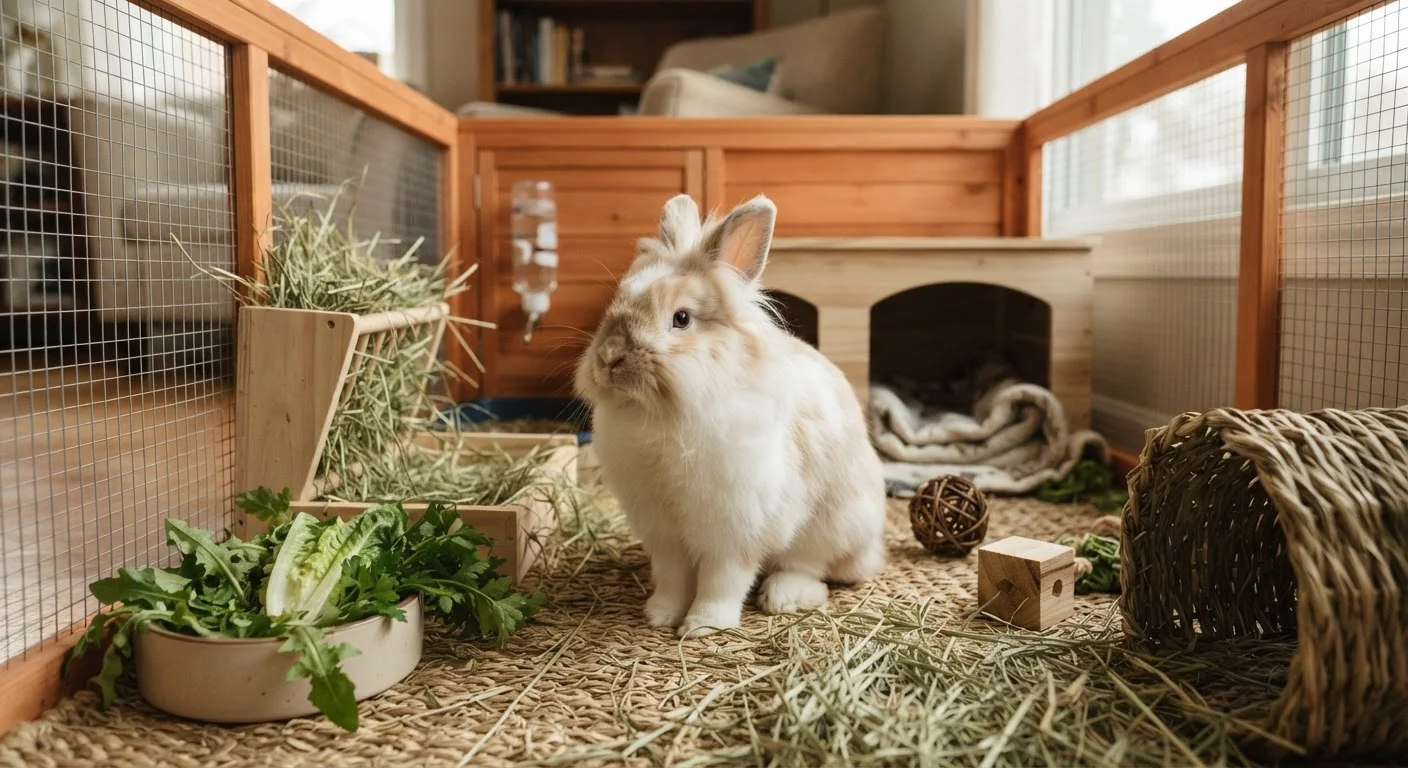
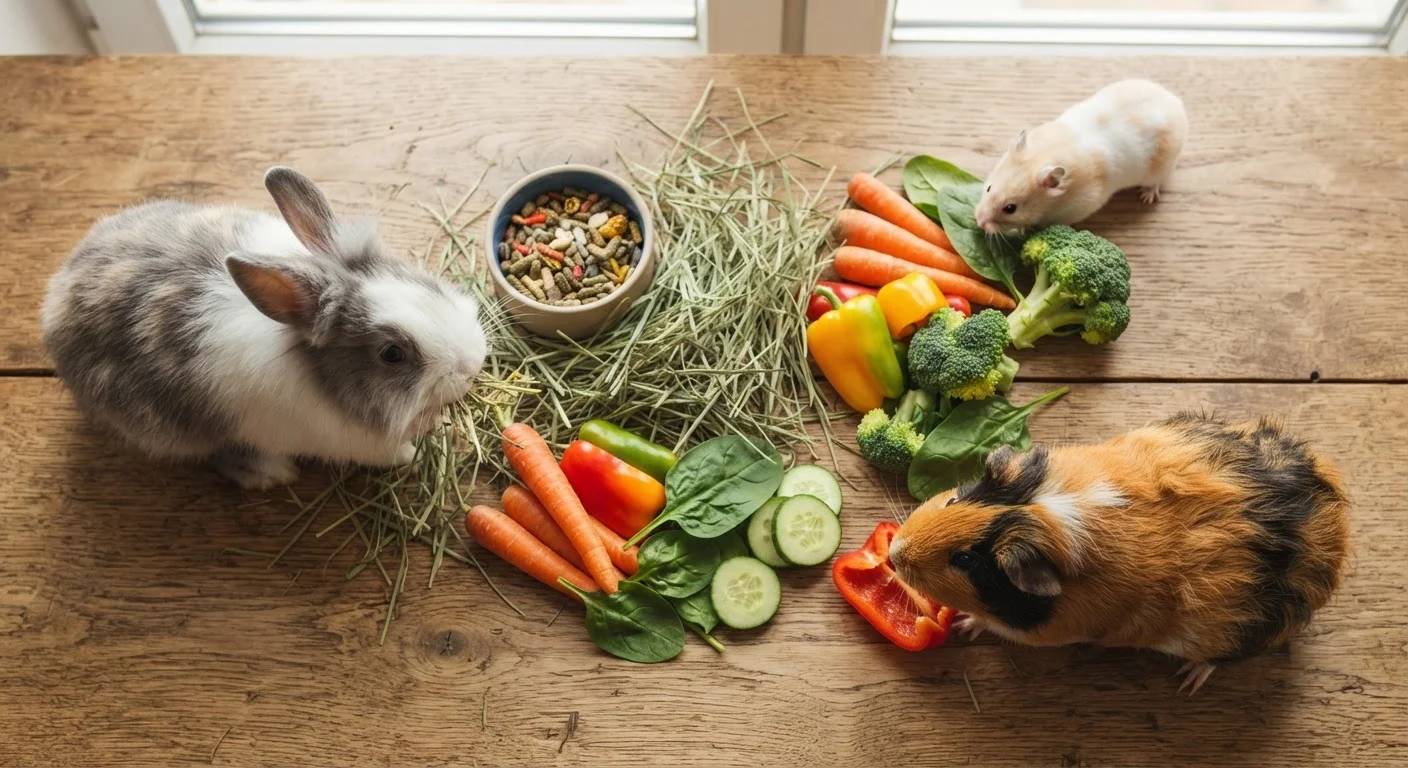
Rabbits are obligate herbivores whose digestive health depends on unlimited grass hay — primarily timothy or orchard grass — which should make up roughly 80% of their diet. Hay keeps gut motility normal and wears down continuously growing teeth. Leafy greens (romaine, cilantro, parsley) add variety and hydration. Pellets should be plain, timothy-based, and offered in limited quantities — about ¼ cup per 5 lbs of body weight daily. Fruits and starchy vegetables are occasional treats only. Never feed muesli-style mixes, iceberg lettuce, or human junk food. See our full rabbit care guide for more detail.
Guinea Pigs
Guinea pigs share rabbit-like hay dependence but have one critical difference: they cannot synthesize vitamin C and must obtain it from food daily. Bell peppers, leafy greens, and small amounts of fresh fruit supply this. Pellets should be guinea-pig-specific and vitamin C–fortified, though vitamin C degrades quickly in stored pellets, so fresh food sources are more reliable. Avoid muesli mixes and anything high in sugar or oxalic acid (e.g., spinach in large amounts).
Chinchillas
Chinchillas evolved in the high-altitude Andes and need an extremely low-fat, low-sugar, high-fiber diet. Timothy hay is the cornerstone. Chinchilla-specific pellets (small daily portion) round out the diet. Fresh foods should be offered sparingly — many fruits and high-moisture vegetables cause digestive upset in this species. Raisins are a common treat but should be genuinely rare due to sugar content.
Obligate herbivore
An animal that must eat plant matter exclusively to survive. Its digestive system is not equipped to process or benefit from animal protein.
Hindgut fermentation
A digestive process used by rabbits and guinea pigs in which fiber is broken down by bacteria in the cecum after passing through the stomach. It requires a constant supply of dietary fiber to function correctly.
Cecotropes
Soft, nutrient-rich droppings produced by rabbits that they re-ingest directly from the anus. This is a normal, essential part of rabbit digestion — not a health problem.
Vitamin C (ascorbic acid)
A water-soluble vitamin that guinea pigs cannot produce internally and must consume daily through food. Deficiency leads to scurvy, a serious and painful condition.
Lab block
A compressed, nutritionally complete pellet formulated for small mammals, often used in research settings. Lab blocks reduce selective feeding compared to loose seed mixes.
Hamsters
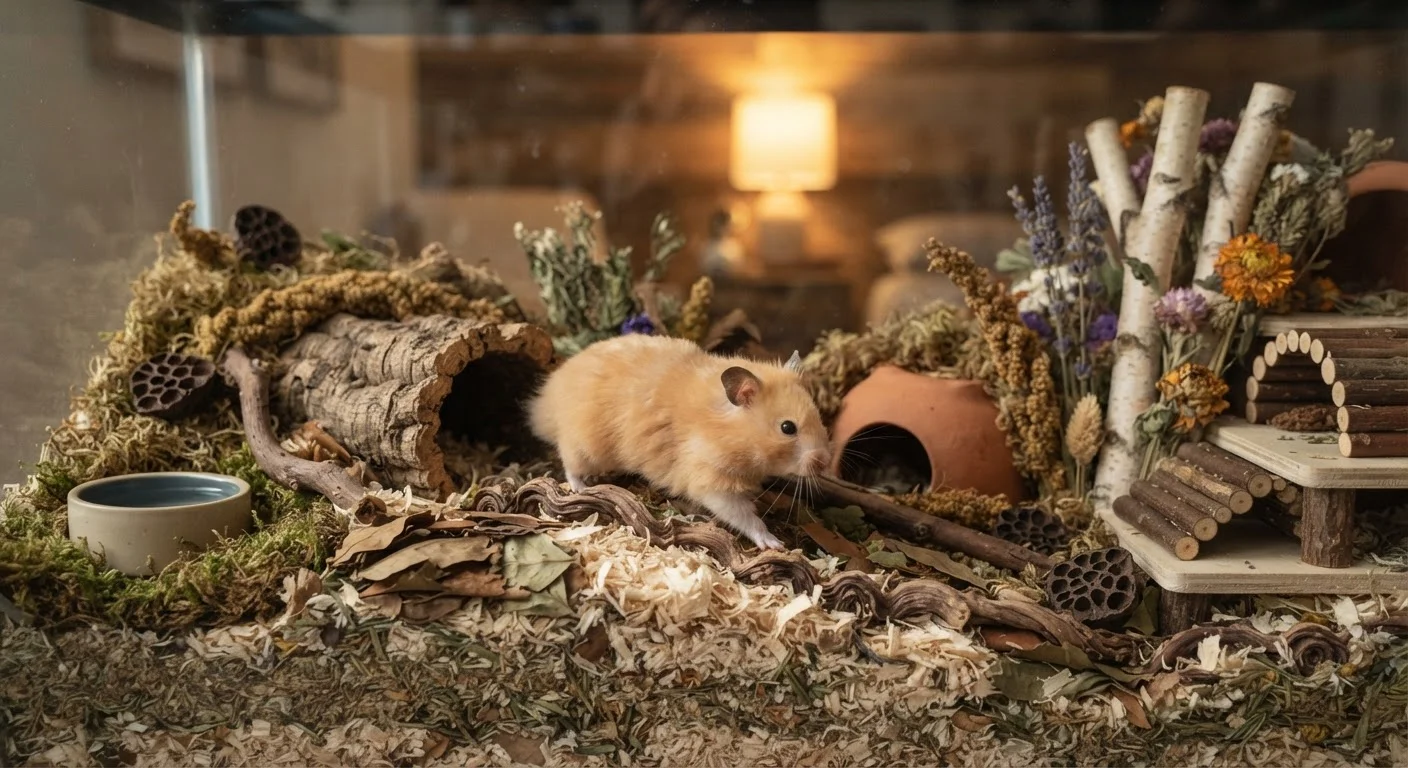
Hamsters are omnivores in the wild, eating seeds, grains, insects, and plant matter. A quality hamster pellet or lab block provides balanced nutrition more reliably than seed mixes, which allow selective eating of high-fat seeds. Small amounts of leafy greens, plain cooked chicken, or hard-boiled egg can supplement protein. Avoid citrus fruits (too acidic), onion, garlic, and any sugary foods. For context on how diet intersects with habitat needs, see why hamsters need appropriate enclosure space.
Gerbils
Gerbils are desert-adapted omnivores with low water needs, though fresh water must always be available. They do well on a gerbil-specific pellet or seed-and-grain mix supplemented with small amounts of fresh vegetables. Like hamsters, they benefit from occasional protein sources. Avoid high-moisture foods in large quantities, as gerbils' kidneys are adapted to conserve water and digestive upsets can occur. Sunflower seeds, while loved, are high in fat and should be limited.
Many common feeding mistakes stem from widespread myths — our article on small pet myths that can harm your animal addresses several of them directly.
Foods to Avoid Across Species
While each species has its own safe-food list, several foods are broadly harmful to most small mammals:
- Chocolate and caffeine — toxic to virtually all small pets
- Onion and garlic — can damage red blood cells
- Avocado — contains persin, which is toxic to many animals
- Sugary processed foods — contribute to obesity, dental disease, and diabetes in prone species
- Muesli-style mixed seed diets — encourage selective eating and nutritional imbalance
If you notice changes in your pet's eating behavior, weight, coat quality, or stool consistency, consult a veterinarian who sees exotic or small mammal patients — a general practice may not have the species-specific expertise these animals require. Our article on reading your small pet's body language can help you recognize early signs of dietary distress.
When to See a Veterinarian
Not all veterinarians are trained in exotic or small mammal care. If your rabbit, guinea pig, chinchilla, hamster, or gerbil shows signs of weight loss, changes in stool, reduced appetite, or lethargy, seek out a vet with documented experience treating these species. Early intervention is especially important because small mammals can decline quickly. Ask prospective clinics specifically whether they see exotic small animals before booking.
This article provides general educational information about small mammal nutrition and is not a substitute for personalized veterinary advice. Always consult a qualified exotic animal veterinarian for guidance specific to your pet's health needs.