Space and Housing Requirements
Housing needs represent one of the clearest differences between these two species. Guinea pigs do well in a minimum 8-square-foot enclosure for a pair, with solid flooring to protect their sensitive feet. They don't jump or climb aggressively, so a lower-walled pen is generally manageable.
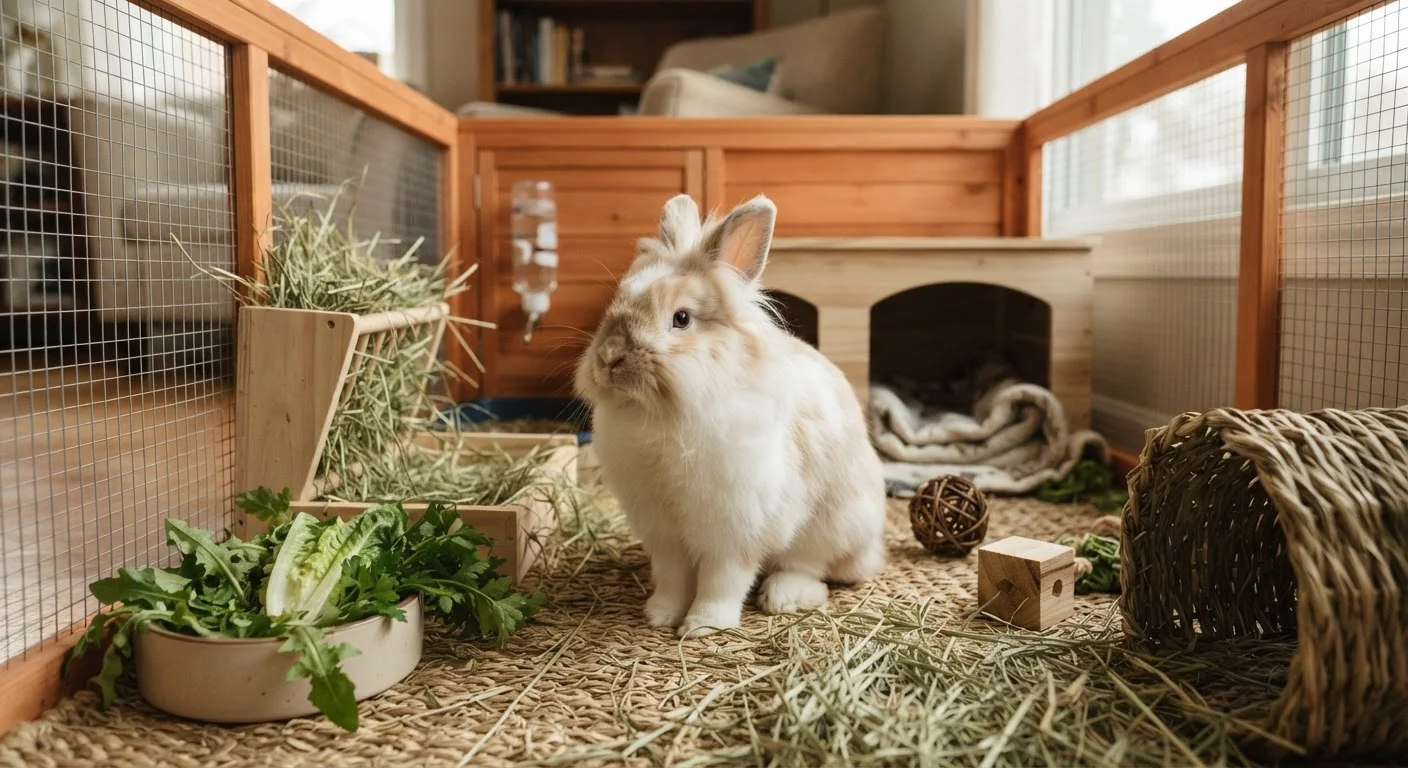
Rabbits, by contrast, require considerably more room. A single rabbit typically needs a minimum of 12 square feet of living space plus several hours of bunny-proofed free-roam time each day. Rabbits that are confined without adequate exercise can develop skeletal problems and behavioral issues. Cord-chewing and furniture exploration are near-certainties if roaming areas aren't carefully managed.
For apartment dwellers or households with limited square footage, guinea pigs are often the more practical choice. If you have a dedicated room or large living area you can safely open to a rabbit daily, that equation shifts. See our full rabbit housing guide for enclosure sizing specifics.
| Criterion | Guinea Pig | Rabbit |
|---|---|---|
| Minimum enclosure size (pair) | ~8 sq ft | ~12 sq ft + free roam |
| Daily free-roam requirement | Recommended but flexible | Essential — several hours daily |
| Vitamin C needed in diet | Yes — from food or supplement | No — self-produced |
| Typical lifespan | 4–7 years | 8–12 years |
| Vocalization level | High — frequent sounds | Low — mostly silent |
| Handling difficulty | Moderate — tends to freeze | Higher — can kick and struggle |
| Trainability | Limited | Good — litter training, name response |
| Spay/neuter commonly recommended | For females if needed | Yes — especially females |
Diet and Nutritional Needs
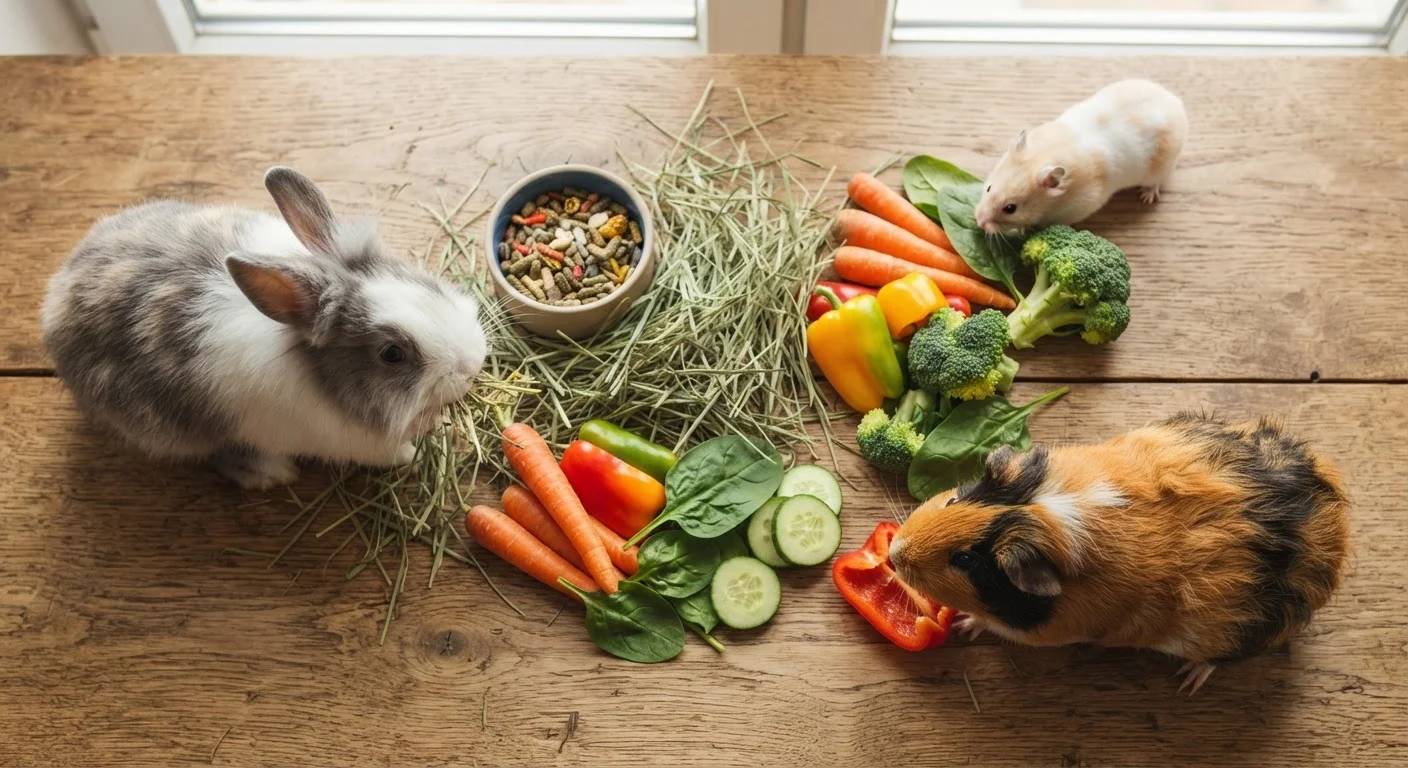
Both species are herbivores whose diets center on unlimited grass hay — Timothy hay for adults is the standard recommendation for each. Hay supports digestive health and keeps teeth worn appropriately, since both guinea pigs and rabbits have continuously growing teeth.
The key nutritional difference is vitamin C. Guinea pigs, like humans, cannot synthesize vitamin C internally and must receive it through fresh vegetables (bell peppers and leafy greens are reliable sources) or water-soluble supplements. A deficiency can lead to scurvy, which is entirely preventable with proper diet. Rabbits produce vitamin C on their own and do not require supplementation.
Rabbit nutrition adds another layer of complexity: rabbits practice cecotrophy, consuming soft droppings called cecotropes directly from their bodies to absorb essential nutrients. This is normal and healthy. Pellets should be limited for adult rabbits (roughly one-quarter cup per five pounds of body weight is a common general guideline, though your exotic vet can advise on the right amount for your individual animal). For a deeper look at species-specific nutrition, visit our small mammal nutrition breakdown.
4–7 yrs
Average guinea pig lifespan with proper care
Lifespan estimates are widely cited by exotic animal veterinary organizations and small pet welfare groups.
8–12 yrs
Average domestic rabbit lifespan
Domestic rabbits commonly live 8–12 years when spayed or neutered and provided appropriate diet and housing.
~10 mg
Daily vitamin C requirement per 100g body weight for guinea pigs
The general daily requirement is frequently cited in exotic animal veterinary nutrition literature; consult your vet for your specific animal.
Social Needs and Handling
Neither guinea pigs nor rabbits thrive in isolation. Guinea pigs are highly vocal social animals that communicate through a range of sounds — wheeking, purring, rumblestrutting — and are generally distressed when housed alone long-term. A bonded pair of the same sex (or a neutered pair) is widely recommended by exotic animal veterinarians.
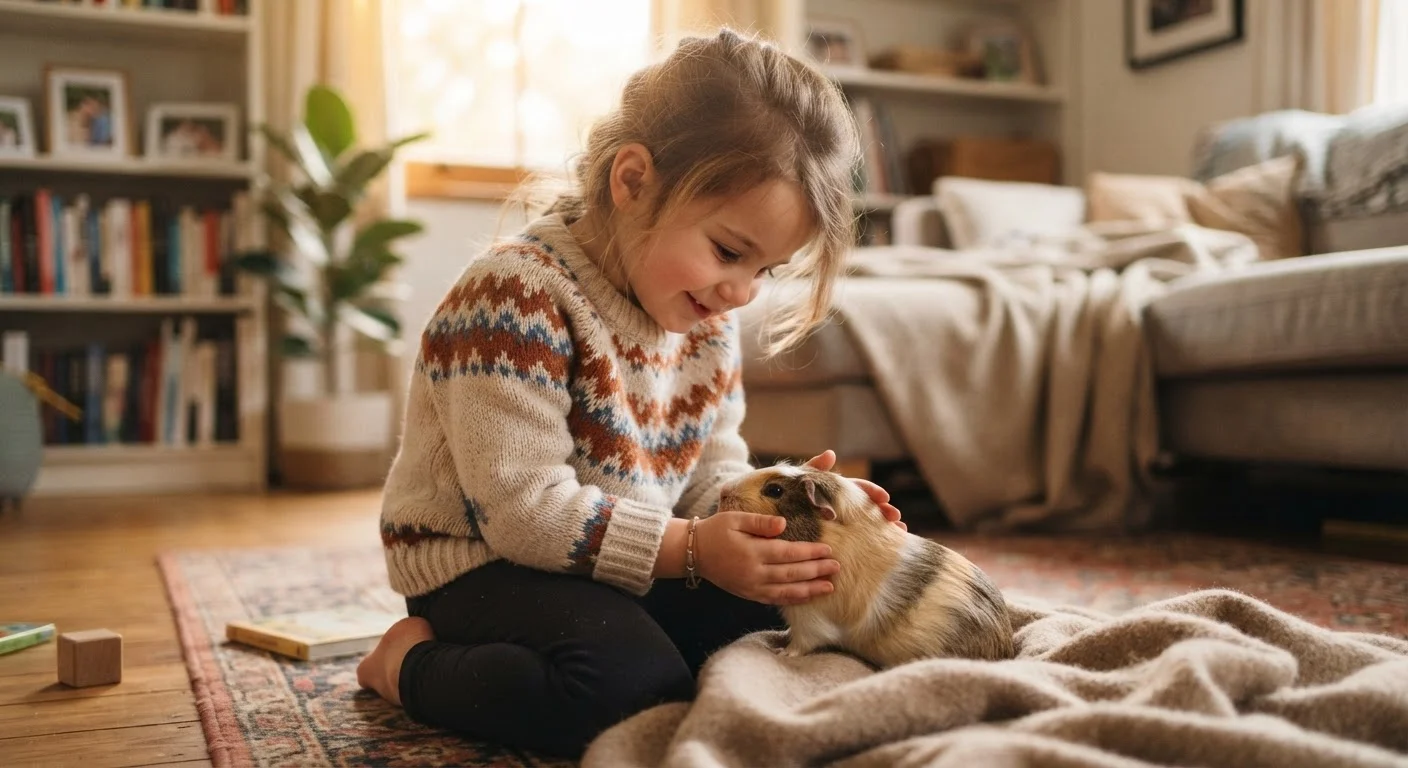
Rabbits are equally social, but express that sociability differently. They bond intensely with companions and owners but may take longer to warm to handling. A rabbit that feels insecure or startled can kick powerfully enough to break its own spine — a real risk if mishandled. This makes patient, low-stress handling technique essential, particularly around children. Our guide to small pets and children covers safe interaction strategies in detail.
Guinea pigs tend to freeze rather than struggle when frightened, which makes them somewhat safer for newer handlers — though they still require gentle, confident support. Learning to read each species' body language is critical for both; our small pet body language guide explains the key signals to watch for.
Same-Species Pairing Matters
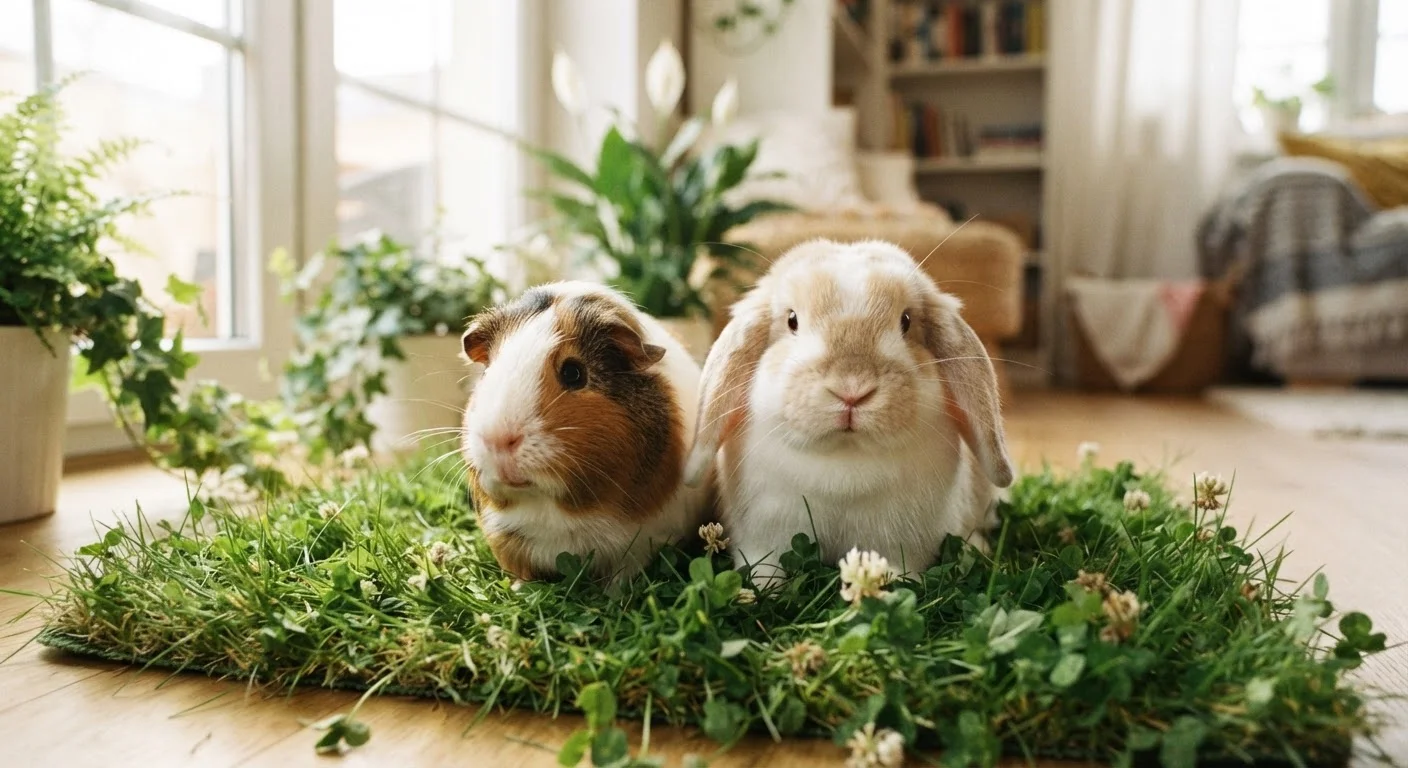
When housing either species with a companion, same-species pairs are strongly preferred. Guinea pigs and rabbits should not be housed together — they have different communication styles, and rabbits can injure guinea pigs unintentionally. A rabbit kick can cause serious harm to a much smaller guinea pig. Always house each species with compatible members of their own kind.
Veterinary Care and Lifespan
Both guinea pigs and rabbits are classified as exotic animals by most veterinary practices, meaning you'll need a vet with specific small-mammal experience. Routine wellness exams, dental checks, and emergency visits can be costly, so factoring in veterinary expenses before choosing either species is important.
Guinea pigs typically live 4–7 years; rabbits often reach 8–12 years depending on breed and care quality. Common health concerns for guinea pigs include respiratory infections, dental disease, and urinary issues. Rabbits are prone to GI stasis (a life-threatening slowdown of gut motility), dental malocclusion, and in unspayed females, uterine cancer — which is why spaying is strongly recommended by most rabbit-savvy vets.
The longer lifespan of a rabbit is a meaningful commitment consideration. A rabbit adopted today may share your household through a decade of life changes. Neither pet should be considered low-cost or low-effort — both deserve owners prepared for their full care needs.
This article provides general educational information about small pet species and is not a substitute for advice from a licensed exotic animal veterinarian. Always consult a qualified professional for guidance specific to your pet's health and care.