Why the Indoor vs. Outdoor Question Actually Matters
Where a dog sleeps, eats, and spends the majority of their time shapes nearly every dimension of their wellbeing — from physical health to emotional stability to how they relate to people. Yet many owners treat the decision as a simple matter of preference or practicality, without fully weighing what it means for the dog.
Dogs are social animals descended from pack-living ancestors. They are wired to exist in close proximity to their social group — which, in a domestic setting, means you. This biological reality informs much of the welfare debate between indoor and outdoor living arrangements. It's also worth noting that the framing of "indoor vs. outdoor" often oversimplifies the reality: most dogs benefit from a hybrid model, living primarily inside while getting structured time outdoors for adequate exercise and stimulation.
Understanding the genuine trade-offs — rather than relying on tradition or assumption — puts you in a much better position to make a decision that actually serves your dog.
Pros of Keeping Dogs Primarily Indoors
Indoor living offers a cluster of advantages that are hard to replicate in an outdoor-only environment, particularly for the average pet dog.
Stronger human-animal bond through daily proximity
Dogs living inside the home interact with family members across meals, evenings, and routines — building the consistent social connection that supports emotional stability and trainability.
Protection from weather extremes and environmental hazards
Indoor dogs are shielded from heatstroke, hypothermia, and exposure to toxic plants, pesticides, or wildlife that outdoor-only dogs encounter regularly.
Easier early detection of health changes
Owners who share living space with their dogs are far more likely to notice subtle behavioral shifts, changes in eating habits, or physical symptoms that warrant veterinary attention.
Reduced parasite and disease exposure
While no dog is entirely free of risk, indoor dogs have significantly less contact with ticks, fleas, and pathogens that thrive in outdoor environments — lowering the burden on preventive care.
Better behavioral outcomes through socialization
Dogs who live with their families naturally receive ongoing social learning that supports calmer, more adaptable behavior around people, sounds, and novel situations.
Closer daily contact also makes it far easier to notice early signs of illness or distress. Changes in appetite, gait, energy, or behavior are visible when a dog shares your living space. For guidance on subtle cues that often go unnoticed, see our article on signs your dog may be in pain.
Cons of an Indoor-Only Lifestyle
Indoor living is not without its own challenges. Dogs confined entirely to indoor spaces without adequate outdoor time can develop their own set of problems.
Risk of insufficient physical exercise indoors
Without deliberate effort, indoor dogs — particularly high-energy breeds — may not get the activity levels their bodies require, leading to weight gain and pent-up energy that manifests as destructive behavior.
Potential for separation anxiety when alone
Dogs accustomed to constant indoor human contact can develop significant distress when left alone, a condition that requires structured behavioral intervention to address effectively.
Space constraints in smaller homes
Large or working breeds housed in apartments or small homes without frequent outdoor time may struggle to decompress or move freely, which can affect both physical and mental health.
Allergen concerns for human household members
Indoor dogs shed dander and hair throughout the home, which can exacerbate allergies in sensitive family members — a real consideration in multi-person households.
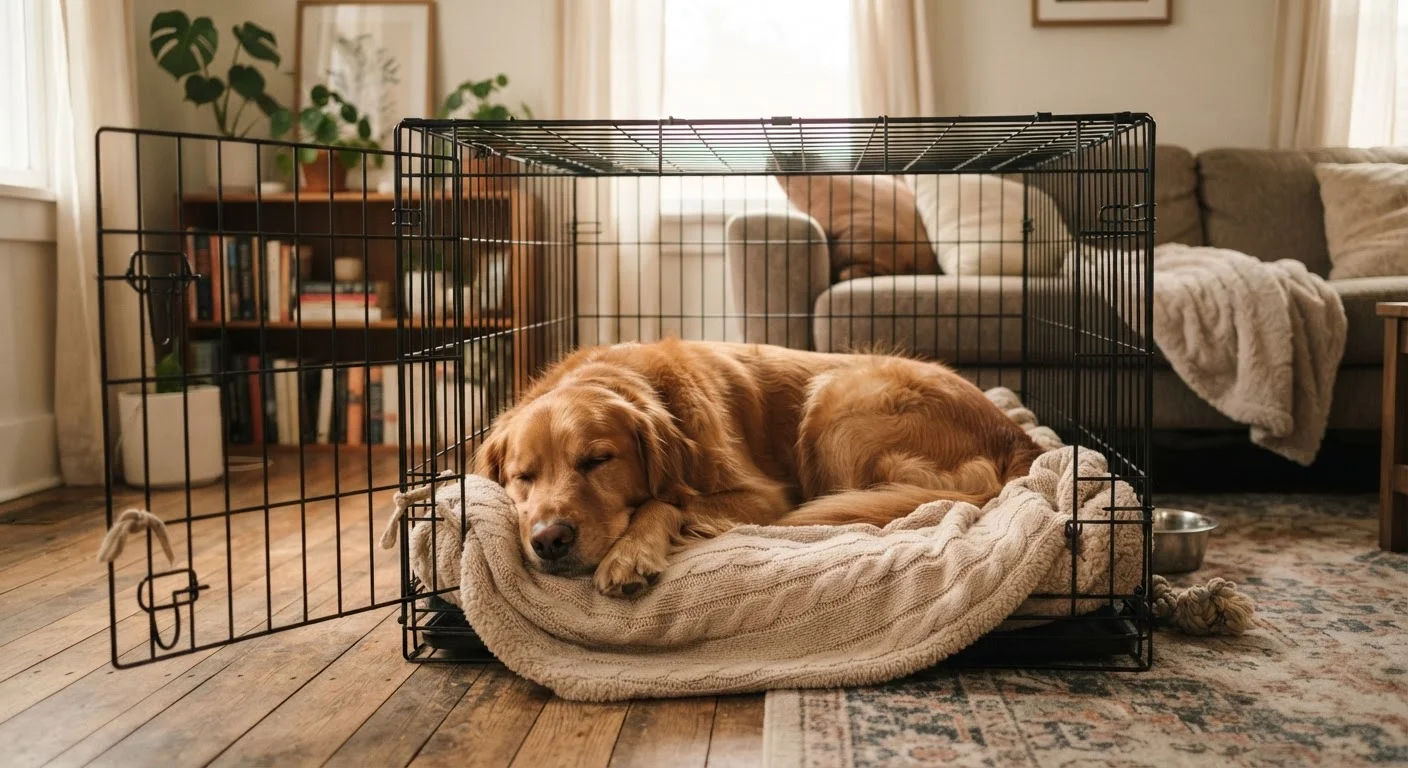
Behavioral issues rooted in under-stimulation are common when indoor dogs don't get enough physical and mental outlets. Crate training done correctly can help manage space and downtime, but it's not a substitute for genuine exercise and enrichment.
What the Research and Welfare Consensus Says
Major veterinary and animal welfare organizations — including the American Veterinary Medical Association — generally recommend that dogs live indoors as members of the household rather than being kept exclusively outside. The core concern with outdoor-only arrangements centers on social deprivation: a dog left alone in a yard for most of the day is not receiving the social interaction central to their psychological health.
~20%
Dogs showing signs of separation anxiety
Research estimates that roughly 17–20% of dogs exhibit separation-related behaviors, a condition more common in dogs with strong indoor-human attachment but manageable with structured training.
3–5x
Higher tick exposure risk for outdoor dogs
Dogs with regular unsupervised outdoor access have substantially greater contact with ticks, increasing the risk of tick-borne illness compared to supervised indoor-primary dogs.
Outdoor-only dogs are also at elevated risk of parasites, infectious disease exposure, extreme temperature injury, and accidental ingestion of toxic plants or substances. Dogs who spend time outdoors often eat grass or other foliage — typically harmless, but worth understanding. See our piece on why dogs eat grass and when it warrants a vet call for context.
"Outdoor Dog" Is Not a Breed Trait
Some owners assume certain breeds — hunting dogs, working dogs, herding dogs — are built for outdoor-only living. While these breeds do have high exercise and stimulation needs, that doesn't mean social isolation or exposure to environmental extremes is appropriate for them. High-energy breeds benefit most from more outdoor activity time, not from being left outside. Meeting those exercise needs is a separate question from where the dog sleeps and lives.
Factors That Should Shape Your Decision
No blanket rule applies to every dog and household. Several variables are worth weighing carefully:
- Breed and coat type: Double-coated Nordic breeds like Siberian Huskies tolerate cold better than short-coated breeds, though this doesn't mean outdoor-only living is appropriate for them either.
- Size: Small dogs are more vulnerable to temperature extremes and predators if left outdoors unsupervised.
- Age: Puppies require intensive socialization during a narrow developmental window — primarily indoors, around people and varied stimuli. Older dogs may have mobility or thermoregulation challenges that make temperature-controlled indoor environments essential. Our guide on senior dog care covers these shifting needs in detail.
- Temperament: Anxious or under-socialized dogs often struggle more with isolation. Reading your dog's body language can help you gauge how well they're coping with their environment.
- Health status: Dogs with chronic conditions need closer monitoring that outdoor living makes significantly harder.
If you have cats and are weighing similar questions for them, the considerations share some parallels — see our piece on indoor cat vs. outdoor cat trade-offs for comparison.