Preparing Your Home Before Arrival
Before your dog sets foot inside, your home needs a safety review. Dogs — especially puppies — explore with their mouths, and household hazards are more common than most new owners realize.
Walk through each room at floor level and identify risks: exposed electrical cords, toxic houseplants (such as pothos, sago palm, or lilies), unsecured trash cans, and small objects that could be swallowed. Store cleaning products, medications, and human foods like grapes, raisins, chocolate, and xylitol-containing products completely out of reach.
Set up a defined space for your dog before they arrive. This area should include their sleeping spot, food and water stations, and ideally be easy to supervise. If you have stairs or rooms you want off-limits, install baby gates now. If you're thinking about organizing your home more broadly to accommodate a pet, general strategies from a home organization resource can be a helpful starting point.
Do a Floor-Level Safety Walk
Before your dog arrives, get down on your hands and knees and survey each room from their perspective. You'll spot hazards — dangling cords, small chewable objects, gaps behind appliances — that are easy to miss from standing height. This five-minute exercise can prevent a costly or dangerous incident in the first week.
Essential Supplies to Have Ready
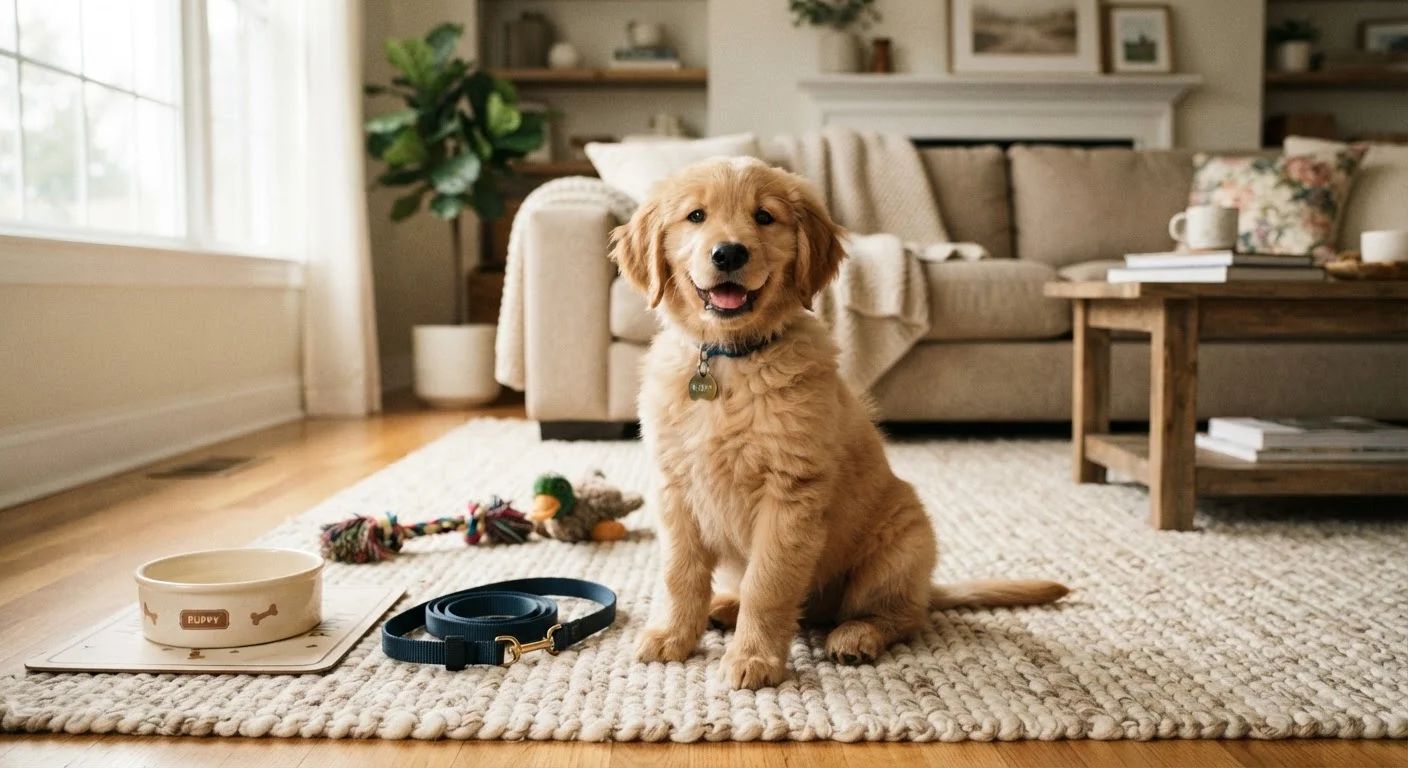
Having the right gear on hand before your dog arrives prevents scrambling during an already busy transition. Here's what you'll genuinely need from day one:
- Food and water bowls — stainless steel or ceramic options are easiest to keep sanitary
- Age-appropriate food — ask your vet or the breeder/shelter what the dog has been eating, and transition gradually to avoid digestive upset
- Collar, ID tag, and leash — your dog should wear identification from the moment they arrive
- Crate or dog bed — a designated sleeping area supports housetraining and gives your dog a sense of security
- Waste bags and an indoor cleaner — accidents will happen; an enzymatic cleaner neutralizes odors effectively
- Toys — provide a mix of chew, tug, and puzzle toys to meet different behavioral needs
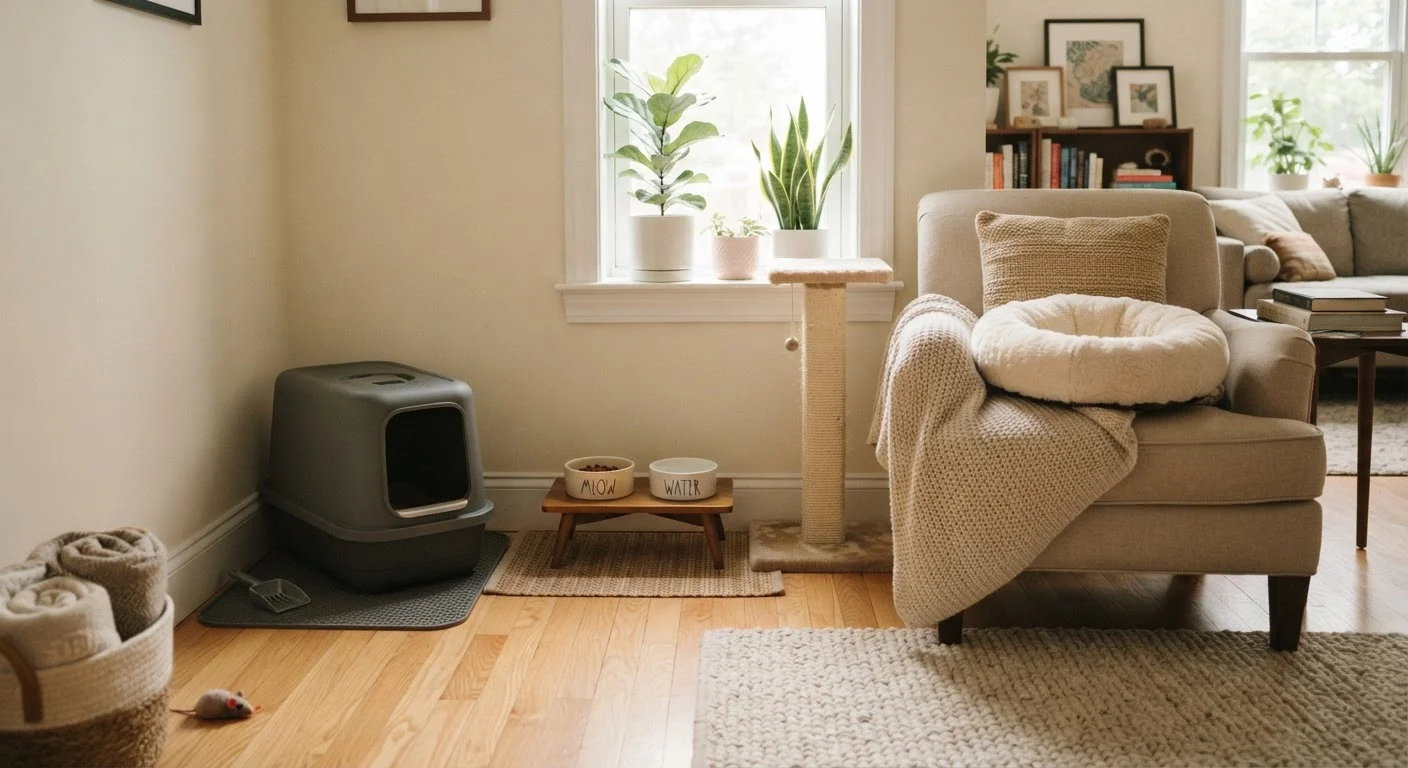
If you're considering getting a cat at some point as well, the new cat owner's preparation checklist follows similar logic and is worth reviewing.
Positive reinforcement
A training approach where desired behaviors are rewarded (with treats, praise, or play) to encourage their repetition, rather than punishing unwanted behavior.
Enzymatic cleaner
A cleaning product that uses enzymes to break down biological waste like urine, effectively eliminating odors that standard cleaners leave behind.
Socialization window
A developmental period in puppyhood — roughly three to fourteen weeks of age — when exposure to new experiences has the strongest influence on long-term temperament.
Free-feeding
Leaving food available to a dog at all times rather than offering measured meals at set times. This approach can complicate housetraining and weight management.
Parasite prevention
Veterinarian-recommended treatments that protect dogs from internal parasites (like heartworm and intestinal worms) and external parasites (like fleas and ticks).
Feeding, Schedules, and Daily Routines
Dogs thrive on predictability. A consistent daily schedule — for meals, walks, playtime, and rest — reduces anxiety and makes housetraining considerably easier.
Feed puppies three to four times per day at set times. Adult dogs generally do well with two meals daily. Always follow the feeding guidelines on your dog's food packaging as a baseline, and adjust portion sizes based on your dog's weight, activity level, and your vet's input. Avoid free-feeding (leaving food out all day), which can make housetraining harder and contribute to overeating.
Beyond meals, structure matters. Take your dog outside for bathroom breaks after waking up, after meals, and before bed. Puppies may need a trip outside every one to two hours. Regular exercise — appropriate to your dog's breed and age — is equally important for physical health and behavioral balance.
Breed and Size Affect Nutritional Needs
Large and small breed dogs have meaningfully different nutritional requirements, particularly during puppyhood. Large breed puppies, for example, benefit from food formulated to support slower, controlled bone growth. Your veterinarian is the best resource for recommending an appropriate food type and portion size based on your specific dog's breed, age, and weight.
Veterinary Care From Day One
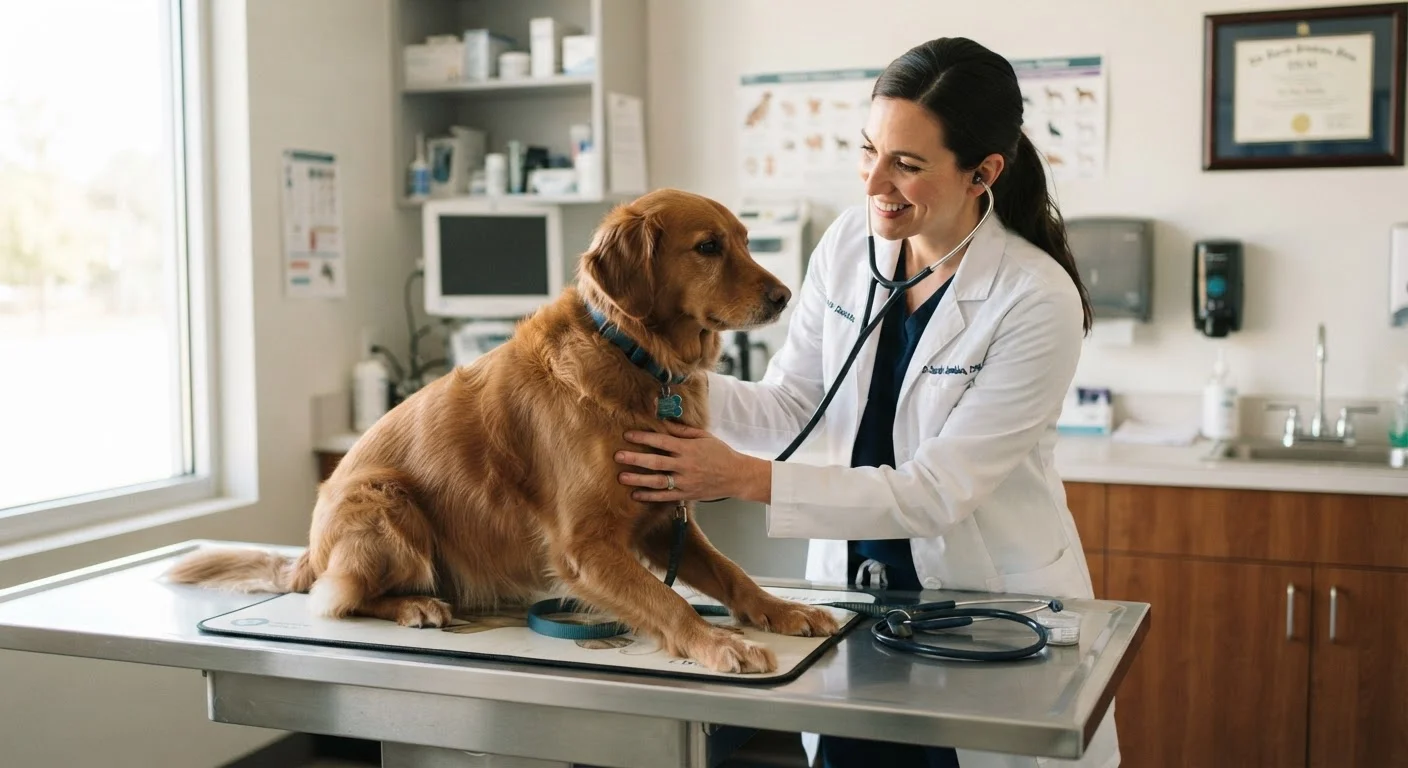
Schedule a veterinary appointment within the first week of bringing your dog home, regardless of whether they appear healthy. A baseline wellness exam lets your vet establish a health record, review vaccination history, check for parasites, and discuss spay/neuter timing if applicable.
Your vet will also guide you on heartworm prevention, flea and tick control, and the vaccination schedule appropriate for your dog's age and lifestyle. Keep all records organized from the start.
For a detailed look at what a routine checkup actually involves, see our guide on what goes into a dog's annual wellness visit. Regular preventive care is far more cost-effective — and better for your dog — than treating conditions that could have been caught early.
This article provides general information for educational purposes and is not a substitute for veterinary advice. Always consult a licensed veterinarian for your dog's specific health needs.
Training Basics and Socialization
Training isn't a luxury — it's a core part of responsible dog ownership. Start basic commands like sit, stay, and come from the very first days. Keep sessions short (five to ten minutes), end on a positive note, and use reward-based methods. Positive reinforcement — treating and praising desired behaviors rather than punishing unwanted ones — is widely supported by animal behaviorists as both effective and humane.
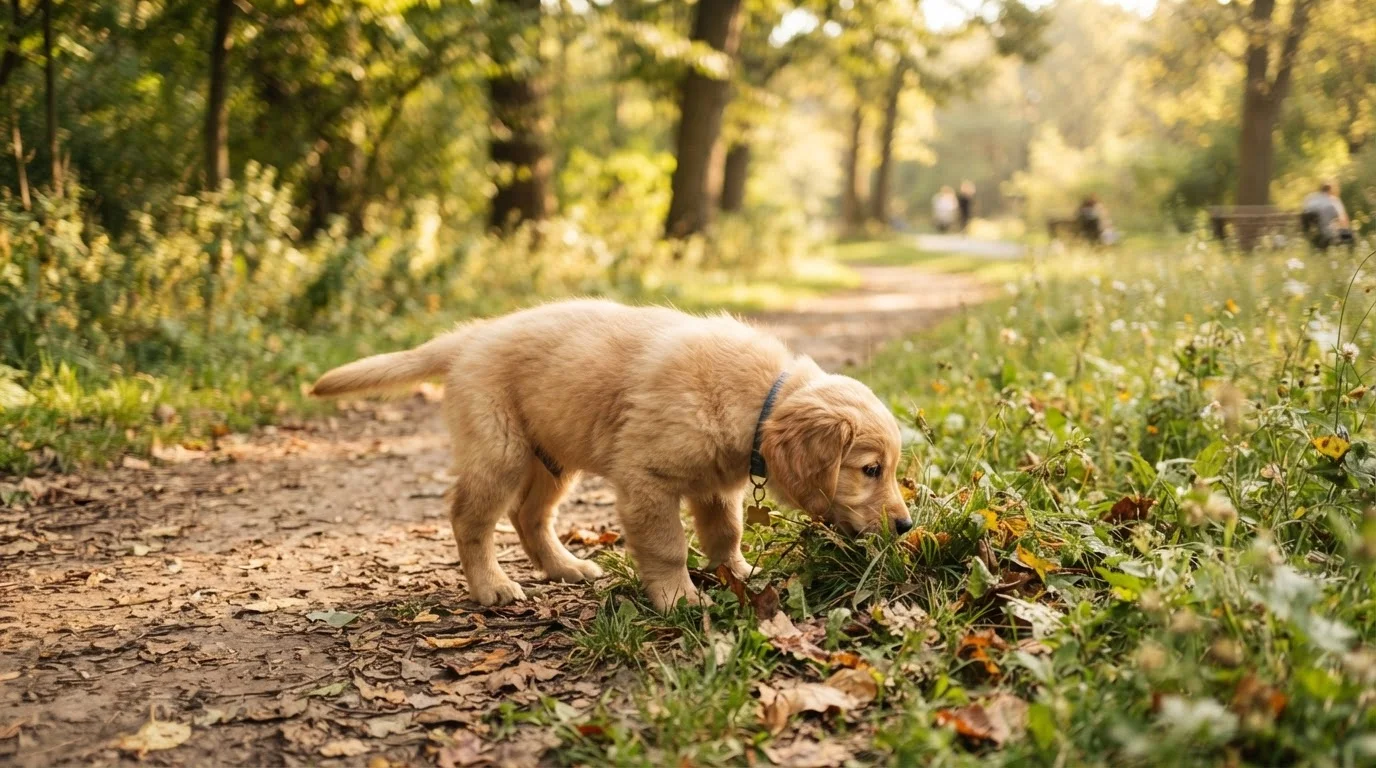
Socialization is equally critical, especially in the early months. Introducing your dog to a variety of people, sounds, surfaces, and situations during puppyhood shapes how they respond to the world as adults. Our guide on socializing a puppy during the critical window explains the developmental timing in detail.
Learning to read your dog's signals will also make training more effective. Reading your dog's body language helps you understand when they're comfortable, stressed, or overstimulated — and respond accordingly.
Avoid Punishment-Based Training Methods
Techniques that rely on fear, pain, or intimidation — such as harsh corrections or shock devices — can damage your dog's trust in you and increase anxiety or aggression over time. Veterinary and animal behavior organizations broadly advise against aversive training methods. If you're struggling with specific behaviors, consult a certified professional dog trainer.