What Causes Separation Anxiety
Separation anxiety rarely has a single cause. It tends to emerge from a combination of genetics, early life experience, and environmental shifts. Dogs that were rehomed multiple times, spent extended time in shelters, or were not gradually taught to be alone as puppies are statistically more vulnerable. Breeds selectively developed for close human partnership — such as herding and companion breeds — can be predisposed as well.
Common situational triggers include:
- A sudden change in an owner's schedule (e.g., returning to an office after working from home)
- The loss of a family member or fellow pet
- A move to a new home
- A period of illness during which the dog received constant attention
In some cases, an inadvertent pattern develops where the owner's own anxiety around departures — lengthy goodbyes, worried body language — signals to the dog that leaving is indeed something to fear.
Separation Anxiety vs. Isolation Distress
These two conditions look similar but have an important distinction. True separation anxiety involves distress tied specifically to one person's absence. Isolation distress improves when any companion — human or animal — is present. Identifying which condition your dog has can shape the most effective approach, so a professional evaluation is worthwhile if you are unsure.
Recognizing the Signs
Because the most intense symptoms occur in your absence, many owners are unaware of the extent of their dog's distress. A pet camera or a short video recording can be revealing. Signs typically begin within minutes of departure and may include:
- Vocalization: Persistent barking, howling, or whining that does not stop on its own
- Destructive behavior: Chewing door frames, windowsills, or furniture — particularly near exit points
- House soiling: Accidents from a dog that is otherwise reliably trained
- Escape attempts: Scratching at doors, gates, or windows to the point of self-injury
- Physical symptoms: Excessive drooling, panting, or vomiting triggered by stress
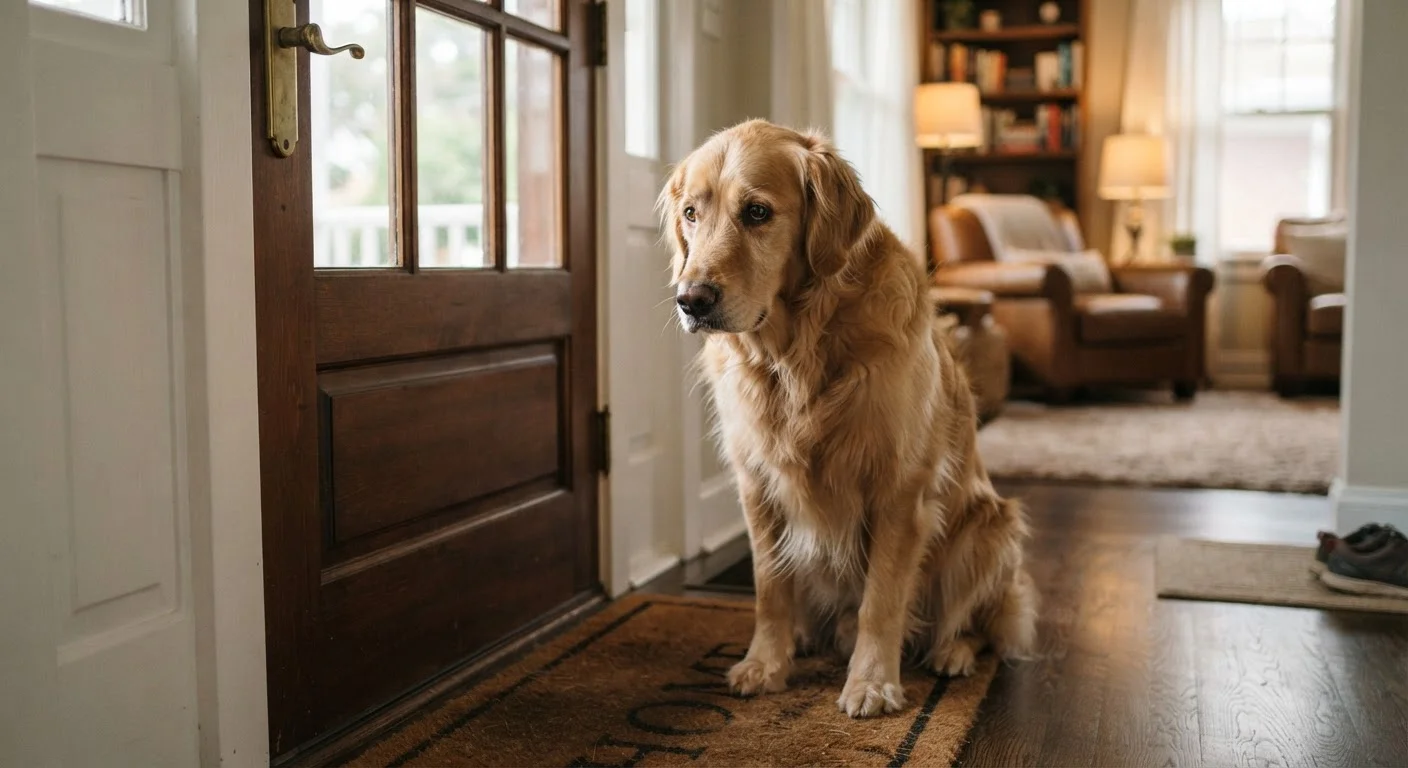
Before departure, an anxious dog may follow their owner from room to room, refuse food, or tremble as they observe departure cues such as picking up keys or putting on shoes.
~17%
Dogs estimated to experience separation anxiety
Veterinary behavioral research suggests roughly one in six dogs meets the criteria for separation anxiety at some point in their life.
30 min
Window when most distress peaks after departure
Behavioral studies using video monitoring consistently show that distress behaviors are most intense within the first half-hour of an owner's absence.
Top 3
Reason dogs are surrendered to shelters
Behavioral problems, including anxiety-driven destructiveness, are among the most commonly cited reasons owners relinquish dogs, according to animal welfare research.
Evidence-Based Ways to Help Your Dog
Treatment is most effective when matched to the severity of the condition. For mild cases, structured independence training — sometimes called graduated departure training — is a reliable starting point. The principle is simple: expose your dog to increasingly longer separations, beginning at just a few seconds, and build duration only when your dog is calm at each level.
Additional strategies that support recovery include:
- Departure cue desensitization: Pick up your keys and then sit back down repeatedly, so the cues lose their predictive power.
- Enrichment before leaving: A food puzzle or long-lasting chew occupies your dog's attention during your exit and early absence.
- Predictable, calm departures and arrivals: Low-key goodbyes and greetings reduce the emotional intensity of your comings and goings.
- Safe spaces: Some dogs settle better in a particular room with familiar scents and sounds.
Start Small With Solo Time
If you are beginning a desensitization program, resist the urge to rush. Start with absences of just 10–30 seconds and only extend duration when your dog is fully calm at the current level. Pushing too fast can set progress back significantly. Consistency and patience matter more than speed.
For moderate to severe cases, consult a veterinarian. In some situations, medication — prescribed and monitored by a vet — can reduce baseline anxiety enough for behavioral training to take hold. A certified applied animal behaviorist or veterinary behaviorist can develop a tailored behavior modification plan.
This article provides general information for educational purposes only and is not a substitute for professional veterinary or behavioral advice. If your dog is showing signs of significant distress, consult a licensed veterinarian or certified animal behavior professional.