How Cats Actually Produce a Purr
The mechanics of purring puzzled scientists for decades. Today, the most widely accepted explanation centers on the laryngeal muscles. During both inhalation and exhalation, these muscles contract and relax at a rate of roughly 25 to 150 times per second, causing the glottis to open and close rapidly. Each cycle briefly interrupts airflow, creating the characteristic rumbling sound on both breaths.
This bidirectional quality is what distinguishes the domestic cat's purr from the roar of large wild cats. Roaring species — lions, tigers, leopards — have a more flexible hyoid bone that enables a different type of vocalization but prevents true continuous purring. Cats like cougars, cheetahs, and domestic cats have a more rigid hyoid, which supports the purring mechanism instead.
Kittens begin purring within the first few days of life, using it primarily to communicate with their mothers during nursing. Because kittens cannot meow and nurse simultaneously, purring serves as a hands-free signal that all is well.
“The purr is perhaps the most nuanced vocalization in the domestic cat's repertoire — it conveys both contentment and distress depending on context, and we are only beginning to understand the full range of information it encodes.”
— Karen McComb, Professor of Animal Behaviour, University of Sussex
Purring Is Not Just About Happiness
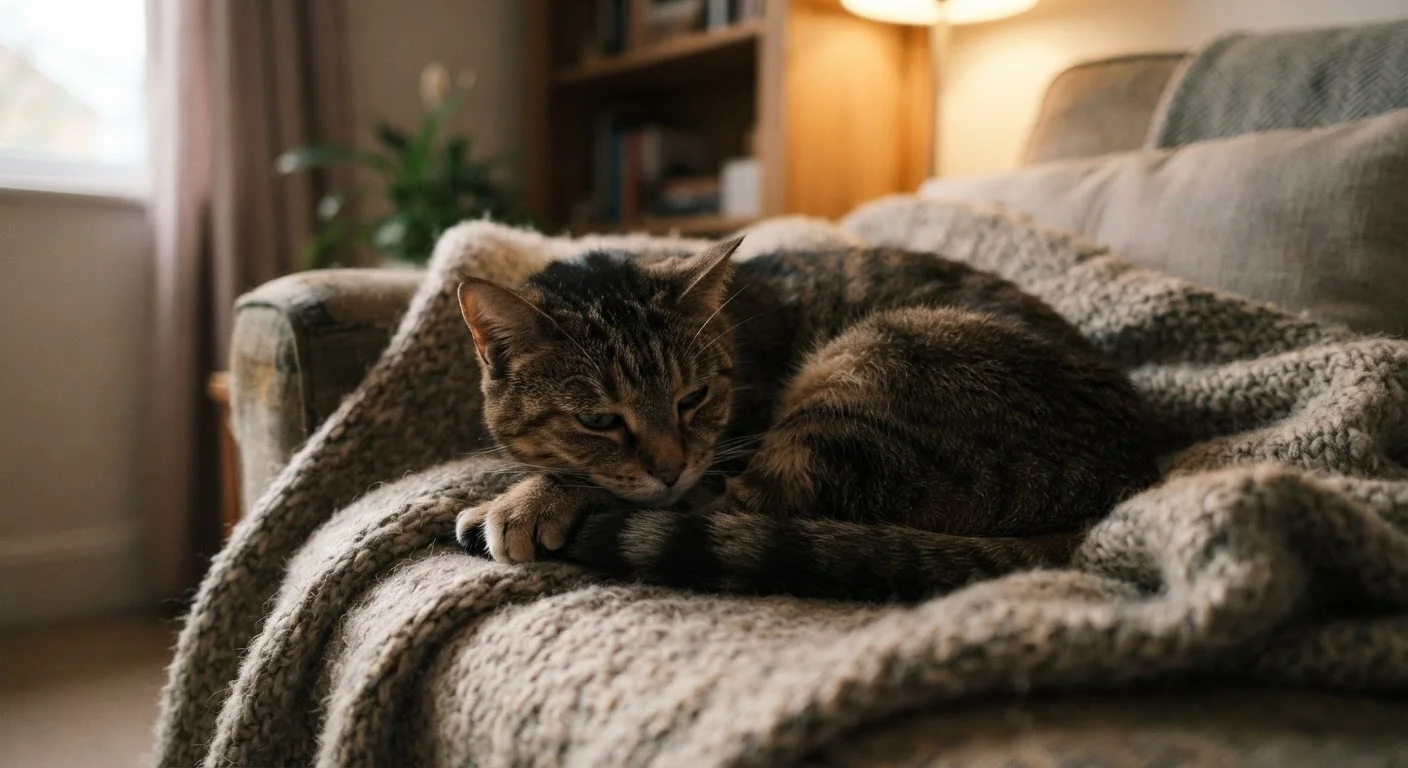
The most common misconception about purring is that it always signals contentment. While a cat curled in a warm lap almost certainly purrs from comfort, the same sound emerges in very different circumstances. Cats have been documented purring during veterinary examinations, while recovering from injuries, during labor, and even in the final moments of life.
This matters practically for cat owners. A cat that is purring while also hiding, holding an unusual posture, or refusing food may not be relaxed — it may be in pain. Recognizing the signs your cat may be in pain requires looking beyond the purr to the full behavioral picture. Pairing purring with body language cues is essential; our guide on what your cat's body language is actually telling you explains how to interpret ear position, tail carriage, and eye contact together.
Read Context, Not Just Sound
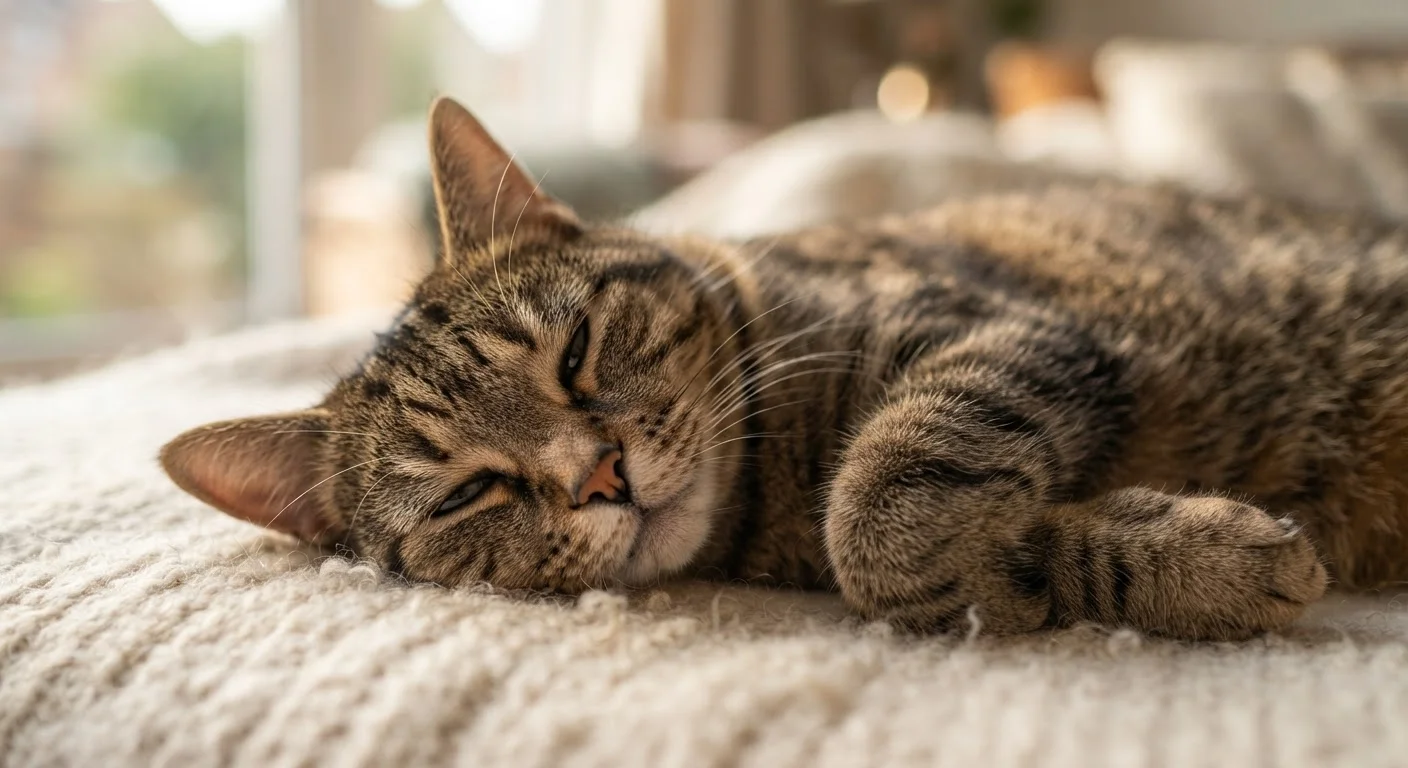
When your cat purrs, pause to observe the full picture: body posture, ear angle, eye shape, and environment. A loose, sprawled posture alongside purring signals comfort; a hunched, tucked posture with purring may signal pain or anxiety. Training yourself to combine auditory and visual cues will make you a far more responsive owner.
Researchers have also identified a specialized variant called the solicitation purr. Embedded within it is a higher-frequency cry — acoustically similar to an infant's wail — that humans find particularly difficult to tune out. Cats appear to deploy this purr specifically when they want food or attention, suggesting a learned communicative refinement shaped by living with humans.
The Frequency Question: Could Purring Promote Healing?
One of the more fascinating scientific threads involves the acoustic frequencies cats produce while purring. Domestic cat purrs most commonly fall within the 25–50 Hz range, with some extending to 150 Hz. Laboratory research — largely in human physical therapy contexts — has explored whether vibrations in the 20–50 Hz range can stimulate bone growth, reduce inflammation, and accelerate tissue repair.
25–150 Hz
Frequency range of domestic cat purring
This range is documented across multiple acoustic studies of domestic cats and overlaps with frequencies explored in vibration therapy research.
25–50 Hz
Bone-stimulating vibration range studied in research
Laboratory research has examined whether vibrations in this range can promote bone density; this overlaps with the core frequency of cat purrs.
Days old
Age at which kittens begin purring
Kittens develop the purring behavior within the first several days of birth, using it as a communication signal during nursing before they can meow.
The hypothesis is biologically plausible. Cats also fracture bones at a lower rate relative to their activity levels than many similarly sized mammals, and some veterinary researchers have speculated that habitual self-vibration could play a role. However, it would be inaccurate to state this as established fact. Controlled clinical studies specifically measuring the healing effect of purring in cats are limited, and the field remains active rather than settled.
What the evidence does support more clearly is that purring — and cat companionship generally — appears associated with reduced human stress responses in observational studies. Whether the purr frequency itself drives this effect, or whether it is the broader comfort of animal companionship, remains an open question. This is an area where separating scientific possibility from overblown claims matters — see our piece on common cat health myths that veterinarians keep correcting for context on how easily plausible ideas become accepted as fact.
What Cat Owners Can Take Away
Understanding the full picture of purring makes you a more observant owner. Rather than defaulting to the assumption that a purring cat is a happy cat, consider the surrounding context: posture, appetite, social behavior, and environment all carry equal weight.
If your cat's purring changes noticeably — becomes louder, stops entirely, or appears alongside other behavioral shifts — treat it as information worth acting on. Schedule a veterinary visit rather than waiting. Cats instinctively minimize visible signs of vulnerability, which means subtle cues like altered purring patterns can be among the earliest signals something is wrong.
For owners who want to deepen their understanding of feline communication more broadly, exploring how to keep a cat mentally stimulated is a natural next step. A well-stimulated cat expresses itself more clearly, making it easier to notice when something is off.
Purring and Veterinary Assessment
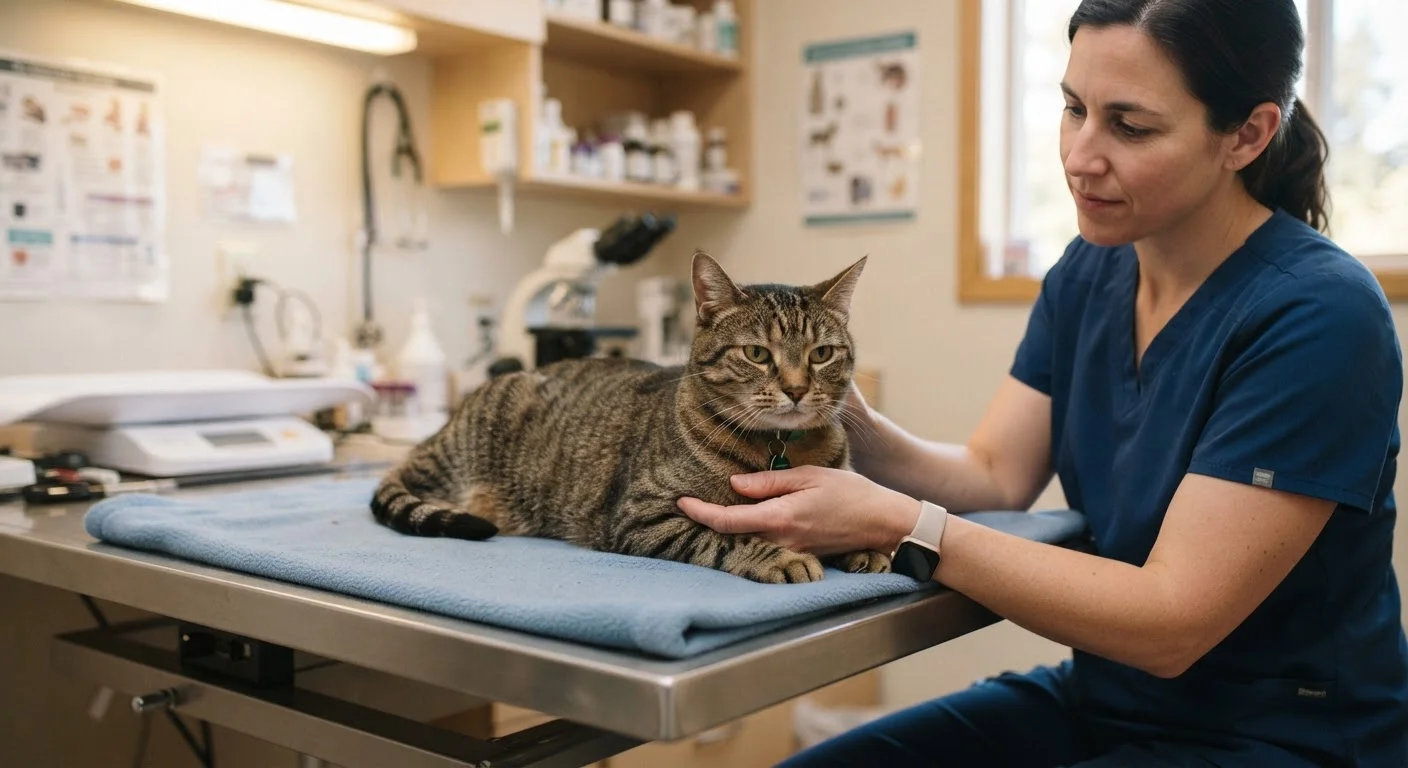
Veterinarians are specifically trained not to use purring as a reliable indicator of a cat's pain level or emotional state during clinical examinations. If your cat purrs throughout a vet visit, that information alone tells your vet very little. Always describe behavioral changes you have observed at home — these are often more diagnostically useful than in-clinic behavior.
This article is for general informational purposes only and does not constitute veterinary advice. Always consult a licensed veterinarian regarding your cat's health and behavior.