Why Cats Conceal Pain
Cats are hardwired to mask vulnerability. In the wild, showing weakness invites predation, so domestic cats carry that same instinct — even when living safely indoors. This means a cat experiencing significant discomfort may continue eating, grooming, and interacting almost normally, giving owners few obvious clues that something is wrong.
Recognizing pain in cats requires understanding subtle shifts in behavior and appearance rather than waiting for dramatic signals. Veterinarians use structured assessment tools, such as the Feline Grimace Scale, to evaluate facial tension as a reliable pain indicator. As a cat owner, learning what baseline «normal» looks like for your individual cat is the foundation of early detection.
This article is for general informational purposes only and is not veterinary medical advice. Always consult a licensed veterinarian if you suspect your cat is in pain.
| Primary challenge | Cats instinctively mask pain, making early detection difficult |
| Validated assessment tool | Feline Grimace Scale — measures facial muscle tension (Developed by Université de Montréal researchers) |
| Most commonly missed sign | Reduced activity and increased hiding |
| High-risk group | Senior cats (10+), especially for undiagnosed osteoarthritis |
| When to seek emergency care | Labored breathing, collapse, or extreme acute distress |
Behavioral Signs to Watch For
Changes in behavior are frequently the earliest indicators of feline pain. Key patterns to monitor include:
- Reduced activity or hiding: A cat that suddenly retreats to isolated spots or stops jumping onto favorite perches may be protecting a sore area.
- Altered grooming habits: Both over-grooming a specific spot and a sudden drop in self-grooming can point to localized pain or systemic discomfort.
- Changes in appetite or litter box use: Reluctance to squat or posture changes during elimination may indicate abdominal or musculoskeletal pain.
- Increased vocalization: Excessive or unusual meowing, hissing when touched, or low growling at rest can all signal distress. That said, vocalization patterns vary widely — some cats in pain become quieter, not louder. See our guide to feline vocalizations for additional context.
- Aggression or withdrawal: A normally sociable cat that suddenly resists handling or bites when touched in a specific area is communicating something important.
Feline Grimace Scale
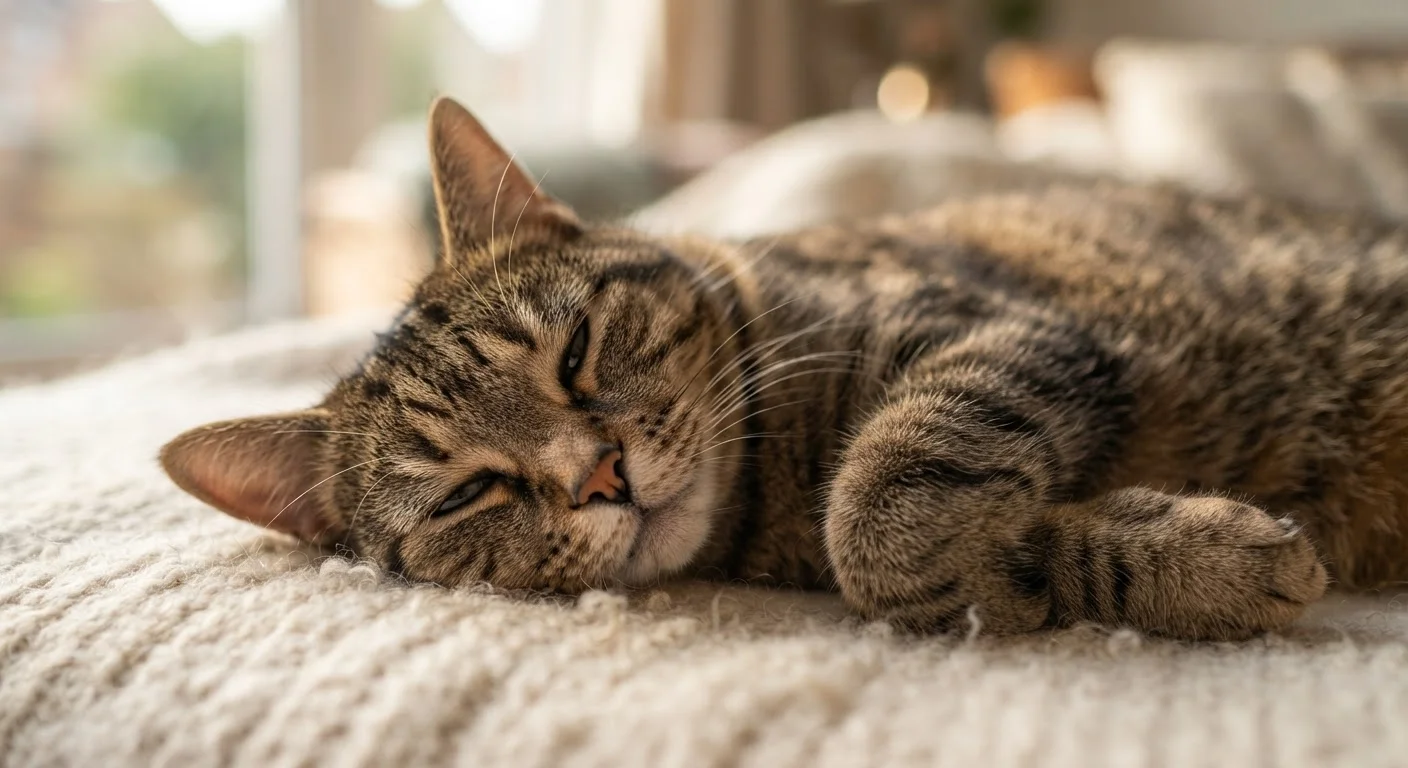
A scientifically validated tool used by veterinarians to assess acute pain in cats by scoring facial muscle actions, including ear position, eye opening, whisker direction, and muzzle tension.
Osteoarthritis
A degenerative joint condition causing cartilage breakdown and chronic pain. It is common in older cats but frequently goes unrecognized because affected cats rarely vocalize discomfort.
Hyperalgesia
Heightened sensitivity to stimuli that would not normally cause pain. A cat with hyperalgesia may react strongly to light touch in areas that seem uninjured.
Allodynia
Pain triggered by stimuli that are not typically painful, such as gentle stroking. It can occur with nerve damage or inflammation and may explain sudden aggression when a cat is touched.
Physical Signs You Can Observe
Alongside behavioral shifts, several physical cues are worth noting during routine interactions with your cat:
~90%
Of cats over 12 show X-ray evidence of arthritis
Studies in veterinary journals suggest the majority of senior cats have radiographic signs of degenerative joint disease, yet many go undiagnosed.
60%+
Of middle-aged cats affected by joint disease
Research published in veterinary literature indicates degenerative joint changes can begin well before a cat reaches senior age.
- Facial tension: Squinting or partially closed eyes, flattened whiskers, and ears rotated outward or backward are all components of the Feline Grimace Scale — a validated veterinary tool.
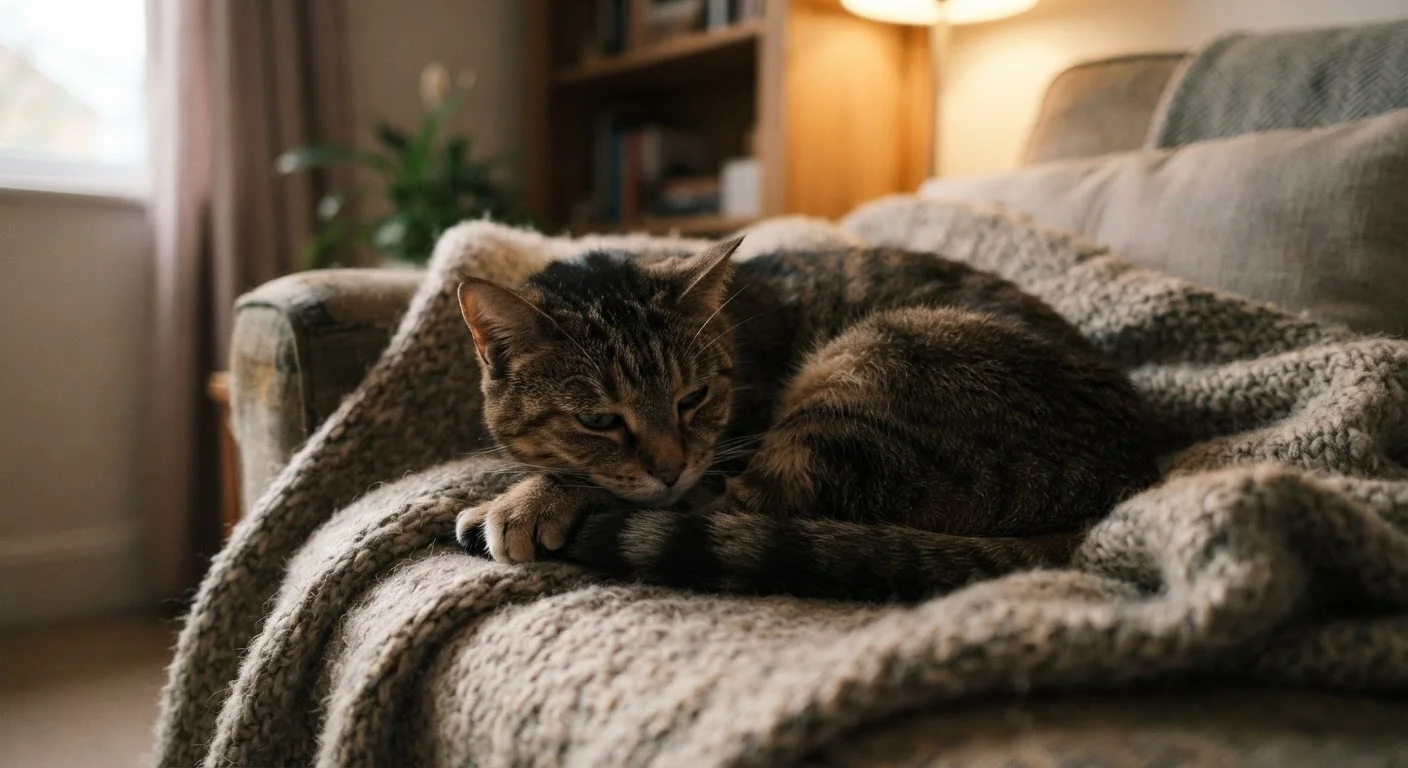
- Body posture: A hunched stance with the back arched upward, or a reluctance to put weight on a limb, often indicates localized pain.
- Coat condition: A dull, matted, or unkempt coat can develop when a cat stops grooming due to discomfort or fatigue.
- Rapid or shallow breathing: Breathing changes at rest, especially if unrelated to heat or exertion, merit prompt veterinary attention.
Senior cats are particularly susceptible to chronic pain from conditions such as osteoarthritis, which is frequently underdiagnosed. Our article on caring for a senior cat explores how age-related health changes can quietly erode quality of life.
It is also worth noting that purring does not always signal contentment — cats sometimes purr when stressed or in pain. The science behind cat purring explains this nuance in detail.
When to Contact Your Veterinarian
Any combination of the signs listed above — especially if they appear suddenly or persist beyond 24 hours — warrants a veterinary evaluation. You do not need to be certain your cat is in pain to seek professional guidance; veterinarians are trained to assess and rule out causes. Early intervention often leads to more manageable outcomes than waiting for symptoms to worsen.
Keep a brief log of what you observe — when it started, what changed, and how frequently it occurs. This information helps your veterinarian make a faster, more accurate assessment. If your cat is exhibiting labored breathing, collapse, or extreme distress, treat this as an emergency and contact a veterinary clinic immediately.
For comparison, dogs exhibit their own distinct pain signals — see our article on recognizing pain in dogs to understand how feline and canine cues differ.
Pain Assessment Is a Veterinary Skill
Owner observation is valuable, but definitive pain assessment requires a trained professional. Veterinarians may use physical examinations, imaging, and validated scales together to reach a diagnosis. Do not attempt to administer human pain medications — many, including ibuprofen and acetaminophen, are toxic to cats. Always follow your veterinarian's guidance on pain management.