Why Mental Stimulation Matters for Indoor Cats
Indoor cats live longer and safer lives on average than cats with outdoor access, but that safety comes with a trade-off: significantly less sensory novelty and cognitive challenge. In the wild, cats spend several hours each day stalking, hunting, climbing, and investigating their territory. Strip away that activity, and the same drive for mental engagement doesn't disappear — it redirects.
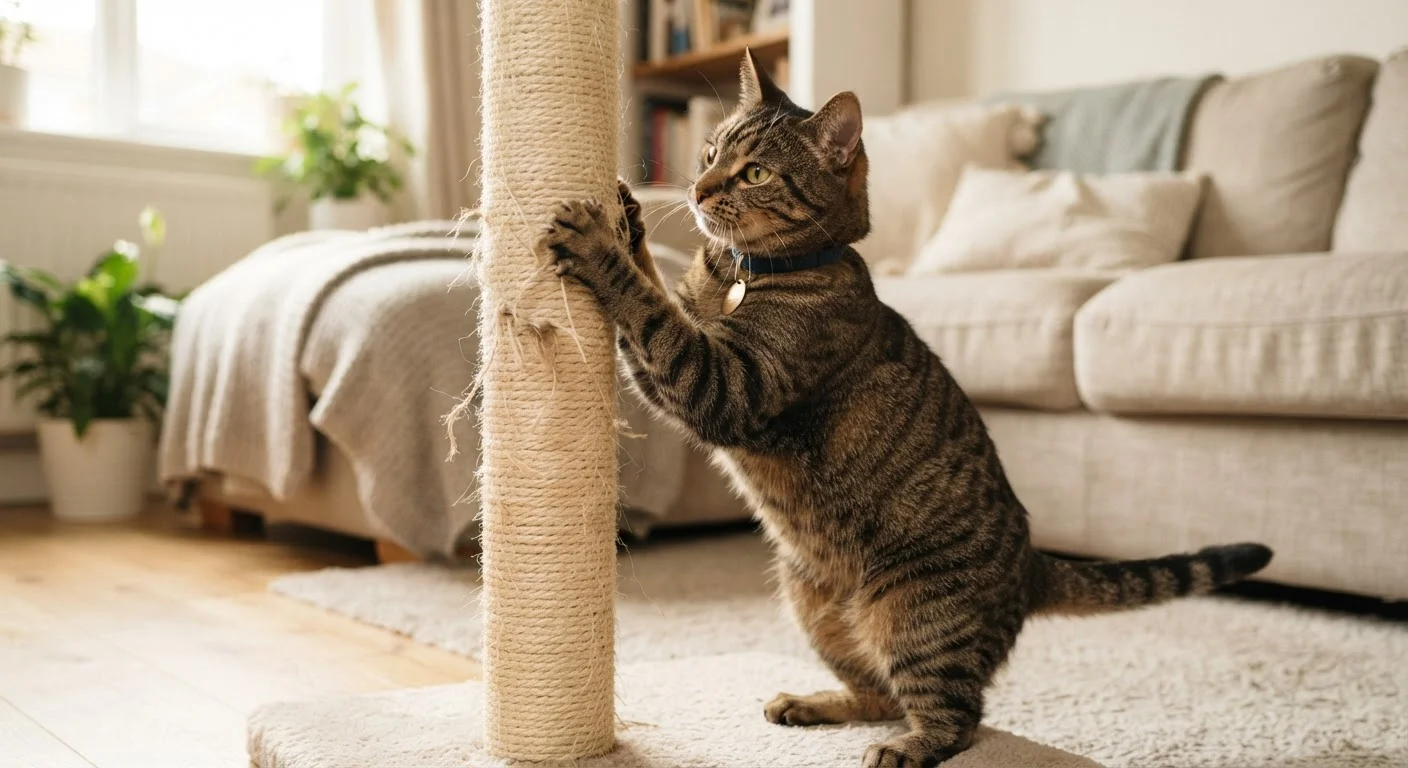
Boredom-driven behavior is more common than many owners realize. Excessive scratching, sudden aggression, compulsive grooming, and overeating can all be traced to under-stimulation. If your cat seems restless, clingy, or destructive, the root cause may not be temperament — it may simply be a lack of daily mental engagement. Understanding what drives these behaviors is the first step; see our guide to feline problem behaviors for a deeper look at common triggers.
When Behavior Changes Signal a Health Issue
Not all behavioral changes stem from boredom. Sudden increases in vocalization, changes in litter box habits, or unexplained aggression can also indicate pain or illness. If enrichment strategies don't improve your cat's behavior within a few weeks, or if the change was abrupt, consult a veterinarian before assuming the cause is environmental. Our article on litter box problems illustrates how medical and behavioral causes can overlap.
Core Enrichment Practices for Every Day
Good enrichment doesn't require expensive equipment. What it requires is consistency and variety. Cats benefit most when stimulation targets multiple senses and simulates natural behaviors across a range of activity types.
Use puzzle feeders or food-dispensing toys for at least one meal per day
Cats are natural hunters, and eating from a static bowl eliminates all the cognitive effort that foraging would normally require. Puzzle feeders restore a degree of problem-solving to mealtime, reducing boredom and slowing eating speed. This is particularly useful for cats prone to stress-eating or weight gain.
Provide and rotate vertical space — shelves, cat trees, or window perches
Height gives cats a sense of security and territorial oversight, both of which reduce anxiety. Rotating which elevated spots are accessible (or adding a new perch location) resets novelty and encourages exploration.
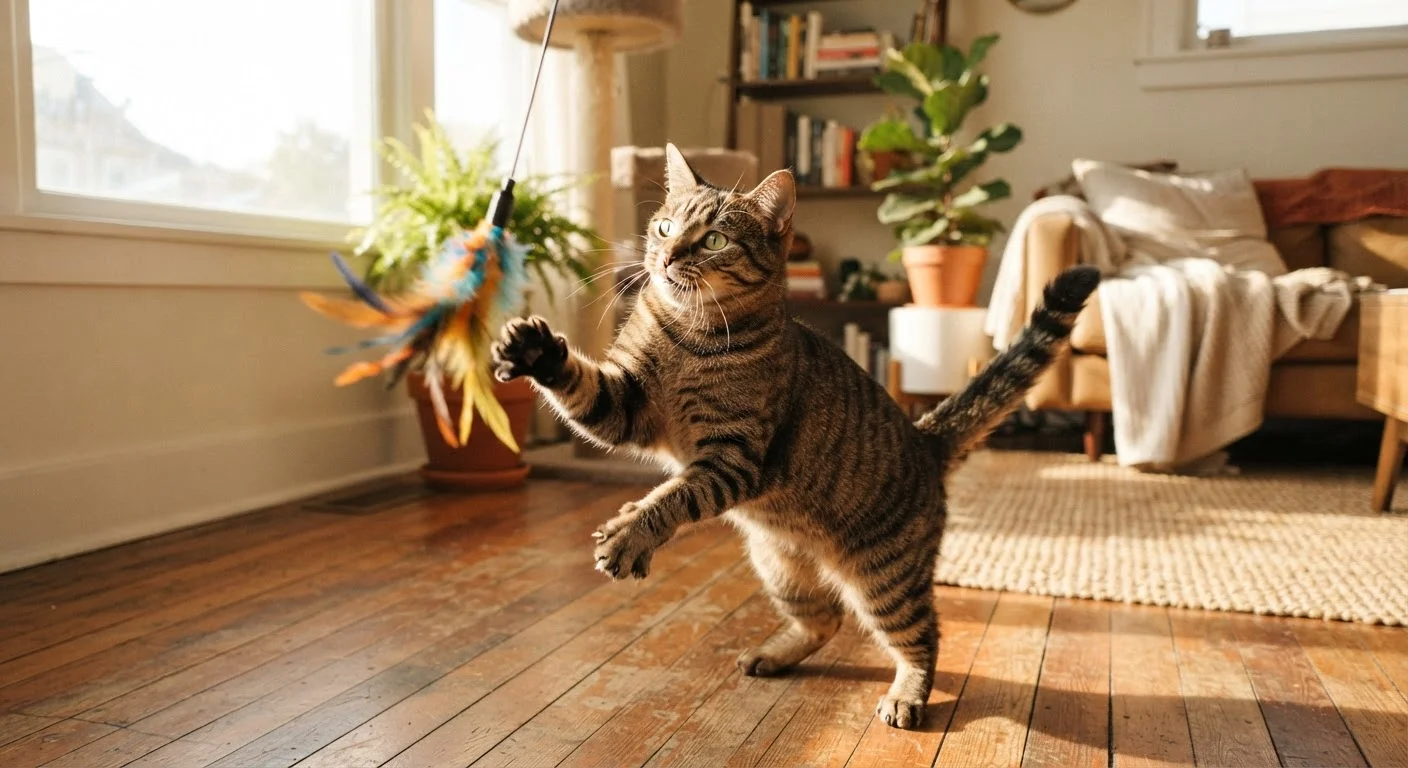
Schedule two interactive play sessions daily using wand or fishing-rod style toys
Interactive play is irreplaceable because it engages a cat's full predatory sequence — stalking, chasing, pouncing — which passive or solo toys rarely complete. Owner participation also strengthens the human-cat bond and allows you to monitor energy and mood changes over time.
Introduce controlled sensory novelty through scent, sound, and texture
A cat's environment is experienced primarily through smell and sound, not just sight. Introducing novel scents (dried herbs, cat-safe botanicals, or scent trails) activates investigative behavior and occupies a cat mentally for extended periods.
Create opportunities for safe outdoor sensory exposure through a catio or leash training
Outdoor sights, smells, and sounds provide sensory richness that is nearly impossible to fully replicate indoors. Even brief, controlled exposure to fresh air and natural stimuli benefits cats behaviorally.
Quick Ways to Start Today
You don't need to overhaul your home overnight. Small, targeted changes introduced consistently make a measurable difference in a cat's mood and behavior. The actions below can be implemented immediately with minimal cost or effort.
For cats over ten years old, enrichment approaches may need to be adjusted for lower energy levels and physical limitations. Our senior cat care guide covers how environmental needs shift with age.
Building a Sustainable Enrichment Routine
One-off enrichment isn't enough. Cats thrive on predictability combined with novelty — a routine that includes daily play, rotating stimuli, and opportunities for problem-solving throughout the day. Morning and evening interactive play sessions of 10–15 minutes each mirror natural crepuscular (dawn and dusk) hunting patterns and can meaningfully reduce nighttime restlessness.
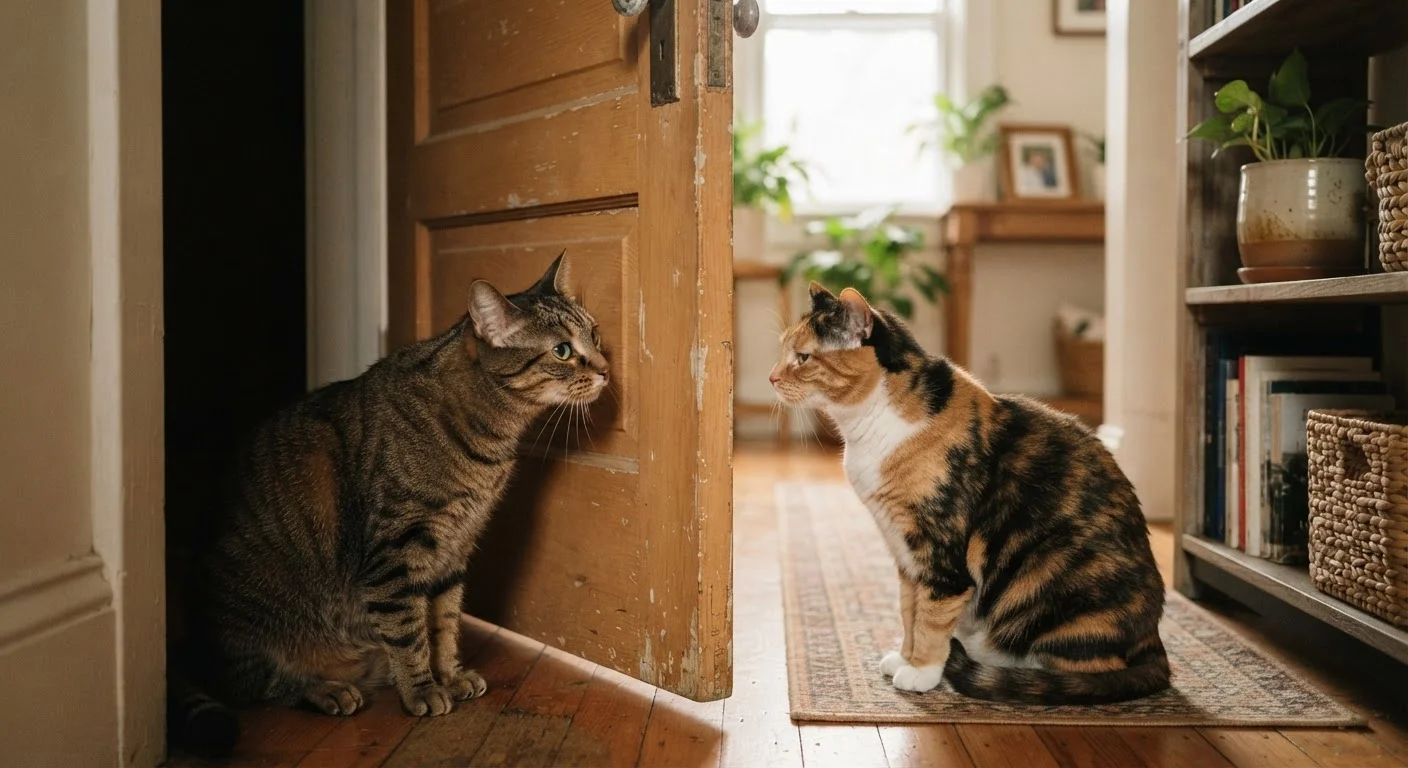
Rotate puzzle feeders, toy types, and hiding spots weekly to prevent habituation. A toy that's always available quickly loses its appeal; one that reappears after a week feels new again. If you share your home with multiple cats, be aware that social dynamics also shape stress levels — a poorly managed multi-cat household can undermine enrichment efforts entirely. A structured introduction process for new cats helps prevent territorial anxiety from the start; our multi-cat introduction guide outlines how to approach this carefully.
“Environmental enrichment is not a luxury for cats — it is a medical and behavioral necessity. A cat that cannot express natural behaviors will find other outlets, and those outlets are rarely ones the owner appreciates.”
— Tony Buffington, Veterinary researcher specializing in feline indoor environmental needs
This article provides general information for educational purposes and is not a substitute for advice from a qualified veterinarian or certified animal behaviorist. If your cat shows sudden behavioral changes, consult a veterinary professional to rule out underlying medical causes.