
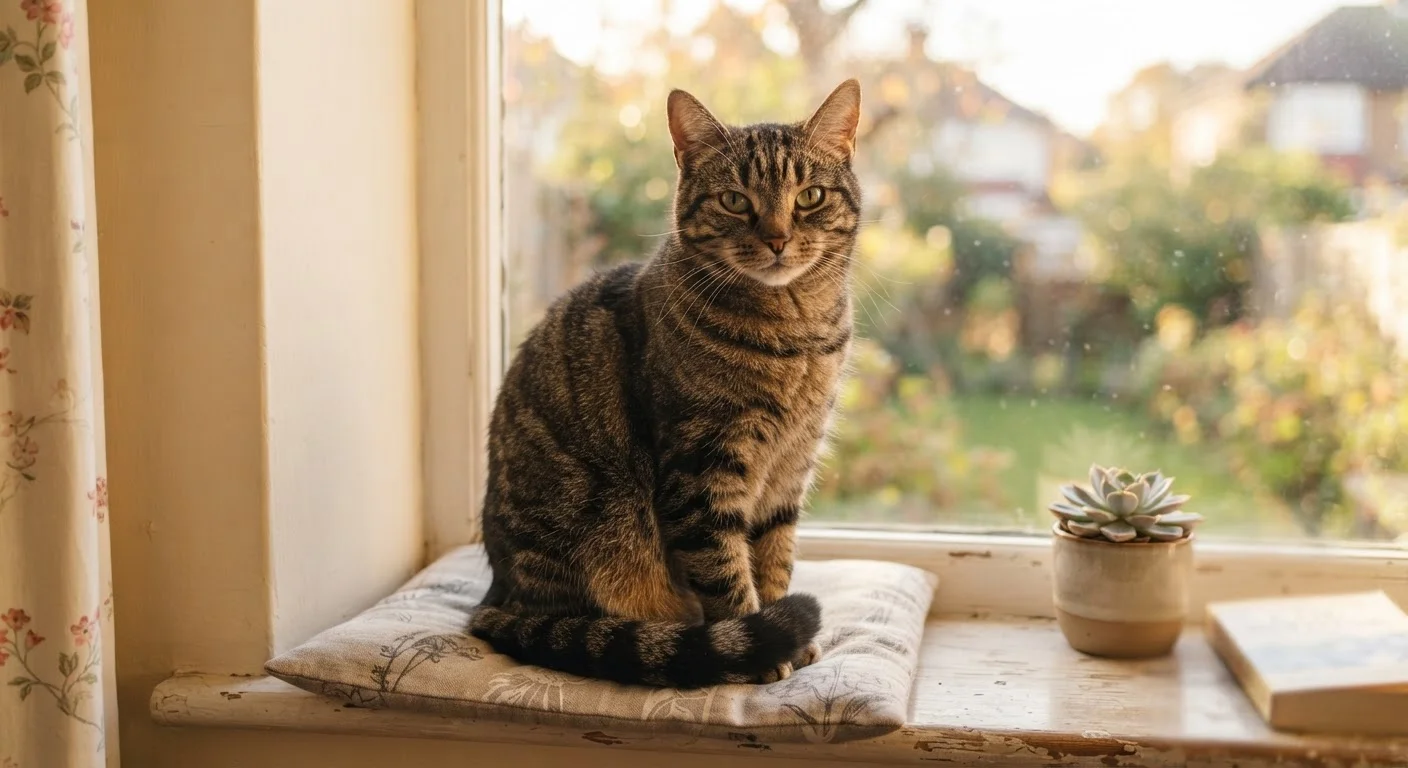
The Tail: Your Cat's Mood Flag
The tail is the easiest place to start reading a cat's emotions because it moves constantly and expressively. A tail held high — straight up like an antenna — indicates a confident, content cat who feels safe approaching you or another animal. When the tip of that upright tail gives a small quiver or curl, it typically signals particularly warm greeting behavior.
A tail carried low or tucked beneath the body signals anxiety or submission. A tail lashing rapidly from side to side is commonly misread as happiness (it resembles a dog's wagging tail), but in cats it usually means mounting irritation or overstimulation. Slowing down interaction at this point often prevents a defensive bite or scratch.
Watch for Clusters, Not Single Signals
Avoid interpreting any one cue in isolation. A high tail alone could mean confidence; a high tail paired with a puffed back and sideways ears means the cat is highly agitated. Always scan the ears, eyes, tail, and posture together before deciding how to respond.
If your cat's tail is puffed into a "bottle brush" shape, it means the cat perceives an immediate threat. This is involuntary — adrenaline causes the fur to stand on end — and it's a clear sign to give your cat space until it calms down.
Ears and Eyes: Precision Signals
Ears rotate independently and can shift position rapidly, making them a precise emotional gauge. Forward-facing, slightly fanned ears indicate curiosity and alertness. Ears rotating to the sides — sometimes called "airplane ears" — suggest discomfort or early irritation. Ears flattened completely against the skull communicate fear or defensive aggression and are a clear warning not to push closer.
Eye shape also carries meaning. Fully dilated pupils can signal excitement, fear, or low light — context separates these. Narrowed pupils in normal light often accompany a confident or mildly tense state. Half-closed, relaxed eyes in a familiar setting generally indicate contentment.
“The slow-blink interaction between cats and humans may function as a form of positive emotional communication, offering an opportunity for humans to strengthen their bond with cats.”
— Karen McComb, Professor of Animal Behaviour, University of Sussex; lead author of a 2020 study on cat-human slow blinking in Scientific Reports
The slow blink deserves special attention. Research by animal behaviorist Dr. Karen McComb and colleagues, published in Scientific Reports in 2020, found that cats are more likely to slow blink at humans who slow blink at them first — and more likely to approach an unfamiliar experimenter who used the slow-blink gesture. It's a meaningful signal of trust, not a random reflex.
Posture, Whiskers, and the Bigger Picture
A cat's overall posture ties individual signals together. A cat standing tall with weight distributed evenly is relaxed. One that crouches low, pulls inward, and avoids eye contact is stressed or frightened. A cat that rolls onto its side and exposes its belly is showing significant trust — but as noted in our FAQ, this isn't always an invitation for touch.
Whiskers add another layer. Fanned out wide and angled forward, they signal alertness and positive engagement. Pulled back flat against the face, they accompany fear or defensive states — and often appear alongside the other signals described above.
16+
Distinct ear positions cats can produce
Feline ethologists have documented that cats can independently rotate each ear through more than a dozen positions, giving them a wide range of directional and communicative expression.
~200
Distinct vocalizations recorded in domestic cats
According to feline communication researchers, domestic cats produce a far broader vocal range with humans than with other cats, suggesting they adapt their communication to their audience.
Reading body language well requires looking at the whole picture rather than any single cue. A tail held high plus forward ears plus relaxed whiskers adds up to a friendly, confident cat. The same high tail alongside pinned ears and a stiff posture suggests something quite different. If you're new to cat ownership, our guide to bringing your first cat home covers how to create an environment where cats feel safe enough to communicate openly.
If you notice body language changes that seem persistent — like prolonged hiding, crouching, or a new reluctance to move — this can sometimes overlap with physical discomfort rather than a behavioral state alone. Our article on signs your cat may be in pain explains how veterinarians interpret these overlapping signals. For comparison, reading your dog's body language shows how feline cues differ substantially from canine ones.
This article is for general informational and educational purposes only. If you are concerned about your cat's behavior or health, please consult a licensed veterinarian.