What Your Standard Policy Leaves Out
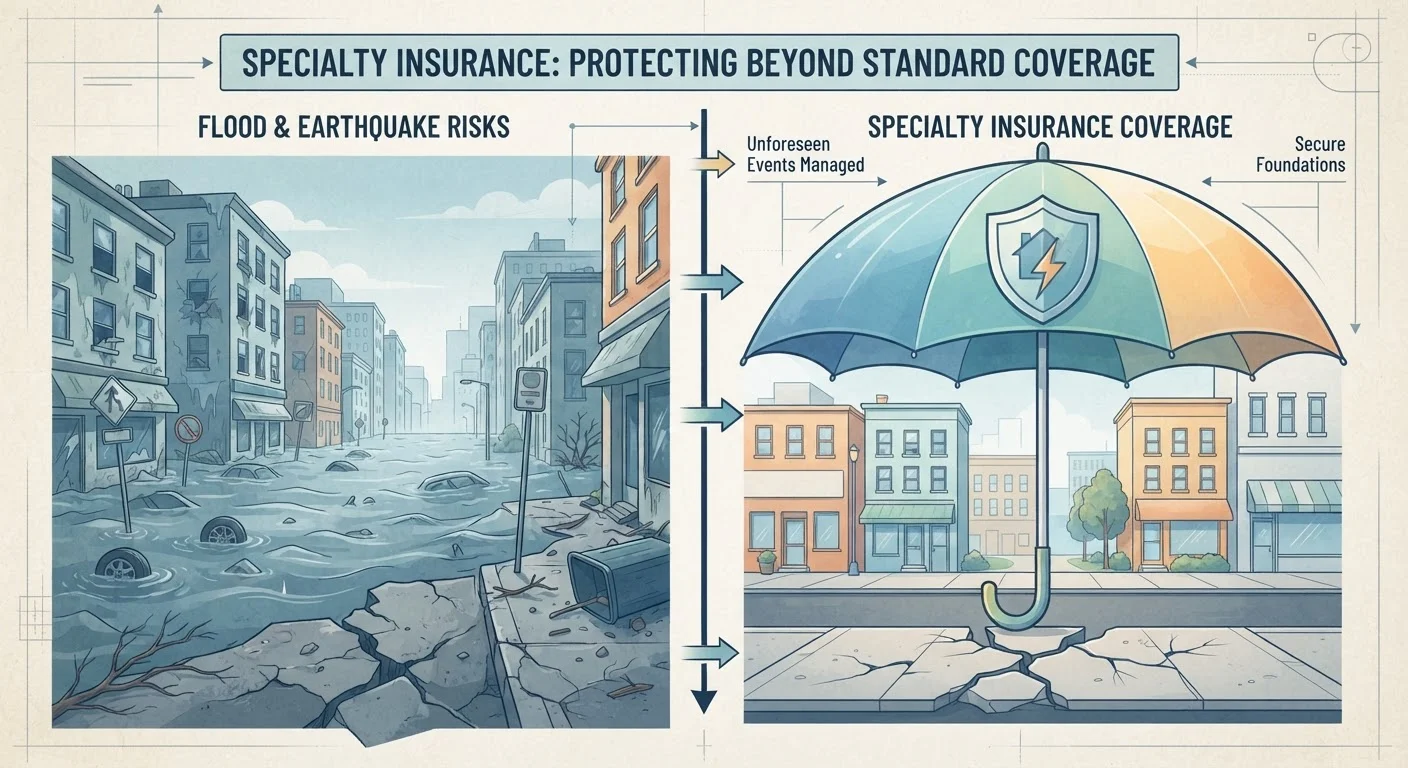
Most people assume a homeowners or renters policy covers them for whatever goes wrong. In reality, standard policies are built around a defined list of covered perils — and several common, costly risks don't make that list. Floods and earthquakes are the most significant omissions, but they're not the only ones.
Understanding which risks fall outside your standard bundle isn't about fear — it's about making an informed choice. You may decide the risk is low enough to skip certain coverage. Or you may discover a gap that's well worth filling. Either way, the decision should be deliberate, not accidental.
This article breaks down the major types of supplemental and specialty insurance that exist outside the standard home, auto, and life bundle — what each one covers, and what problem it solves.
Flood Insurance
Flood damage is one of the most common — and most expensive — exclusions in a standard homeowners policy. Whether the cause is a storm surge, an overflowing river, or heavy rainfall overwhelming local drainage, the resulting damage to your structure and belongings typically won't be covered without a separate flood policy.
In the United States, flood insurance is most commonly issued through the National Flood Insurance Program (NFIP), though a growing private market also exists. Coverage generally splits into two parts: building property (the physical structure) and personal property (your belongings). These are often purchased as separate policies or endorsements.
Even if you don't live in a high-risk flood zone, flooding can happen in lower-risk areas. Your lender may also require flood coverage if your property is in a federally designated Special Flood Hazard Area.
Flood damage is excluded from nearly every standard homeowners policy — a separate policy is required.
Earthquake Insurance
Like flood insurance, earthquake coverage is not part of a standard homeowners or renters policy. It typically needs to be added as a standalone policy or, in some states, as an endorsement to your existing policy.
Earthquake policies generally cover damage to your home's structure, personal belongings, and sometimes additional living expenses if your home becomes uninhabitable after a quake. However, they often come with relatively high deductibles — sometimes a percentage of the insured value of the home rather than a flat dollar amount — so it's important to understand what you'd actually receive after a loss.
This coverage is most relevant in seismically active states, but minor earthquakes occur across a much broader geographic area than many people realize.
Earthquake policies often carry percentage-based deductibles that can be significantly higher than flat-dollar deductibles.
Umbrella Insurance
Umbrella insurance is a form of liability coverage that sits on top of your existing home and auto policies. When a claim exceeds the liability limit of your underlying policy, an umbrella policy can cover the remaining amount — up to its own limit, which typically starts at $1 million.
Common scenarios where umbrella coverage comes into play include serious auto accidents where you're found at fault, injuries that occur on your property, or certain personal liability claims. Without an umbrella policy, any judgment exceeding your standard policy's limits could come from your personal assets.
Umbrella insurance is generally considered affordable relative to the amount of coverage it provides, though eligibility and pricing depend on your insurer and underlying policy structure.
An umbrella policy can protect personal assets when a liability judgment exceeds standard policy limits.
Sewer Backup and Water Damage Riders
Water damage from a backed-up sewer or drain line is another exclusion that catches many homeowners off guard. Standard homeowners policies typically cover sudden and accidental water damage from internal sources like burst pipes — but not water that backs up through drains or sewers.
A sewer backup endorsement (sometimes called a water backup rider) can be added to many homeowners policies for a relatively modest additional premium. It covers cleanup, structural damage, and personal property losses resulting from sewer or drain backup events.
If your home has a basement or is in an older neighborhood with aging municipal infrastructure, this type of add-on coverage is worth evaluating.
Sewer backup is routinely excluded from standard homeowners policies but can often be added as an endorsement.
Scheduled Personal Property Coverage
Standard homeowners and renters policies cover personal property, but they impose sub-limits on specific categories — jewelry, artwork, collectibles, musical instruments, and electronics are common examples. If a single item's value exceeds that sub-limit, you may not be fully reimbursed after a loss.
Scheduled personal property coverage — sometimes called a floater or rider — lets you list high-value items individually, typically at their appraised value, with broader protection than the base policy provides. This coverage often includes perils like accidental loss or breakage that a standard policy might exclude.
If you own items whose replacement cost would exceed your policy's category limits, scheduling them is a straightforward way to close that gap.
Jewelry, art, and collectibles often hit policy sub-limits — scheduling items individually provides more complete protection.
Identity Theft Coverage
Identity theft coverage is offered as a standalone product or as an add-on to homeowners and renters policies. It typically helps cover the costs associated with restoring your identity after fraud — things like legal fees, lost wages from time spent resolving the issue, and costs for credit monitoring services.
It's important to understand that this type of coverage generally doesn't reimburse stolen funds directly (that may fall under other financial protections, depending on how accounts are held). Instead, it covers the administrative and financial costs of recovery.
As data breaches and digital fraud have become more common, this coverage has grown more widely available — though the scope of what's included varies significantly by policy.
Identity theft coverage typically pays for recovery costs, not stolen funds — read the terms carefully.
Making the Right Call for Your Situation
No single checklist determines whether you need any of these coverage types. Your location is often the biggest factor — flood zones and seismically active regions make those policies worth a serious look. Your financial situation matters too: if a liability judgment or major property loss could derail your finances, supplemental coverage may be worth the premium.
Start With a Coverage Gap Review
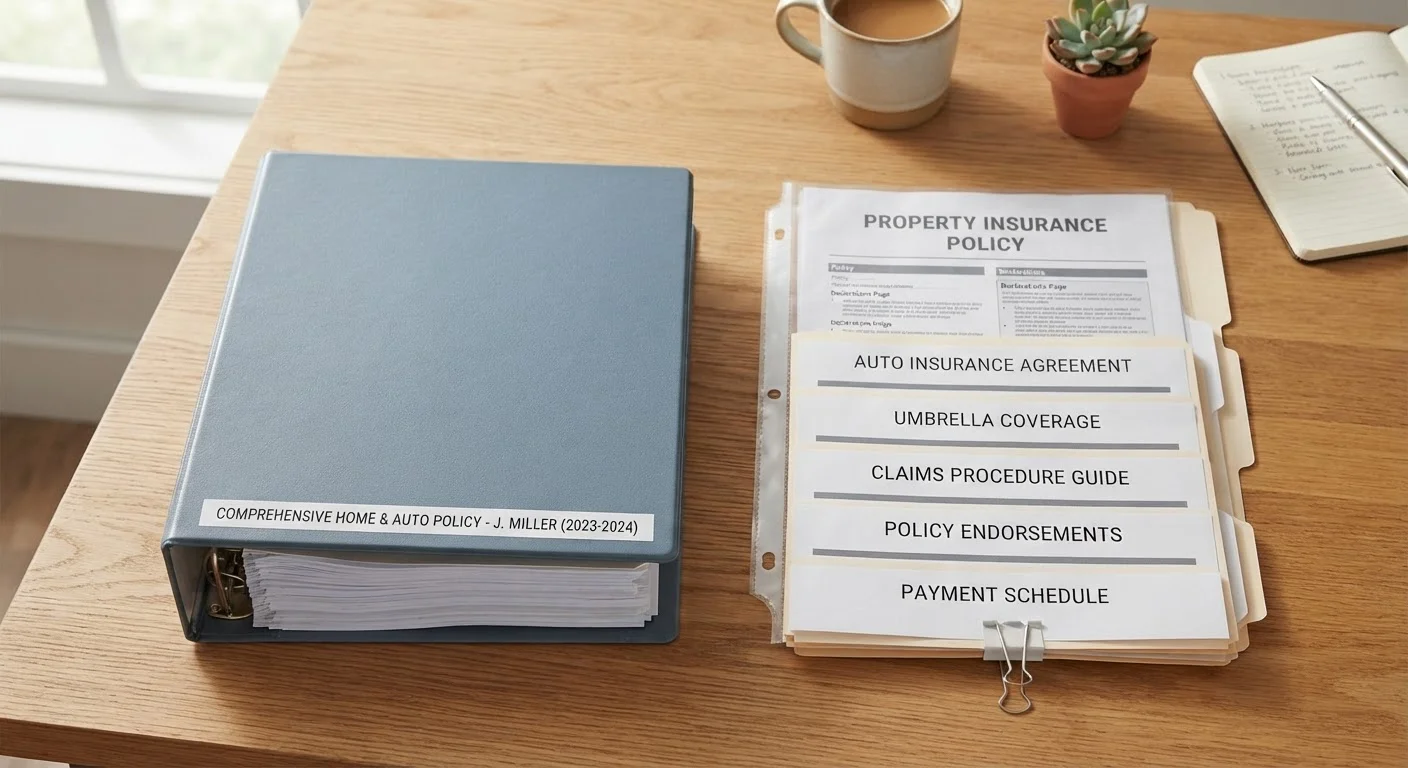
Before adding any specialty policy, review your existing home, auto, and renters policies for their listed exclusions — not just what they cover. Many insurers or licensed agents can walk you through a gap analysis at no charge. Knowing exactly what you're missing makes it easier to prioritize which supplemental coverage, if any, makes sense for your situation.
It's also worth knowing how these decisions interact with how you've structured your existing policies. If you're weighing whether to bundle your home and auto coverage or keep them separate, that choice can affect what add-ons are available to you. See our breakdown of bundling vs. buying separately for a closer look at those trade-offs.
Ultimately, specialty and supplemental insurance exists because risk doesn't stay neatly inside a standard policy. A licensed insurance agent or broker familiar with your state's market can help you assess which gaps are worth closing — and at what cost.
This article is for general informational and educational purposes only and does not constitute personalized insurance, financial, or legal advice. Coverage availability, terms, exclusions, and costs vary by provider and state. Always read your actual policy documents and consult a licensed insurance professional before making coverage decisions.