The Six Core Coverages in a Standard Homeowners Policy
Most homeowners in the U.S. carry what the industry calls an HO-3 Special Form policy. Despite the technical name, its structure is straightforward: it bundles six types of coverage under one contract. Understanding each one tells you where you're protected — and where you're not.
| Standard Policy Form | HO-3 (Special Form) is the most common policy sold to homeowners in the U.S. (Insurance Information Institute) |
| Dwelling Coverage Basis | Most HO-3 policies cover the dwelling on an open-peril basis; personal property on a named-peril basis |
| Typical Liability Minimum | $100,000 per occurrence (higher limits available and often recommended) |
| Loss of Use Limit | Commonly 20–30% of dwelling coverage limit, varies by insurer |
| Flood & Earthquake Coverage | Excluded from standard policies; require separate policies (FEMA / Insurance Information Institute) |
| Medical Payments Coverage | Typically $1,000–$5,000; pays guest medical bills regardless of fault |
Coverage A — Dwelling
This pays to repair or rebuild the physical structure of your home after a covered loss: the walls, roof, floors, built-in appliances, and attached structures like a garage. On an HO-3, the dwelling is covered on an open-peril basis, meaning any cause of damage is covered unless the policy explicitly excludes it.
Coverage B — Other Structures
Detached garages, fences, sheds, and similar structures on your property fall here. Coverage is typically set at 10% of your dwelling limit by default, though you can often increase it.
Coverage C — Personal Property
Your belongings — furniture, clothing, electronics, kitchenware — are covered under this section. Unlike the dwelling, personal property on an HO-3 is usually covered on a named-peril basis, meaning only causes of loss explicitly listed in the policy are covered. Standard named perils include fire, theft, vandalism, and certain water damage, but not all water damage. High-value items like jewelry or art often have sub-limits that are lower than their actual worth; a scheduled personal property endorsement can address this gap.
Coverage D — Loss of Use
If a covered event makes your home temporarily uninhabitable, this coverage reimburses additional living expenses — hotel costs, restaurant meals above your normal food budget — while repairs are underway. Limits are typically 20–30% of your dwelling coverage.
Coverage E — Personal Liability
If a guest is injured on your property, or you accidentally damage someone else's property, liability coverage pays for legal defense and any damages up to your policy limit. Many policies start at $100,000, but higher limits are available and worth considering.
Coverage F — Medical Payments
This pays modest medical bills for guests injured on your property — regardless of fault. It's not for your own household members. Limits are typically $1,000–$5,000 and are meant to handle minor incidents without a formal liability claim.
What a Standard Policy Does Not Cover
Exclusions are where policyholders often get caught off guard. Several common and costly events fall outside the scope of a standard HO-3.
This Article Is General Information, Not Advice
The coverage details described here reflect common features of standard homeowners policies, particularly the HO-3 form. Your actual policy terms, limits, exclusions, and premiums depend on your insurer, your state, and your specific situation. Always read your policy documents carefully and consult a licensed insurance agent or adviser for guidance tailored to your circumstances.
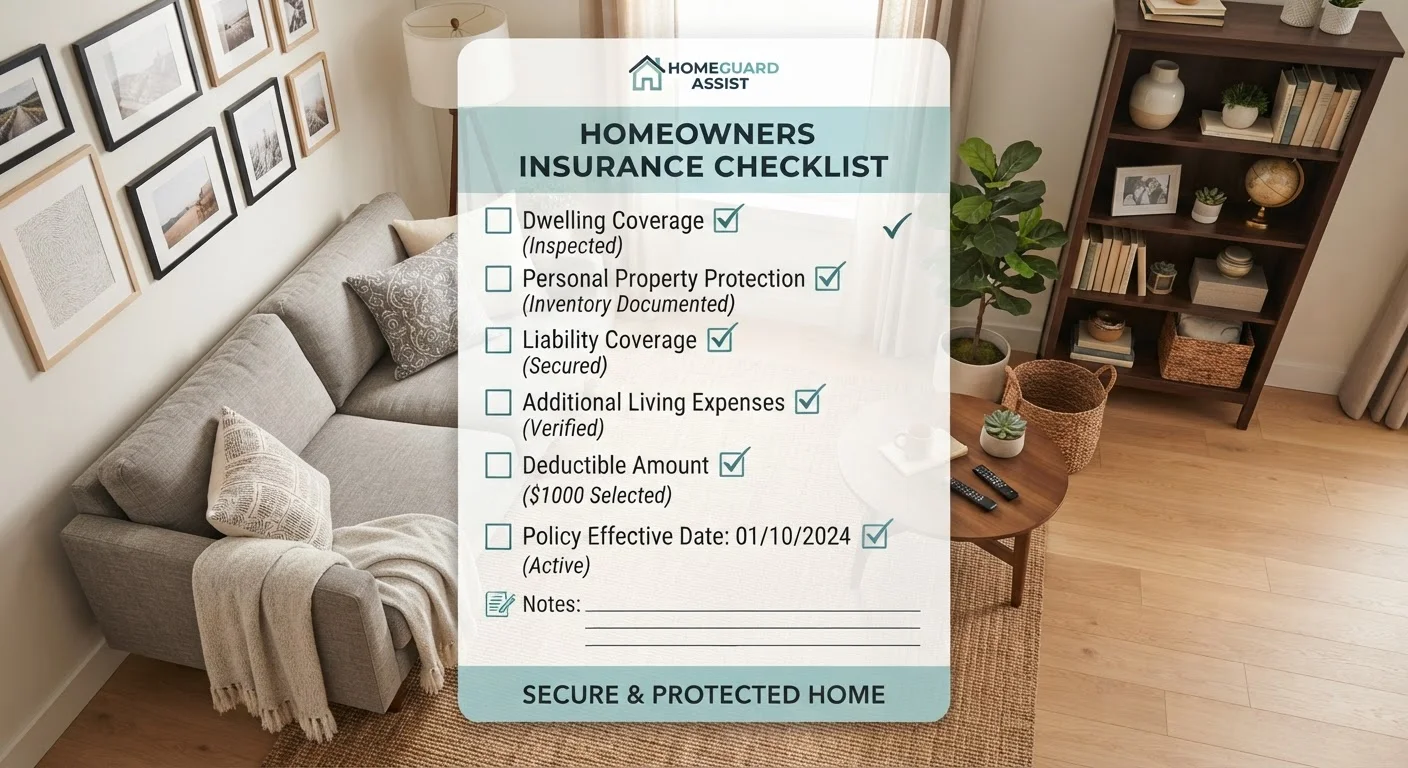
Dwelling Coverage
The portion of a homeowners policy that pays to repair or rebuild the physical structure of your home — walls, roof, floors, and built-in fixtures — after a covered loss.
Personal Property Coverage
Coverage for your belongings inside (and sometimes outside) the home, such as furniture, clothing, and electronics, up to a policy limit.
Liability Coverage
Protection that pays for legal defense and damages if someone is injured on your property or you are found legally responsible for property damage to others.
Loss of Use (ALE)
Additional Living Expenses coverage that reimburses reasonable costs — like hotel stays and meals — while your home is uninhabitable due to a covered claim.
Named Peril
A specific cause of loss (such as fire, windstorm, or theft) explicitly listed in your policy as covered. Losses from causes not on the list are not covered.
Open Peril (All-Risk)
A broader coverage form that covers any cause of loss unless it is specifically excluded in the policy. Generally offers wider protection than named-peril forms.
Scheduled Personal Property
An endorsement that insures specific high-value items — jewelry, art, musical instruments — for an agreed or appraised value, separate from standard personal property limits.
Deductible
The amount you pay out of pocket before your insurer pays on a claim. Higher deductibles typically lower your premium, but increase your cost at claim time.
Flood Damage
Standard homeowners policies do not cover flooding — whether from a storm surge, overflowing river, or heavy rain runoff. Flood coverage is available separately, most commonly through the National Flood Insurance Program (NFIP) or select private insurers. Even homes outside high-risk flood zones can experience flood events, so this gap affects more homeowners than commonly assumed.
Earthquake Damage
Ground movement — including earthquakes, sinkholes, and earth settlement — is excluded from standard policies. Separate earthquake endorsements or standalone earthquake policies exist in most states.
Maintenance-Related Damage
Gradual deterioration, mold from long-term moisture, pest infestations, and wear and tear are explicitly excluded. Insurance is designed to address sudden, unexpected losses — not the slow effects of deferred maintenance.
Home-Based Business Liability
If you run a business from home, standard homeowners liability typically does not extend to business-related injuries or property. A separate business owner's policy or endorsement is usually needed.
For a deeper look at the fine print that surprises most policyholders at claim time, see what insurance policies don't cover and why it matters. And if you rent rather than own, the coverage picture is quite different — renters insurance covers different losses and has its own set of gaps worth understanding.
This article is for general informational purposes only and does not constitute insurance, legal, or financial advice. Coverage terms, limits, exclusions, and availability vary by insurer and by state. Read your policy carefully and consult a licensed insurance professional for advice specific to your situation.