What These Plan Types Actually Mean
HMO and PPO aren't just acronyms — they describe two different architectures for how you access and pay for medical care. Understanding the structure behind each one makes it much easier to predict how a plan will work for your situation.
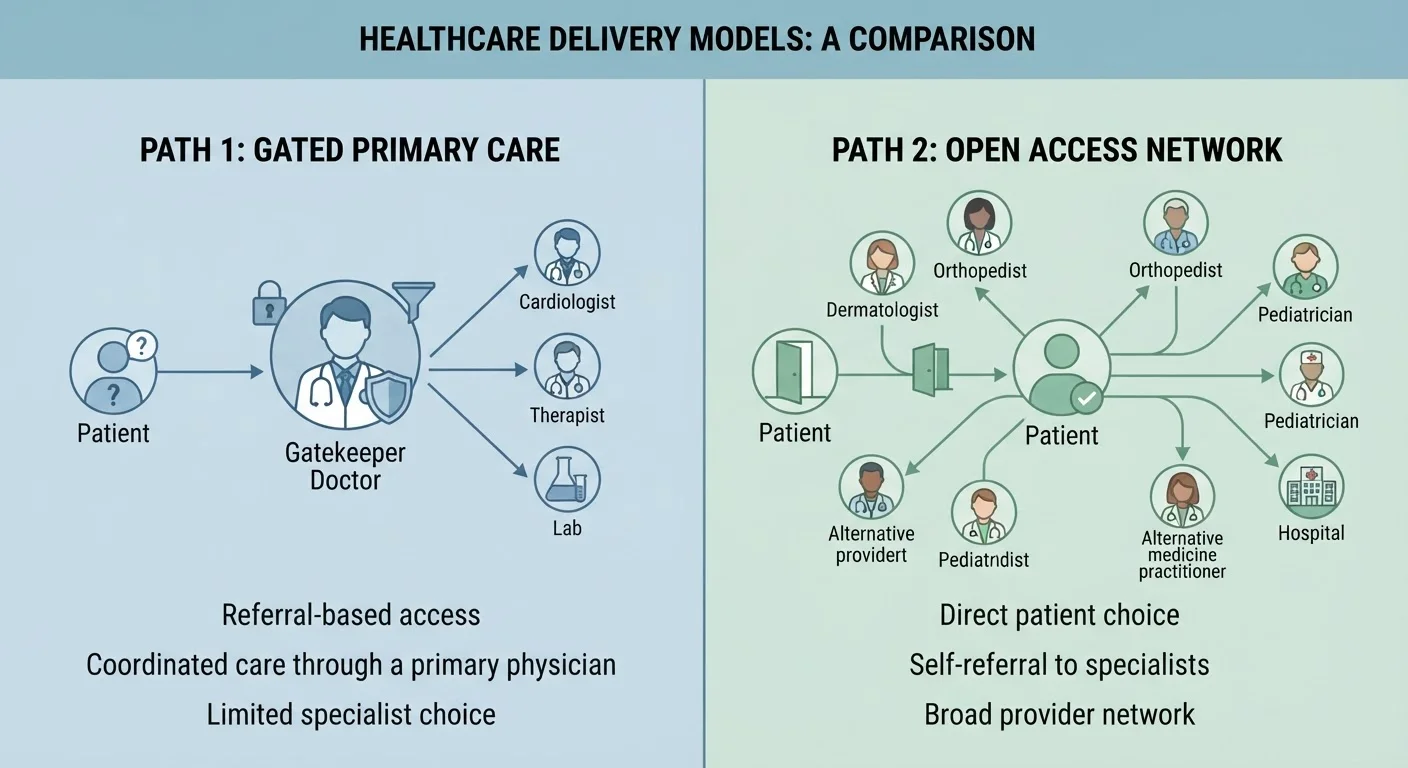
An HMO (Health Maintenance Organization) builds care around a contracted network of providers. You select a primary care physician (PCP) who coordinates your care. If you need to see a specialist, your PCP generally issues a referral. Going outside the HMO network usually means paying the full cost yourself — except in emergencies.
A PPO (Preferred Provider Organization) also has a preferred network, but the boundaries are softer. You can see in-network providers at lower cost-sharing rates, or go out-of-network and pay a higher share of the bill. No referral is required to see a specialist. That added flexibility comes at a price: PPO premiums and deductibles tend to run higher.
For a deeper look at how premiums and deductibles interact across plan types, see our explainer on deductibles and premiums.
Head-to-Head: Key Differences
The table below lays out the core differences side by side. Keep in mind that specific figures vary by insurer, employer plan, and region — always review your actual plan documents.
| Criterion | HMO | PPO |
|---|---|---|
| Monthly premiums | Generally lower | Generally higher |
| Requires a primary care physician (PCP) | Yes, typically required | No, optional |
| Referrals needed for specialists | Yes, in most cases | No referral needed |
| Out-of-network coverage | Generally not covered | Covered at higher cost-sharing |
| Network size | Defined, often regional | Broader, sometimes national |
| Out-of-pocket predictability | High (within network) | Variable (especially out-of-network) |
| Administrative complexity | Moderate (referral coordination) | Lower (more self-directed) |
One distinction worth emphasizing: the referral requirement. Under an HMO, skipping the referral step often means the specialist visit isn't covered at all. Under a PPO, you make that call yourself. That single structural difference shapes day-to-day care more than most people expect.
The Cost Trade-Off in Practice
Lower HMO premiums are real, but the savings come with constraints. If you stay within the network and your PCP manages your care smoothly, your out-of-pocket spending can be quite modest. But if you need a provider outside the network — or if you live somewhere with a thin provider network — the savings can evaporate quickly.
PPO plans shift more cost to you upfront (higher premiums, often higher deductibles), but they spread risk differently. You retain the option to pay more and access a broader pool of providers. For people managing a chronic condition or who have an established relationship with a specialist, that flexibility can justify the added cost.
~48%
Workers enrolled in PPO plans
According to KFF's Employer Health Benefits Survey, PPOs remain the most common plan type offered by employers, though HMO enrollment has grown steadily.
~25%
Workers enrolled in HMO plans
KFF employer survey data shows roughly one in four covered workers is in an HMO, reflecting their continued role as a cost-conscious option.
This is fundamentally the same trade-off that runs through all insurance decisions. Our guide on premiums vs. deductibles breaks down how to think through it clearly.
This article is for general informational purposes only and does not constitute personalized insurance, financial, or legal advice. Coverage terms, costs, and network rules vary by insurer, plan, and state. Consult a licensed insurance agent or benefits adviser to evaluate options for your specific situation, and always read your actual policy documents before enrolling.
How to Choose Between Them
A few practical questions can help clarify which structure fits you better:
- Do your current doctors participate in the plan's network? This is the most important single factor. An HMO with your preferred providers beats a PPO without them.
- How often do you need specialist care? Frequent specialist visits under an HMO require repeated referrals. A PPO removes that step.
- How predictable is your healthcare use? If you mainly need routine preventive care, HMO cost structures often work in your favor.
- Do you travel or live in multiple states? HMO networks are typically regional; PPOs generally offer more nationwide coverage.
It's also worth checking whether a high-deductible health plan paired with a Health Savings Account might be a third option worth considering. Our overview of HDHPs and HSAs lays out how that combination works in practice.
If you're still building familiarity with core insurance terms, decoding your policy's key terms is a useful starting point before comparing plan specifics.
Other Plan Types to Know About
HMOs and PPOs are the two most common structures, but they aren't the only options. EPO (Exclusive Provider Organization) plans combine an HMO-style network restriction with PPO-style no-referral access. POS (Point of Service) plans blend elements of both. If your employer or marketplace offers these, it's worth understanding how each one handles out-of-network care and referrals before comparing premiums alone.