Why Insurance Myths Persist — and Why They Matter
Insurance is one of those topics most people interact with only at purchase time or during a claim. That gap creates fertile ground for myths to take hold and go unchallenged for years. The problem isn't just that the myths are wrong — it's that acting on them can leave you financially exposed at exactly the moment you need protection most.
This article addresses five of the most persistent misconceptions, corrects the record with accurate information, and explains what the reality means for your coverage decisions. It is intended as general educational information, not personalized insurance or financial advice. For guidance specific to your situation, consult a licensed insurance professional.
Myth
Red cars cost more to insure because insurers charge a premium for that color.
Fact
Insurers do not factor in vehicle color when calculating your premium. They look at the make, model, year, engine size, safety ratings, and your driving record.
The red-car myth is one of the most durable in insurance. In reality, no major insurer in the U.S. uses paint color as a rating factor. When you apply for auto coverage, you're asked about your vehicle's year, make, model, trim level, and VIN — not its color. What actually moves your premium are things like crash-test ratings, repair costs for that model, your claims history, and where you garage the vehicle.
Myth
My landlord's insurance covers my belongings if something happens to my apartment.
Fact
A landlord's policy covers the building structure — not tenants' personal property or personal liability.
This misunderstanding is widespread, and it leaves many renters exposed. Your landlord's policy is designed to protect their investment in the building itself. If a pipe bursts and ruins your furniture, or your laptop is stolen, that loss is yours to absorb — unless you have your own renters insurance policy. Renters insurance also typically includes personal liability coverage, which protects you if someone is injured in your home. See what renters insurance actually covers for a breakdown of inclusions and exclusions. The gap between perception and reality in renters coverage is often larger than people expect.
Myth
As long as I carry the state-required minimum insurance, I'm adequately covered.
Fact
Minimums set by state law represent the legal threshold, not a recommended protection level. They're often far below what a real accident or claim can cost.
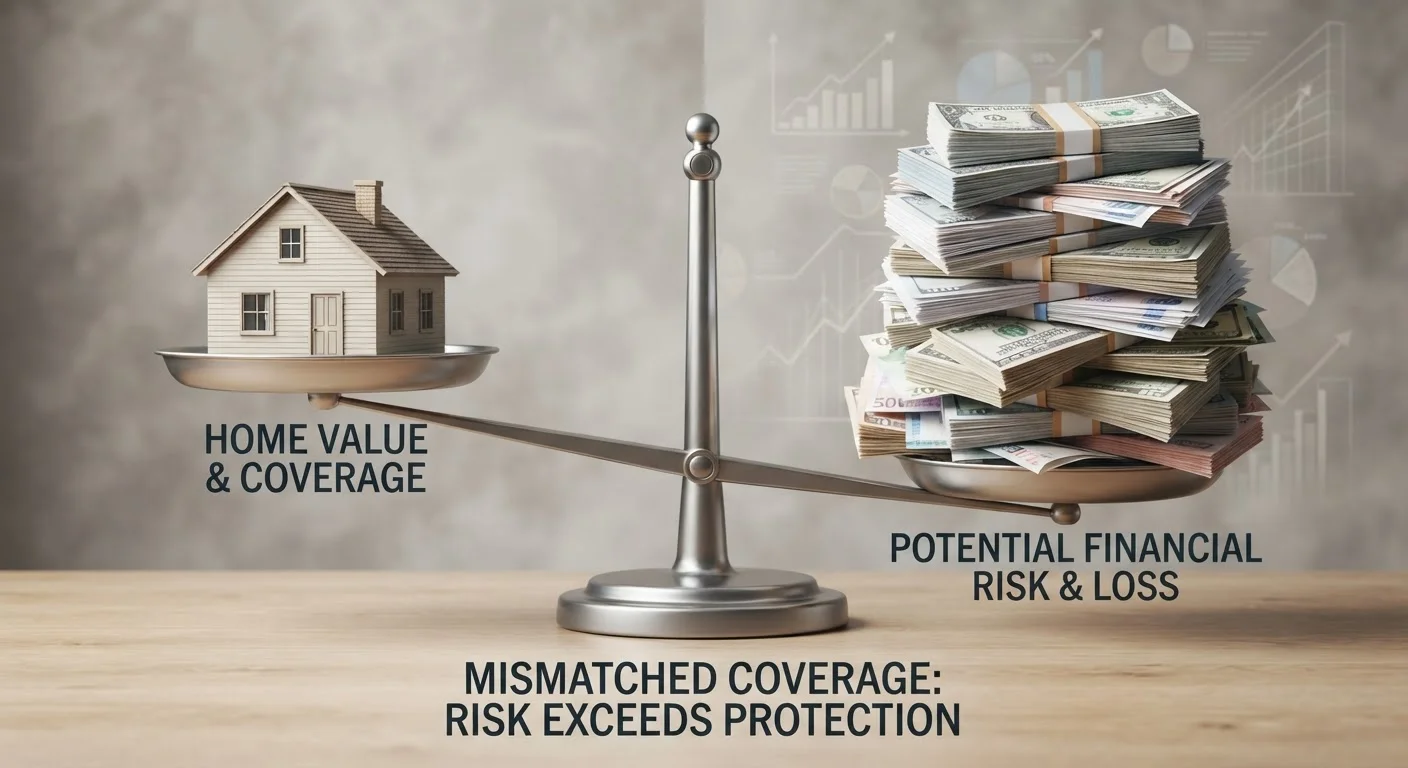
Every state that requires auto insurance sets a minimum liability limit — but those numbers haven't kept pace with the actual cost of medical care, vehicle repairs, or litigation. If you're at fault in a serious accident and damages exceed your policy limits, your personal assets can be at risk. The same principle applies to homeowners insurance: insuring your home for its purchase price rather than its full replacement cost can leave you short after a major loss. It's worth reviewing whether your coverage amount matches your actual risk on a regular basis.
Myth
Standard homeowners insurance covers flood damage.
Fact
Flood damage is explicitly excluded from virtually all standard homeowners insurance policies and requires a separate flood insurance policy.
This is one of the most financially damaging myths in home insurance. A standard homeowners policy covers certain types of water damage — like a burst pipe — but not flooding caused by external sources such as storm surge, overflowing rivers, or heavy rainfall accumulation. Flood insurance is available through private insurers and, in many areas, through the National Flood Insurance Program (NFIP). If you don't have a separate flood policy, a flood event will not be covered regardless of your homeowners policy's other terms. For a broader look at what people commonly get wrong, things people get wrong about what their policy covers is a useful companion read.
Myth
Once I buy a policy, I don't need to review it — I'm covered.
Fact
Life changes like home renovations, new purchases, marriage, or a new dependent can all create gaps between what your policy covers and what you actually need.
Insurance isn't a set-it-and-forget-it product. Major life events — buying valuable items, remodeling your home, adding a driver to a household — can shift your coverage needs significantly. If your insured value doesn't reflect current replacement costs or new assets, you may be underinsured without knowing it. Annual policy reviews with a licensed agent are a practical way to catch these gaps before a claim makes them visible. The core coverage types every consumer should know can serve as a useful starting checklist.
Checking Your Assumptions Before They Cost You
The myths above share a common thread: they lead people to either skip coverage they actually need or feel falsely secure in coverage that doesn't protect them the way they think it does. Both outcomes can result in real financial harm.
Minimum Coverage Is Often Not Enough
State-mandated minimums for auto insurance are floor requirements, not recommendations. If you cause an accident where damages exceed your limits, you are personally liable for the difference. A licensed agent can help you evaluate whether your current limits reflect your real financial exposure.
A practical first step is reviewing your declarations page — the summary document your insurer provides that outlines your coverage limits, deductibles, and what's included. If you're not sure what it means, that's a reasonable thing to bring to a licensed agent. You can also explore core coverage types to build a clearer picture of how different policies work together.
~57%
Renters without renters insurance
According to the Insurance Information Institute, roughly 57% of renters in the U.S. do not carry renters insurance, often because they believe their landlord's policy protects them.
~$52,000
Average flood claim payout (NFIP)
The National Flood Insurance Program has reported average flood claim payments in the tens of thousands of dollars — losses not covered by a standard homeowners policy.
Myths about insurance aren't harmless trivia. They shape real decisions — whether to buy renters insurance, how much liability coverage to carry, or whether to assume a flood is covered. The gap between what people believe their policy does and what it actually does is something worth closing before a claim forces the issue. For a related look at how similar myth-driven thinking can show up elsewhere in your finances, see everyday money tips for grounded, practical guidance.
This article is for general informational and educational purposes only. It does not constitute personalized insurance, financial, or legal advice. Coverage terms, exclusions, and availability vary by insurer, policy, and state. Always read your actual policy documents and consult a licensed insurance agent or adviser for guidance specific to your circumstances.