What Each System Actually Means
Home organization advice often assumes everyone thinks the same way — but two fundamentally different frameworks underpin most approaches: zoning and categorizing.
A zoning system organizes items based on where they are used. Everything needed in the kitchen stays in the kitchen. Craft supplies live near the craft table. The logic is spatial: your storage mirrors your activity. This is the approach behind the popular advice to "give everything a home."
A category system organizes items based on what they are. All batteries live together — regardless of which room uses them. All gift wrap, all cleaning cloths, all extension cords belong in a single designated spot. The logic is taxonomic: like goes with like.
Neither is wrong. They answer different questions. Zoning answers, "Where do I go to do this task?" Category systems answer, "Where do I find this type of thing?" Understanding which question your household asks most often is the first step toward choosing your approach. For a deeper look at how storage placement affects small spaces specifically, see vertical vs. horizontal storage strategies.
The Case for Zoning: Organizing by Where You Live
Zoning is intuitive for most people because it mirrors how daily life unfolds. You wake up, go to the bathroom, make coffee, sit at a desk. Each activity has a physical anchor — and zoning builds storage around those anchors.
Practical advantages of zoning:
- Items are always within reach when you need them, reducing back-and-forth trips.
- Zones make it easy to tidy up quickly — everything returns to its room.
- Works naturally in homes with dedicated, single-purpose rooms.
- Particularly effective for kitchens, bathrooms, and kids' rooms where tasks are concentrated.
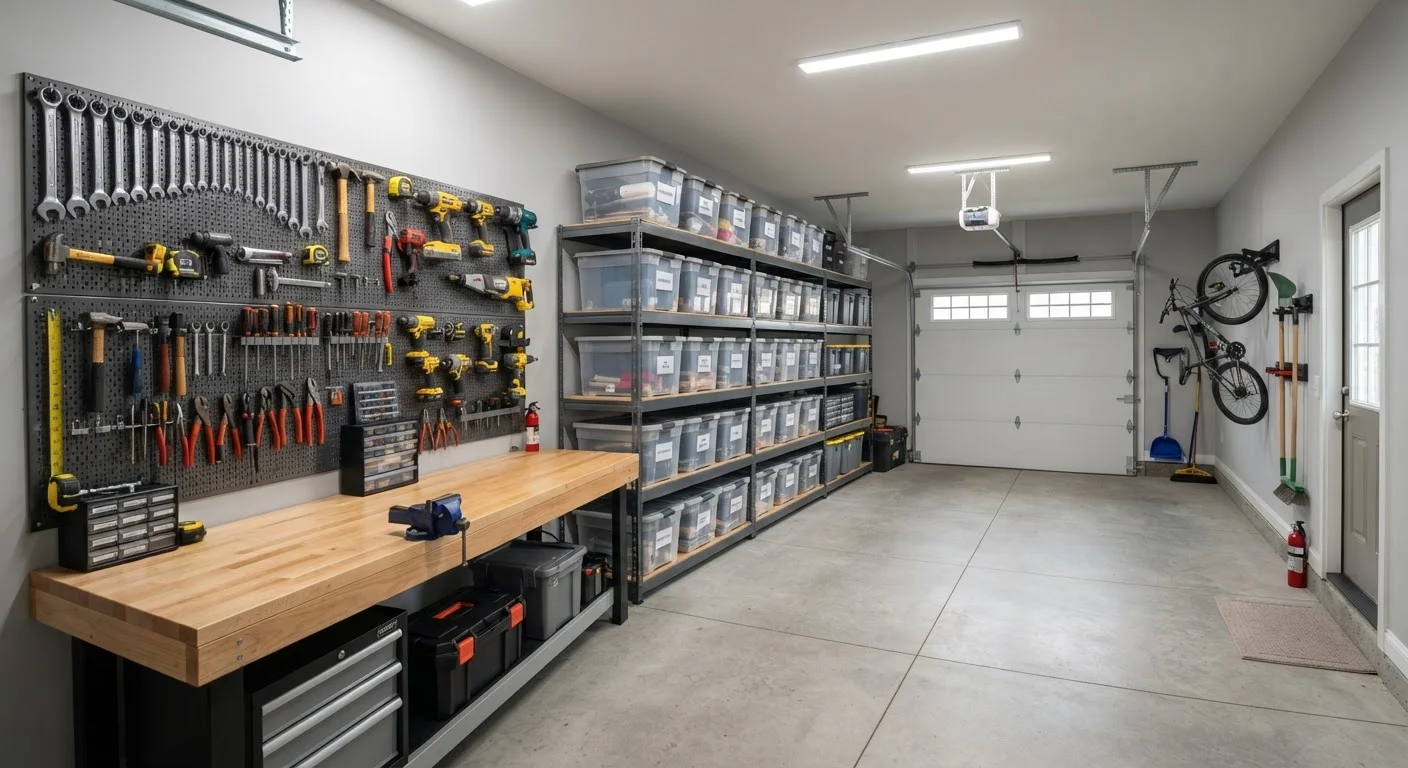
The biggest challenge with zoning is duplication. If scissors are used in three rooms, do you buy three pairs or pick one zone? Homes with open floor plans or multifunctional spaces can also make zone boundaries blurry. For room-specific guidance, the garage organization guide demonstrates how zoning a single large space into activity areas can transform its usefulness.
Start with One Zone Before Expanding
If you're new to zoning, pick a single high-traffic area — like the kitchen counter or a bedroom nightstand — and get that zone working well before moving on. Trying to rezone an entire home at once is one of the most common reasons reorganization projects stall. Small wins build the habits that sustain larger changes.
The Case for Category Systems: Organizing by What Things Are
Category systems appeal to people who think in inventories. If you've ever needed a spare lightbulb and couldn't remember which drawer it was in, a category system solves that problem permanently — because all lightbulbs live in one dedicated spot.
Practical advantages of category systems:
- Eliminates duplicate purchasing — you always know what you have.
- Easier to take stock and restock supplies.
- Works well for shared-use items like tools, batteries, office supplies, and medications.
- Scales effectively in smaller homes where rooms serve multiple purposes.
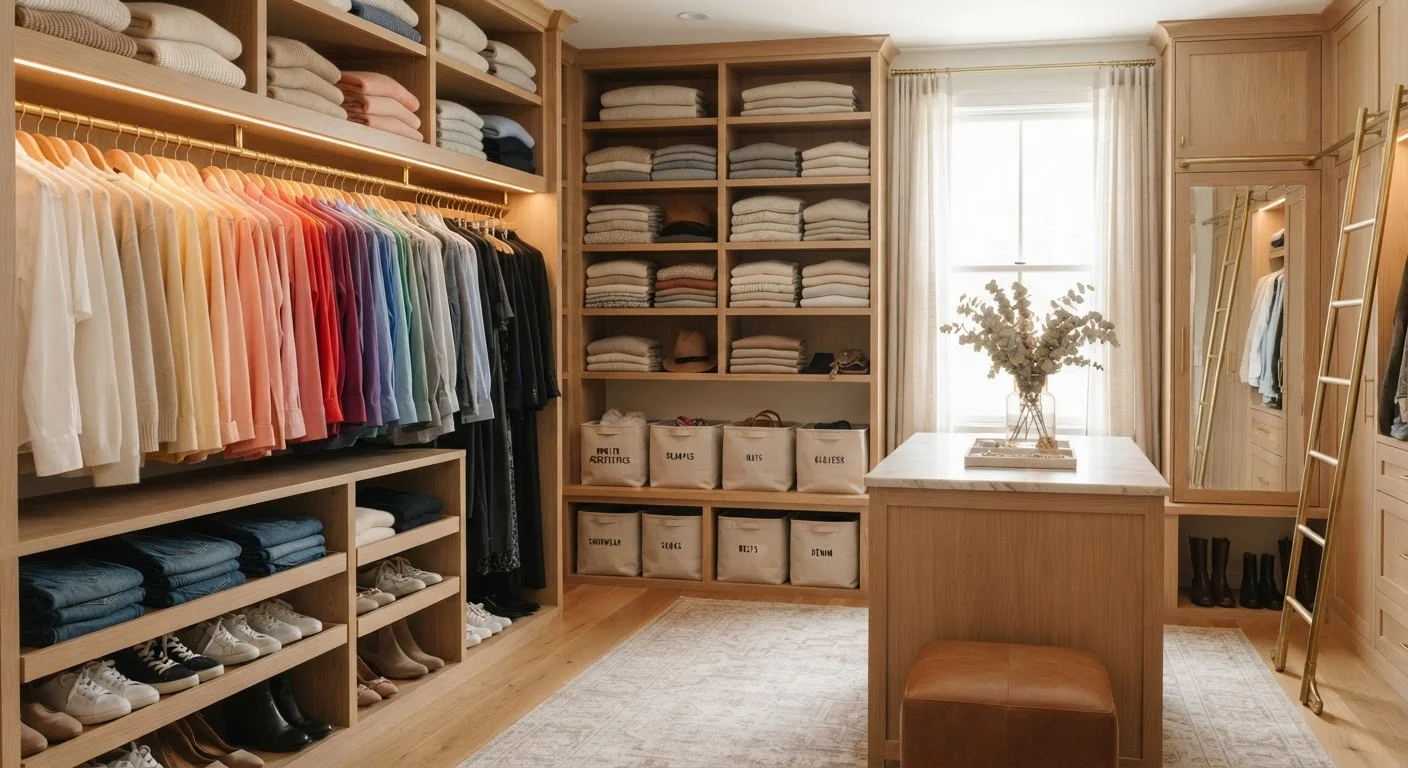
The trade-off is access friction. If all gift wrap is stored in a hallway closet but you wrap gifts in the bedroom, you're making extra trips. Category systems demand that users remember what category something belongs to — which can break down under stress or when other household members don't share the mental model. A well-maintained closet is a good proving ground for this approach; closet organization methods that hold up over time explores how to make category-based sorting stick long term.
| Zoning Systems | Category Systems | |
|---|---|---|
| Core logic | Organized by where items are used | Organized by what items are |
| Best for | Dedicated, single-purpose rooms | Multifunctional or small spaces |
| Daily access speed | Fast — items are at point of use | Moderate — requires knowing category location |
| Inventory management | Harder — duplicates can spread across rooms | Easier — all like items in one place |
| Setup complexity | Low — mirrors existing habits | Medium — requires taxonomy decisions |
| Maintenance ease | Easy if zones are clear | Requires household-wide buy-in |
| Works best for household size | Families with varied routines | Solo or organized duos managing supplies |
Combining Both: A Practical Hybrid Approach
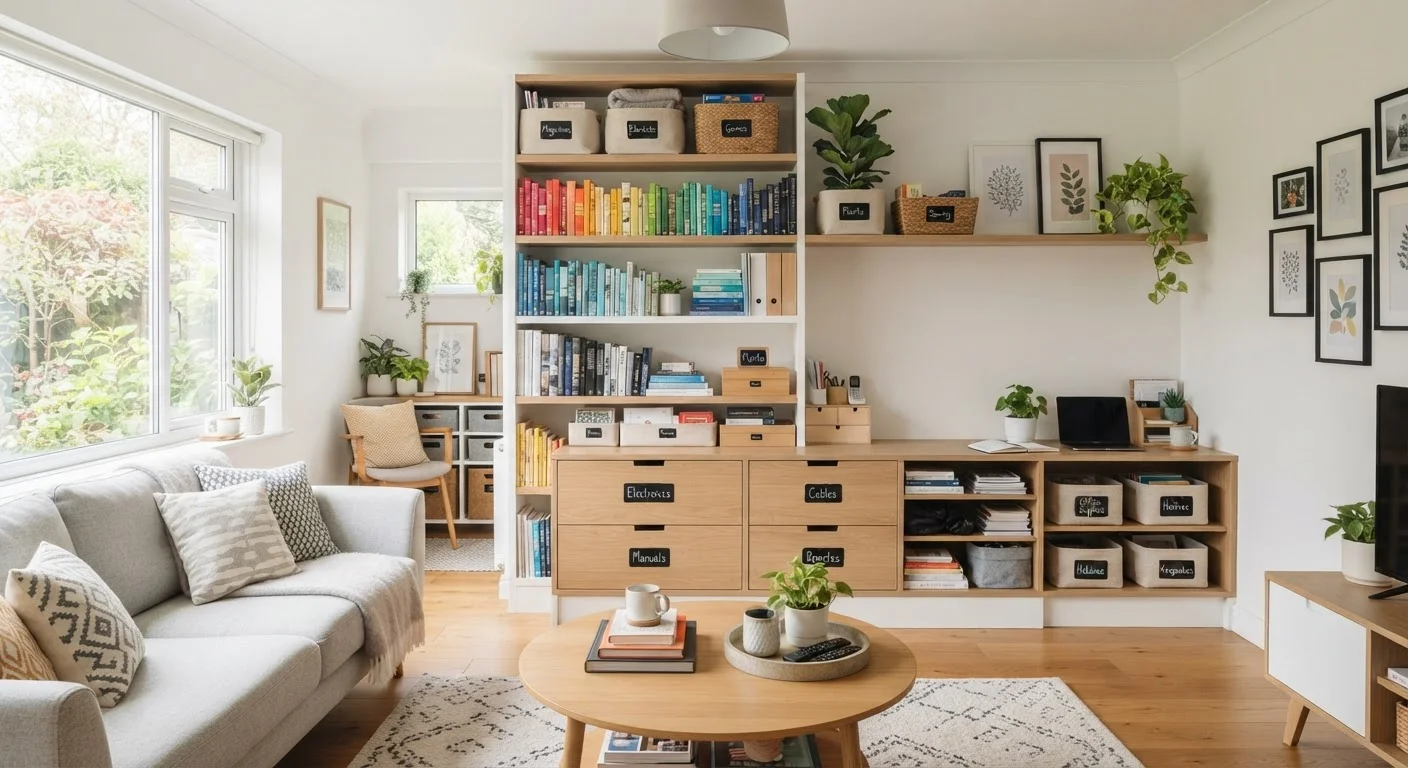
Most successful home organization systems aren't purely one or the other — they're zone-first with category logic inside each zone. Think of it as nesting: the room or area is the zone, and within that zone, items are sorted into categories.
For example, a home office zone holds everything work-related. Inside it, cables are grouped together, stationery is grouped together, and reference materials are grouped together. You navigate by zone first, then by category within it.
This layered approach gives you the speed of zoning — you know which room to go to — and the clarity of categorizing — you know exactly where within that room to look.
To build a hybrid system:
- Map your home's natural activity zones (sleeping, cooking, working, creating, relaxing).
- Identify items that belong clearly within one zone and place them there.
- For shared-use items, choose a central category home — a utility closet or laundry room works well.
- Label consistently so that all household members can navigate without asking.
Even well-designed systems need ongoing attention. understanding where organization efforts break down can help you anticipate the habits that cause maintained spaces to slip back into chaos.
25%
Time lost daily searching for items
Research from the National Association of Professional Organizers suggests Americans spend roughly 25% of their time at home looking for misplaced objects.
1 in 4
Households report buying duplicates
Consumer surveys have found that a significant portion of households regularly purchase items they already own because they couldn't locate the originals.