Why Most Closet Systems Fall Apart
Most closet organization efforts fail not during the initial setup, but in the weeks that follow. The system gets elaborate, life gets busy, and within a month the floor is covered again. Understanding why this happens is the first step toward building something that actually lasts.
The core problem is usually a mismatch between the system and real behavior. If returning a jacket requires three steps, it won't get returned — it gets dropped. Effective closet organization isn't about perfection; it's about designing a system that's easy enough to maintain on a tired Tuesday evening.
For a broader look at where organization efforts tend to unravel, see common organization pitfalls and the habits that prevent them.
Category-First Sorting: The Foundation
Before deciding where anything lives, pull everything out and group it by category — not by color or season. Shirts together, pants together, outerwear together. This single step reveals duplicates, forgotten items, and volume imbalances that no amount of rearranging can fix.
Once you can see everything in a category at once, decisions become much simpler. You'll notice you have twelve black t-shirts and no casual trousers, or that your shoe collection has outgrown its space. This honest inventory is what makes the rest of the system work.
Interestingly, many people discover wearable pieces they'd forgotten they owned. Shopping your own closet is one of the most practical ways to get more from what you already have without spending anything new.
Zone-Based Layout and Vertical Space
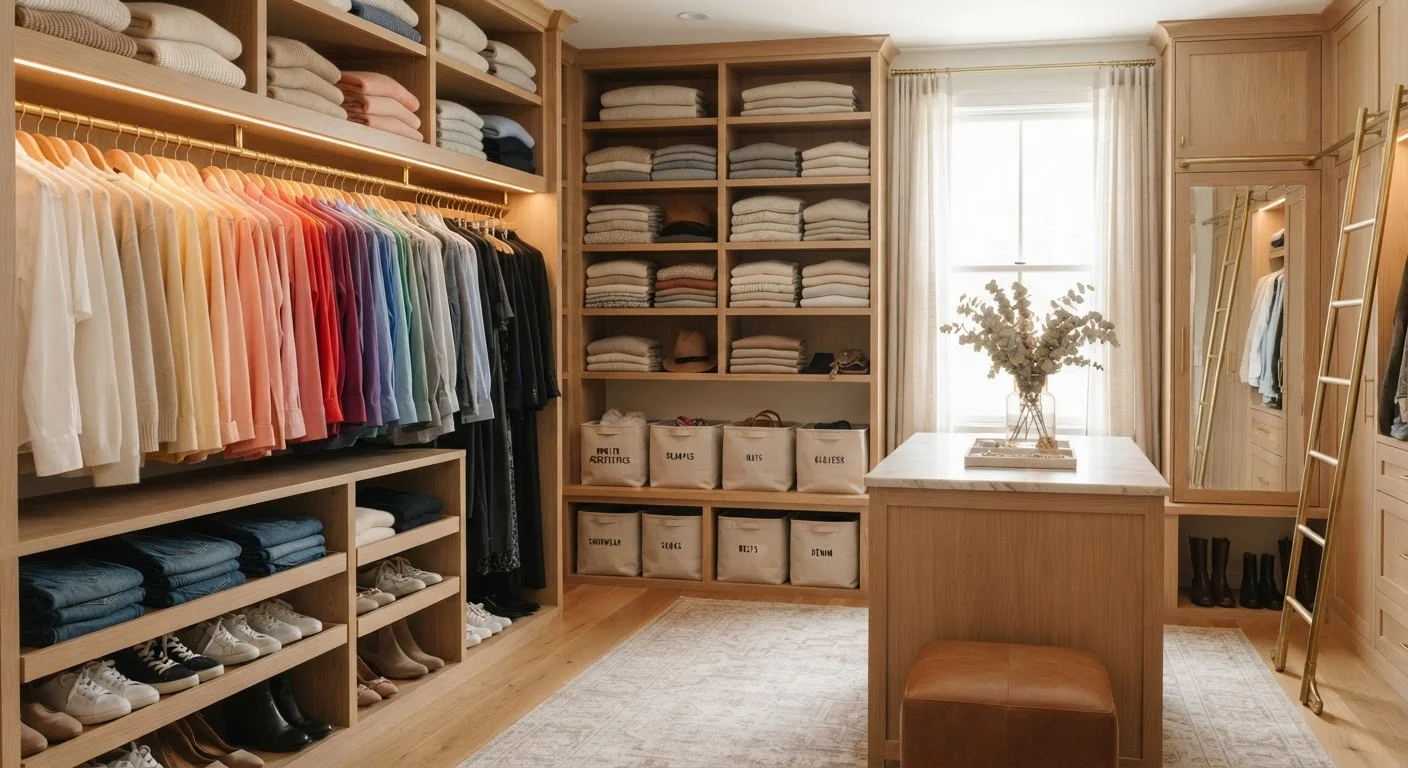
Once categories are established, assign each a dedicated zone in the closet. Items used daily — work clothes, everyday shoes — belong at eye level and arm's reach. Seasonal or rarely worn pieces move to high shelves or the back. This reduces handling time and keeps prime real estate working for you.
Most closets waste significant vertical space. A second hanging rod below shorter items (blazers, folded pants) effectively doubles hanging capacity. Open shelving above the rod works well for folded sweaters or bins. Hooks on the inside of the door handle bags, belts, or accessories without consuming floor or shelf space.
Make the Most-Used Zone Effortless
Position your most-reached-for items — everyday shoes, go-to tops, the jacket you wear three times a week — at the most accessible point in your closet, typically between shoulder and hip height. When the easiest grab is always the right item, the system sustains itself almost automatically. Reserve awkward corners and high shelves for things you access less than once a month.
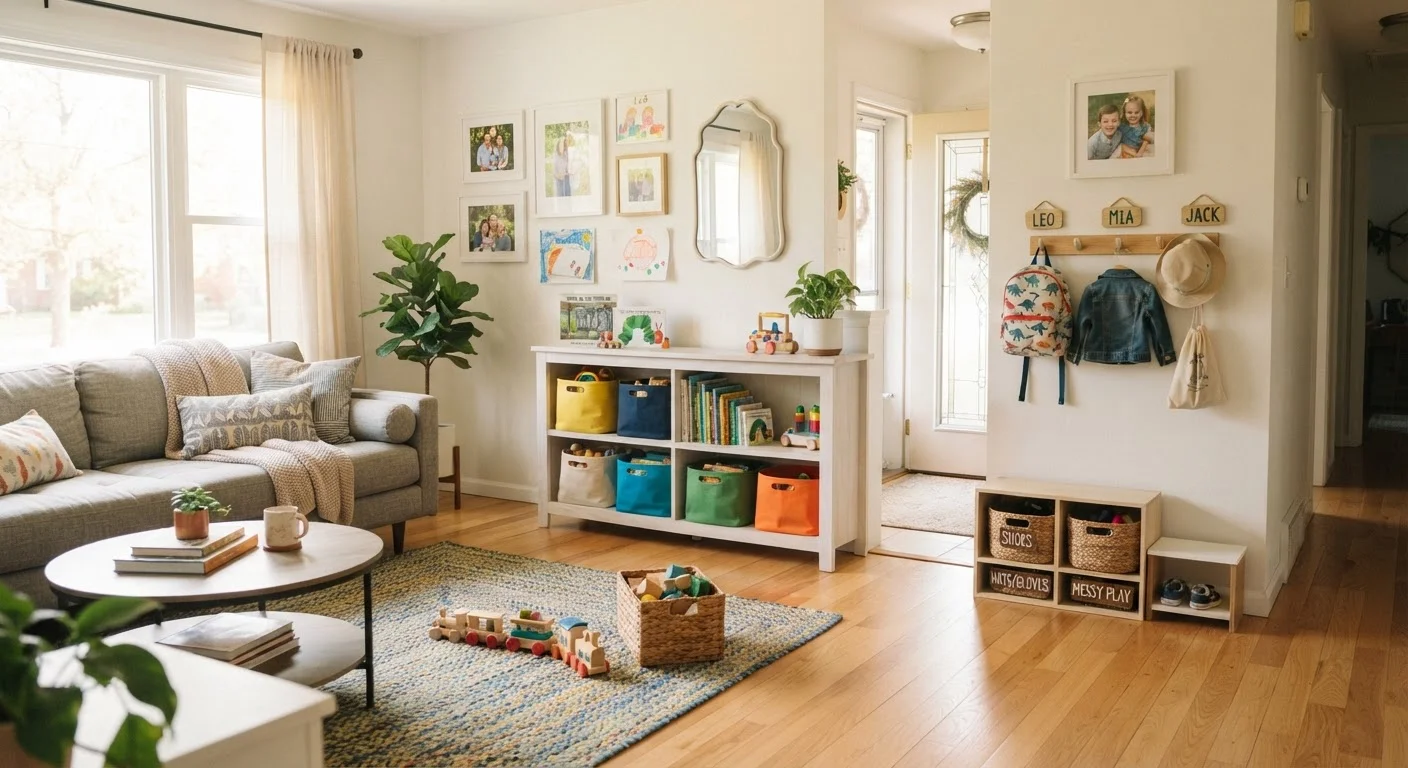
For households with children, zone-based thinking applies equally well — and at a lower height. Organization strategies for family homes offer practical frameworks that hold up under real daily use.
The Habits That Keep It Functional
Even the best physical setup will deteriorate without a small number of consistent habits. Two stand above the rest in their impact: seasonal rotation and the one-in-one-out rule.
Seasonal rotation means moving off-season clothing to less accessible storage — a high shelf, under-bed containers, or a secondary closet. This reduces the total number of decisions your closet has to present each morning. Seasonal wardrobe transitions can be done without buying anything new; it's mostly a storage and styling exercise.
The one-in-one-out rule is straightforward: when something new enters the closet, something leaves. It prevents gradual volume creep — the quiet culprit behind most closet relapses — and keeps your system from being overwhelmed over time.