The Problem the Rule Is Actually Solving
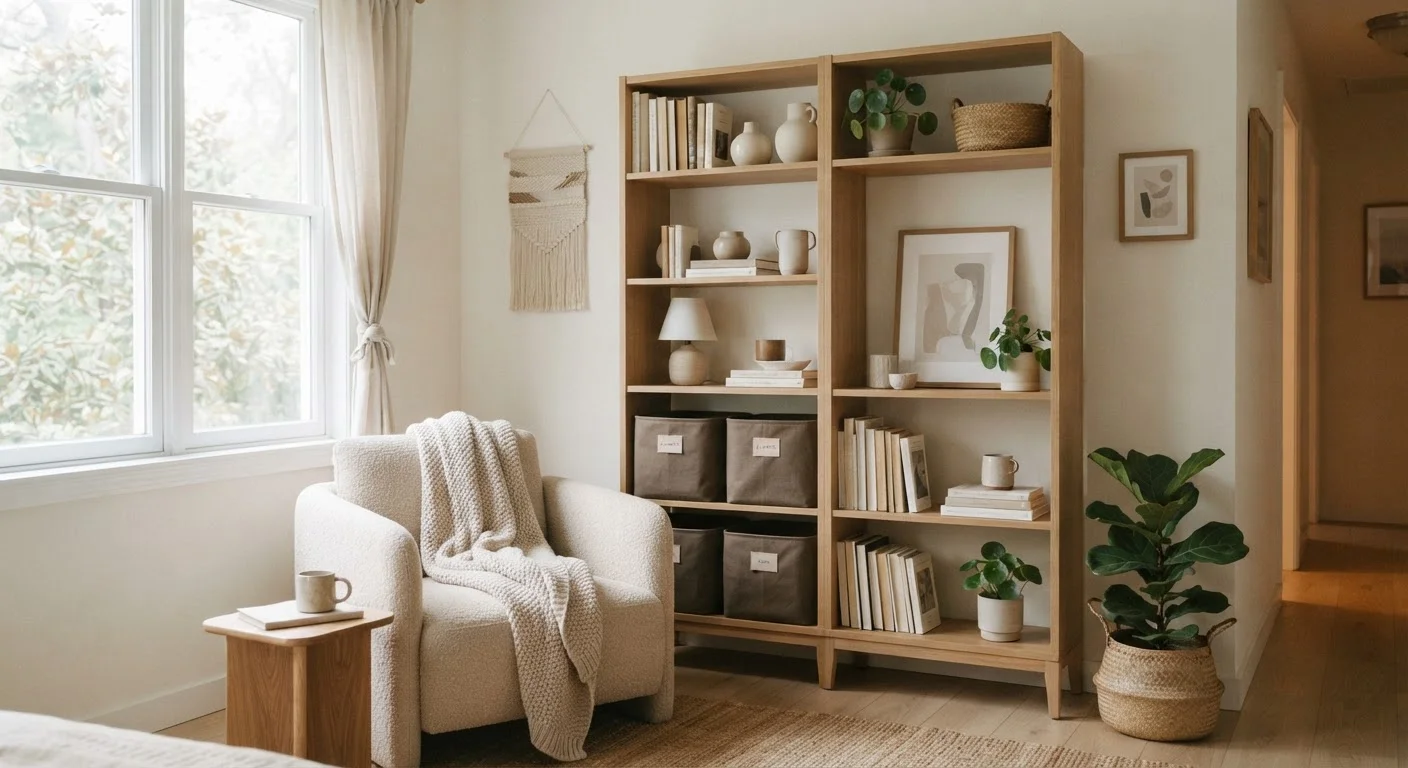
Most homes don't become cluttered from one dramatic shopping spree. They fill up gradually — a mug here, a gadget there, a jacket that seemed useful — until one day a closet or kitchen cabinet no longer closes cleanly. This slow accumulation is invisible precisely because each individual addition seems reasonable.
The one-in, one-out rule intervenes at the moment of acquisition rather than waiting for clutter to become a crisis. By tying every incoming item to a deliberate outgoing decision, it keeps the total volume of belongings from quietly growing over time. It doesn't require a weekend overhaul or a color-coded storage system — just a consistent decision made at the point of purchase or arrival.
If you've ever decluttered a space and watched it fill back up within months, the issue usually isn't the initial cleanout — it's what happens after. The habits that cause organized spaces to slip back into chaos almost always involve adding items without removing them.
This Is a Maintenance Habit, Not a Cure
The one-in, one-out rule works best after a space has already been decluttered to a comfortable baseline. Applying it to an already overfull room simply preserves the existing excess at a steady state. If you're starting from a cluttered home, a targeted decluttering session comes first — then the rule keeps things stable going forward.
Where It Works Best — Room by Room
The rule performs most reliably in spaces with clearly defined categories and limited storage.
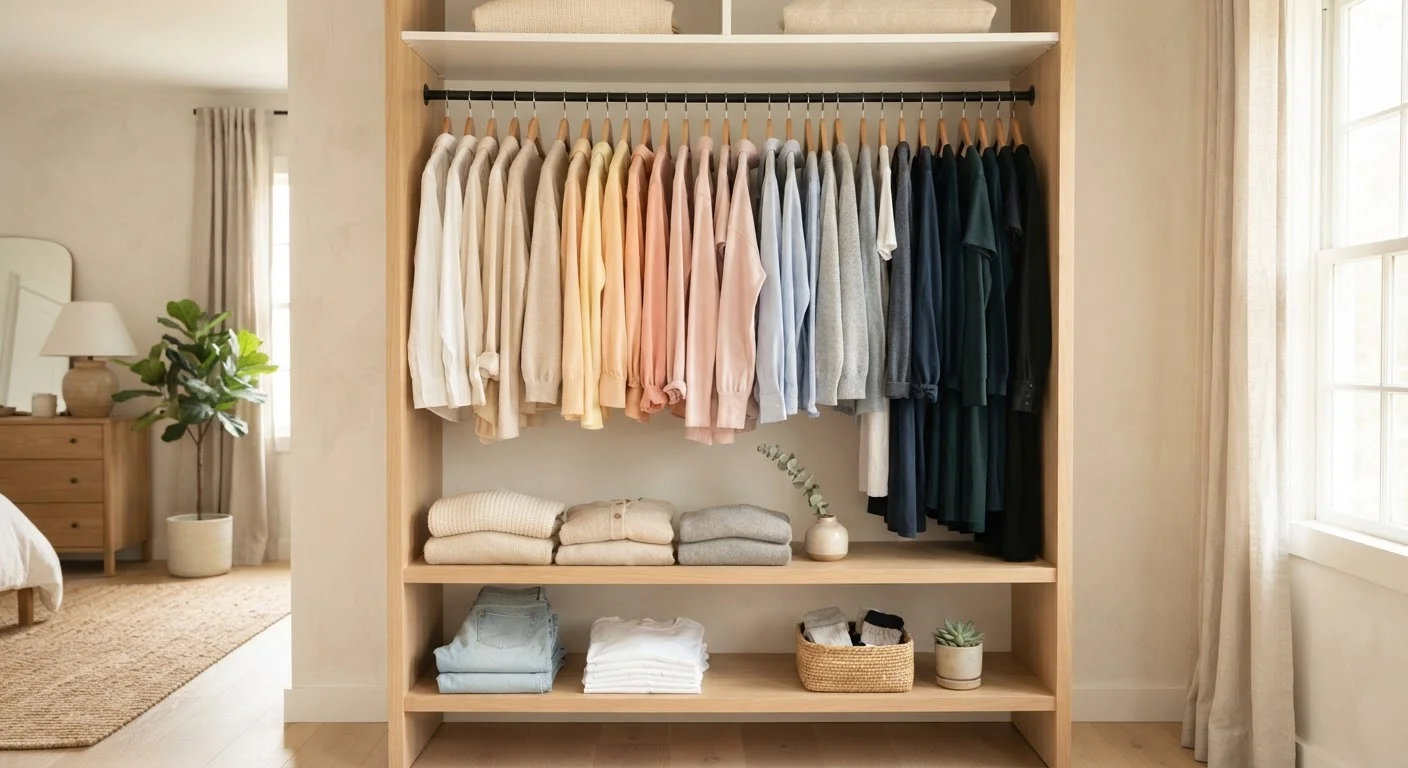
- Wardrobe: A new shirt means an old shirt leaves. This is the most common application and the easiest to enforce because clothing is easy to assess and donate. Wardrobes are also where the cycle of decluttering and refilling is most predictable — a pattern explored in depth in what keeps wardrobes cluttered even after a cleanout.
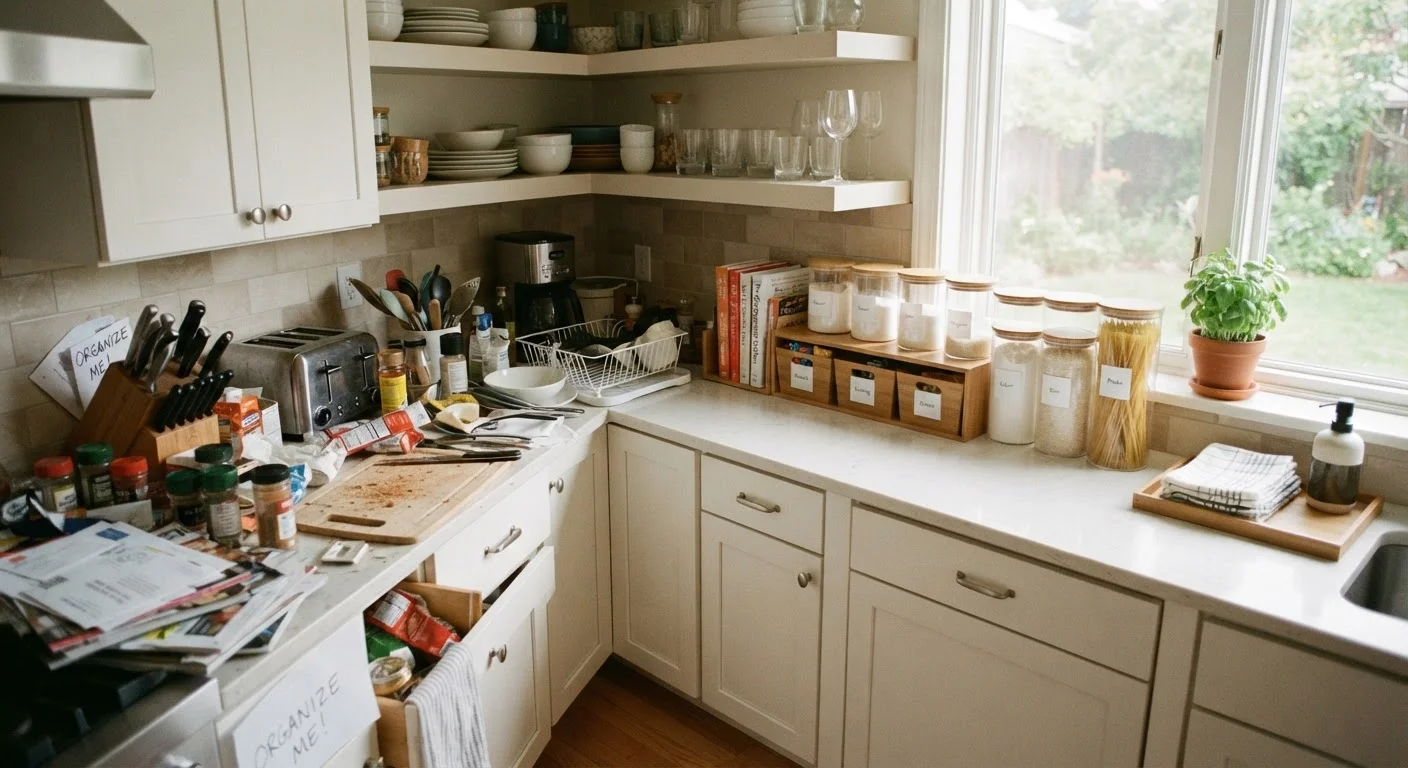
- Kitchen: A new pan replaces an old one. A new appliance means an older, less-used one is donated or discarded. Counter and cabinet space is finite, which makes the rule intuitive.
- Books and media: A new book comes in, a finished or unwanted one goes to a library, used bookstore, or neighbor.
- Children's toys: Before a birthday or holiday, involve kids in choosing one toy to donate. This also builds a useful habit for them early.
Build In a Brief Pause Before Buying
Before bringing a new item home, ask yourself what you'd remove to make room for it. If nothing comes to mind, that's useful information. This single question — asked consistently — catches a surprising number of purchases that would have added to clutter without adding much value.
The rule is less suited to consumables — food, cleaning supplies, toiletries — where the items naturally deplete. Don't overcomplicate low-stakes categories.
Why It Works Psychologically
The rule's effectiveness isn't just logistical — it's behavioral. Requiring a removal decision at the point of acquisition creates a natural pause. That pause prompts a question most impulse acquisitions skip entirely: Do I need this enough to give something else up for it?
“Behavior change is most durable when it is specific, immediate, and tied to an existing routine rather than relying on motivation or willpower alone.”
— BJ Fogg, Behavior scientist and author of 'Tiny Habits'
This friction isn't a bug — it's the mechanism. Researchers who study habit formation note that small, concrete constraints are more durable than broad intentions like "I'll buy less stuff." The one-in, one-out rule is specific, actionable, and attached to a visible trigger (the moment of bringing something home), which makes it easier to maintain than vague resolutions.
It also sidesteps one of the biggest obstacles to letting things go: deciding whether something is worth keeping. Instead of auditing everything you own, you only evaluate one item at a time — the one being replaced. That's a much lower cognitive load.
1 in 4
Americans with a clutter problem in their home
According to a survey conducted by the National Association of Professional Organizers, roughly one in four Americans describes their home as disorganized or burdened by too much stuff.
80%
Of items kept 'just in case' rarely used
Professional organizers commonly observe that the large majority of possessions people hold onto 'just in case' are never actually used — making the ongoing cost of keeping them (space, mental load) disproportionate to their value.
Where the Rule Falls Short
Like any system, this one has limits worth understanding before you rely on it.
It doesn't work retroactively. If a space is already overcrowded, maintaining a one-to-one ratio just locks in the existing excess. The rule is a maintenance tool, not a decluttering strategy. Use a deliberate decluttering method first, then apply the rule going forward. The common myths that keep homes messier than they need to be often include the assumption that one approach handles both phases.
It can also create a false sense of permission — reasoning that because one item is leaving, a questionable purchase is justified. The outgoing item should genuinely free up space and reflect a real swap, not become a rationalization.
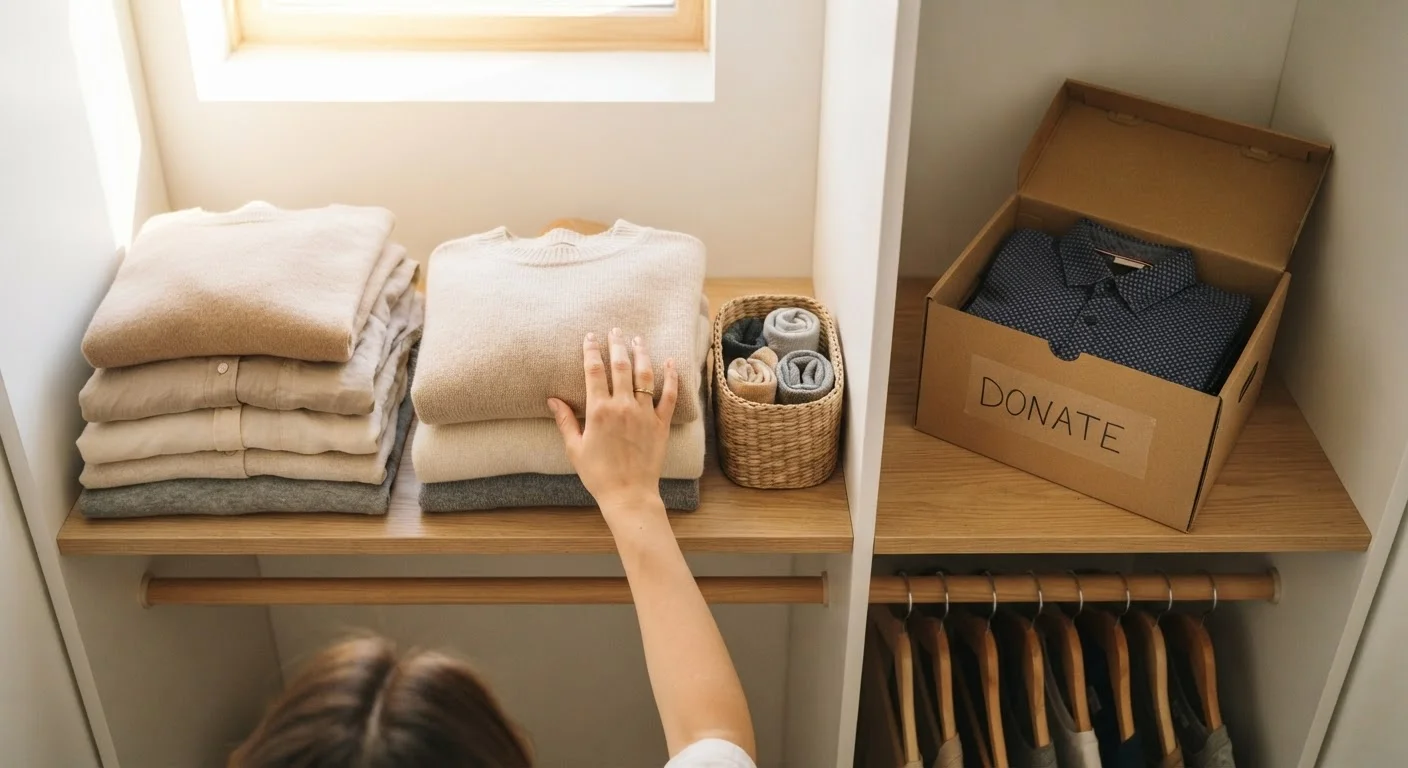
Finally, the rule requires follow-through. Designating the outgoing item without actually removing it defeats the purpose. A practical fix: keep a donation box near the door. When it fills, it leaves. The same friction-reduction logic applies to catch-all spaces like junk drawers — lowering the effort of the intended action makes it far more likely to happen.