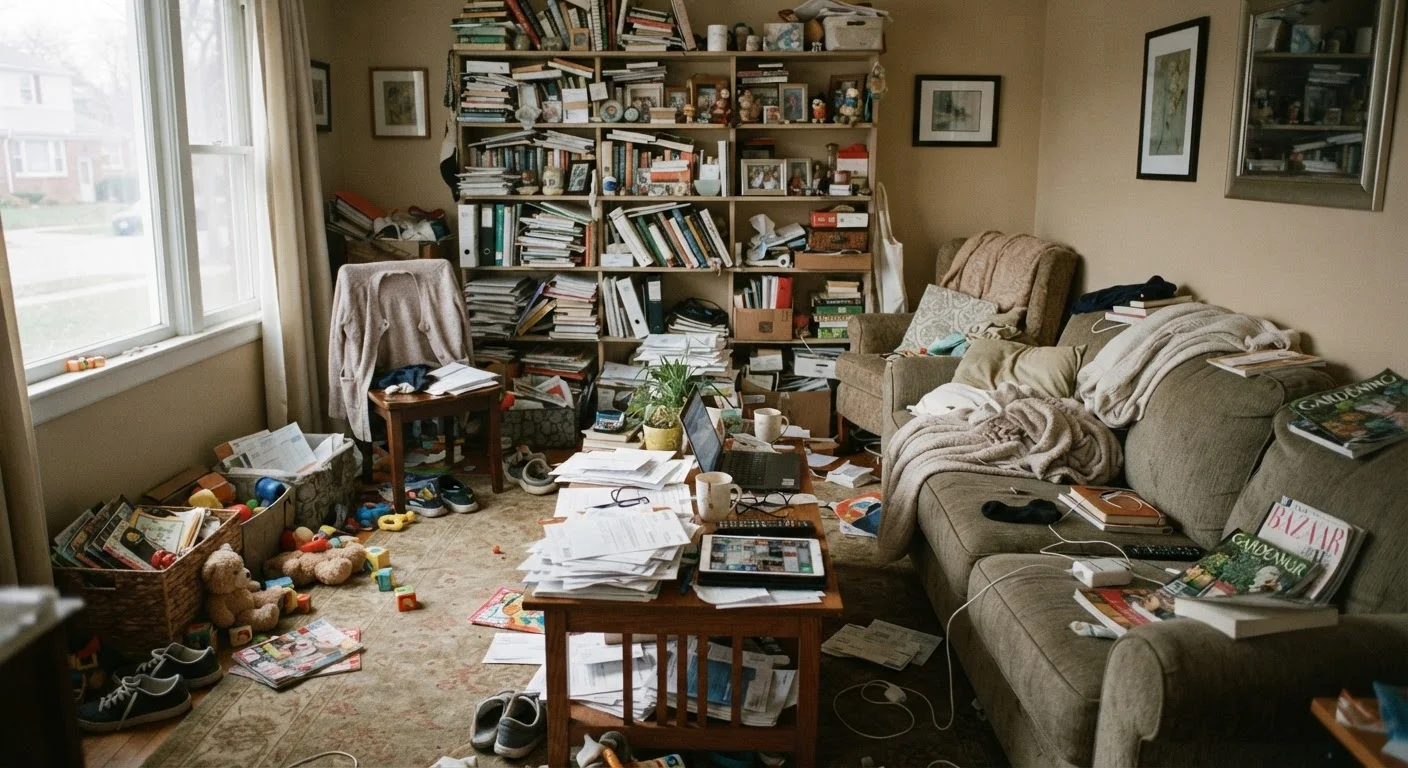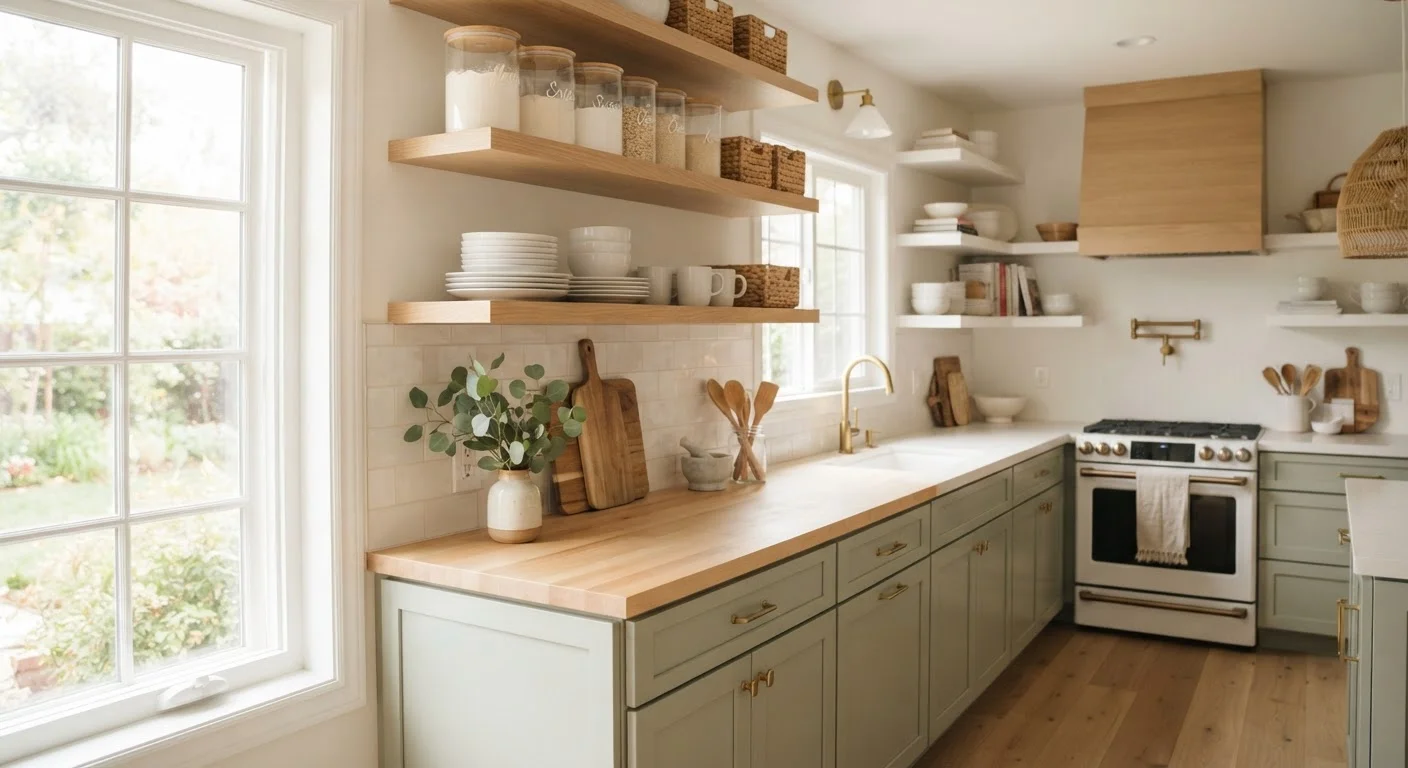

Why These Myths Matter
Most of us don't keep a messy home on purpose. We keep it because the stories we tell ourselves about our stuff make letting go feel risky, wasteful, or simply impossible right now. These beliefs aren't laziness — they're deeply ingrained habits of thought that feel practical but often work against us.
Research on decision fatigue and environmental psychology consistently links disorganized spaces to elevated stress and reduced focus. If clutter is affecting your daily life, the first step isn't buying storage bins — it's examining what you actually believe about the process. See also: why clutter causes stress.
Myth
I'll use it someday, so I should keep it just in case.
Fact
If an item hasn't been used in over a year and you can't name a specific upcoming need for it, it's unlikely to serve a real purpose.
The 'just in case' mindset is one of the most persistent drivers of accumulation. The problem is that 'someday' rarely arrives — and in the meantime, the item takes up physical and mental space. A more honest question to ask: if you needed this item and didn't own it, how hard would it realistically be to replace? For most everyday objects, the answer is 'not very.' Keeping things out of vague future fear means your home ends up storing possibilities rather than serving your actual life.
Myth
Decluttering requires a full weekend — I don't have the time.
Fact
Consistent 15-to-20-minute sessions are often more effective than infrequent marathon clear-outs.
The all-or-nothing mindset causes people to delay indefinitely because a big block of free time never materializes. Short, focused sessions — one junk drawer, one shelf, one category of items — avoid decision fatigue and produce visible results quickly. The junk drawer is a perfect example: it can be addressed in under 20 minutes and delivers an immediate sense of progress. Small wins build the momentum needed to keep going.
Myth
I need to buy the right storage containers before I can get organized.
Fact
Purchasing storage before reducing the volume of items typically results in neatly contained clutter.
Storage products are most useful after you've decided what stays — not before. Buying bins, baskets, and drawer dividers as a first step gives the impression of organization without addressing the underlying problem. The sequence that works: sort and reduce first, then measure the remaining items, then — if needed — find containment that fits. Skipping straight to shopping often means buying containers that are the wrong size, style, or quantity for what you actually own.
Myth
Getting rid of a gift is disrespectful to the person who gave it.
Fact
Keeping items out of obligation rather than genuine use doesn't honor the giver — it just fills your space with guilt.
Gifts fulfill their purpose at the moment they're given: they express care and connection. Once received, the object belongs to you, and you're not obligated to store it indefinitely. This is especially worth examining with items from people who have passed away — the memory of that person lives in you, not in the physical object. Holding onto something purely out of guilt tends to create negative associations with both the item and the space it occupies.
Myth
Once you declutter, you're done — the home stays organized on its own.
Fact
Without ongoing habits, most spaces return to their previous state within a few months.
A single decluttering session is a reset, not a permanent solution. New items enter the home regularly, priorities shift, and without deliberate maintenance, the same patterns that created clutter in the first place reassert themselves. Treating organization as a one-time project leads to repeated cycles of chaos and overwhelm. Simple habits — returning items to their designated spots, applying a one-in, one-out rule, doing a monthly pass through high-traffic areas — are what sustain a functional home long term.
Myth
Sentimental items are the place to start when decluttering.
Fact
Emotionally charged categories are the hardest to evaluate and should be tackled after you've built decision-making confidence with easier items.
Starting with keepsakes, family heirlooms, or childhood objects is a reliable way to stall out. These decisions require a level of emotional clarity that most people don't have at the beginning of the process. Professional organizers and behavioral researchers generally recommend building momentum with low-stakes categories — expired pantry items, duplicates, broken objects — before approaching anything with sentimental weight. By the time you reach those items, you'll have practiced making decisions and will feel less overwhelmed by the process.
Building Habits That Actually Stick
Correcting these myths is only useful if it changes how you act day to day. Decluttering works best as a recurring practice rather than a dramatic overhaul. Start with a single drawer, a single shelf, or one corner of a room — and make decisions about what you find there without deferring to 'someday.'
Avoid the 'Organize Everything at Once' Trap
Attempting to overhaul every room in a single session almost always leads to abandoned piles, misplaced items, and increased frustration. If you pull everything out at once and run out of energy, you may end up with a home that's more chaotic than when you started. Limit each session to one defined area — a single room, zone, or category — and complete that fully before moving on.
Room-by-room approaches tend to build momentum. The kitchen, for example, is one of the highest-traffic spaces and one of the most rewarding to tackle systematically — see decluttering your kitchen without losing your mind for a practical walkthrough. Wardrobes present their own challenges; the cycle of cleanout and refill is more common than most people realize, and wardrobe clutter mistakes explores why. For those newer to the process, home organization for beginners lays out the core principles clearly.
Understanding where organization efforts break down can also help you anticipate and avoid the common drift back into clutter after a successful session.
80%
Of clutter is never used again
Professional organizers commonly estimate that the vast majority of items people struggle to discard are never actually used after being kept.
40%
Of household cleaning time linked to clutter
According to the National Soap and Detergent Association, clutter is responsible for a significant portion of the time spent on household cleaning tasks.