Why Junk Drawers Form in the First Place
The junk drawer isn't a sign of a disorganized person — it's a sign of a busy one. When you walk in carrying groceries, mail, and a phone charger, the drawer nearest the door becomes a split-second solution. Over weeks, that pattern solidifies into a habit.
Psychologically, these spaces form because the brain prioritizes large organizational decisions over small ones. Deciding where a single rubber band lives feels wasteful compared to making dinner or answering an email. So the drawer absorbs everything that doesn't have an obvious home.
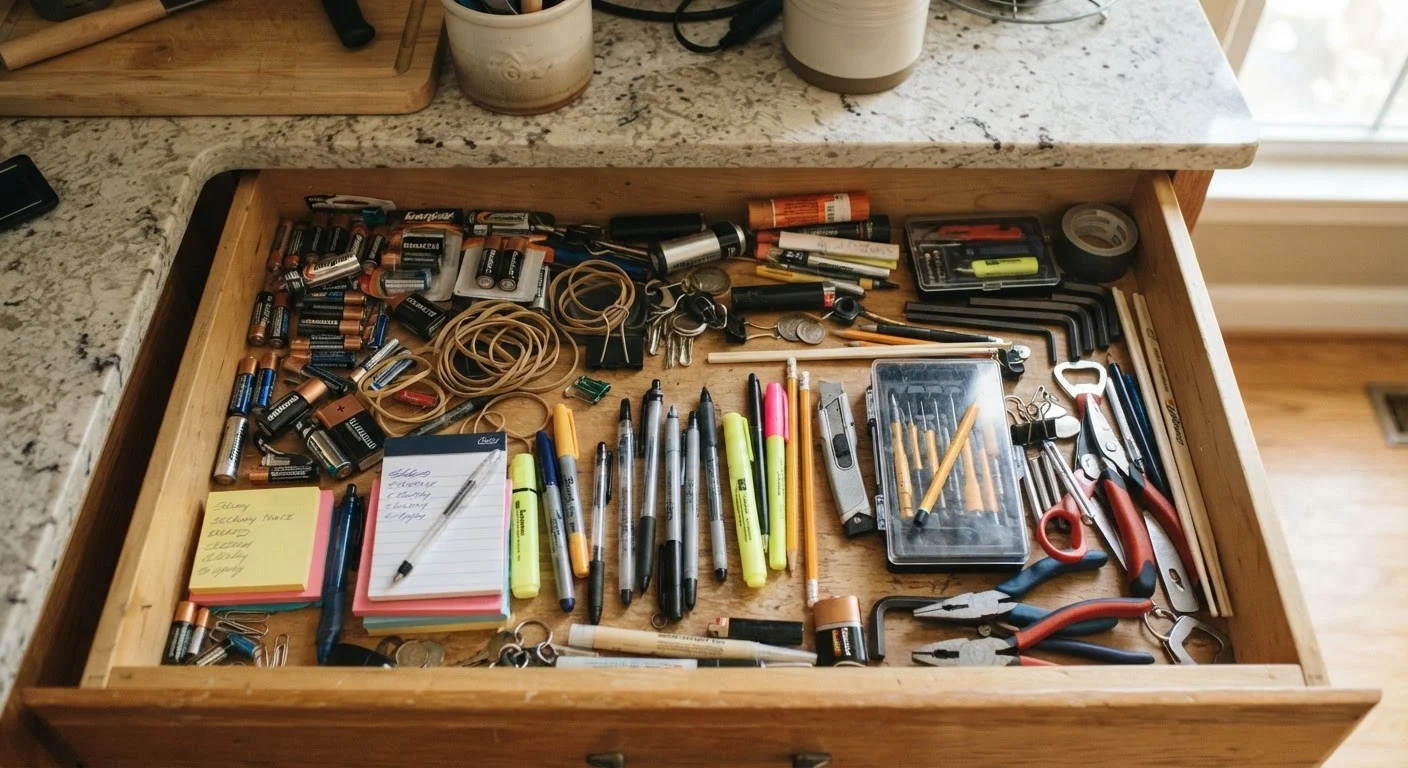
The trouble starts when the drawer fills past usefulness — when you can't find the scissors because they're buried under expired coupons and a phone from 2017. At that point, the drawer stops saving time and starts costing it.
More Space Isn't Always the Answer
If you find your junk drawer spilling over into countertops or other drawers, that's a signal to sort — not to acquire more storage. More space without a system just delays the same problem. See our common decluttering myths that may be keeping your home messier than it needs to be.
If you find your junk drawer spilling over into countertops or other drawers, that's a signal to sort — not to acquire more storage. More space without a system just delays the same problem. See our common decluttering myths that may be keeping your home messier than it needs to be.
What a Functional Junk Drawer Actually Looks Like
A well-managed junk drawer isn't empty — it's edited. It holds a curated set of genuinely miscellaneous items that are used infrequently but matter when you need them. Think: a few AA batteries, a measuring tape, a small screwdriver, a notepad, and maybe a spare key.
The key difference between a functional drawer and a chaotic one is containment. Simple dividers — even repurposed cardboard boxes or small containers — create zones that keep categories from merging. When batteries live in one section and pens in another, you stop digging.
~30 min
Average time to fully reset a junk drawer
Organization professionals commonly estimate a single drawer reset takes 20–30 minutes when done methodically from scratch.
1 drawer
Recommended maximum catch-all spaces per home zone
Home organization frameworks generally advise limiting catch-all spaces to one per functional zone to prevent clutter from spreading.
It also helps to set a rule about what doesn't belong. Items with their own dedicated storage space elsewhere, anything broken or expired, and things you haven't touched in over a year are candidates for removal. For items that have grown numerous enough to need their own space, give them one — a small bin, a labeled bag, or a dedicated drawer of their own.
How to Reset Your Junk Drawer in One Session
You don't need a weekend or a label maker to fix a junk drawer. Here's a straightforward process that takes most people 20 to 30 minutes:
- Empty it completely. Pull everything out onto a table or counter so you can see the full inventory.
- Sort into three groups: keep, relocate, and discard. Be honest — if it's broken or you forgot it existed, it probably goes.
- Identify what actually belongs. Only return items that are genuinely miscellaneous, used occasionally, and don't have a better home elsewhere.
- Add simple dividers. Small containers, drawer organizers, or even repurposed packaging work fine. The goal is visual separation, not perfection.
- Return items by category. Batteries together, writing tools together, hardware together. Leave breathing room — a drawer that's 70% full stays organized longer than one that's packed.
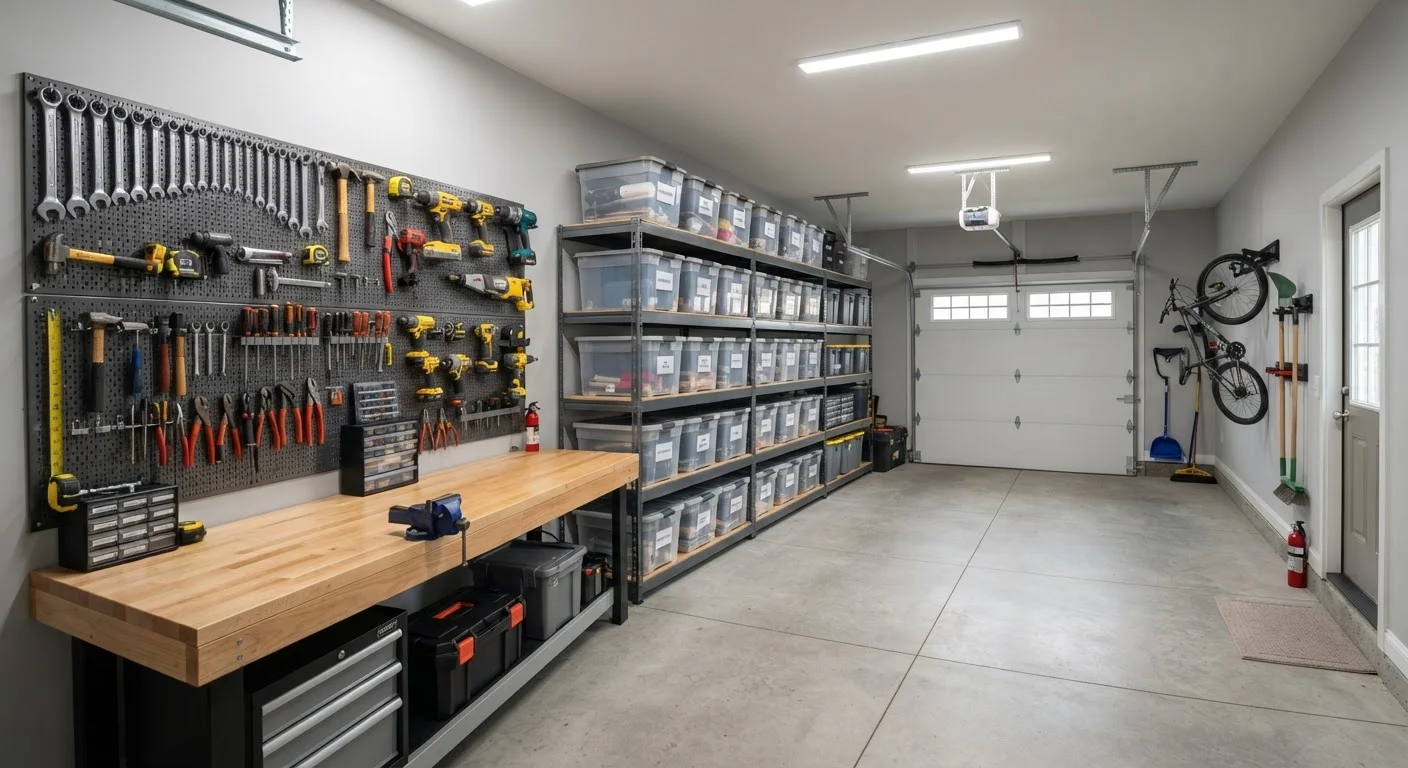
For items you removed, consider whether they belong in a dedicated space. Tools might belong in a organized garage, and tangled cables deserve their own solution — our guide on organizing cables and home office clutter is a useful starting point.
Leave Room to Breathe
Aim to keep your junk drawer no more than 70% full after a reset. That extra space gives frequently returned items a place to land without immediately triggering chaos. When it creeps above full, that's your cue for a five-minute sort — not a full reorganization.
Keeping It Manageable Long-Term
The reset is the easy part. Maintenance is where most people stumble. The drawer will naturally accumulate again — the goal isn't to prevent that entirely, but to slow the rate and do quick resets before things become overwhelming.
A once-a-month habit of spending five minutes pulling out anything that doesn't belong is enough for most households. The one-in, one-out principle can also apply here: when something new goes in, something old comes out.
If the drawer keeps overflowing despite regular resets, the problem may be upstream. Your kitchen as a whole might benefit from a broader look — our article on decluttering your kitchen covers how to build systems that reduce the daily pile-up before it starts.
The junk drawer isn't going away, and it shouldn't. It serves a real purpose. The only goal is to make sure it works for you — not against you.