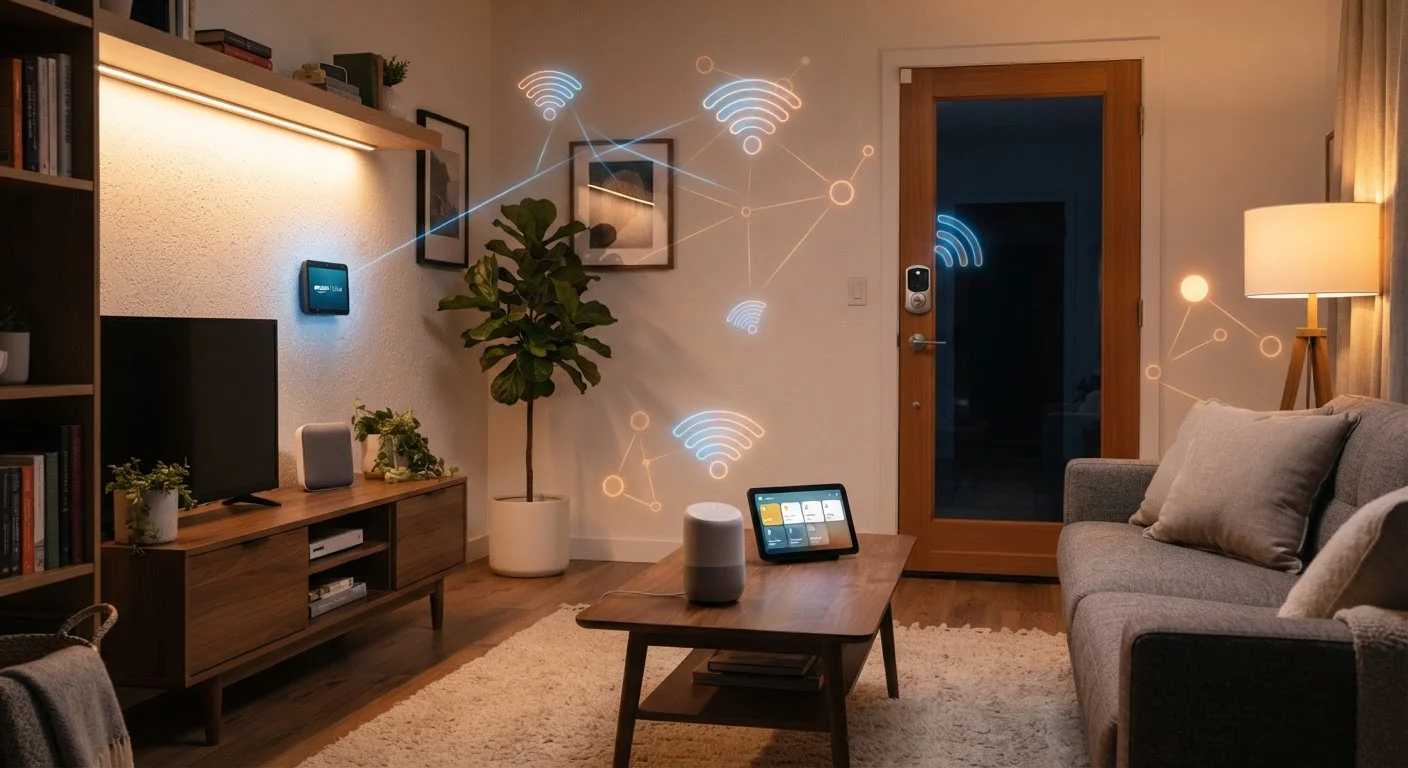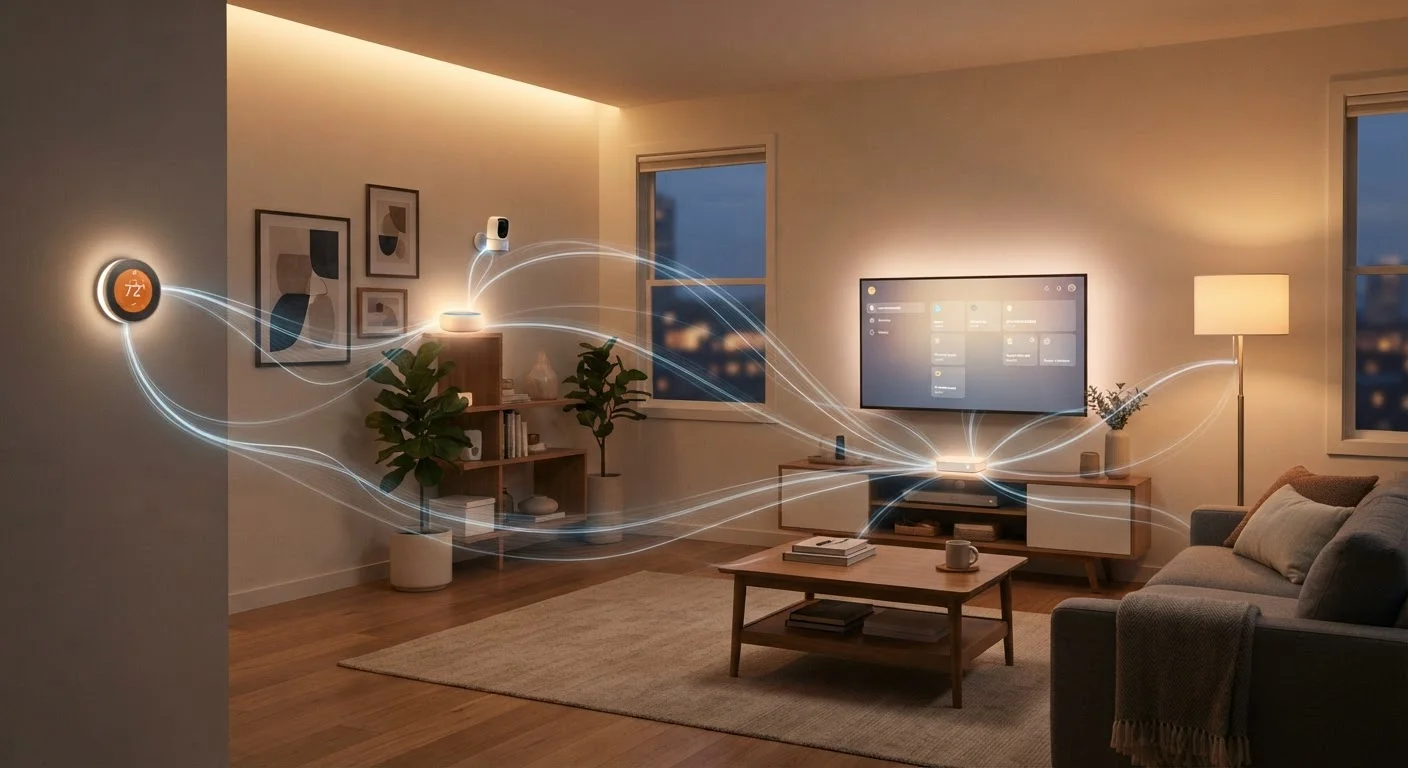
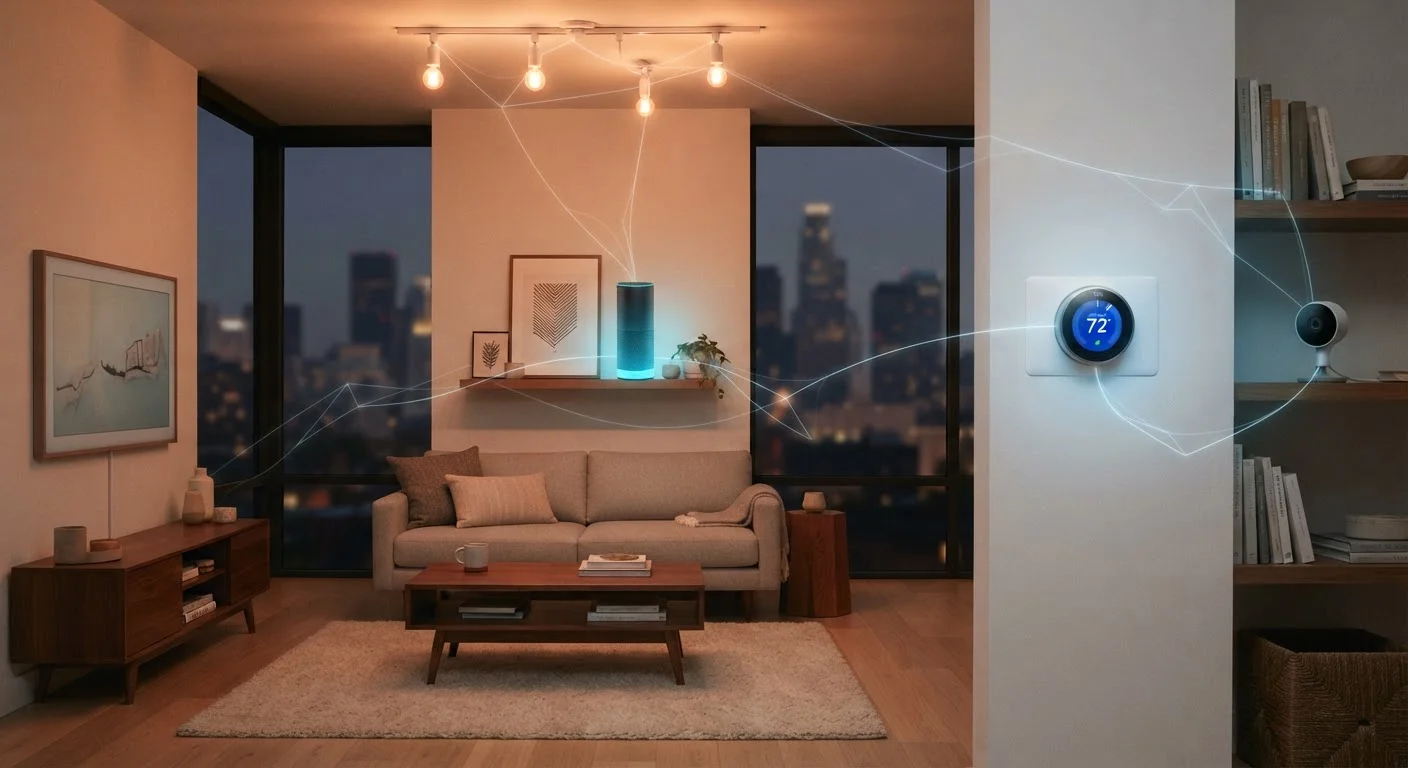
What Is Matter?
Matter is an open-source, royalty-free smart home connectivity standard developed by the Connectivity Standards Alliance (CSA) — an industry group whose members include Apple, Google, Amazon, Samsung, and dozens of device manufacturers. Its single goal is straightforward: let smart home devices from different brands talk to one another without forcing consumers to stay inside one company's walled garden.
Before Matter, buying a smart bulb meant checking whether it worked with your hub, your voice assistant, and your phone's app. That fragmentation frustrated millions of households. Matter is designed to end that by establishing a common language every certified device must speak. If you want to understand the broader context of how these ecosystems evolved, this plain-language explainer on what "smart home" really means is a useful starting point.
When evaluating a Matter-certified device, check whether it supports Thread or only Wi-Fi. Thread devices build a mesh network that improves reliability throughout your home, while Wi-Fi-only Matter devices depend entirely on router range.
Thread's mesh capability is a significant architectural advantage for homes with many devices or thick walls — a detail product pages often undersell.
If you manage a mixed-brand home, set up your primary Matter controller — usually a hub or smart speaker — before adding individual devices. A controller configured first creates a cleaner, more predictable commissioning experience.
The order of setup in Matter networks affects how smoothly multi-admin pairing (connecting a device to more than one ecosystem) resolves, according to CSA documentation.
How Matter Works Under the Hood
Matter sits at the application layer — meaning it defines how devices describe and share their capabilities, not the physical radio signal they use. Underneath Matter, devices communicate over two transport technologies:
- Wi-Fi — the same network your phone and laptop already use, suited to devices that need more bandwidth or are plugged into power.
- Thread — a low-power, mesh radio protocol designed for battery-operated sensors, locks, and similar devices. Thread devices form a self-healing mesh, so the network doesn't collapse if one node goes offline.
Crucially, Matter uses IP-based networking. That means devices can communicate locally on your home network, without every command having to travel to a manufacturer's cloud server and back. Faster responses and continued operation during internet outages are the practical payoffs.
A Matter controller — typically your smart home hub, phone app, or a compatible smart speaker — manages devices on your behalf. A single Matter device can be simultaneously linked to multiple controllers, so an Alexa-household member and a Google Home user in the same house can both control the same light switch natively. For a deeper comparison of how Matter stacks up against older wireless protocols, see Matter vs. Zigbee vs. Z-Wave.
550+
Matter-certified devices available
The Connectivity Standards Alliance reported more than 550 certified Matter devices across multiple categories as the standard expanded through its early revisions.
4
Major ecosystems natively supporting Matter
Apple Home, Google Home, Amazon Alexa, and Samsung SmartThings all function as Matter controllers, representing the vast majority of consumer smart home setups.
2022
Year Matter 1.0 launched publicly
The Connectivity Standards Alliance officially released the first Matter specification in November 2022 after years of development under its earlier working title, Project CHIP.
What Devices and Ecosystems Support Matter?
As of the standard's current revision, Matter covers a meaningful range of device categories:
- Smart lights and switches
- Smart plugs and outlets
- Door locks
- Thermostats and HVAC controls
- Window blinds and shades
- Garage door controllers
- Sensors (motion, contact, temperature, humidity)
- Robotic vacuums (added in a later revision)
On the ecosystem side, Apple Home, Google Home, Amazon Alexa, and Samsung SmartThings all support Matter as controllers. This means a Matter-certified device added to your home can, in principle, be managed through any of those platforms without requiring separate setup steps for each. For a fuller picture of how these platforms interact, Smart Home Ecosystems Explained covers the relationship between platforms and protocols in accessible terms.
Ecosystem Support Does Not Mean Full Feature Parity
A Matter-certified light bulb added to both Google Home and Apple Home will turn on and off in both apps — but advanced features like adaptive lighting schedules or energy usage graphs may only appear in the manufacturer's own app or a single preferred ecosystem. Read the fine print on feature availability before assuming full cross-platform functionality.
What Matter Means for Your Existing Devices
If you already own smart home devices, the news is mixed but leaning positive. Some manufacturers have released firmware updates that add Matter support to older hardware — particularly devices already running on Thread or Wi-Fi. Certain smart speakers and hubs have been updated to act as Matter controllers, meaning your existing voice assistant setup may already be Matter-ready.
However, not every device will receive a Matter update. Older Zigbee or Z-Wave devices typically require a Matter bridge — a hub that translates between those protocols and Matter — to participate in a Matter ecosystem. The bridge approach works, but it adds a dependency: if the bridge loses power or support, the devices behind it lose their Matter connection.
Matter Bridges: A Useful but Imperfect Solution
Bridges allow older Zigbee and Z-Wave devices to appear as Matter devices to your controller, extending the useful life of existing hardware. Keep in mind that bridge support depends on the bridge manufacturer continuing to provide software updates. If a bridge reaches end-of-life, the devices behind it lose their Matter integration even if the devices themselves still function.
If you are planning a more deliberate, long-term smart home build, this end-to-end smart home planning guide walks through how to account for protocol compatibility from the start.
Matter's Current Limitations
Matter is promising, but it is not a complete solution — at least not yet. Several important gaps are worth understanding before you plan around it:
- Video cameras and doorbells are not yet fully supported. Video streaming is a technically complex area the standard is still addressing.
- Complex appliances — refrigerators, washing machines, multi-zone HVAC systems — are largely outside the current specification.
- Ecosystem-specific features remain locked. Matter guarantees baseline interoperability (on/off, brightness, temperature), but advanced features — custom automations, energy monitoring dashboards, manufacturer-specific scenes — may still require the device's native app.
- Thread border routers are a prerequisite for Thread-based devices. Without a compatible hub or smart speaker acting as a border router on your network, Thread devices cannot join your Matter setup.
For unfamiliar terminology encountered while researching devices, the Home Tech Jargon Glossary demystifies terms like Thread, border router, and IP networking in plain language.
Thread Requires a Border Router on Your Network
Thread-based Matter devices cannot connect to your home network on their own — they need a Thread border router to bridge the Thread mesh to your Wi-Fi network and the internet. Compatible smart speakers (such as a HomePod mini or certain Nest devices) often serve this role automatically, but not every hub does. Confirm your existing equipment includes a Thread border router before purchasing Thread-based sensors or locks.
Should Matter Factor Into Your Next Purchase?
For most consumers shopping for new smart home devices today, Matter certification is a reasonable criterion to prioritize — not because it guarantees a perfect experience, but because it reduces the risk of being locked into a single ecosystem you might later want to leave.
Look for the Matter logo or explicit certification language in product listings. Devices labeled "Works with Matter" have passed CSA's compliance testing, giving you confidence that the cross-platform promise is backed by a real standard rather than a marketing claim.
That said, Matter certification alone should not override other practical considerations: device quality, reliability track record, and the depth of features available in your preferred app all still matter (lowercase). Think of the standard as a minimum compatibility floor, not a full quality guarantee.
Check the CSA Device Registry Before You Buy
The Connectivity Standards Alliance maintains a publicly searchable registry of all Matter-certified products. Searching a product's name or model number there takes about 30 seconds and confirms whether its certification is genuine. Marketing language on retail pages can be imprecise; the registry is authoritative.
The smart home space continues to evolve rapidly, and Matter's device category coverage expands with each new specification revision. Checking the CSA's official device registry before purchasing is the most reliable way to confirm current certification status for any specific product.