The Logic Behind the Order
Think of your skin as a series of doors — each product needs the previous one to have opened its door before it can enter. Skincare layering isn't arbitrary ritual; it's rooted in basic chemistry and skin biology. Products with smaller molecules and lighter textures can penetrate more readily, while thicker formulas sit closer to the surface and form a partial seal.
When you apply a heavy cream before a serum, the cream's occlusive barrier keeps the serum from reaching the deeper layers of the skin where its active ingredients are meant to work. The result: you've used the product, but you haven't gotten much from it. Applying in the right order means each product gets a fair shot at doing exactly what it's formulated to do.
If you're new to building a routine from scratch, our guide on your first grown-up skincare routine is a great place to anchor the basics before adding more steps.
~60%
Adults who report using multiple skincare products daily
Survey data from market research firms consistently shows multi-step routines are now common among US adults who use any skincare at all.
30–60 sec
Recommended wait time between skincare layers
Dermatologists generally advise a brief pause between applications to allow each layer to settle and reduce pilling risk.
The Standard Layering Sequence
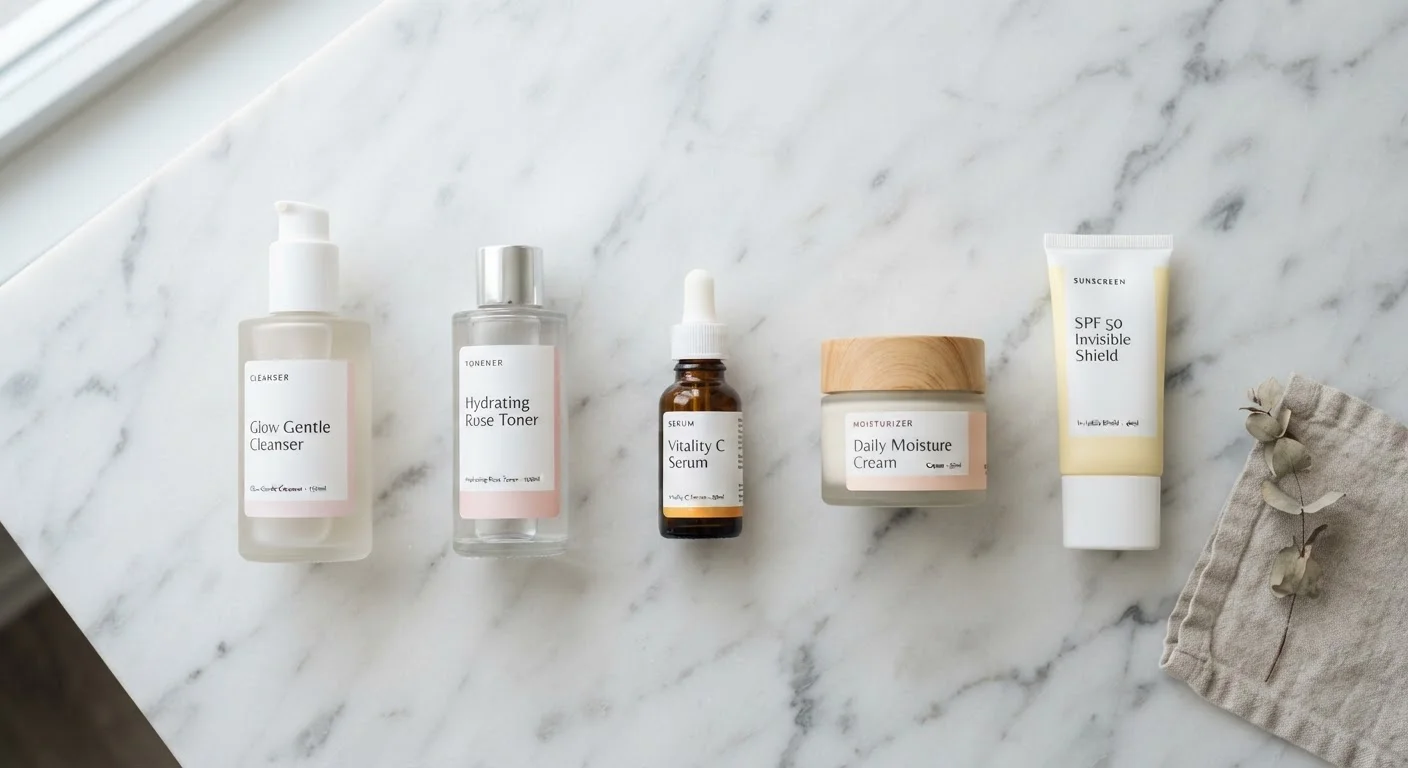
A practical morning routine follows this general order:
- Cleanser — Always start with a clean surface. Cleansing removes overnight sebum, sweat, and any residue that could interfere with absorption.
- Toner or essence — These water-based steps prep and lightly hydrate skin, setting up the surface for what follows. Serums, essences, and ampoules each have distinct textures and functions worth understanding before adding them to your shelf.
- Serum or treatment — This is your active-ingredient layer: think vitamin C, hyaluronic acid, or niacinamide. Serums are lightweight and concentrated, designed to penetrate deeply.
- Eye cream — Applied before heavier moisturizers so the delicate under-eye area receives the targeted formula without interference.
- Moisturizer — Seals in everything beneath it while providing hydration. At this stage, thicker textures make sense because there's nothing left that needs to get through.
- Sunscreen (AM only) — The final and non-negotiable morning step. Applying it last protects both your skin and the integrity of the SPF formula.
Evening routines follow the same thin-to-thick logic, minus sunscreen and often with richer repair-focused products. Our guide on evening skincare explains which steps matter most before bed.
The 30-Second Rule for Smoother Layers
After applying each product, give it roughly 30 to 60 seconds before moving to the next step. You don't need to stand and stare at a timer — use that time to brush your teeth or pick out your outfit. This brief pause dramatically reduces pilling and helps each formula actually absorb rather than just sit on top of the next one.
Common Layering Mistakes — and How to Avoid Them
Even seasoned routines can have a sequencing slip. A few patterns tend to trip people up:
- Applying oil before water: Oil creates a barrier water-based products can't cross. Always go water-based first.
- Skipping the wait: Layering too quickly doesn't give formulas time to settle, which can cause pilling — that frustrating balling-up of product on your face. Our explainer on why skincare products pill breaks down the most common causes.
- Mixing incompatible actives in the same step: Some ingredient combinations (like certain acids together) can cause irritation or cancel each other out. When in doubt, separate potentially conflicting actives into morning and evening routines.
Understanding your skin type also shapes which products and textures make sense at each step — what works beautifully for dry skin may feel suffocating on an oily complexion.
Active Ingredients Need Extra Thought
Some active ingredients — like retinol, exfoliating acids (AHAs and BHAs), and certain vitamin C formulas — can interact in ways that increase sensitivity or reduce effectiveness when stacked carelessly. A common approach is to use potentially conflicting actives on alternate nights or in separate AM and PM routines rather than combining them in one session. If you're introducing a new active, consider adding just one at a time so you can gauge your skin's response clearly.
Does Every Step Have to Be Perfect?
Skincare doesn't need to be a performance. The guiding principle — thinnest to thickest — is more important than memorizing a rigid ten-step sequence. A simple three-product routine applied in the right order will outperform a complex regimen applied haphazardly every time.
Start with cleanser, one active or treatment product, and moisturizer plus sunscreen in the morning. Build from there only when you have a clear reason to add something. More products layered correctly is great; more products layered incorrectly is wasted product and potentially irritated skin.
When a moisturizer starts feeling less effective over time, the issue usually isn't tolerance — it's often about how and when it's applied relative to other layers. Our guide on why your moisturizer stops feeling effective explains what's really going on.
This article is for general informational and educational purposes only. It does not constitute medical or dermatological advice. Consult a qualified skincare professional or dermatologist if you have specific skin concerns or conditions.