Why Dress Codes Still Matter
Dress code language can feel like a secret club where no one hands you the rulebook. Terms like "business casual" or "cocktail attire" show up on invitations and office handbooks alike — but they rarely come with a definition. The good news: once you understand the logic behind each label, dressing appropriately becomes a lot more straightforward.
This reference breaks down each major dress code in plain language, so you can get dressed with confidence instead of second-guessing yourself. For a broader look at putting together a wardrobe that handles every situation, see our complete guide to everyday American style.
| Number of common dress codes | 6–8 (from casual to white tie) |
| Most misunderstood dress code | Business Casual |
| Safest dress code default | Dress one level up when uncertain |
| Key factor across all dress codes | Fit and cleanliness |
| White Tie frequency | Rare — state dinners, formal galas only |
The Dress Code Spectrum, Explained
Casual
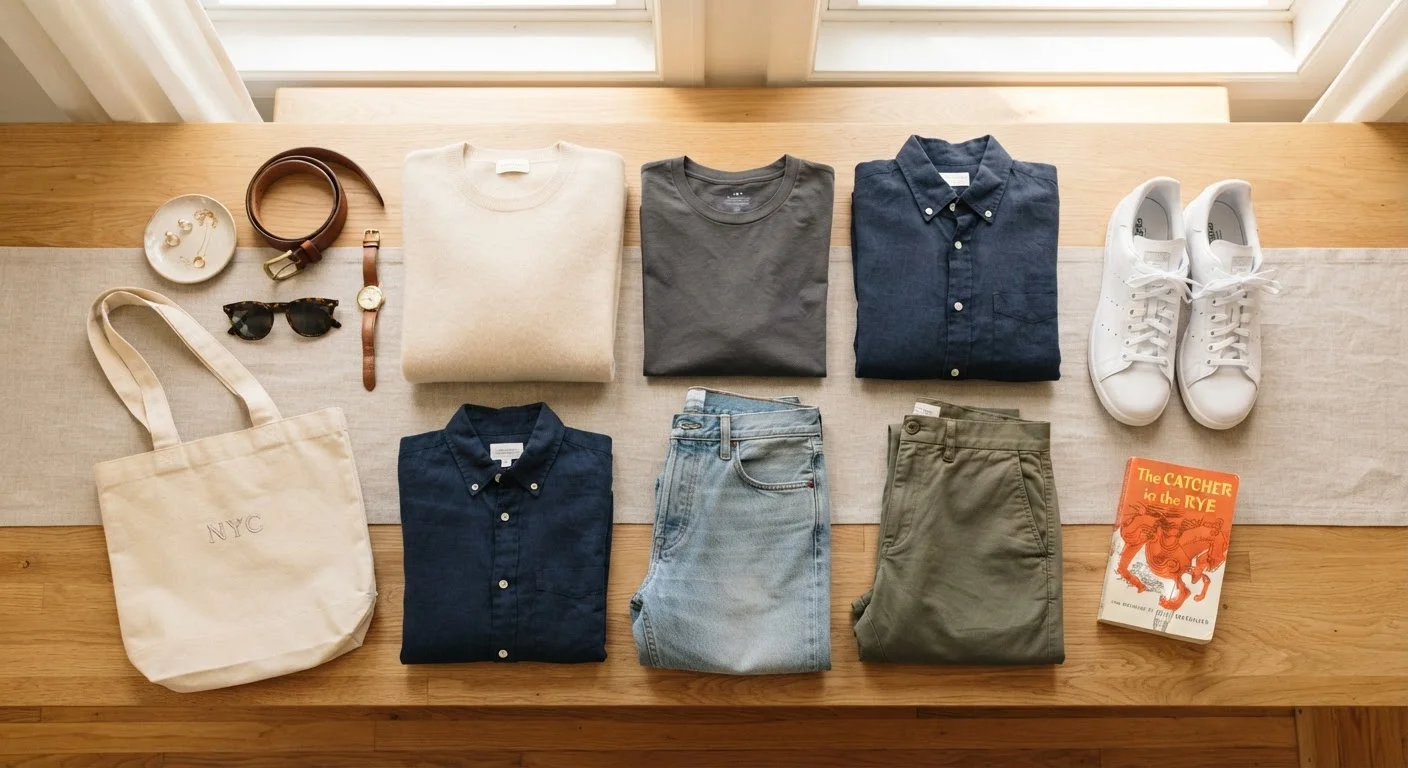
Casual means comfortable and relaxed — think jeans, t-shirts, sneakers, and everyday basics. There's no performance required here, but "casual" doesn't mean anything goes. Clothing that's clean, well-fitting, and free of visible damage reads as intentionally casual rather than simply unprepared. Our guide to wardrobe staples explains why a few foundational pieces make casual dressing effortless.
Smart Casual
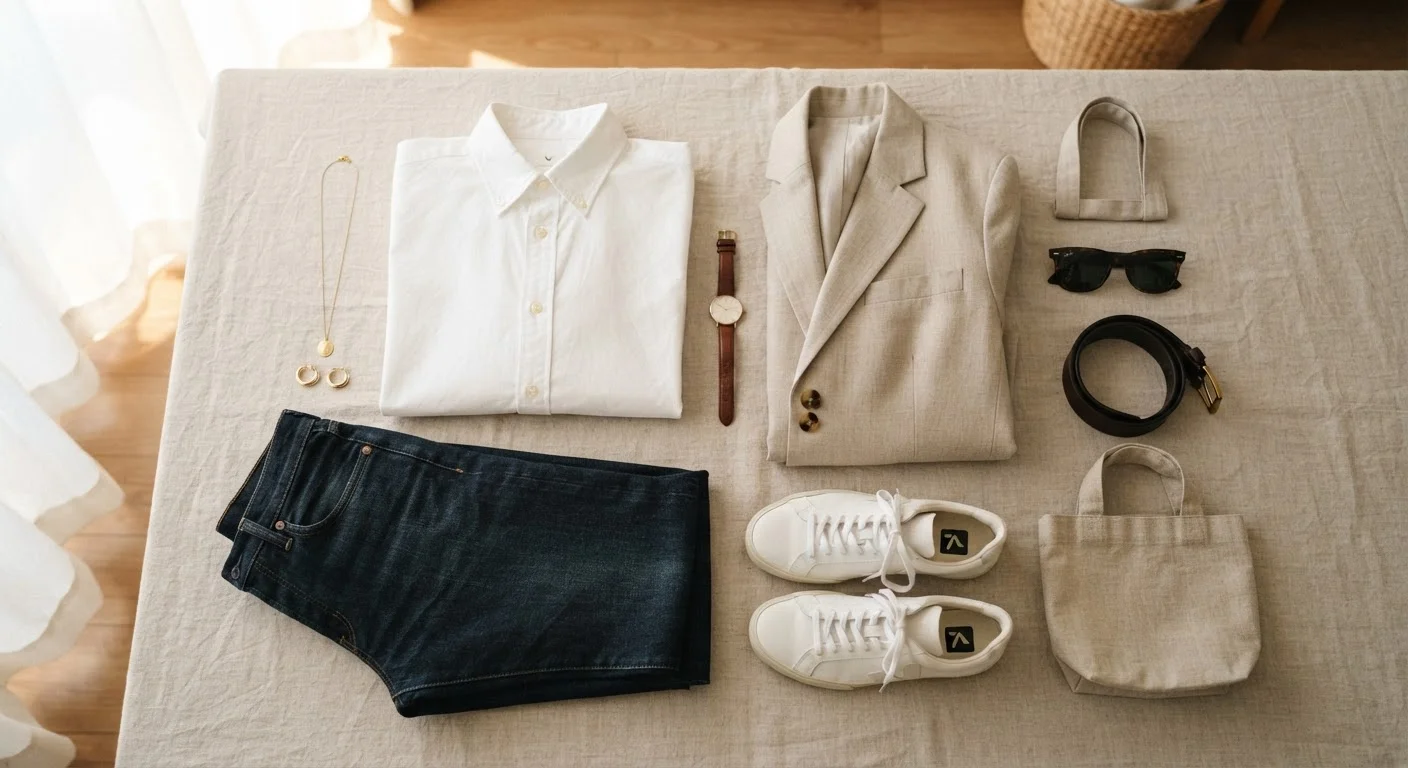
Smart casual sits between relaxed and polished. It asks you to look put-together without being formal. In practice this often means pairing clean denim or chinos with a button-down shirt or a neat blouse, adding leather shoes or loafers instead of athletic sneakers, and keeping accessories simple. The "smart" part is about intentionality — every piece looks chosen, not grabbed.
Business Casual
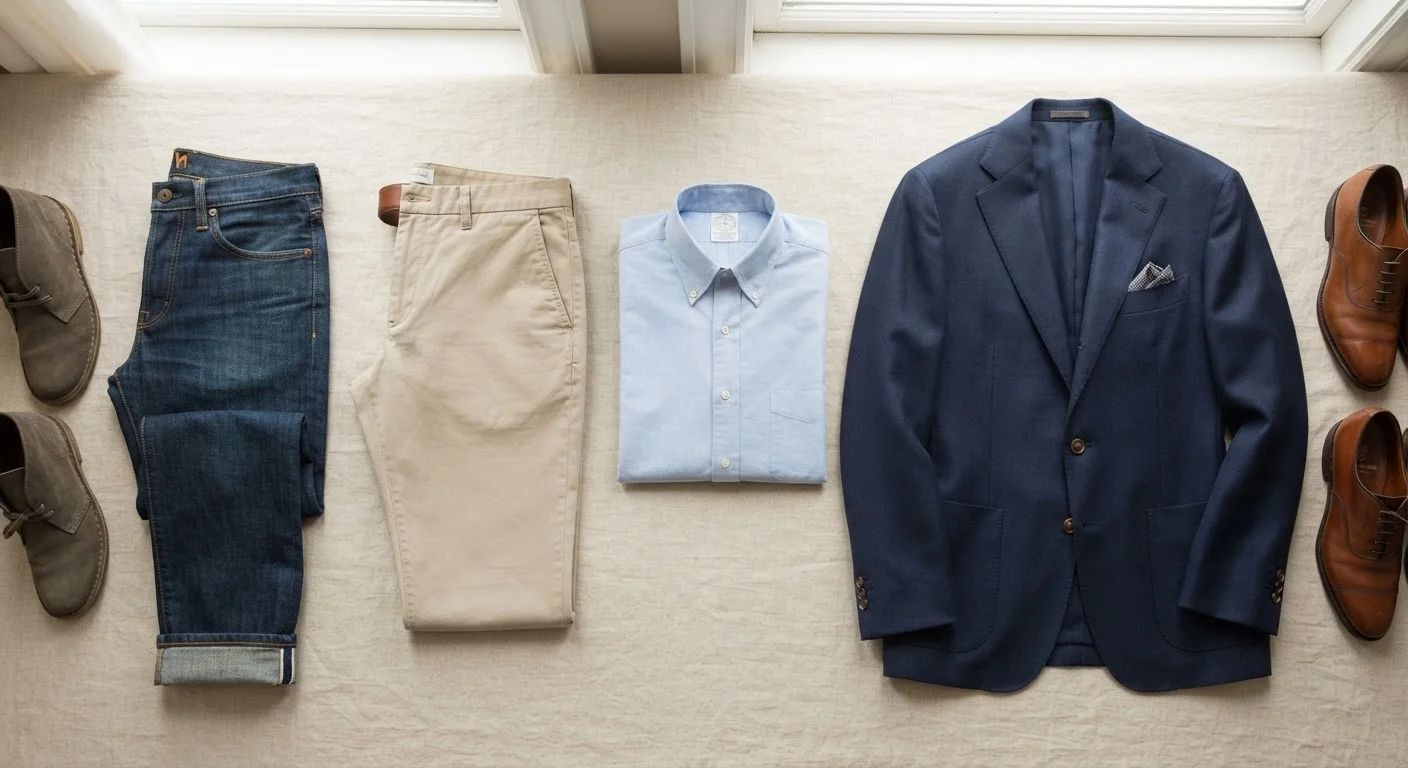
Business casual is arguably the most misunderstood label of all. In most American workplace contexts it means slacks or chinos, collared shirts or blouses, and closed-toe shoes. Jeans may or may not be acceptable depending on company culture — when in doubt, opt for well-fitted trousers. Blazers are optional but can quickly elevate the look. Visible logos, athletic wear, and overly casual footwear typically fall outside this code.
Business Formal / Professional
Business formal calls for a full suit or tailored separates in neutral tones — navy, charcoal, black, or grey. Ties are standard for men; tailored dresses, skirt suits, or pantsuits work equally well. Polished dress shoes and minimal, conservative accessories complete the look. This is the dress code for job interviews, courtrooms, and corporate presentations.
Cocktail Attire
Cocktail attire is semi-formal — dressed up, but not a full-length gown situation. Knee-length or midi dresses, dressy jumpsuits, or a suit with a refined shirt all fit the bill. The goal is celebratory without being over-the-top.
Black Tie and White Tie
Black tie means floor-length gowns or elegant cocktail-length dresses and tuxedos. White tie is the most formal of all American dress codes — full-length formal gowns and black tailcoats — and is rarely encountered outside of state dinners or formal galas.
Casual
A relaxed dress code with no formal requirements. Prioritizes comfort; everyday basics like jeans, t-shirts, and sneakers are appropriate.
Smart Casual
A step up from casual — neat, intentional clothing that looks put-together without being formal. Combines relaxed pieces with polished details.
Business Casual
A common American workplace dress code requiring professional-looking separates such as slacks, collared shirts, and closed-toe shoes, without requiring a full suit.
Business Formal
A traditional professional dress code requiring a complete suit or tailored separates in conservative colors, typically for high-stakes professional settings.
Cocktail Attire
A semi-formal dress code for social events — knee-length or midi dresses, dressy jumpsuits, or refined suits are all appropriate choices.
Black Tie
A formal dress code calling for tuxedos and floor-length or elegant cocktail-length gowns. Common at formal weddings, galas, and charity events.
White Tie
The most formal American dress code, reserved for state functions and formal galas. Requires tailcoats and full-length formal gowns.
Practical Tips for Navigating Any Dress Code
When you're unsure, it's almost always safer to dress one level up than one level down — you can remove a blazer, but you can't add formality you didn't bring. Fit matters more than price: a well-fitted garment in any code looks intentional and polished. Getting dressed for your body shape breaks down why fit-focused thinking beats rigid style rules every time.
Color choices also play a bigger role than most people realize. Sticking to neutrals and tonal combinations is a reliable way to look cohesive across every dress code level. For simple strategies, our color coordination guide offers approachable principles that work in real life.
When the Dress Code Isn't Clear
If an invitation or workplace policy doesn't specify a dress code, context clues matter: the venue, time of day, and occasion type all signal appropriate formality. For a dinner at a hotel ballroom, lean smart casual or above. For a backyard gathering, casual is almost certainly fine. When genuinely unsure, a quick, friendly message to the host or HR contact is always a reasonable move.