Why Everyday Style Matters More Than Trend-Chasing
American style at its best is practical, confident, and genuinely personal — not a runway performance. Yet many people feel quietly defeated by getting dressed each morning, either overwhelmed by choices or underwhelmed by what they see in the mirror. The good news: dressing well day-to-day has very little to do with following trends and everything to do with understanding a few durable principles.
Style confidence isn't about owning the right things — it's about knowing how to use what you have. That shift in mindset is where this guide starts. Rather than chasing seasonal looks, the goal here is to help you build a wardrobe that supports your actual life: your job, your budget, your body, your routine.
Before buying anything new, identify the specific gap it fills — not just 'I like it,' but 'this replaces the missing layer in three outfits I already own.' That test alone dramatically reduces regret purchases.
Most wardrobe frustration comes from isolated pieces that don't integrate with anything else. Intentional purchases compound value; impulse ones dilute it.
When in doubt about fit, go to a tailor for one simple alteration — even just hemming a pair of trousers. The experience recalibrates your eye for what 'properly fitted' actually feels like on your body.
Fit perception is a learned skill. Experiencing a correctly altered garment gives people a concrete reference point they carry forward to every future clothing decision.
The Foundation: Fit, Fabric, and Function
No single variable transforms an outfit more dramatically than fit. A well-fitting garment — one that follows your body's proportions without pulling, bunching, or drowning you — reads as intentional regardless of price point. Most style professionals agree: tailoring an inexpensive piece to fit correctly will almost always outperform wearing an expensive piece that fits poorly.
Fabric comes next. Natural fibers like cotton, linen, and wool breathe better, tend to hold their shape longer, and generally look more polished over time than heavily synthetic alternatives. That said, fabric blends have improved significantly, and many everyday Americans find that a cotton-polyester blend in a structured cut works perfectly for their lifestyle.
Function means asking honestly: does this piece work in my actual day? A garment you love in the store but never reach for at home is a wardrobe cost, not an asset. Prioritize pieces that move between the situations you genuinely encounter.
Avoid Building Around Aspirational Sizing
One of the most common wardrobe mistakes is keeping — or buying — clothing in a size you don't currently wear, intending to 'get back into it.' Clothes that don't fit right now don't contribute to your daily getting-dressed confidence. Dress the body you have today, and reassess your wardrobe as your needs change.
Building Your Core Wardrobe
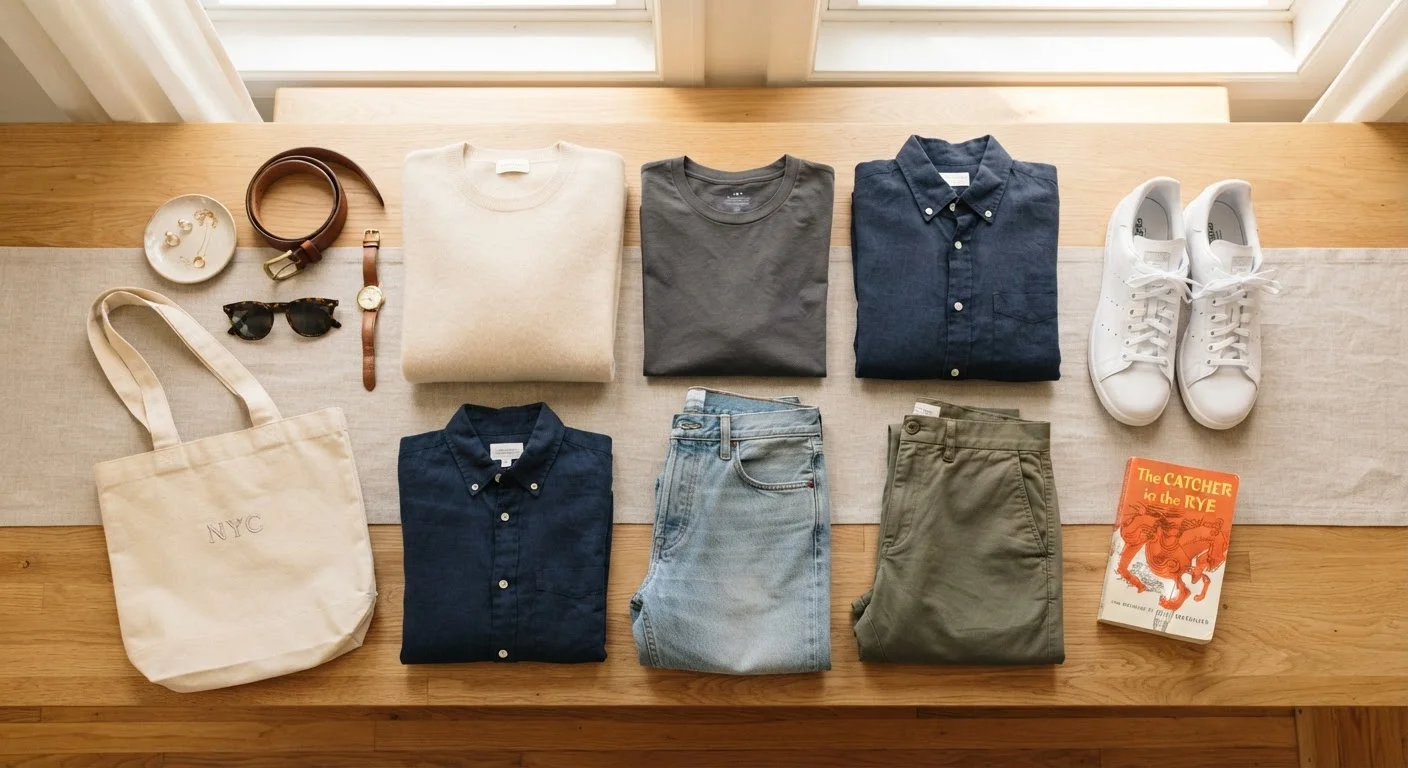
A practical core wardrobe isn't about minimalism — it's about intentionality. The idea is that a relatively small group of versatile pieces generates a disproportionately large number of wearable combinations. Style educators often refer to these as foundational pieces or wardrobe staples.
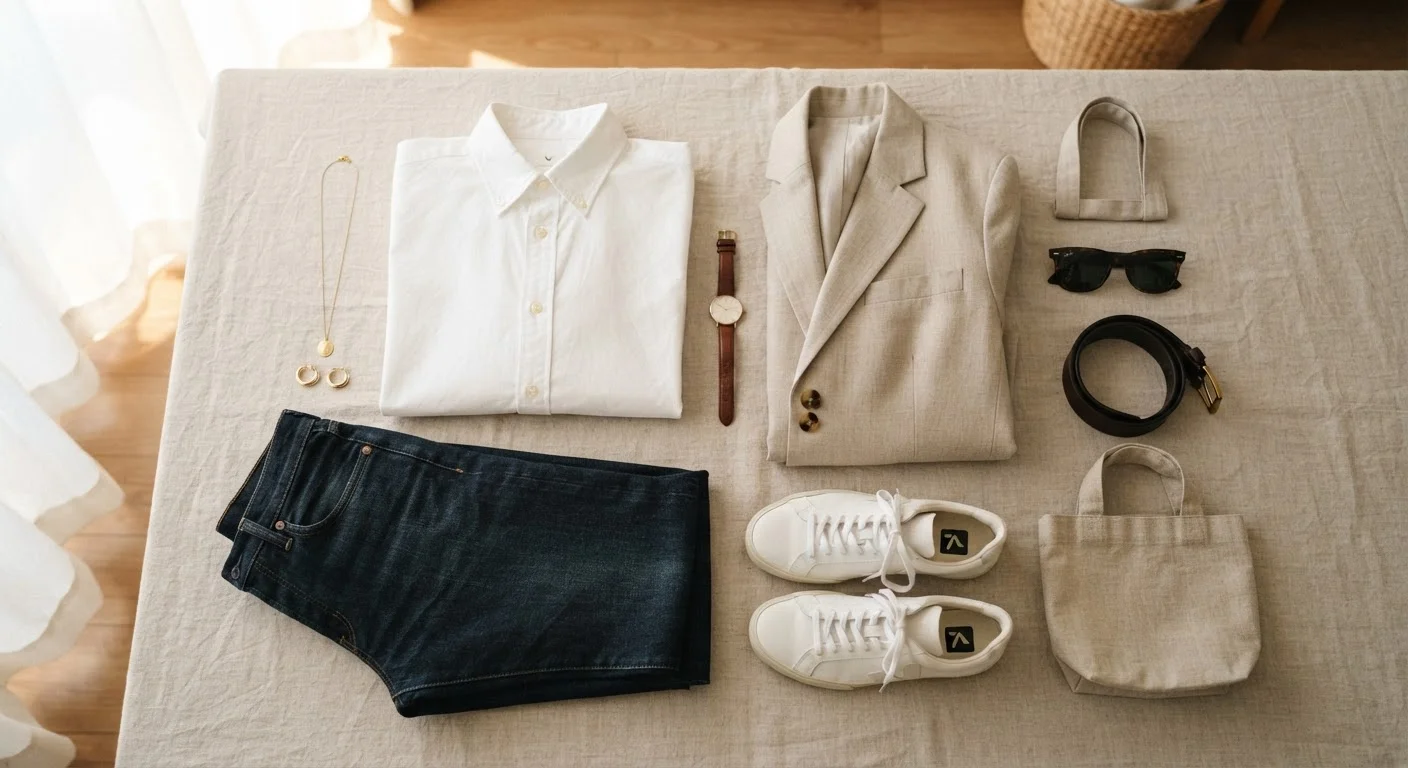
Common examples across genders include: a well-fitted pair of dark-wash jeans, a few solid-color crewneck or V-neck tops in neutral shades, one layer that adds polish (a blazer, cardigan, or structured jacket), a pair of clean, simple shoes that work across casual and semi-formal contexts, and versatile outerwear suited to your local climate.
If you're starting from scratch or reassessing what you own, our guide to building a versatile wardrobe on a tight budget walks through a step-by-step approach. For a closer look at individual foundational pieces, this breakdown of timeless wardrobe staples explains why each one earns its place.
20%
Clothing most people regularly wear
Style researchers and wardrobe consultants widely cite the 80/20 principle: most people reach for roughly 20% of their wardrobe for 80% of their daily outfits.
3–5
Neutral anchors in a functional wardrobe
Wardrobe-building frameworks from style educators consistently recommend anchoring around three to five versatile neutral shades to maximize outfit combinations.
Color and Pattern Without the Guesswork
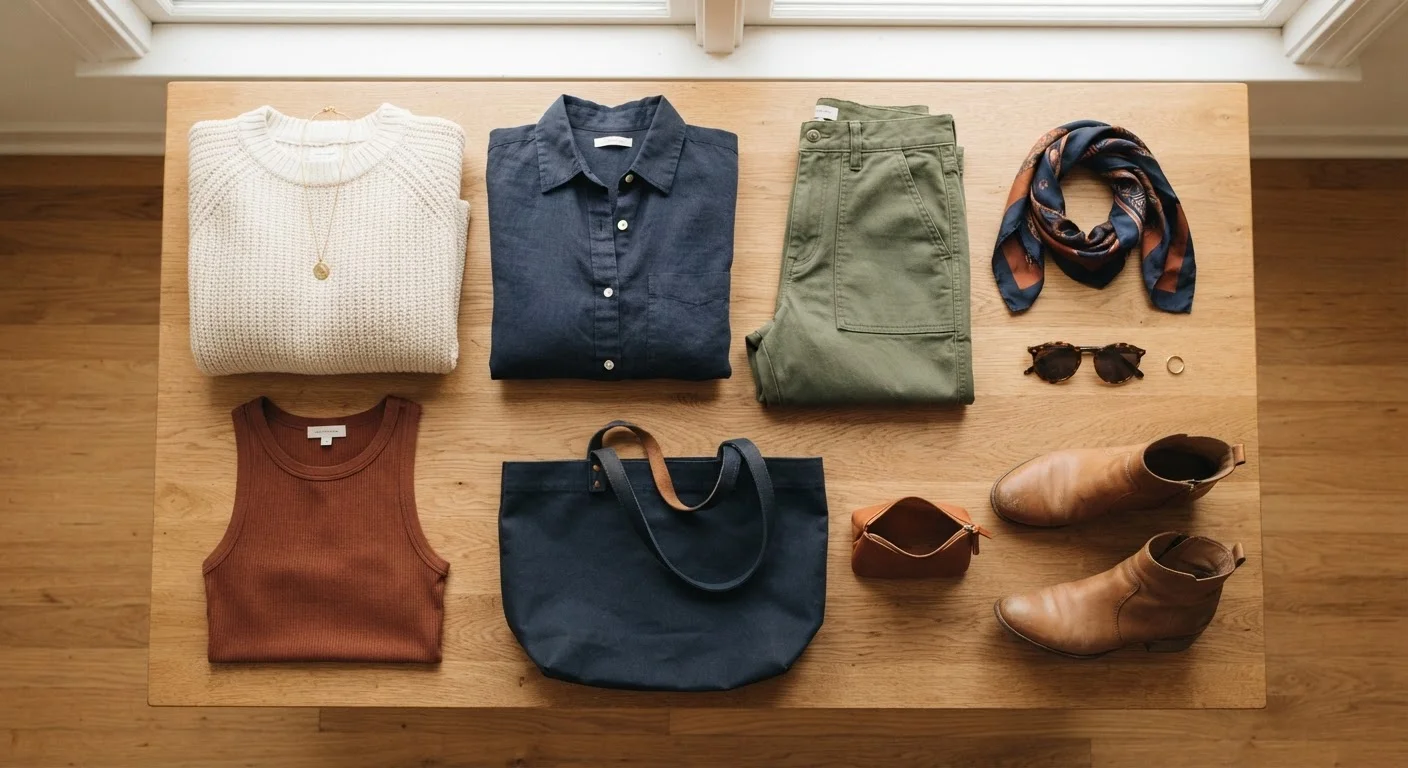
Color is where a lot of people second-guess themselves — but it doesn't have to be complicated. The simplest framework: build your wardrobe around two or three neutral anchors (navy, white, grey, camel, black, or olive are popular choices) and introduce color or pattern through one piece at a time. When every item in an outfit can plausibly work with every other item, getting dressed becomes genuinely fast.
Patterns follow a similar logic. Mixing patterns confidently typically involves varying the scale — a fine stripe with a larger plaid, for example — and keeping color families consistent. But for everyday American life, a solid-on-solid approach is completely valid and consistently looks clean and put-together.
For a deeper dive into this topic without the jargon, color coordination without a fashion degree covers the practical principles that make everyday outfits look intentional.
Dressing for Real-Life Situations
One of the most common friction points in everyday dressing is navigating ambiguous situations: a work meeting that could be casual or semi-formal, a dinner that's neither fancy nor casual, a weekend event with a vague dress code. Understanding what dress code labels actually mean removes a significant amount of that anxiety.
Terms like "business casual," "smart casual," and "casual" are used inconsistently across regions and industries — which means context matters enormously. A good default: aim one level above what you think is required when in doubt. You can always dress down a polished outfit; dressing up an underdressed one mid-day is harder.
Dress codes decoded is a plain-language reference that breaks down exactly what each label means in everyday American contexts — a useful bookmark for anyone who regularly navigates mixed-signal invitations.
When the Dress Code Is Unclear
If you genuinely can't tell what's appropriate, it's perfectly reasonable to ask the host or check whether the venue has a stated dress policy. Asking shows consideration, not uncertainty. When asking isn't possible, a clean, simple outfit in neutral tones that leans slightly more polished than casual is a reliable middle ground across most American social contexts.
Making the Most of What You Own
Research consistently suggests that most people regularly wear a small fraction of what's in their closet. Before adding anything new, it's worth investing time in what you already own. Many underused pieces simply suffer from poor visibility — they're buried, forgotten, or never considered in combination with newer items.
A useful exercise: pull everything out, assess what actually fits and flatters right now, and look for combination gaps (e.g., you have bottoms but nothing that layers over them). This process often surfaces pieces that work better than you remembered and reveals a few specific gaps worth filling thoughtfully rather than impulsively.
Shopping your own closet is an entire guide dedicated to this practice — practical and genuinely rewarding whether your wardrobe is large or small.
Style and Budget Work Together
Building a wardrobe that works doesn't require a large clothing budget. Thoughtful choices, prioritizing fit and versatility over quantity, consistently outperform large, unfocused spending. For practical guidance on keeping costs in check while still building something genuinely useful, general financial habit resources — like those covered in everyday money tips — can offer helpful framing around intentional spending decisions.
This article provides general style guidance for informational purposes only. Individual preferences, body types, budgets, and lifestyle needs vary widely — treat these principles as starting points, not prescriptions.