Why "Natural" on a Label Means Less Than You Think
Pick up almost any moisturizer or cleanser and you'll likely spot words like natural, plant-based, or clean somewhere on the packaging. These terms feel reassuring — they suggest something wholesome and safe. The reality is more complicated. In the United States, the FDA does not legally define or regulate the word "natural" on cosmetic products. That means any brand can use it without meeting a specific standard.
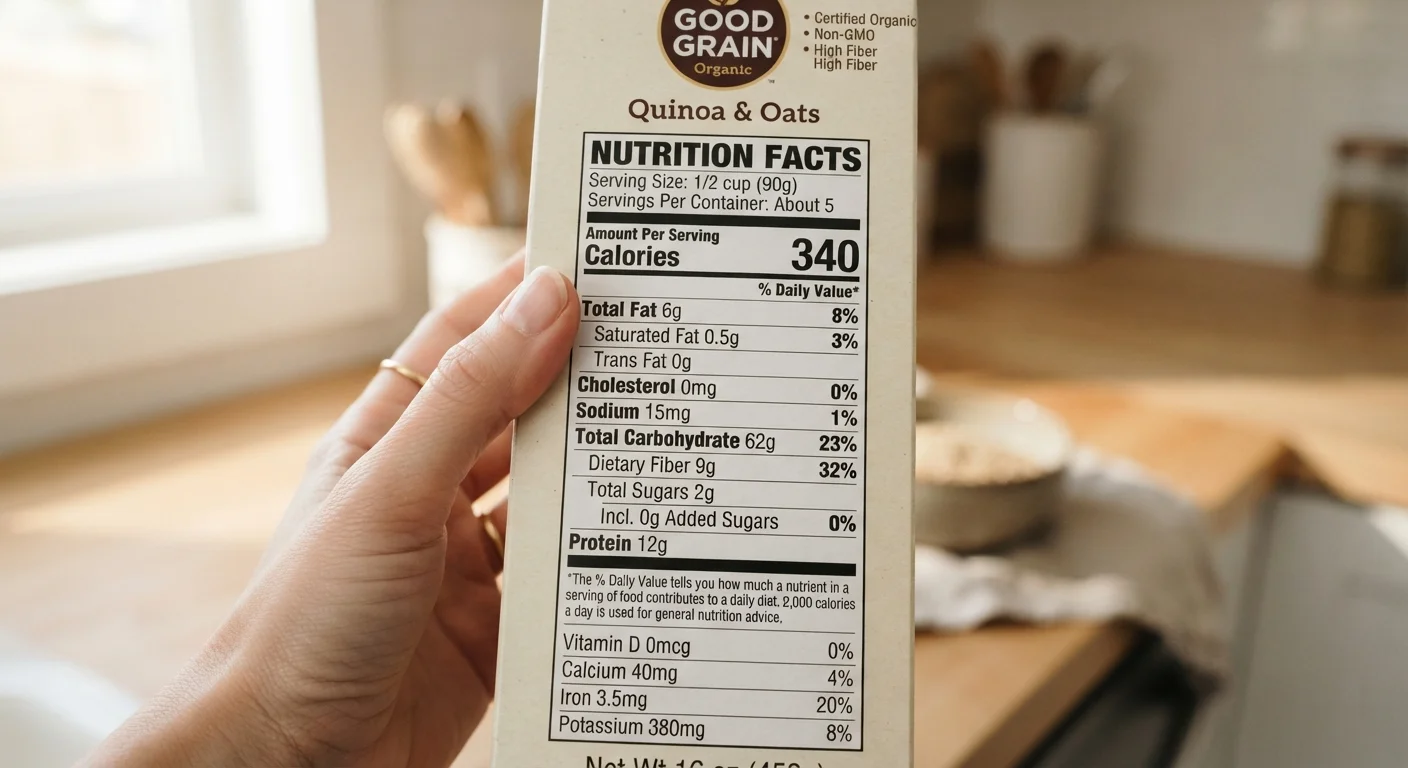
This doesn't make those products bad — it just means the label is doing marketing work, not scientific work. To actually understand what's in your serum or shampoo, you have to read the ingredient list, not the front-of-package claims. Think of it the same way you'd approach a food label: the nutrition panel tells you more than the headline on the box. (Our guide to reading a nutrition facts label explores that same pattern in food.)
The natural-versus-synthetic divide in beauty is less a meaningful quality line and more a spectrum shaped by processing, concentration, and formulation context. Understanding that spectrum is what actually empowers your choices.
Myth
Natural ingredients are always safer than synthetic ones.
Fact
Safety is determined by a substance's properties and concentration, not its origin.
Many naturally derived ingredients — essential oils, botanical extracts, certain preservatives from plant sources — are among the most common causes of contact dermatitis and allergic reactions. Toxicologists often note that the dose and the molecular context determine risk, not the origin story. A beautifully extracted botanical can be just as irritating as a lab-made compound if used at the wrong concentration or on reactive skin.
Myth
Synthetic ingredients are loaded with harmful chemicals.
Fact
"Chemical" is not a synonym for harmful — every ingredient, natural or synthetic, is a chemical compound.
Water is a chemical. Vitamin C is a chemical. The word "chemical" simply refers to any matter with a defined composition. Synthetic ingredients are frequently developed to replicate — or improve upon — the stability and efficacy of naturally sourced compounds. Many synthetic variants are also purer in form, with less risk of contamination from pesticides, heavy metals, or microbial growth that can affect raw botanical extracts.
Myth
"Clean beauty" products are free from all harmful ingredients.
Fact
"Clean" has no regulated definition; its meaning varies entirely by brand.
Different brands and retailers each maintain their own "clean" ingredient lists, meaning a product labeled clean on one platform may contain ingredients flagged on another. Without a universal standard, clean functions as a brand positioning term. Reading the actual ingredient list — the INCI list — gives you far more reliable information than any front-of-label claim.
Myth
If an ingredient is derived from plants, it's automatically sustainable and ethical.
Fact
Plant sourcing can carry significant environmental and labor concerns depending on the supply chain.
High demand for certain botanical ingredients — rosehip, mica, argan, palm-derived compounds — has in some cases contributed to overharvesting, deforestation, and exploitative labor conditions. Conversely, some synthetic ingredients are developed specifically to reduce pressure on endangered plant species. Sustainability depends on supply chain practices and sourcing transparency, not simply whether an ingredient grew in soil.
Myth
More natural ingredients on a label means a more effective product.
Fact
Ingredient count and origin are unrelated to product efficacy; formulation quality is what drives results.
A product could list thirty botanical extracts and still underperform if those extracts are present at concentrations too low to have any measurable effect — a practice sometimes called "fairy dusting." A focused formula with two or three well-researched, appropriately concentrated actives will generally outperform a crowded one built primarily for label appeal. Efficacy comes from science-backed formulation, not ingredient headcount.
What Really Determines Whether an Ingredient Works — or Irritates
Whether an ingredient originated in a rainforest or a laboratory tells you almost nothing about how it will behave on your skin. What matters is molecular structure, concentration, and how ingredients interact with each other in a formula. A synthetic version of vitamin C (ascorbic acid) is chemically identical to the vitamin C extracted from a rose hip — your skin's receptors cannot tell the difference.
~10%
Cosmetic allergic reactions linked to fragrance ingredients
Dermatology research consistently identifies fragrance — often plant-derived — as among the leading causes of contact allergy in cosmetic products.
0
FDA-regulated definitions for "natural" or "clean" in U.S. cosmetics
The U.S. Food and Drug Administration does not define or regulate these marketing terms on cosmetic product labels.
Skin compatibility is equally origin-agnostic. Poison ivy is thoroughly natural; so is lanolin, a common moisturizing agent that triggers reactions in some people with wool sensitivities. On the flip side, lab-synthesized niacinamide is one of the gentler, better-tolerated actives across all skin types. For a plain-language breakdown of the actives you'll see most often, our skincare ingredients glossary is a solid reference to bookmark.
One practical note: formulation order matters too. Even the most effective ingredients underdeliver if they're layered in the wrong sequence. Our piece on skincare layering walks through the logic so your routine actually delivers.
Essential Oils Are Not Automatically Gentle
Essential oils are among the most concentrated naturally derived ingredients used in beauty products. They are a leading source of allergic contact dermatitis, particularly for people with sensitive or compromised skin barriers. Perform a patch test before using any product with a high essential-oil concentration, and be especially cautious with citrus-based oils in products used before sun exposure — some are phototoxic.
This article is for general informational purposes only and is not a substitute for professional dermatological or medical advice. If you have sensitive skin, allergies, or a skin condition, consult a qualified dermatologist before changing your skincare routine.