Why the Label Exists and What It's Based On
The Nutrition Facts panel is a federally standardized format regulated by the FDA. It was redesigned in 2016 (with full compliance phased in by 2020) to better reflect how Americans actually eat and what science now understands about diet and health. Every packaged food sold in the U.S. must display it, which makes it one of the most accessible nutrition tools available — if you know how to read it.
The reference point for the entire label is a 2,000-calorie daily diet. This is a population-level benchmark, not a personal prescription. Your actual calorie needs depend on age, sex, body size, and activity level. Use the label for comparison and context, not as an exact personal target.
What you will need
The Five Sections You'll Encounter
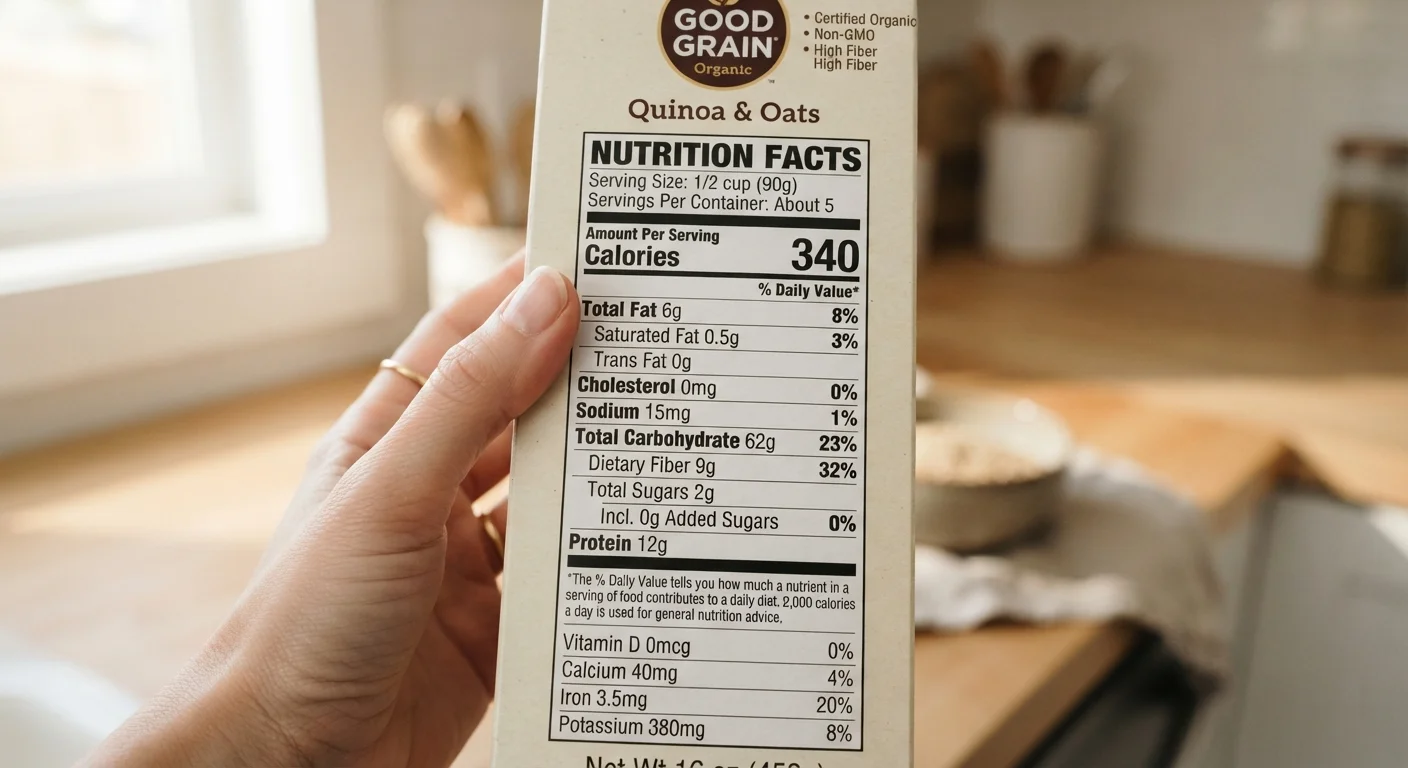
The label is organized into five functional zones. Understanding what each zone does makes the numbers far less intimidating.
- Serving Information — at the very top, showing serving size and servings per container.
- Calories — total energy per serving, displayed in large type.
- Nutrient amounts to limit — saturated fat, trans fat, cholesterol, and sodium.
- Nutrient amounts to get enough of — dietary fiber, vitamin D, calcium, iron, and potassium.
- The % Daily Value footnote — a brief guide explaining what low and high %DV means.
The ingredients list is a separate element printed below or beside the panel. It's governed by different rules but is equally important.
Use the Label as a Comparison Tool
The Nutrition Facts panel is most powerful when used to compare similar products — two breakfast cereals, two soups, two snack bars. Because the format is standardized, you can scan %DV columns side by side in seconds. This is especially useful for keeping an eye on sodium or added sugars across categories where amounts vary widely.
Step-by-Step: Working Through the Label
Start With Serving Size — Always
Every number on the label is per serving, not per container. Find the serving size (e.g., "2/3 cup" or "1 slice") and the servings per container. If a bag lists 3 servings and you eat the whole bag, multiply every number by 3. This single step prevents the most common misreading of nutrition labels.
Note the Calorie Count
Calories measure the energy one serving provides. The number is displayed prominently. Context matters here: 200 calories from a food that also delivers fiber, protein, and micronutrients is different from 200 calories of mostly added sugar. Calories are one data point, not the whole story.
Interpret % Daily Value Correctly
The %DV column shows what percentage of the recommended daily amount one serving provides, based on a 2,000-calorie diet. Use this quick benchmark: 5% DV or less is considered low; 20% DV or more is considered high. Apply that benchmark strategically — high is desirable for fiber, calcium, and iron; low is preferable for saturated fat, sodium, and added sugars.
Identify Nutrients to Limit
Scan for saturated fat, trans fat, sodium, and added sugars. Current dietary guidance from health authorities consistently links excessive intake of these to elevated risk of certain chronic conditions. Trans fat should ideally be 0 g; even "0 g" on the label can mean up to 0.5 g per serving due to rounding rules, so check the ingredients list for "partially hydrogenated oils."
Check Nutrients Worth Getting More Of
The lower section of the panel highlights dietary fiber, vitamin D, calcium, iron, and potassium — nutrients many Americans consume in insufficient amounts. A higher %DV here is a positive signal. Foods with 10–15% DV or more for fiber or key minerals can meaningfully contribute to your nutritional goals. For a full breakdown of what these micronutrients do in the body, see our guide to dietary fats and vitamin resources.
Once you're comfortable moving through these steps, comparing two products takes under a minute. For deeper context on specific nutrients — particularly vitamins and minerals in the lower half of the label — see our guide to vitamins and minerals every adult should know.
Common Points of Confusion
Total Sugars vs. Added Sugars
Total sugars include both naturally occurring sugars (from fruit, dairy, etc.) and sugars added during manufacturing. Added sugars are the ones most closely linked to dietary concerns, which is why the FDA now requires them to be listed separately. A plain yogurt with 10 g of total sugar and 0 g of added sugar is nutritionally different from a flavored yogurt with the same total sugar count but 8 g added. Our article on where added sugar hides and why the distinction matters covers this in detail.
The Ingredients List
Ingredients are listed in descending order by weight. If refined flour or sugar appears first, it's the dominant ingredient. This list also reveals additives, preservatives, and allergens that the Nutrition Facts panel won't show you. For context on how ingredient composition relates to overall food quality, see what the research says about whole vs. processed foods.
"Natural" and "Healthy" Are Marketing Terms
Words like "natural," "wholesome," or "made with real ingredients" on the front of a package have no standardized legal definition in the U.S. and do not reflect the nutrient profile inside. Always flip to the Nutrition Facts panel and ingredients list before drawing conclusions about a product's nutritional value.
Sodium Deserves Attention
Sodium is one of the most consistently over-consumed nutrients in the American diet. Many packaged foods carry 20–40% DV per serving — and some carry far more. Sodium in the American Diet offers grounded context on its role and common sources.
Similarly, dietary fiber is a nutrient most Americans fall short on. A %DV of 15% or higher per serving is considered a good source.
This article is for general informational and educational purposes only and is not a substitute for professional medical or dietary advice. Consult a qualified healthcare provider or registered dietitian for guidance specific to your health needs.