Why Makeup Hygiene Matters More Than You Think
Most of us put real thought into which products we put on our skin — but far less into how we're applying them. The truth is, a well-chosen foundation applied with a bacteria-laden brush can do more harm than good. Contaminated tools and expired products are a surprisingly common source of breakouts, eye infections, and skin irritation.
The good news? Solid makeup hygiene doesn't require an overhaul of your routine. A handful of consistent habits makes an enormous difference. Think of this as maintenance for your skin investment — the same way you'd care for quality skincare products. (For a refresher on building a smart skincare routine alongside your makeup, see our guide to skincare layering.)
70%+
Makeup brushes found to contain harmful bacteria
A 2019 study published in the Journal of Applied Microbiology found over 70% of used makeup products and tools were contaminated with bacteria including E. coli and Staphylococcus aureus.
3–6 months
Safe window for mascara use after opening
Dermatologists and cosmetic chemists generally recommend replacing mascara within three to six months of opening due to rapid bacterial growth near the moist wand tip.
Your Tools Need Regular Cleaning — Here's How Often
Makeup brushes and sponges pick up oil, dead skin cells, and bacteria every time they touch your face. Left unwashed, that buildup gets redeposited directly onto your skin during your next application session.
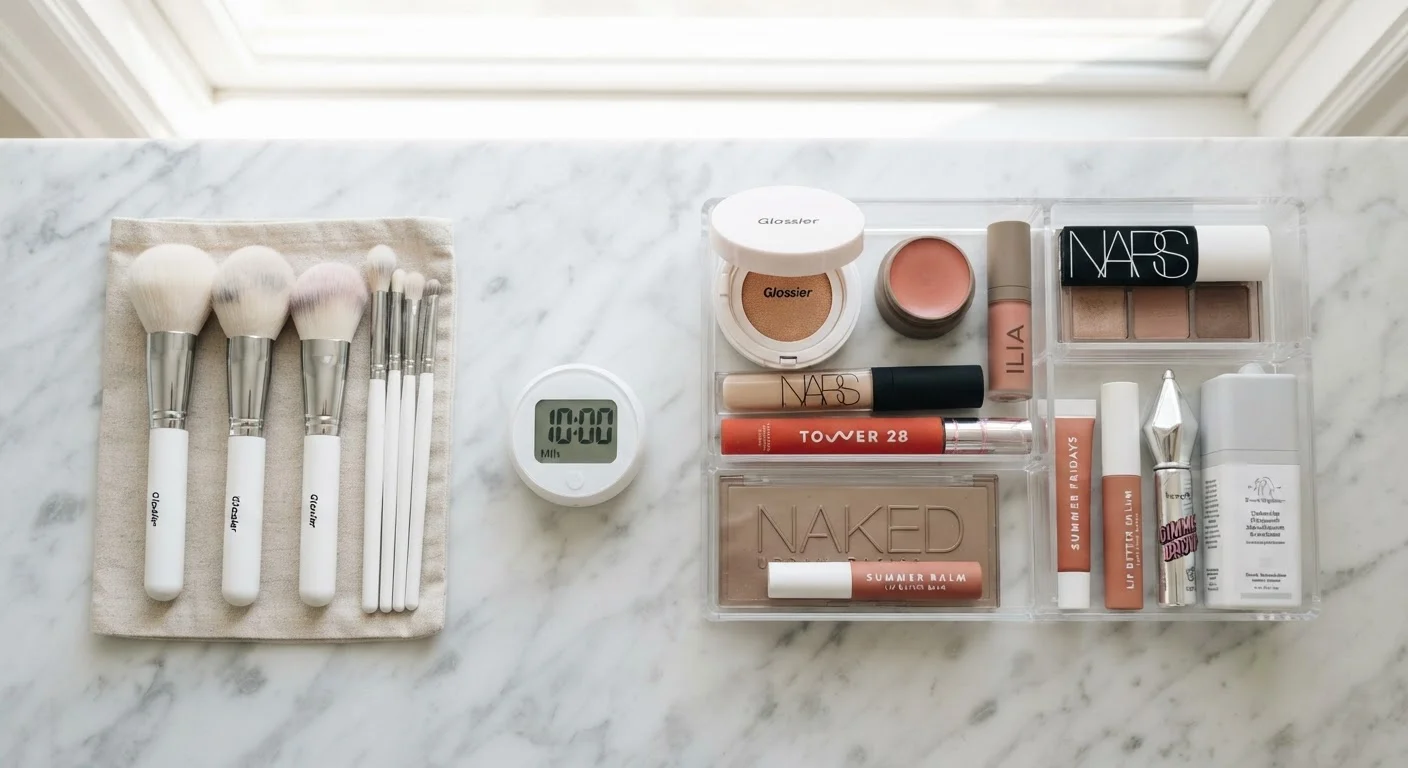
Wash foundation and concealer brushes at least once a week.
These tools contact large areas of skin and collect significant oil and bacteria over multiple uses. Weekly cleaning prevents bacterial buildup from being reapplied directly to the face, reducing the risk of breakouts and irritation.
Clean eye brushes after every two to three uses.
The eye area is particularly vulnerable to infection. Brushes used near the eyes accumulate bacteria quickly, and reusing them without cleaning raises the risk of styes and conjunctivitis.
Replace beauty blenders and sponges every one to three months.
Porous sponges are difficult to clean thoroughly and harbor moisture, making them an ideal environment for mold and bacteria to thrive even when visually clean.
Sanitize powder products and palettes with 70% isopropyl alcohol spray.
Pressed powders and eyeshadow palettes touched by fingers or shared brushes accumulate surface bacteria. A light mist of alcohol evaporates quickly and reduces contamination without damaging the product.
Store makeup in a cool, dry location away from direct sunlight.
Heat and humidity accelerate the breakdown of preservatives in cosmetics, shortening product lifespan and increasing contamination risk. Bathrooms — while convenient — are often too humid for optimal storage.
If you're building or refining your kit, our minimal makeup kit guide covers which tools are actually worth owning and maintaining.
Expiration Dates and PAO Symbols: Don't Ignore Them
Every cosmetic product sold in the US carries a Period After Opening (PAO) symbol — a small open jar icon with a number, like "12M" or "6M," indicating months of safe use after opening. These aren't arbitrary suggestions; as products age, preservatives break down, consistency changes, and contamination risk rises.
How to Find the PAO Symbol
Look for a small open-jar icon on the bottom or back of your product packaging. Inside or beside it you'll see a number followed by "M" — that's the number of months the product is considered safe after first opening. If you've lost the packaging, a general rule of thumb is: mascaras and liquid liners last three to six months, liquid foundations six to twelve months, and powder products up to two years, though individual formulas vary.
Eye products like mascara and liquid liner carry the shortest safe windows — typically three to six months — because the moist, warm environment near the eye promotes bacterial growth rapidly. Lipsticks and powder products generally last longer, but any product that smells off, changes texture, or separates should be discarded regardless of its PAO date.
Habits That Quietly Protect Your Skin Every Day
Good hygiene extends beyond washing tools. A few everyday behaviors go a long way toward keeping your skin clear and your products safe.
Wash your hands before touching your face or dipping into any product. Pump dispensers are more hygienic than open jars, which invite repeated finger contact. Never add water or saliva to thin out a product — this introduces bacteria directly into the formula and can cause infections. And as tempting as it is to share a gorgeous eyeshadow palette with a friend, makeup tools and products are genuinely not meant to be shared: sharing is one of the most direct paths to spreading conjunctivitis (pinkeye) and cold sores.
Make Cleanup Part of Your Routine
Pairing brush washing with an existing weekly habit — like Sunday laundry or your weekly skin mask — makes it far easier to stay consistent. Setting a simple phone reminder removes the mental load entirely. Clean tools become second nature within a few weeks.
Your evening routine is also a key part of skin protection — removing makeup thoroughly before bed allows skin to repair overnight. Our evening skincare guide explains exactly which steps matter most before sleep.
This article is for general informational and educational purposes only and is not intended as medical or dermatological advice. If you experience persistent skin irritation, breakouts, or eye infections, consult a qualified healthcare professional.