Why Less Really Is More in a Makeup Kit
Most people who feel overwhelmed by makeup aren't under-informed — they're over-supplied. Dozens of single-use products competing for drawer space create decision fatigue before you've even touched a brush. The solution isn't a 30-step system; it's a thoughtfully curated set of essentials that do their jobs reliably.
This checklist is designed to help you audit what you already own or build a starter kit from scratch. Every item here earns its place by being genuinely versatile, widely useful, and hard to live without once you've tried it. Before diving in, if your skin isn't in a good baseline place, it's worth checking out a beginner-friendly skincare guide — prepped skin makes every product perform better.
Skin Prep & Base
Eyes
Cheeks & Color
Lips
Setting & Touch-Ups
Tools, Hygiene, and Making the Kit Last
Products are only half the equation. The tools you use to apply them, and how well you maintain both, determine how your makeup actually looks and how safe it is for your skin.
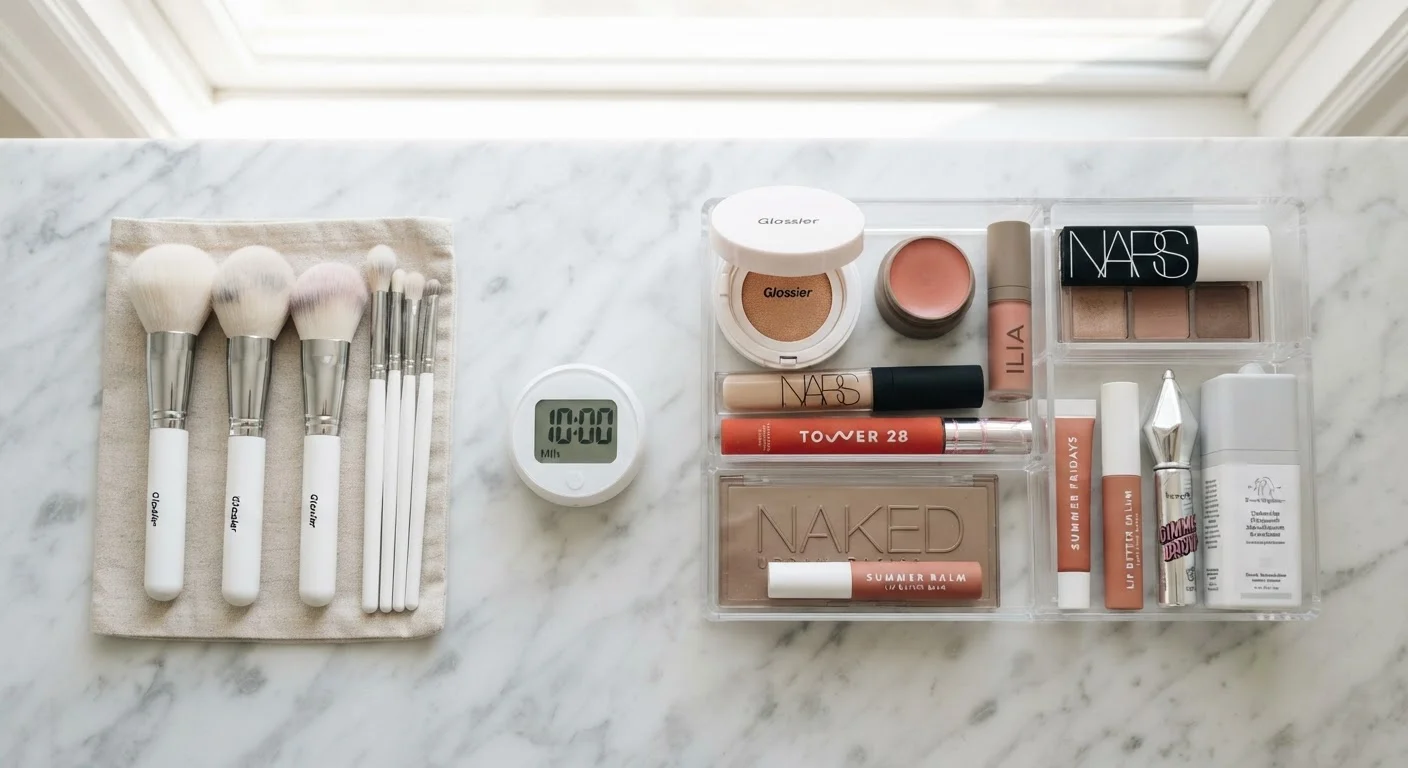
Fluffy blending brush
Blends eyeshadow seamlessly and doubles as a powder brush for light coverage applications.
Flat concealer brush or sponge
Applies and blends concealer precisely under eyes and over blemishes without pulling at skin.
Angled brow brush
Applies brow powder with control and defines shape for a natural, groomed look.
Spoolie brush
Blends brow product and brushes lashes for a clean, unclumped mascara finish.
Makeup sponge (damp)
Blends foundation and tinted moisturizer into the skin for a seamless, skin-like finish.
Once your kit is assembled, keeping it clean is non-negotiable. Dirty brushes transfer bacteria and old product, which can lead to breakouts or infections. Makeup hygiene habits that protect your skin covers expiration dates, brush-cleaning schedules, and storage tips worth bookmarking.
Check Product Expiration Dates
Most mascara should be replaced every three months; liquid eyeliners and foundations typically last six months to a year. Using expired products — especially near the eyes — raises the risk of irritation or infection. When in doubt, check the period-after-opening symbol (the open jar icon) printed on the packaging.
Building a minimal kit is also a great exercise for anyone new to any kind of personal care routine. If you're just getting started with grooming more broadly, our no-fuss grooming introduction applies many of the same paring-back principles.
Patch-Test New Products Before Full Use
Even well-formulated products can cause reactions on sensitive skin. Before applying a new product across your full face, test a small amount on your inner wrist or jawline and wait 24 hours. If you experience persistent redness, itching, or swelling, discontinue use and consult a dermatologist. This is general informational guidance, not medical advice.