Why a Routine Matters (Even a Short One)
If you've ever stood in a drugstore aisle staring blankly at a wall of face wash options, you're not alone — and you're definitely not behind. Most men start a grooming habit later than they'd like, and the good news is that starting simple actually works better than starting with a complex system you won't stick to.
Skin is your body's largest organ. It manages temperature, blocks environmental pollutants, and signals a lot about your overall health. A minimal, consistent routine helps it do that job without interference. According to dermatologists, the benefits of basic skincare — cleansing away impurities, maintaining the moisture barrier, and protecting against UV damage — compound over time in meaningful ways.
Think of it less like a beauty ritual and more like brushing your teeth: a low-effort daily habit with long-term payoff. If you've recently started thinking about organizing other areas of your life too, you might relate to the ideas in this beginner's guide to building lasting habits.
Broad-spectrum SPF
A sunscreen rating that means the product protects against both UVA rays (which cause aging) and UVB rays (which cause sunburn). Look for 'broad-spectrum' on the label alongside the SPF number.
Skin barrier
The outermost layer of skin that keeps moisture in and irritants out. Harsh cleansers or over-washing can damage it, leading to dryness, sensitivity, or breakouts.
Non-comedogenic
A product formulated so it won't clog pores, making it less likely to cause blackheads or acne. A useful label to look for if you have oily or acne-prone skin.
Sebum
The natural oil your skin produces to stay lubricated and protected. Too much can cause a shiny complexion or clogged pores; too little leaves skin dry and tight.
pH-balanced cleanser
A face wash formulated to match the skin's natural slightly acidic pH level, which helps preserve the skin barrier. Harsh soaps are often too alkaline and can disrupt this balance.
The Three-Step Core: Cleanse, Moisturize, Protect
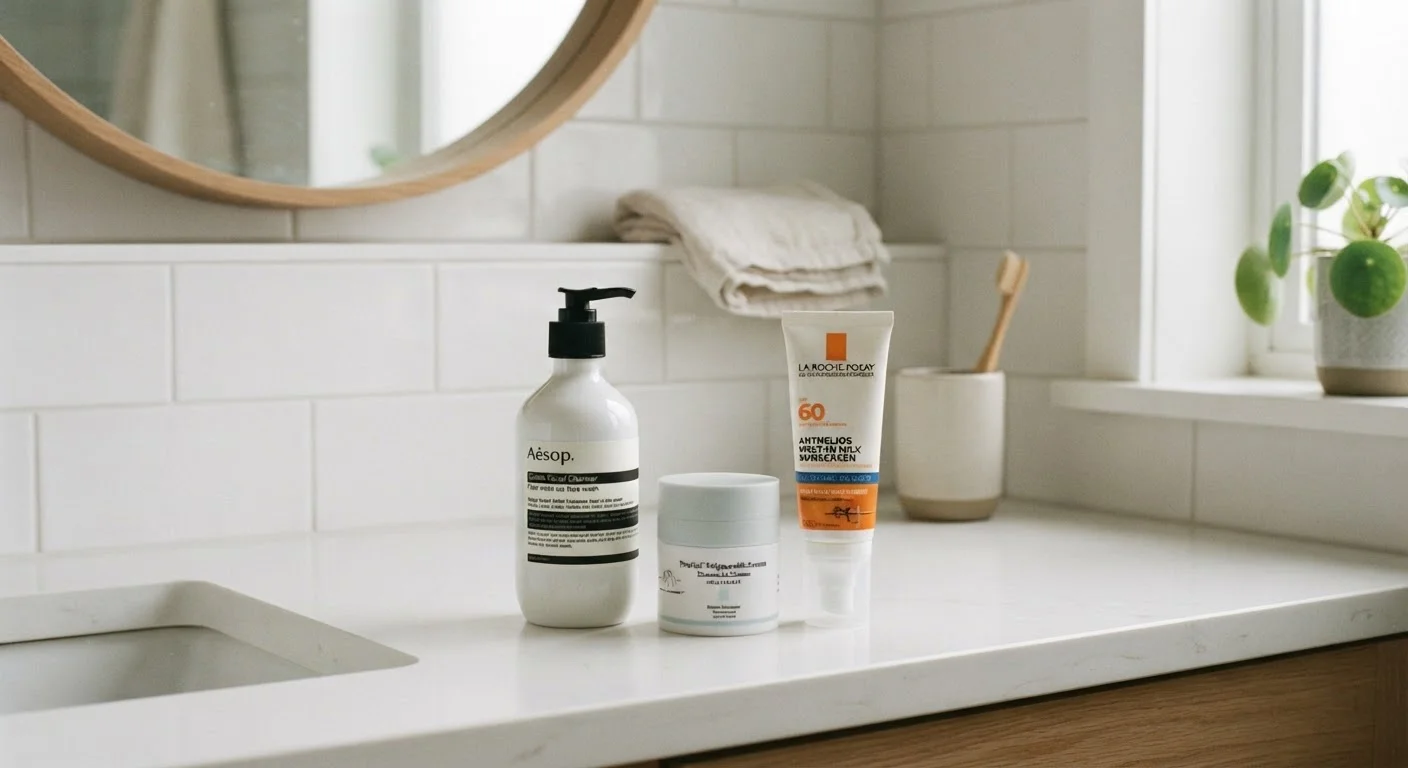
Forget the 10-step programs for now. Three products — a cleanser, a moisturizer, and a sunscreen — handle the essentials.
Cleanser
A gentle, pH-balanced face wash removes dirt, excess oil, and environmental residue without stripping the skin. Look for terms like gentle, non-irritating, or sulfate-free on packaging. If you shave, cleansing before helps soften hairs; cleansing after removes residue.
Moisturizer
Moisturizer seals in hydration and keeps the skin's outer barrier intact. For oily or combination skin, a lightweight gel formula works well. For drier skin, a cream tends to provide more sustained comfort. Apply to a slightly damp face to help lock in hydration.
Sunscreen (SPF)
This is the step dermatologists consistently call the most impactful. Broad-spectrum SPF 30 or higher applied daily helps protect against both UVA and UVB rays, which are linked to premature aging and more serious skin concerns. Many moisturizers now include SPF, which cuts one step entirely.
One Product, Two Jobs
If you want to trim your routine down even further, look for a moisturizer with built-in broad-spectrum SPF 30+. It combines two steps into one and removes any excuse to skip sun protection on busy mornings. Just check that it's labeled 'broad-spectrum' — not all SPF moisturizers cover both UVA and UVB rays.
Building Your Morning and Evening Habits
The same three products serve slightly different purposes depending on when you use them.
Morning
- Cleanse — a quick 30-second wash to remove overnight oil buildup and prep skin for the day.
- Moisturize — apply while skin is still slightly damp for best absorption.
- SPF — the final step, every single day, even when it's cloudy or you expect to stay mostly indoors.
Evening
- Cleanse — more important than the morning wash; this removes sunscreen, pollutants, and the day's grime.
- Moisturize — use the same product or opt for a slightly richer formula if your skin feels drier at night.
Skip sunscreen at night — your skin does its repair work in darkness and doesn't need UV protection while you sleep.
The whole routine takes under three minutes once you have your products. That's it. For a deeper look at how these fundamentals translate into a broader skincare habit, this beginner skincare guide walks through what genuinely makes a difference.
When to Add More (and When Not To)
Once the three-step routine feels automatic — usually after two to four weeks — you might wonder if there's more to explore. The short answer: maybe, but only if you have a specific concern to address.
Common add-ons that many people find useful include exfoliants (to remove dead skin cells once or twice a week), serums with ingredients like niacinamide for texture or vitamin C for radiance, and eye creams if dryness or puffiness is a concern. These are additions, not requirements.
Don't Add Everything at Once
Introducing multiple new products simultaneously makes it nearly impossible to pinpoint the cause if your skin reacts badly. Redness, breakouts, or irritation can result from a single ingredient — but you won't know which one if you've changed five things at once. Patience here saves a lot of frustration.
The important principle: introduce one new product at a time. Wait at least two weeks before adding another. This makes it easy to identify what's helping — or what's causing a reaction — rather than guessing across five new variables at once.
Products labeled specifically for men often share the same core ingredients as general skincare. Marketing aside, what matters is your skin type and the formulation, not the packaging. Good grooming hygiene practices — like keeping lids on products and not touching your face with dirty hands — also matter more than most people realize. Our guide to skin hygiene habits covers these overlooked details well.
This article is for general informational purposes only and does not constitute medical or dermatological advice. Consult a qualified dermatologist or healthcare professional for concerns about your skin health.