What Parrots Actually Need Day to Day
Parrots are not decorative pets. They are highly social animals whose natural habitats involve constant flock interaction, foraging challenges, and environmental stimulation. In a home setting, owners must compensate for what the wild provides.
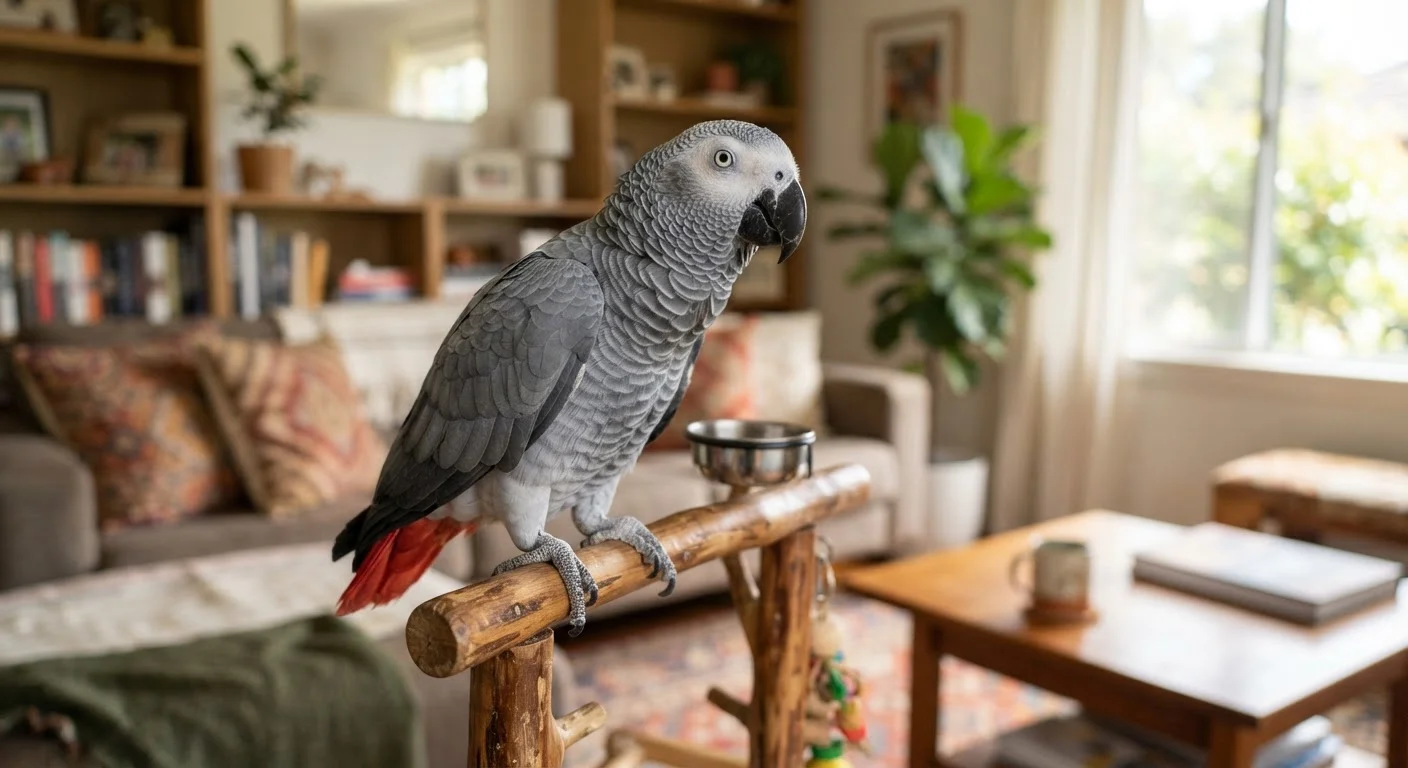
Most medium to large parrot species — including African greys, Amazon parrots, cockatoos, and macaws — require a minimum of two to four hours of direct, out-of-cage time daily. This means hands-on interaction: talking, playing, puzzle-solving, and supervised exploration. Time spent near the bird but not with it often isn't enough to meet their social threshold.
Diet is equally demanding. Seeds alone are nutritionally insufficient. Avian veterinarians generally recommend a base of formulated pellets supplemented with fresh vegetables, some fruits, and limited healthy proteins. Preparing and varying these meals takes consistent effort.
Don't Underestimate Smaller Parrots
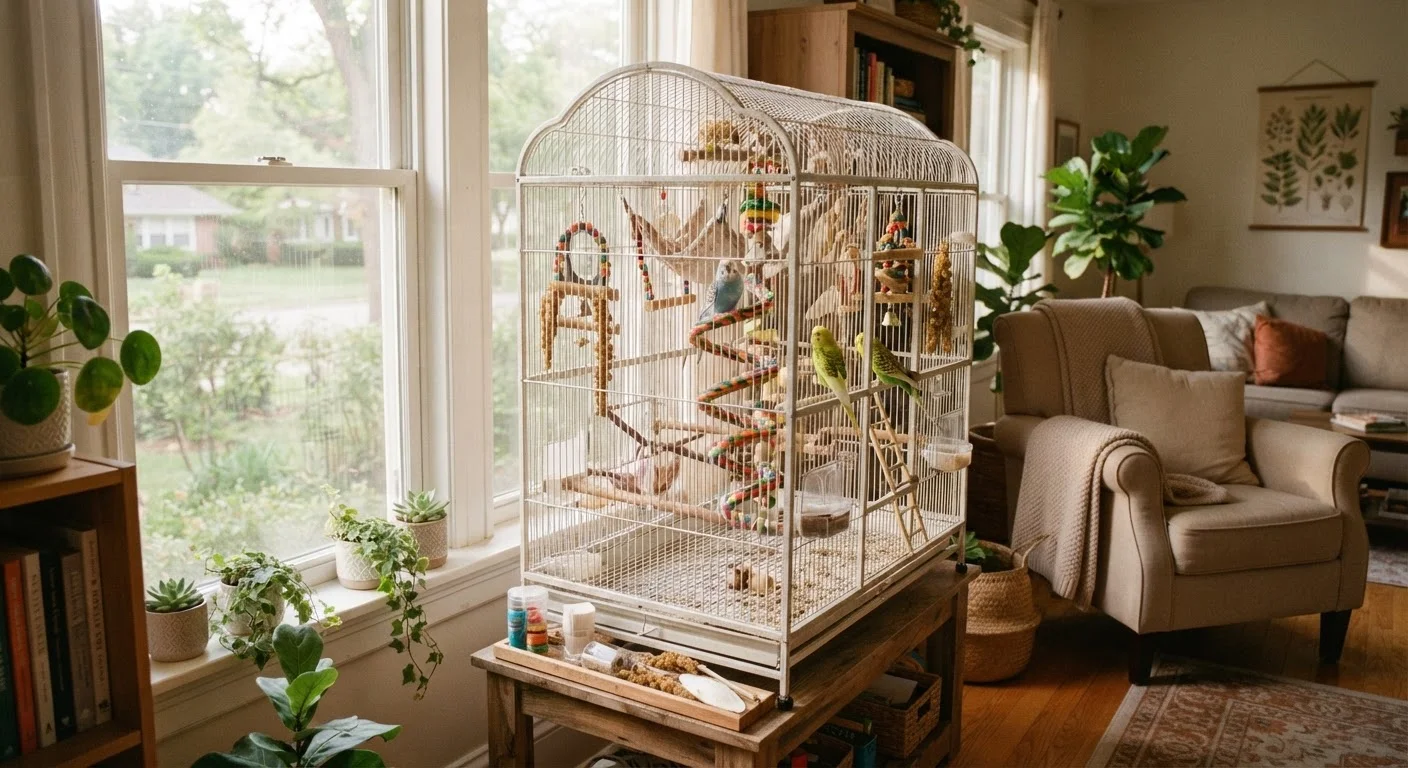
Budgerigars, cockatiels, and lovebirds are sometimes assumed to be low-effort alternatives to larger parrots. While their care is less intensive in some respects, they still require daily interaction, species-appropriate diet, and avian veterinary oversight. Smaller size does not mean simpler needs.
Before acquiring any parrot, it's worth reviewing common small pet misconceptions — many owners underestimate exotic bird care in the same way they underestimate other small animals.
The Advantages of Parrot Ownership
For owners who can genuinely meet their needs, parrots offer something few other pets can.
Exceptional intelligence and problem-solving ability
Many parrot species demonstrate cognitive skills comparable to young children, including the ability to associate words with objects and solve sequential puzzles. This makes daily life with a parrot consistently stimulating.
Deep, lasting emotional bonds with owners
Parrots are flock animals that transfer social loyalty to their human families. Well-socialized birds often develop nuanced, affectionate relationships that deepen meaningfully over years.
Remarkable vocal communication and mimicry
Beyond simple repetition, some species learn to use words contextually — greeting specific people, naming objects, or expressing preferences. This creates a genuinely interactive companionship.
Long lifespan for sustained companionship
While longevity is also a responsibility, owners who are prepared for the commitment gain a companion that can share a significant portion of their adult life — decades of shared routines and growth.
Low allergen profile compared to fur-bearing pets
Parrots don't produce pet dander in the same way dogs or cats do, making them a viable option for some individuals with common animal allergies (though feather dust is a separate consideration).
The cognitive complexity of parrots — particularly species like African greys — has been documented in peer-reviewed research. These birds can learn to associate words with meanings, solve multi-step puzzles, and demonstrate a form of object permanence. Living with one is intellectually engaging in a way that's hard to replicate with other pets.
Parrots also adapt their communication over time to the rhythms of their household. Many owners describe a relationship that deepens over years in ways that feel genuinely reciprocal.
The Real Challenges Prospective Owners Must Weigh
The difficulties of parrot ownership are significant and should not be minimized.
Extreme longevity demands lifelong planning
Large macaws and cockatoos can live 60 to 80 years. Owners must plan for the bird's care across multiple life stages, including making provisions in estate planning for what happens to the bird after the owner's death.
High daily time investment is non-negotiable
Parrots deprived of adequate social interaction can develop serious behavioural problems including feather-destructive behaviour, aggression, and repetitive screaming. Meeting their social needs is a daily obligation, not an option.
Loud vocalizations are disruptive in many homes
Many species produce high-decibel calls during dawn and dusk, mimicking their wild flock-contact patterns. This can create real tension in apartments, townhouses, or households with noise-sensitive members.
Specialised veterinary care is harder to access
Avian medicine is a distinct specialty. Not all general veterinary practices have the training or equipment to treat parrots properly, and avian vets may require travel or longer appointment wait times.
Feather dust poses respiratory risks
Powder-down species like cockatoos and African greys release fine feather particulates continuously. This can worsen asthma or trigger allergic reactions in sensitive household members.
Significant financial costs beyond initial purchase
Quality housing, a varied diet, enrichment toys that are regularly replaced, and routine avian veterinary visits add up substantially over time — often more than prospective owners anticipate.
Noise is perhaps the most underestimated factor. Cockatoos and macaws in particular can produce sounds exceeding 100 decibels — loud enough to disturb neighbours in apartments or close-quarters housing. Even quieter species like budgerigars and cockatiels produce consistent vocalizations throughout the day. If you're researching smaller parrot-family birds, setting up the right environment for budgies is a useful starting point.
Feather dust produced by powder-down species such as cockatoos and African greys can aggravate respiratory conditions in sensitive individuals. This is a medical consideration for any household member with asthma or allergies.
60–80 years
Lifespan of large macaw species
Large parrots such as blue-and-gold macaws are documented to live six to eight decades, according to avian care literature — surpassing the lifespan of many other companion animals.
2–4 hours
Daily out-of-cage interaction recommended
Avian behaviour specialists generally recommend a minimum of two to four hours of active, supervised out-of-cage time per day for medium and large parrot species.
~5-year-old child
Cognitive equivalence cited in research
Studies on African grey parrots, including research conducted at institutions such as Harvard and Brandeis University, have compared their problem-solving and communication abilities to those of young children.
It's also worth noting that parrot ownership may intersect with local regulations. Exotic pet laws vary considerably by state, and some species require documentation related to wildlife protection treaties.
Is Your Household a Good Fit?
Parrots are long-term family members, not starter pets. Their lifespan demands that owners think carefully about life changes — moves, new children, work schedules, and aging. Rehoming a bonded parrot can cause lasting behavioural and emotional distress to the bird.
Families with young children should approach with particular caution. Parrots can bite with significant force when stressed, and their stimulation requirements don't reduce to match a busy household. Households with children and small pets need clear supervision structures and realistic expectations.
Prospective owners should also locate an avian veterinarian before acquiring a bird — not after. Avian vets are less common than general practitioners, and access to qualified care is a non-negotiable part of responsible ownership.
This article provides general educational information about parrot care and is not a substitute for guidance from a qualified avian veterinarian. Always consult a professional for health-related decisions about your pet.