Why the Right Environment Shapes Budgie Health
Budgerigars (Melopsittacus undulatus) are native to the open scrublands of Australia, where they travel in large flocks, forage continuously, and fly significant distances each day. In a home setting, this behavioral baseline does not disappear — it simply needs to be redirected into a well-designed environment. A cage that is too small, poorly positioned, or devoid of stimulation is a common source of feather-destructive behavior, chronic stress, and susceptibility to respiratory illness in pet budgies.
Unlike larger parrots, budgies are sometimes underestimated in their environmental needs. For a fuller picture of what bird ownership demands at a higher complexity level, see our overview of parrot ownership demands. Many of those principles — social needs, environmental enrichment, and species-specific hazard awareness — apply directly to budgies at a scaled level.
Before setting up your habitat, work through our bird readiness checklist to confirm your home and routine are prepared. Then follow the steps below to build an environment that supports your budgie's long-term physical and behavioral health.
What you will need
Tools and Materials You Will Need
Gather everything listed below before your budgie arrives. Setting up with the bird already in the cage is stressful for both owner and animal, and rushed decisions — especially around perch placement and cage location — often need to be corrected later.
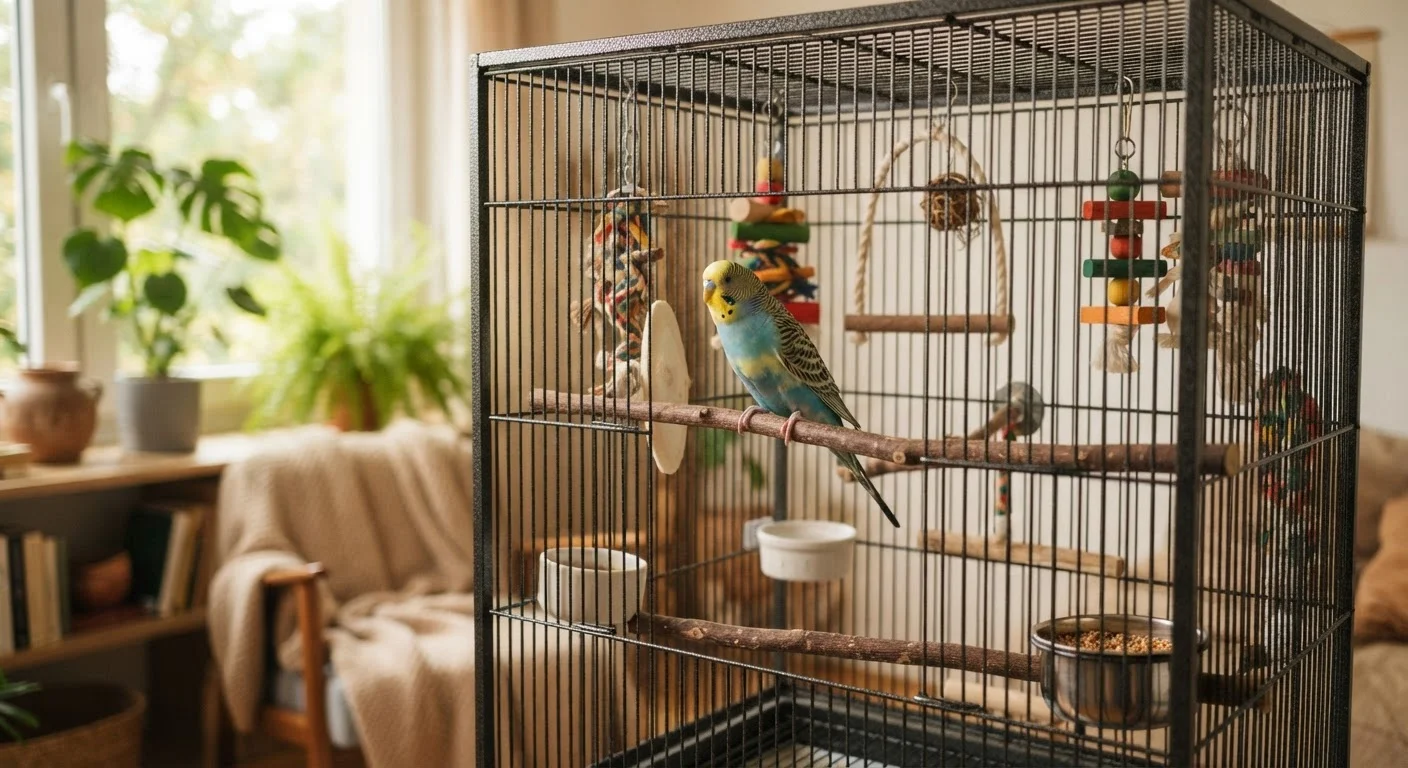
Horizontal flight cage
Provides the minimum recommended space — at least 18 inches wide, 18 inches deep, and 24 inches tall — for a single budgie to move and exercise.
Perches in multiple diameters (0.375–0.75 inch range)
Varied diameters exercise different foot muscles and help prevent pressure sores and arthritis.
Natural wood perches (e.g., manzanita or apple wood)
Offer irregular surfaces that replicate wild branch textures and encourage healthy foot grip.
Foraging toys and puzzle feeders
Simulate natural food-seeking behavior, reducing boredom and feather-destructive habits.
Full-spectrum or bird-safe UV lamp
Supports calcium metabolism and circadian rhythm when natural daylight is limited.
Cage thermometer
Monitors ambient temperature, keeping the budgie's environment within the safe range of 65–85°F.
Cage cover or blackout cloth
Provides the 10–12 hours of uninterrupted darkness budgies require each night for proper rest.
Step-by-Step Setup Instructions
Follow these steps in order. Steps 1 through 3 must be completed before the bird comes home. Steps 4 through 6 establish the daily routines that sustain long-term wellbeing.
Choose the right cage size and bar spacing
Select a cage that is wider than it is tall. Budgies are horizontal flyers, so a cage at least 24 inches wide is preferable for a single bird, with bar spacing no greater than ½ inch to prevent head entrapment. Avoid round cages — they provide no safe corners for the bird to retreat and can cause disorientation.
Install perches with variety in mind
Mount at least three perches at different heights and positions, ensuring none sits directly above a food or water dish. Include a natural wood perch, a rope perch for texture variation, and a slightly thicker dowel for contrast. Remove any smooth plastic dowels that came with the cage — uniform surfaces cause joint stress over time.
Select a safe, stable cage location
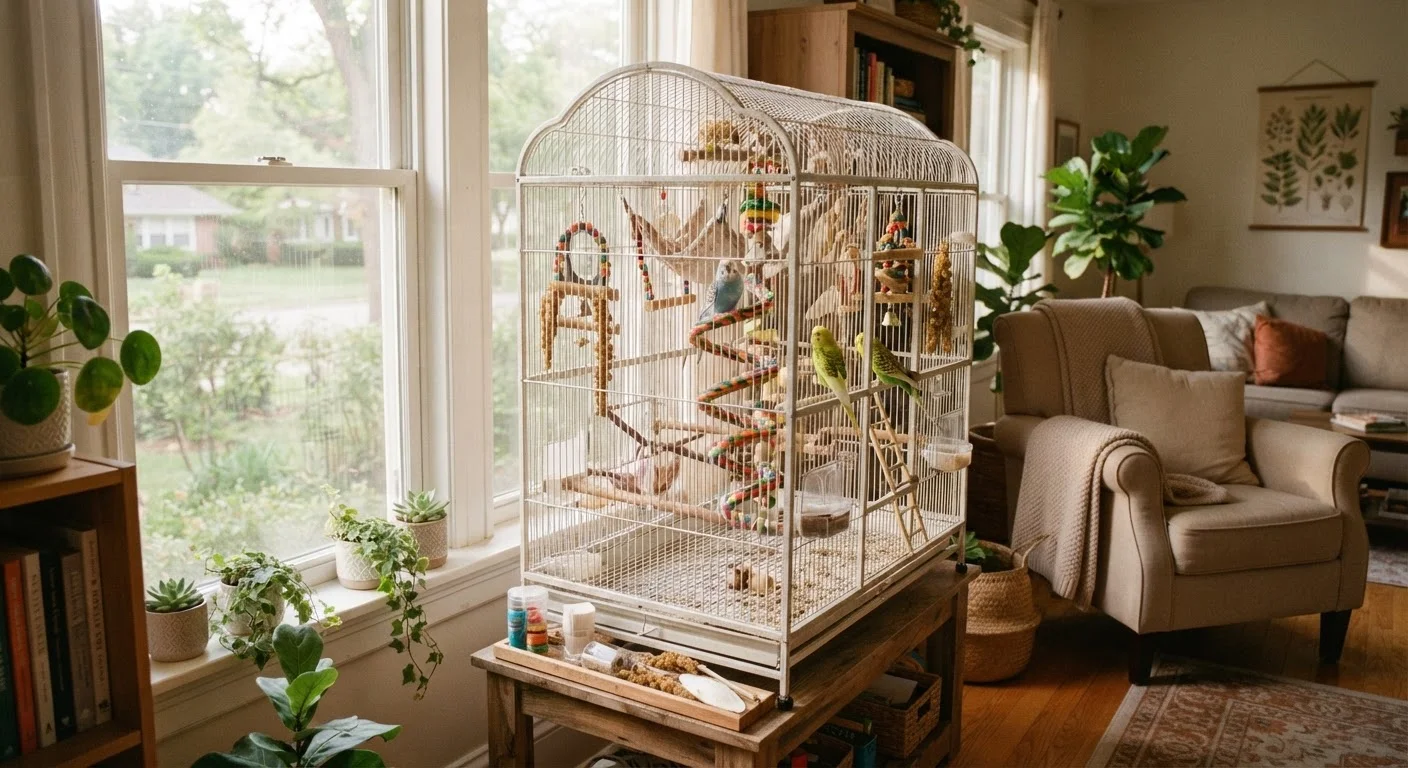
Place the cage in a room where the family spends time — budgies are social and thrive on ambient human activity. Position it at approximately chest height against a wall, giving the bird a sense of security on at least one side. Avoid the following locations:
- Kitchens: Fumes from non-stick cookware (polytetrafluoroethylene, or PTFE) can be rapidly fatal to birds.
- Drafty windows or air vents: Temperature fluctuations stress the respiratory system.
- Direct midday sun: Budgies can overheat quickly with no way to escape intense rays.
Establish a consistent light and dark cycle
Budgies need roughly 10–12 hours of darkness per night to maintain hormonal balance and avoid chronic stress. Cover the cage with a breathable, opaque cloth at the same time each evening, and uncover it at a consistent morning hour. If the household has irregular schedules, consider placing the cage in a quieter room at night.
Add enrichment that changes regularly
Stock the cage with a rotating selection of foraging toys, shreddable items (plain palm fronds, bird-safe paper), bells, and mirrors. Rotate at least two items weekly — novelty is itself a form of enrichment. Avoid toys with long loops of string that could catch a toe or neck.
Social enrichment is equally critical. Plan a minimum of one hour of supervised out-of-cage time daily in a budgie-proofed room: close windows and doors, cover mirrors, and remove ceiling fans from operation.
Arrange food and water placement thoughtfully
Mount dishes on the cage side — not on the floor where droppings contaminate them. Provide separate stations for pellets, seed, and fresh foods so the budgie must move between them. Change water daily and wash dishes with mild soap every two to three days. Offer fresh vegetables and leafy greens in a separate clip-on dish, removing uneaten perishables within two hours.
Household Hazards Budgies Cannot Avoid
Beyond PTFE cookware fumes, budgies are vulnerable to scented candles, aerosol sprays, incense, cigarette smoke, and certain houseplants including philodendron and dieffenbachia. Review your home for these hazards before your bird arrives, and establish a habit of ventilating rooms before allowing out-of-cage time.
Reading Your Budgie's Response to Its Environment
Once your budgie is settled, observe its body language regularly to assess whether the setup is working. A content budgie grinds its beak softly before sleep, fluffs briefly when relaxed, vocalizes throughout the day, and actively explores perches and toys. Signs that the environment may need adjustment include persistent feather fluffing during waking hours, repetitive cage-bar climbing, plucking, or complete disinterest in enrichment items.
Our guide to reading small pet body language covers bird-specific signals in detail and can help you distinguish normal settling behavior from genuine stress indicators. If behavioral concerns persist after environmental adjustments, consult an avian veterinarian — behavior is often the earliest visible sign of underlying health issues.
Make Gradual Changes, Not Sudden Ones
Budgies are neophobic — initially wary of new objects — so introduce cage changes one at a time over several days. Place a new toy outside the cage first so the bird can observe it before it enters the habitat. Sudden overhauls of the cage layout can cause avoidance of food dishes and temporary stress-related behavior.
This article provides general husbandry information for educational purposes only and is not a substitute for guidance from a qualified avian veterinarian. If you have concerns about your budgie's health or behavior, seek professional veterinary advice.