Why Fish Waste Becomes a Survival Problem
Unlike a pond or river, a closed aquarium cannot dilute or flush away waste on its own. Every time a fish excretes waste, urinates, or even breathes, it releases ammonia directly into the water. Uneaten food and decaying plant matter add more. In high enough concentrations, ammonia damages gill tissue, impairs the nervous system, and kills fish within days.
This is the central challenge of fish-keeping: the tank itself is both a home and a waste vessel. Without a biological mechanism to process that waste, water quality deteriorates faster than most new owners expect. Understanding the nitrogen cycle is the single most important concept for keeping fish alive — far more critical than lighting, décor, or tank size alone.
See our guide to what a healthy fish tank actually requires for a broader look at how the nitrogen cycle fits into overall aquarium care.
The Three-Stage Process, Step by Step
The nitrogen cycle moves through three chemical stages, each driven by a different group of bacteria:
- Ammonia (NH₃): Fish waste and decomposing organic matter produce ammonia continuously. This is the most acutely toxic stage.
- Nitrite (NO₂⁻): Bacteria from the Nitrosomonas family consume ammonia and convert it to nitrite. Nitrite is still toxic — it interferes with a fish's ability to carry oxygen in its blood — but it is a necessary intermediate step.
- Nitrate (NO₃⁻): A second bacterial group, primarily Nitrospira, converts nitrite into nitrate. Nitrate is far less toxic at typical aquarium concentrations and accumulates slowly. It is removed through routine partial water changes.
3–6 weeks
Typical time to fully cycle a new aquarium
Cycling duration varies with water temperature, ammonia levels, and whether established bacterial media is used to seed the tank.
0 ppm
Target ammonia and nitrite in a cycled tank
Even trace ammonia above 0.25 ppm can cause gill damage and immune stress in most freshwater and marine species.
20–40 ppm
Commonly recommended nitrate ceiling
Acceptable nitrate thresholds vary by species; sensitive fish and invertebrates often require levels kept below 20 ppm.
A tank is considered fully cycled when a full dose of ammonia is processed to nitrate within 24 hours, and both ammonia and nitrite consistently test at zero. Nitrate will still be present and should be managed through water changes — generally keeping it below 20–40 ppm depending on the species.
How to Cycle a Tank Before Adding Fish
The safest approach for new aquariums is fishless cycling — establishing the bacterial colony before any fish are introduced. Here's how the process works:
- Set up the tank fully with dechlorinated water, filter, and heater running.
- Introduce an ammonia source — pure ammonia drops (without surfactants) or a small amount of fish food left to decompose works well.
- Test water every few days using a liquid test kit. You will see ammonia rise first, then nitrite spike as the first bacteria establish, then nitrite fall as the second bacterial group matures.
- Cycle is complete when both ammonia and nitrite read zero after an ammonia dose.
Speed Up Cycling With Bacterial Seeding
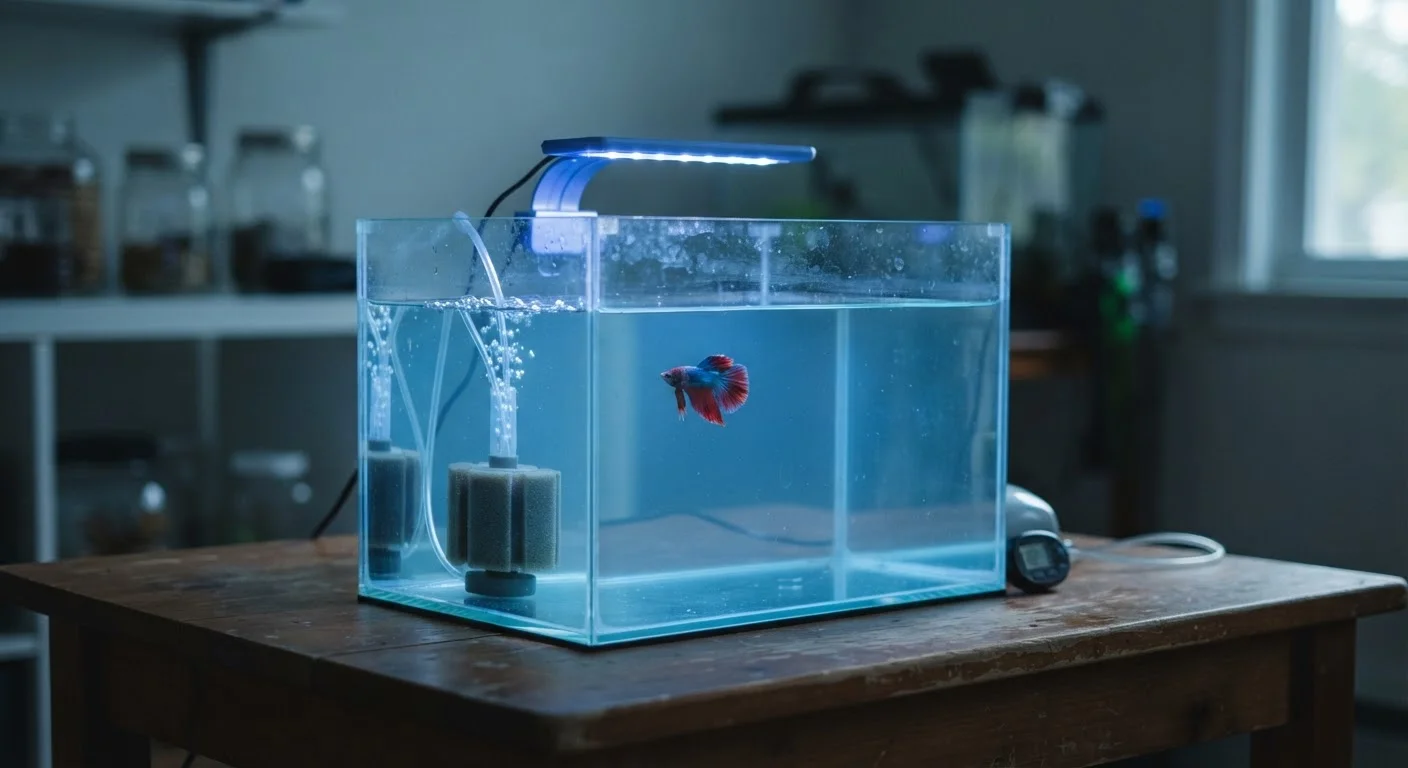
Adding a small amount of gravel, filter floss, or sponge from an established, disease-free aquarium introduces live beneficial bacteria directly into your new tank. This can cut cycling time from six weeks to as little as one to two weeks. Make sure the donor tank is healthy before transferring any material.
Seeding your filter with media, gravel, or a small amount of water from an established healthy tank can significantly shorten the cycling time by introducing existing bacterial colonies. This is one reason quarantining new fish in a separate cycled tank is strongly recommended — a quarantine tank needs its own established cycle to be effective.
Protecting the Cycle in an Established Tank
Once your tank is cycled, the bacterial colonies are fragile in ways that can catch owners off guard. Several common actions can disrupt or crash the cycle:
Mini-Cycles Can Happen Anytime
A mini-cycle — a temporary spike in ammonia or nitrite — can occur in an established tank after significant filter cleaning, a large die-off of fish or plants, or adding many new fish at once. If you notice fish gasping at the surface or behaving lethargically, test your water immediately. Small, frequent water changes can help stabilize levels while the bacterial population recovers.
- Replacing all filter media at once removes the majority of your beneficial bacteria in a single step.
- Using tap water to rinse filter media exposes bacteria to chlorine or chloramine, which are lethal to them.
- Adding many fish at once spikes ammonia beyond what the existing bacterial population can handle.
- Medicating the display tank — some treatments affect beneficial bacteria. Using a separate quarantine tank protects your cycle.
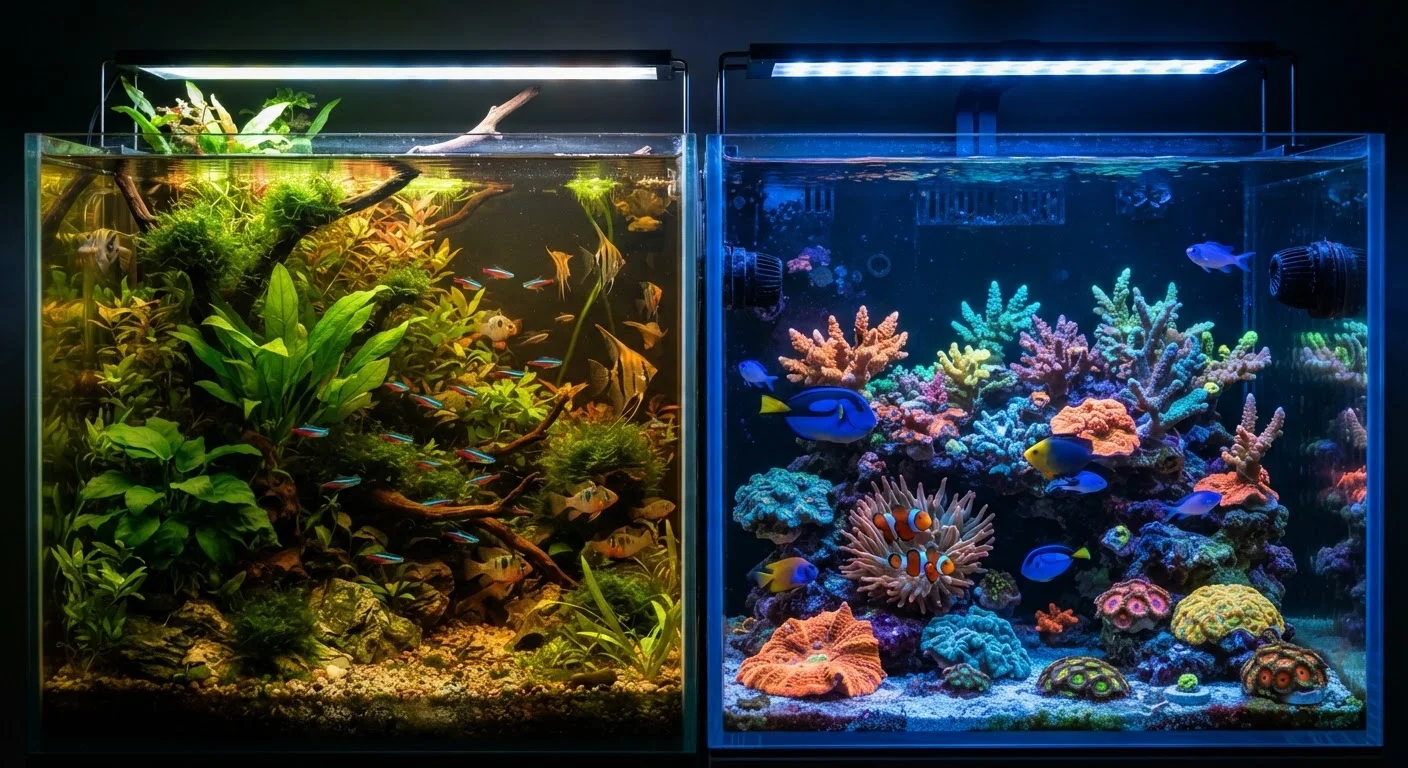
When nitrate accumulates faster than expected, it often signals overstocking, overfeeding, or infrequent water changes rather than a problem with the cycle itself. Regular testing gives you early warning before fish show visible signs of stress. Whether you're keeping freshwater species or exploring a marine setup, the cycle functions the same way — though saltwater systems introduce additional complexity. Our article on freshwater vs. saltwater aquariums covers how maintenance demands differ between the two.
This article is for general informational purposes. Always consult an aquatic specialist or veterinarian experienced with fish health for concerns about sick fish or water quality emergencies.