The Nitrogen Cycle: The Foundation of Any Healthy Tank
Before any fish enters a tank, one invisible process determines whether they will thrive or struggle: the nitrogen cycle. Fish produce ammonia through waste and respiration. Left unchecked, even small amounts of ammonia are toxic. Beneficial bacteria — primarily Nitrosomonas and Nitrospira — colonize filter media and convert ammonia first into nitrite (also toxic) and then into nitrate, which is far less harmful at low concentrations.
This cycle must be established before fish are introduced. A process called fishless cycling — adding an ammonia source to a running filter without fish present — allows bacterial colonies to develop safely. Testing ammonia, nitrite, and nitrate levels with a liquid test kit (not strips, which are less accurate) tells you when the cycle is complete: ammonia and nitrite should both read zero.
New Tank Syndrome Is Real
"New tank syndrome" refers to the ammonia and nitrite spikes that occur in uncycled aquariums. It is responsible for a significant proportion of fish deaths among new hobbyists. Recognizing that a tank needs weeks of preparation — not just days — is the most important mindset shift for new aquarium owners.
Skipping the cycling process is the single most common cause of early fish death in new aquariums. Many well-intentioned owners don't realize their tank needs weeks of preparation before it's ready. For a deeper look at how common misunderstandings harm fish, see small pet myths that can harm your animal.
Water Parameters: What You Actually Need to Monitor
Once cycled, a tank requires ongoing attention to several water chemistry values. Each species has specific tolerances, but some benchmarks apply broadly to most freshwater setups:
- Ammonia: 0 ppm at all times
- Nitrite: 0 ppm at all times
- Nitrate: Under 20–40 ppm, managed through water changes
- pH: Varies by species — bettas tolerate 6.5–7.5, while African cichlids need 7.8–8.5
- Temperature: Tropical fish generally require 74–80°F; a reliable heater and thermometer are non-negotiable
Test water parameters at least weekly in established tanks, and daily during cycling or when fish appear stressed. Sudden changes in any value — even within acceptable ranges — can cause osmotic stress. Consistency matters as much as the numbers themselves.
Test Before You Treat
When fish show signs of stress — clamped fins, surface gasping, erratic swimming — always test water parameters before adding any medication. Many fish illnesses are secondary to water quality problems, and treating with medication in compromised water can add unnecessary stress. Fixing the root cause first often resolves symptoms on its own.
Stocking Levels and Species Compatibility
Overstocking is one of the fastest ways to destabilize water quality. More fish means more waste, which means more demand on your biological filter. The old "one inch of fish per gallon" rule is a rough starting point but ignores body shape, waste output, and territorial behavior. A single large goldfish, for example, produces far more waste than the rule implies.
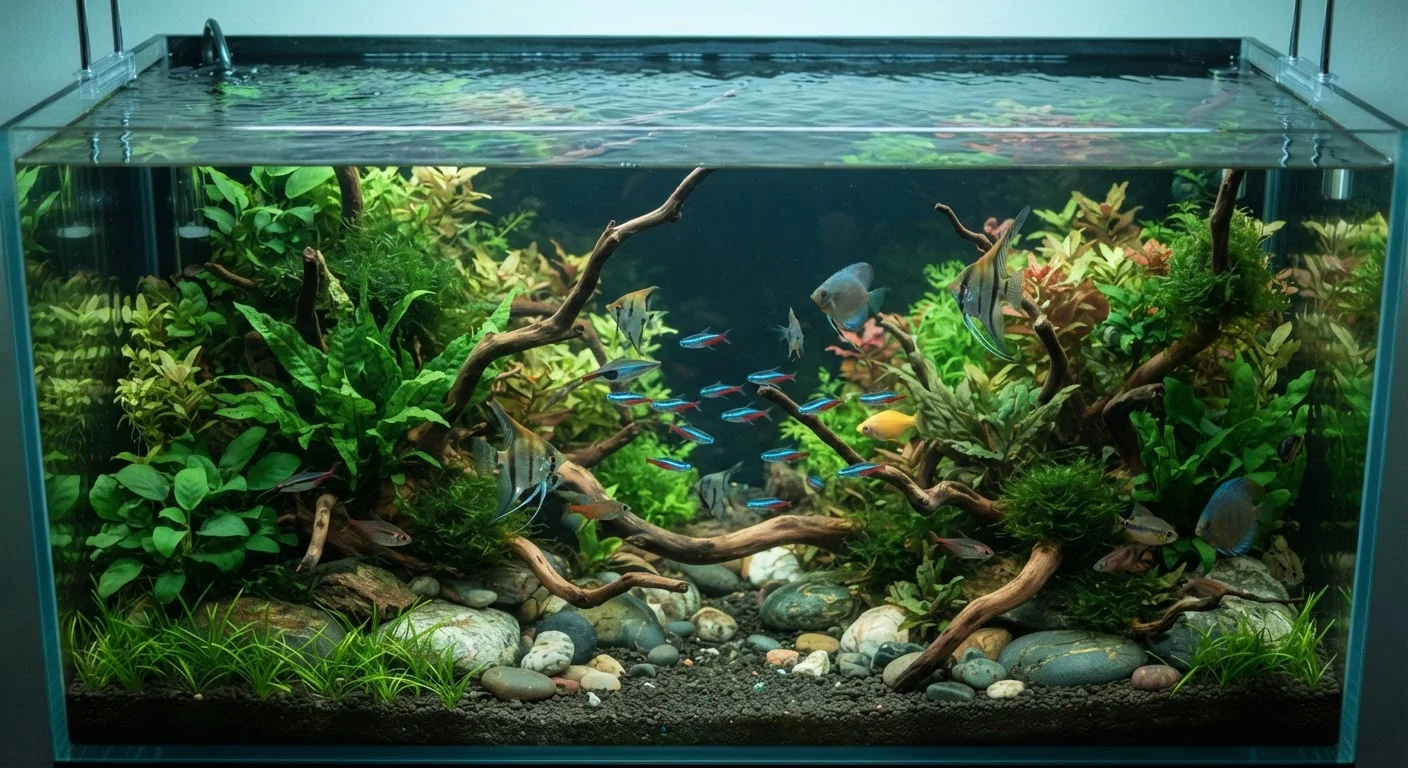
Species compatibility extends beyond size. Research whether fish you plan to keep share temperature and pH requirements, feeding habits, and behavioral temperaments. Peaceful community fish like tetras and rasboras coexist well; fin-nippers housed with long-finned species create chronic stress. Stress, in turn, suppresses immune function and invites disease.
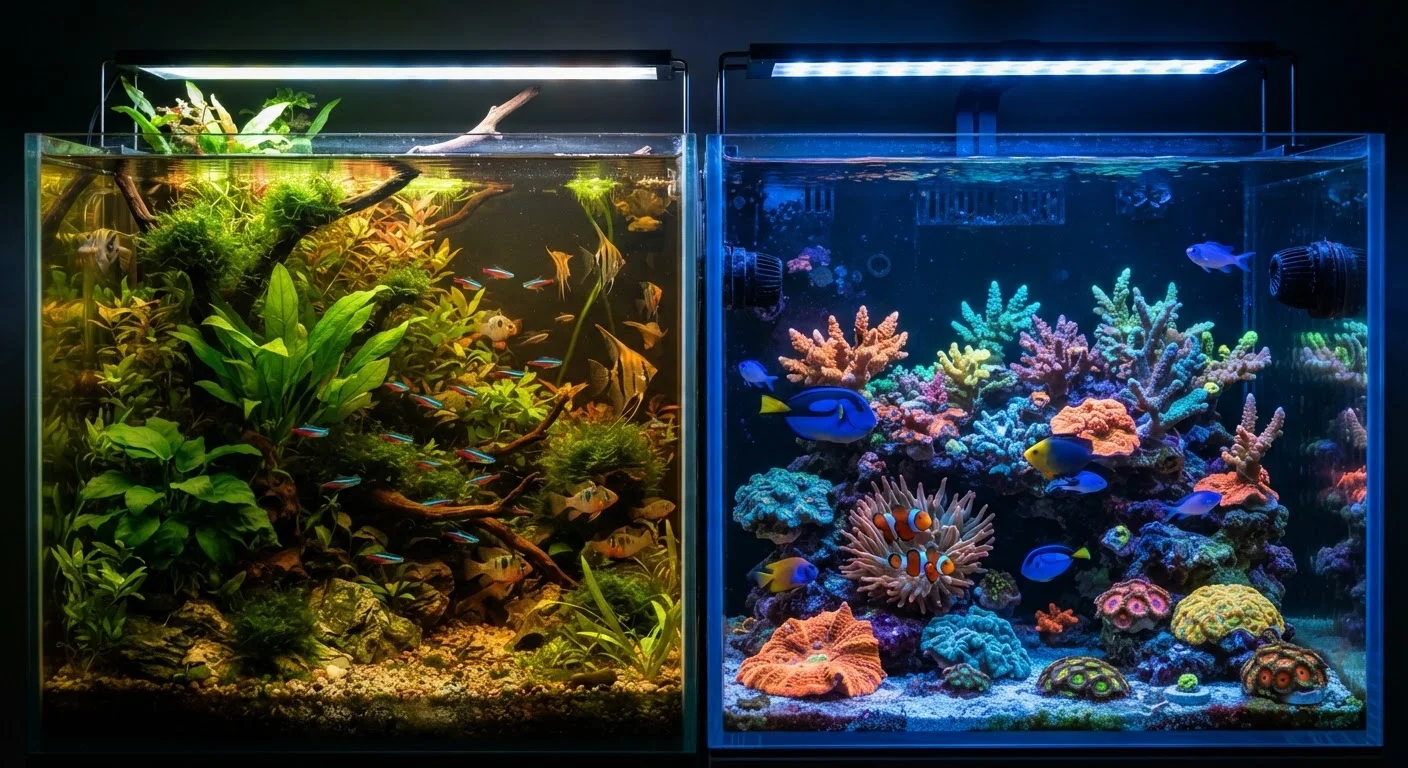
For those weighing different aquarium types altogether, freshwater vs. saltwater aquarium commitments covers how stocking complexity differs between the two systems.
4–8 weeks
Time to complete a fishless nitrogen cycle
Aquarium hobbyist guidance consistently recommends allowing 4 to 8 weeks for beneficial bacterial colonies to establish before adding fish.
0 ppm
Safe ammonia and nitrite levels in a cycled tank
Any detectable ammonia or nitrite in an established aquarium signals a problem requiring immediate investigation.
25–30%
Recommended partial water change volume
Most freshwater aquarium references recommend changing 25–30% of tank water every one to two weeks to manage nitrate buildup.
Filtration, Maintenance, and Long-Term Stability
Filtration performs three jobs: mechanical (removing debris), chemical (activated carbon absorbing dissolved compounds), and biological (housing beneficial bacteria). Most quality filters address all three, but biological filtration is the most critical — it's the living heart of the nitrogen cycle. Never clean all filter media at once or rinse it under tap water, which kills beneficial bacteria. Rinse media in a bucket of tank water instead.
Partial water changes — typically 25–30% every one to two weeks — dilute accumulated nitrates, replenish trace minerals, and reset small imbalances before they compound. Always treat new water with a dechlorinator, as chlorine and chloramine in tap water kill the bacteria your filter depends on.
A well-maintained aquarium shares something with other carefully managed home systems: consistent routine checks prevent the small failures that compound into larger problems. The same principle applies to keeping a smart home running reliably — regular attention is cheaper and easier than reactive repair.
This article is for general informational purposes only and is not a substitute for professional veterinary or aquatic specialist advice. Consult a qualified aquatics professional for concerns about your specific fish or setup.