
When Does a Dog Become a Senior?
Veterinarians generally classify dogs as seniors around age seven, though the threshold varies by size. Large and giant breeds age faster — a Great Dane may be considered senior at five or six, while a Chihuahua may not reach that life stage until nine or ten. Body weight and breed genetics drive these differences more than calendar age alone.
Recognizing when your dog has entered the senior phase matters because the biological changes that come with aging — slower metabolism, reduced joint flexibility, declining organ efficiency — call for specific management adjustments. Catching those shifts early gives you and your veterinarian the best chance to maintain your dog's quality of life.
| Senior threshold (small breeds) | Around 9–10 years (American Veterinary Medical Association general guidance) |
| Senior threshold (large/giant breeds) | Around 5–7 years (American Veterinary Medical Association general guidance) |
| Recommended vet visit frequency | Twice per year (AVMA senior pet care recommendations) |
| Common age-related condition | Osteoarthritis (Veterinary peer-reviewed consensus) |
| Cognitive Dysfunction Syndrome prevalence | Increases significantly after age 11 (Journal of Veterinary Behavior, published studies) |
Nutrition: What Needs to Change
Senior dogs typically require fewer calories as their activity level and metabolic rate decrease. Feeding the same quantity as during their adult years can lead to gradual weight gain, which places added stress on joints and the cardiovascular system. Portion reassessment — ideally guided by a veterinarian — is a sensible first step.
Protein quality also becomes more important with age. Older dogs may have reduced digestive efficiency, meaning easily absorbed protein sources support muscle maintenance more effectively than lower-quality alternatives. Some formulations marketed for seniors also include added omega-3 fatty acids to support joint and cognitive health, though the clinical evidence for specific supplements varies. Ask your vet which nutrients are worth prioritizing for your individual dog.
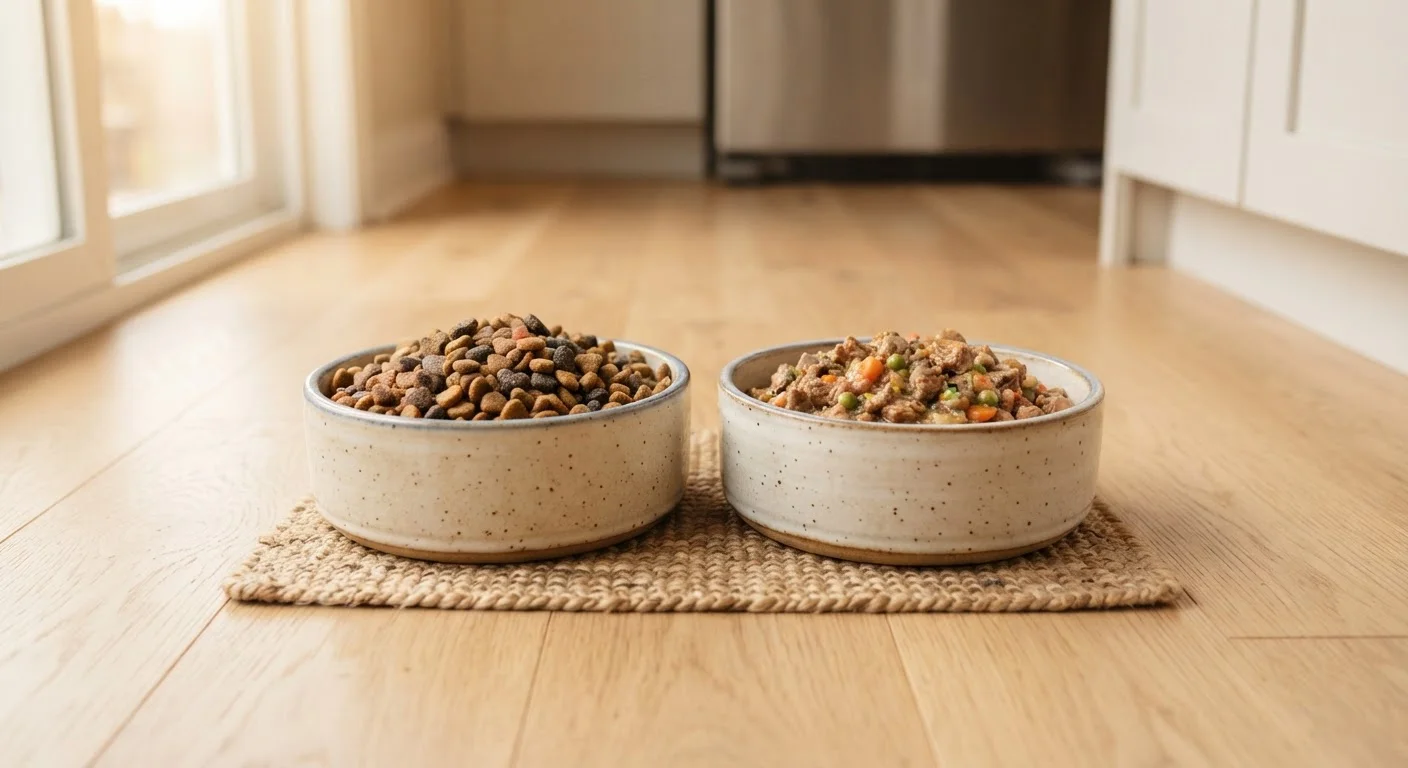
Food texture can matter too. Dogs with dental disease or missing teeth may struggle with hard kibble. See our guide to kibble vs. wet food for a breakdown of nutritional trade-offs that may help you navigate this decision.
Cognitive Dysfunction Syndrome (CDS)
A neurological condition in older dogs involving memory, awareness, and behavioral changes — comparable in some ways to dementia in humans. Signs include disorientation, changed sleep patterns, and reduced interaction.
Osteoarthritis
A progressive joint disease characterized by cartilage breakdown that leads to pain and reduced mobility. It is one of the most common conditions in senior dogs.
Metabolic rate
The speed at which a body converts food and stored energy into fuel. Senior dogs typically have a slower metabolic rate, meaning they need fewer calories to maintain a healthy weight.
Bloodwork panel
A group of laboratory tests performed on a blood sample to evaluate organ function, red and white cell counts, and other markers. Routine panels are a key diagnostic tool in senior dog care.
Exercise and Mobility Adjustments
Senior dogs still need regular physical activity — it supports healthy weight, mental engagement, and muscle tone. What changes is intensity and duration. Shorter, more frequent walks are generally easier on aging joints than one long daily outing. Avoid surfaces that are hard on hips and knees when possible, and watch for signs of fatigue or lameness during or after exercise.
Swimming is often recommended for older dogs with joint discomfort because it allows movement with minimal impact. Mental stimulation through puzzle feeders or low-intensity scent games can supplement physical exercise on days when a dog is stiff or tired.
Keep in mind that activity needs remain breed-dependent even in older dogs. Exercise requirements across dog breeds vary considerably — a senior Border Collie still needs more engagement than a senior Basset Hound of the same age.
~80%
Dogs over 8 showing arthritis signs
Veterinary studies estimate the majority of dogs over eight years have radiographic evidence of osteoarthritis, though clinical signs vary widely.
2×/year
Recommended senior wellness exams
Most veterinary associations advise biannual checkups for dogs classified as senior to improve early disease detection.
Veterinary Monitoring and Common Health Concerns
Twice-yearly veterinary checkups are widely recommended for senior dogs, compared to the annual schedule typical for younger adults. More frequent visits allow earlier detection of age-related conditions including osteoarthritis, dental disease, kidney and liver changes, hypothyroidism, and cognitive dysfunction syndrome (CDS) — a condition with symptoms similar to dementia in humans.
Bloodwork panels become a key diagnostic tool at this stage. Routine lab work can identify kidney or liver changes before outward symptoms appear, giving owners and veterinarians more options for management. Your vet may also recommend blood pressure monitoring, as hypertension is more common in older dogs.
At home, watch for behavioral changes such as increased confusion, disrupted sleep patterns, reduced responsiveness, or new anxiety. These can be early indicators of cognitive or neurological changes worth discussing with your veterinarian. If your dog is also showing digestive oddities, see our article on why dogs eat grass and when to call the vet — some gastrointestinal behaviors increase in frequency with age.
This article is for general informational purposes only and is not a substitute for professional veterinary advice. Always consult a licensed veterinarian regarding your individual dog's health needs.