When Your Cat's Behavior Feels Like a Problem
Cats scratch furniture, cry through the night, and mark territory — and owners often respond with frustration before curiosity. But each of these behaviors tells a story. They emerge from instinct, unmet needs, stress, or health changes that your cat cannot communicate any other way.
Understanding what drives a specific behavior is the only reliable path to changing it. The five behaviors covered below represent the most common complaints from cat owners, and each one responds to a different approach. If you're new to cat ownership, our guide to bringing your first cat home lays helpful groundwork for understanding how cats communicate from the start.
Start With a Vet Visit
Before attempting behavioral interventions for any of the issues listed here, schedule a veterinary checkup if the behavior is new, escalating, or accompanied by other changes in eating, drinking, or movement. Many problem behaviors have a medical component that no amount of training or environmental adjustment will resolve on its own. A clean bill of health gives you a reliable baseline to work from.
Five Feline Problem Behaviors — and What's Really Behind Them
Destructive Scratching
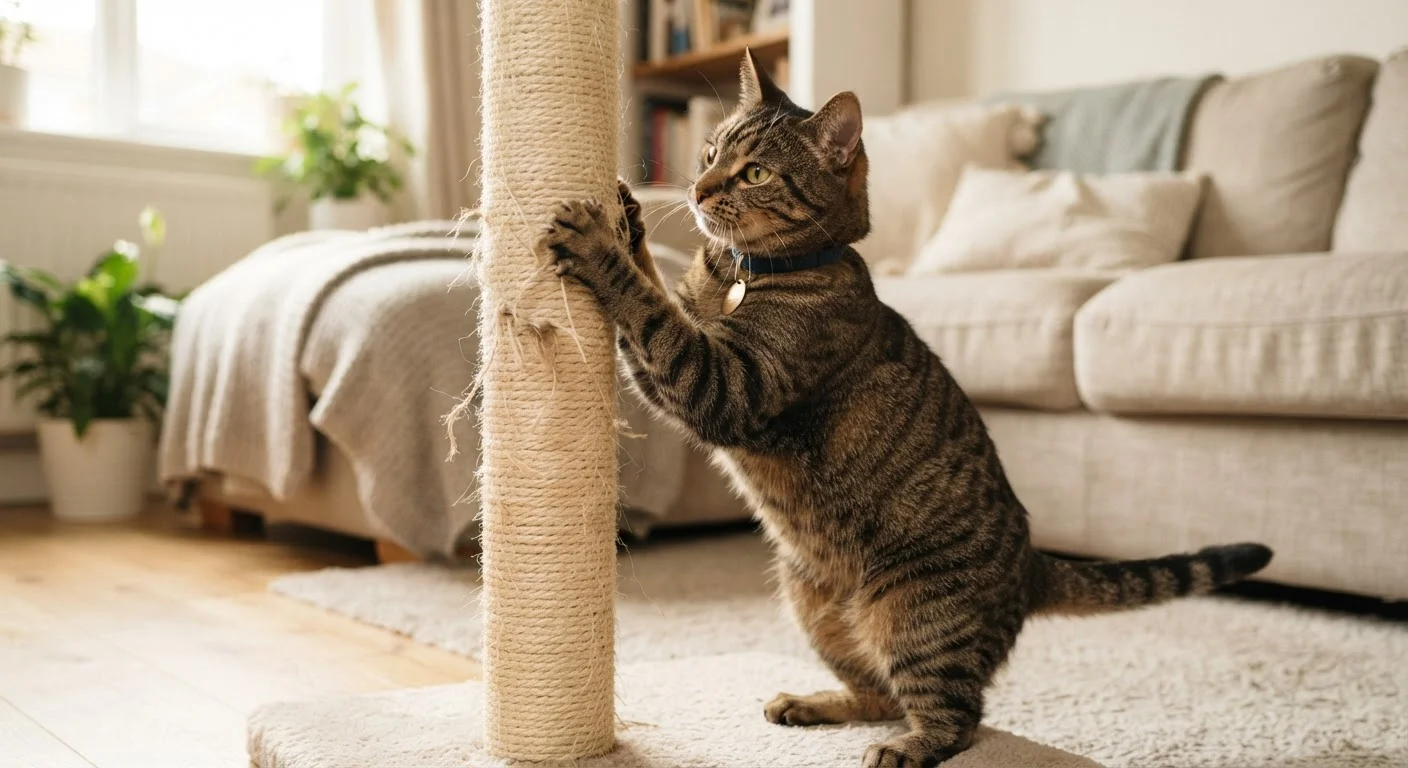
Scratching is not misbehavior — it is a biological necessity. Cats scratch to shed dead claw sheaths, stretch the muscles of their back and shoulders, and deposit scent from glands in their paws. When a cat scratches your sofa, it is almost always because no better option has been made available or obvious.
The fix centers on redirection, not restriction. Place scratching posts near the locations your cat already targets, since cats often scratch surfaces close to their sleeping spots or in social areas. Tall, stable sisal posts that allow full-body stretching tend to be used more consistently than short or wobbly alternatives. If you are protecting a specific item, a temporary physical barrier paired with an appealing post nearby is far more effective than deterrents alone.
Scratching is a biological necessity — the fix is always redirection, not restriction.
Excessive or Nighttime Vocalization
A cat who yowls persistently — especially at night or in patterns that feel new — deserves a veterinary evaluation before any behavioral intervention. Hyperthyroidism, high blood pressure, cognitive dysfunction in older cats, and pain can all produce increased or altered vocalization. Ruling these out is non-negotiable.
When health causes are excluded, the behavior is usually driven by hunger timing, insufficient stimulation during waking hours, or reproductive hormones in unspayed or unneutered cats. Adjusting feeding schedules so a larger meal falls close to bedtime, increasing structured play earlier in the evening, and spaying or neutering when appropriate address the majority of non-medical cases. For context on how feline vocalization relates to other sounds cats make, our article on the science behind cat purring explores the breadth of feline communication.
New or escalating yowling warrants a vet visit before any behavioral intervention is attempted.
Urine Spraying
Spraying — backing up to a vertical surface and releasing a small amount of urine — is a marking behavior distinct from litter box avoidance. It is performed by both male and female cats, though intact males do so most frequently. The trigger is almost always social stress: a new pet, outdoor cats visible through windows, changes in household routine, or conflict between resident cats.
Spaying or neutering resolves spraying in the majority of cases when the behavior is hormonally driven. For already-altered cats, identifying and reducing the specific stressor is the primary strategy — blocking visual access to outdoor cats, adding vertical space and hiding spots to reduce inter-cat tension, or using synthetic feline facial pheromone products that some cats find calming. If spraying is accompanied by changes in urination posture or frequency, a urinary health issue may be involved, and a vet should assess the cat.
Spraying signals social stress — identifying the specific stressor drives the most effective response.
Sudden Aggression
Aggression that appears without obvious provocation — or that represents a change from a cat's baseline temperament — frequently has a medical origin. Pain, neurological changes, and hormonal conditions can all lower a cat's threshold for defensive or offensive behavior. Sudden aggression always warrants veterinary assessment first.
Behaviorally driven aggression falls into recognizable patterns: redirected aggression (a cat aroused by something outside attacking the nearest person or pet), play aggression in understimulated young cats, and petting-induced aggression when overstimulation builds unnoticed. Each type has a different management strategy. Redirected aggression requires identifying and removing the arousing trigger. Play aggression responds well to structured wand-toy sessions that give the cat a legitimate outlet. Petting-induced aggression is managed by learning a cat's individual tolerance signals and stopping before threshold is reached.
Sudden aggression without clear cause should always be evaluated by a veterinarian before behavioral work begins.
House Soiling Outside the Litter Box
When a cat eliminates outside the litter box, medical causes — urinary tract infection, kidney disease, diabetes, or gastrointestinal illness — must be ruled out first. This is especially important when the onset is sudden or when the cat appears to strain or vocalize while eliminating.
Once health causes are excluded, the investigation turns to the litter box itself: its cleanliness, size, litter type, number of boxes, and placement. A widely cited guideline among veterinary behaviorists is to provide one box per cat plus one additional. Boxes should be scooped at minimum once daily and placed in low-traffic, low-noise locations that offer the cat a clear sightline. Our dedicated resource, why cats stop using the litter box, walks through each contributing factor in detail.
House soiling is rarely spite — medical causes and litter box conditions are nearly always the real explanation.
Putting It All Together
None of these behaviors exist in isolation. A cat who is bored may scratch more; a cat in pain may yowl and spray. When multiple problem behaviors appear at once, that overlap is important information. Our article on signs your cat may be in pain can help you identify whether discomfort is playing a role.
Enrichment is another powerful lever. Keeping a cat mentally stimulated every day reduces boredom-driven scratching, redirects anxious energy, and promotes the kind of calm routine that discourages marking. Behavior change takes consistency and patience — but when you address the root cause, results are far more durable than any quick fix.
Punishment Does Not Work for Cats
Cats do not connect physical correction or verbal scolding with the behavior that prompted it — especially when the punishment comes even seconds after the act. Punishment tends to increase anxiety and, in turn, worsen many of the behaviors owners are trying to eliminate. Consistent redirection, environmental management, and addressing root causes are the approaches supported by veterinary behaviorists.
This article is for general informational purposes only and is not a substitute for veterinary advice. If your cat's behavior changes suddenly or significantly, consult a licensed veterinarian to rule out medical causes.