
Why Cat Introductions Go Wrong — and How to Avoid It
Cats are solitary hunters by nature. Unlike pack animals, they have no built-in social drive to welcome a stranger into their territory. When a new cat is brought home and immediately placed in the shared living space, the resident cat perceives it as an invasion — triggering a fight-or-flight response that can persist for months.
The most common mistake cat owners make is moving too quickly. A brief sniff in the hallway is not a cat introduction; it is a confrontation. A structured, phased approach works because it allows each cat to process the other's presence through scent — the primary sense cats use to interpret their social world — before any face-to-face contact occurs.
If you are preparing your home for a first cat rather than adding a second, our guide on bringing your first cat home covers the foundational steps. For owners weighing an indoor-only lifestyle versus outdoor access for either cat, Indoor Cat, Outdoor Cat, or Both? is a useful companion read.
Never Force a Face-to-Face Meeting
Placing two cats together before they are ready can cause lasting fear and aggression that takes months to undo. Physical fights can result in injuries and infections requiring veterinary care. Always let the cats set the pace — if either cat shows prolonged distress or aggression, consult your veterinarian or a certified cat behaviorist before proceeding.
The timeline below assumes both cats are in good health. A veterinary check for the new cat — including parasite screening — should happen before any introduction begins.
What you will need
What to Expect and When to Seek Help
Most successful multi-cat introductions take two to four weeks when the process is followed carefully. Some pairs, particularly adult cats with strong territorial histories, may take longer. Kittens generally adapt faster than adult cats, and a resident cat that was previously socialized with other cats may tolerate a new companion more readily.
Use Mealtime as a Positive Bridge
Feed both cats on opposite sides of the closed separation door at the same time. The cats associate each other's scent with something rewarding — eating — which builds a positive emotional connection before they ever make eye contact. Move bowls slightly closer each day as tension decreases.
Separate room with a door
Provides the new cat with a safe territory and prevents premature face-to-face contact.
Extra litter box
Ensures each cat has its own box plus one additional — the standard formula for reducing elimination conflict.
Separate food and water bowls
Prevents resource guarding and allows each cat to eat without competition.
Soft cloth or sock for scent swapping
Used to transfer each cat's scent to the other's environment before visual contact begins.
Baby gate or screen door
Allows limited visual and olfactory contact while maintaining a physical barrier during transition.
Vertical spaces (cat trees, shelves)
Gives each cat escape routes and high perches that reduce conflict over floor-level territory.
Watch for Signs the Process Is Moving Too Fast
Flattened ears, growling, swatting with claws out, or a cat refusing to eat are signals to return to a previous stage. Brief hissing is expected; persistent, escalating confrontation is not. When in doubt, slow down and allow more days at each phase before moving forward.
If significant aggression — chasing, biting, blocking access to food or the litter box — continues beyond several weeks of careful introduction, consult your veterinarian. Underlying anxiety disorders in cats can be addressed with behavioral modification strategies, and in some cases, a veterinarian may discuss additional options. A certified cat behaviorist can also provide household-specific guidance. The goal is a genuinely peaceful shared space, not simply an absence of overt fighting.
Once your cats are living together comfortably, ongoing mental enrichment helps keep tension low. Boredom and under-stimulation are underrecognized drivers of inter-cat conflict — our article on keeping a cat mentally stimulated every day offers practical strategies you can implement immediately.
Set Up a Sanctuary Room for the New Cat
Before bringing the new cat home, prepare a dedicated room with everything it needs: litter box, fresh water, food, a hiding spot, and a scratching surface. This space should be off-limits to your resident cat entirely. The new cat needs time to decompress and feel safe in a contained area before encountering any unfamiliar animals.
Begin Scent Swapping
After two to three days, rub a soft cloth on the new cat's cheeks and face, then place it near your resident cat's sleeping area — and vice versa. Do not force either cat to interact with the scented cloth. Allow each animal to investigate at its own pace. Repeat daily, gradually moving the cloths closer to feeding spots to build positive scent associations.
Conduct Parallel Mealtime Through the Door
Place both cats' food bowls on opposite sides of the closed sanctuary door — far enough away that neither cat shows stress. Over several days, move the bowls progressively closer to the door. The goal is for both cats to eat calmly with only the door between them, associating each other's scent with a positive experience.
Introduce Visual Contact With a Barrier
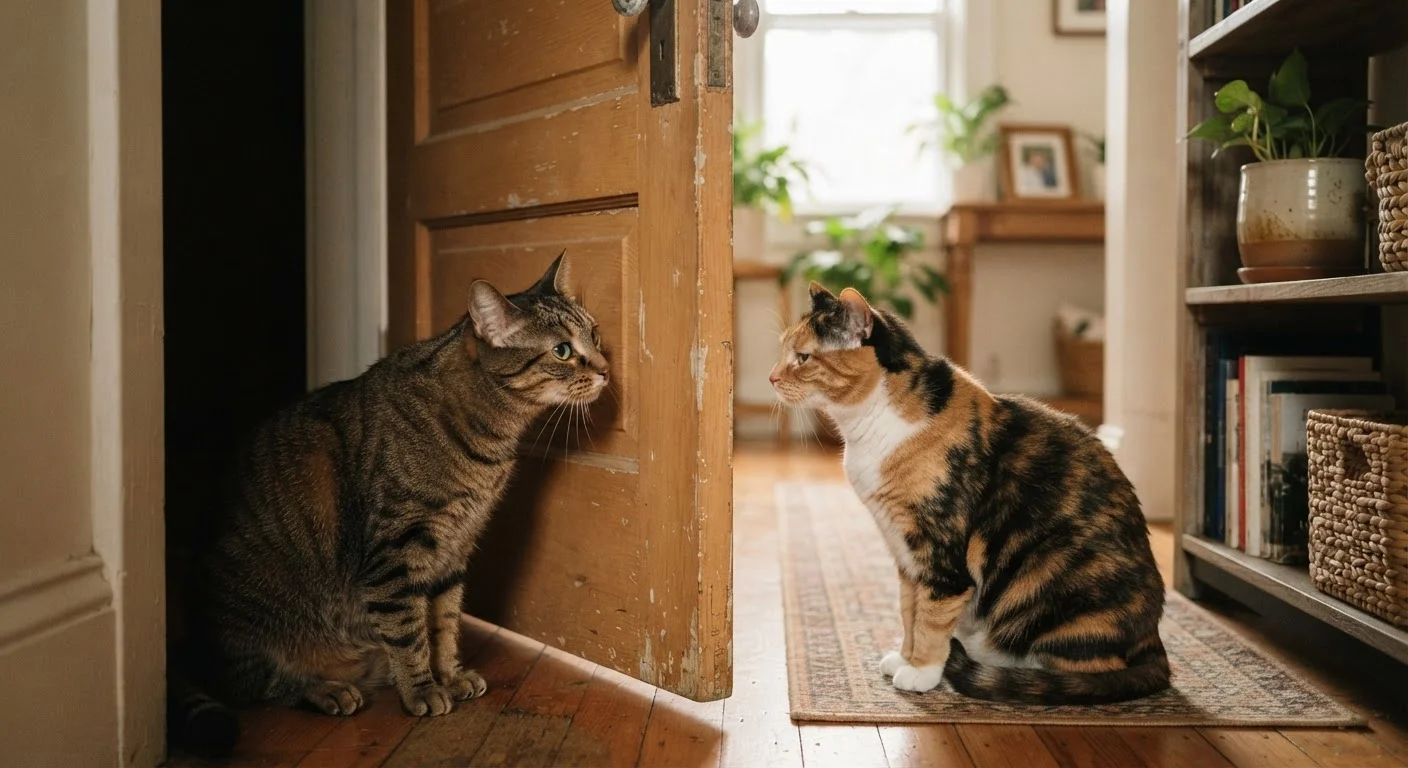
Once both cats eat calmly near the closed door (typically after five to ten days), prop the door open just enough for them to see each other, or use a baby gate or a cracked-open door with a doorstop. Keep initial visual sessions short — five to ten minutes — and supervise closely. End the session before either cat shows signs of escalating stress.
Allow Supervised Free Interaction
When both cats consistently show calm body language during barrier sessions — relaxed tails, no sustained hissing — allow the new cat to explore the larger home while you supervise. Keep sessions short and return the new cat to its sanctuary room afterward. Gradually extend these sessions over several days. Ensure multiple vertical spaces and escape routes are available so neither cat feels cornered.
Establish Permanent Separate Resources
Once the cats coexist with minimal conflict, confirm that permanent resource stations are in place: one litter box per cat plus one extra, food and water bowls in separate locations, and individual sleeping areas. Resource competition is a leading driver of ongoing inter-cat aggression even after a successful introduction. Maintaining separation of resources reduces tension long-term.
This article is for general informational purposes only and does not constitute veterinary advice. Always consult a licensed veterinarian for health concerns or behavioral issues specific to your cats.