Why Dietary Fat Matters
Fat has spent decades as a nutritional villain, but the science tells a more nuanced story. Your body needs fat to absorb vitamins A, D, E, and K, to support cell membranes, and to produce essential hormones. The relevant question isn't whether to eat fat — it's which kinds and in what amounts.
All dietary fats share a basic chemical structure: chains of carbon atoms bonded to hydrogen. The differences in those bonds are what separate fats into categories, and those categories translate directly into different effects on cardiovascular health and overall well-being.
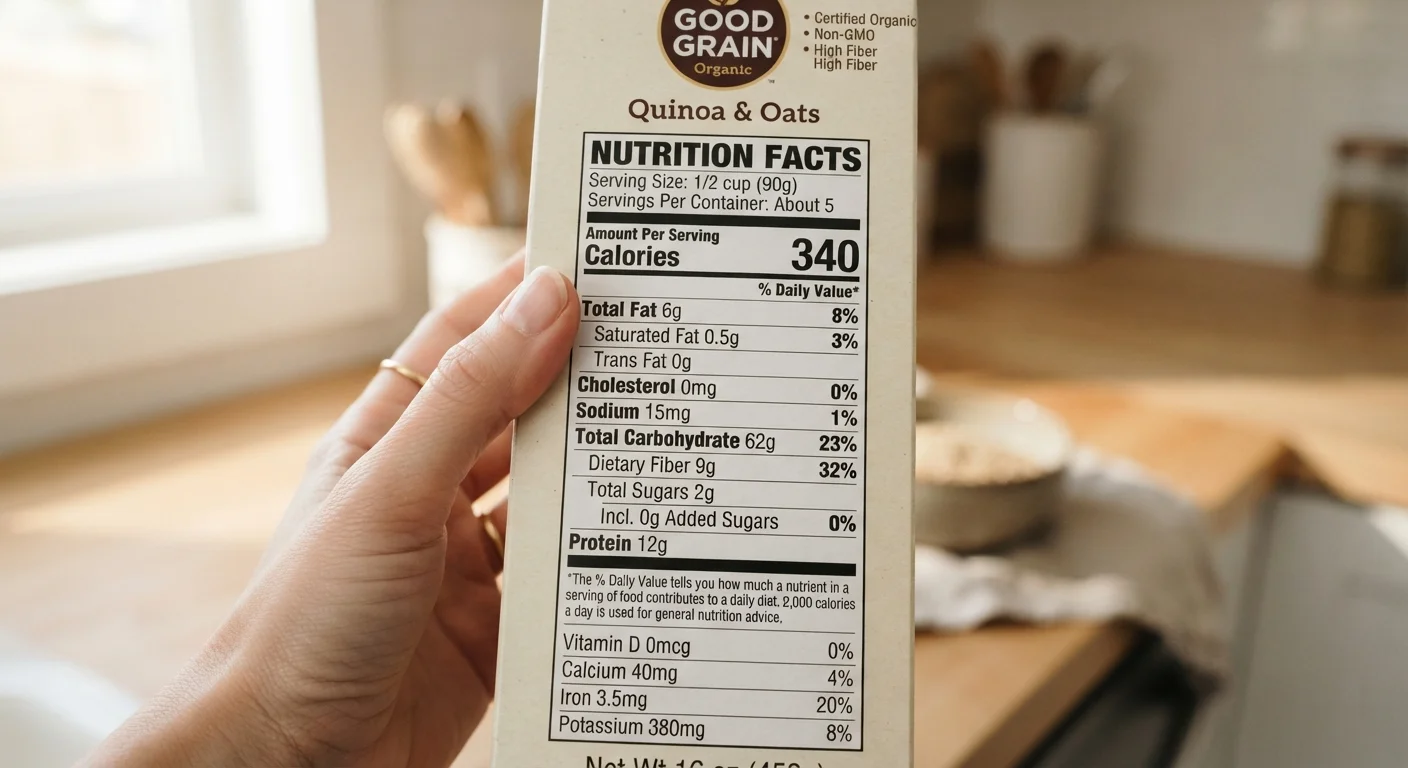
When you check a food label, you'll see total fat broken into subcategories. Understanding what each line means helps you make genuinely informed choices. See our guide to reading a Nutrition Facts label for a full breakdown of every panel entry.
| Fat calories per gram | 9 calories (USDA Dietary Reference Intakes) |
| Recommended saturated fat limit | Less than 10% of daily calories (2020–2025 U.S. Dietary Guidelines for Americans) |
| Artificial trans fat status (U.S.) | Phased out of food supply (FDA ruling, finalized 2018, compliance by 2020) |
| Fat-soluble vitamins requiring dietary fat | A, D, E, K (National Institutes of Health, Office of Dietary Supplements) |
| Key omega-3 food sources | Fatty fish, walnuts, flaxseed, chia seeds |
The Three Main Types Explained
Saturated Fat
Saturated fats have no double bonds between carbon atoms — every carbon is "saturated" with hydrogen. They're typically solid at room temperature. Common sources include beef, butter, cheese, coconut oil, and palm oil. Research has consistently linked high saturated fat intake to elevated LDL cholesterol (the kind associated with increased cardiovascular risk), though scientists continue to debate the magnitude of that effect and how food context matters.
The U.S. Dietary Guidelines generally recommend limiting saturated fat to less than 10% of total daily calories for most adults. This is general population guidance, not a personal prescription — individual needs vary.
Unsaturated Fat
Unsaturated fats have one or more double bonds in their carbon chain, which makes them liquid at room temperature. They split into two subtypes:
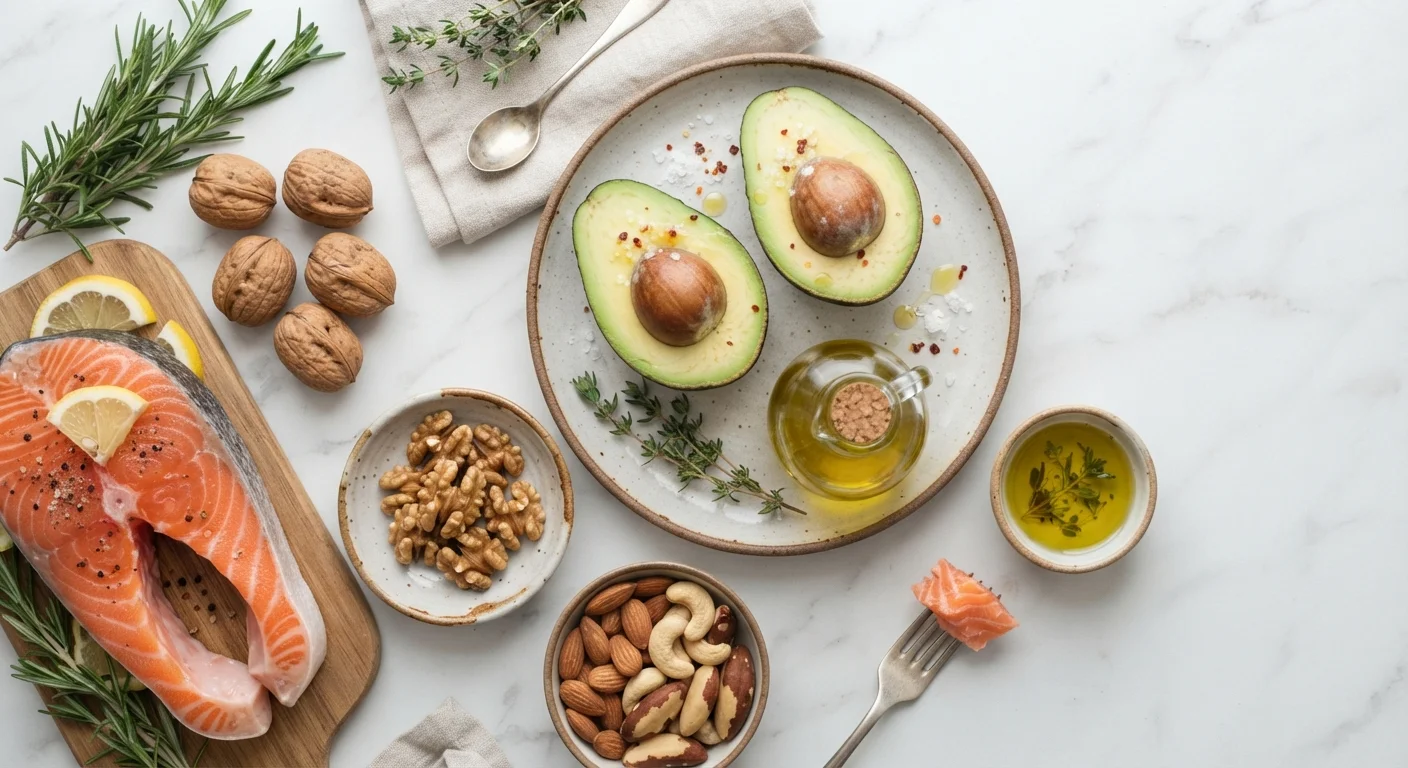
- Monounsaturated fats (MUFAs) — one double bond. Found in olive oil, avocados, peanuts, and many nuts. Evidence supports their role in maintaining healthy cholesterol levels.
- Polyunsaturated fats (PUFAs) — multiple double bonds. Includes omega-3 and omega-6 fatty acids. Fatty fish, walnuts, flaxseed, and sunflower oil are key sources. Omega-3s in particular have strong evidence for supporting heart and brain health.
Trans Fat
Trans fats arise when liquid oils are partially hydrogenated — an industrial process that extends shelf life. They raise LDL cholesterol and lower HDL cholesterol (the protective kind), a combination that research links to heightened cardiovascular risk. The FDA phased out artificial trans fats from the U.S. food supply by 2020, but small amounts can still appear naturally in some animal products and in foods with partially hydrogenated oils still working through supply chains. Check ingredient lists for the phrase "partially hydrogenated oil."
Saturated fat
A type of dietary fat with no double bonds between carbon atoms, typically solid at room temperature. Found in animal products and some tropical oils, high intake is associated with elevated LDL cholesterol.
Unsaturated fat
A dietary fat containing one or more double bonds in its carbon chain. Includes monounsaturated and polyunsaturated varieties, and is generally considered more heart-favorable than saturated fat.
Trans fat
Fat formed by partially hydrogenating liquid vegetable oil, converting it to a more solid form. Artificial trans fats raise LDL and lower HDL cholesterol, increasing cardiovascular risk.
LDL cholesterol
Low-density lipoprotein cholesterol, sometimes called "bad" cholesterol. Elevated LDL levels are associated with a higher risk of plaque buildup in arteries.
HDL cholesterol
High-density lipoprotein cholesterol, often called "good" cholesterol. Higher HDL levels are generally associated with a lower risk of cardiovascular disease.
Omega-3 fatty acids
A class of polyunsaturated fats considered essential because the body cannot synthesize them. They are associated with heart and brain health and must be obtained through food or supplements.
Putting It Into Practice
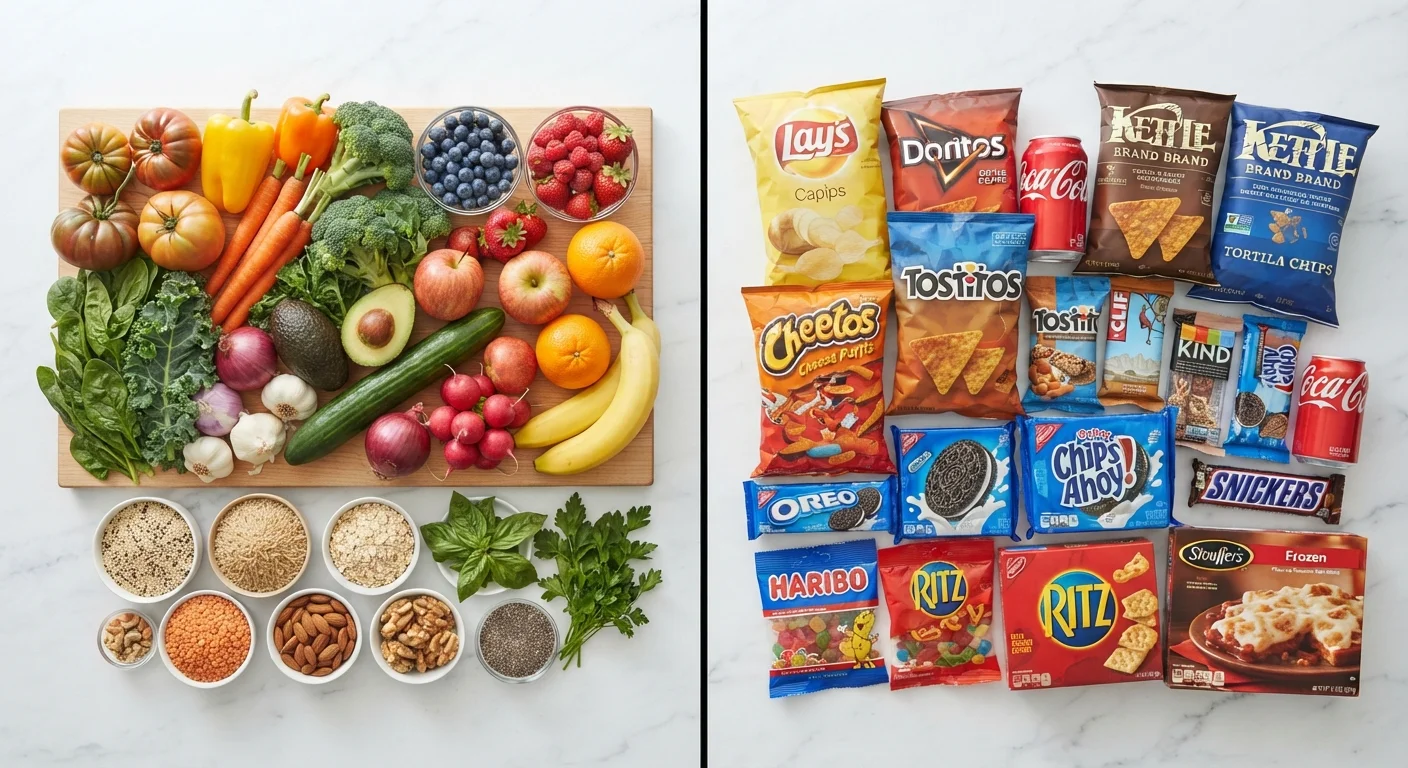
Understanding fat types becomes practical at the grocery store and in the kitchen. Whole, minimally processed foods tend to deliver unsaturated fats in more favorable packages than heavily processed alternatives. Research on whole versus processed foods shows that the broader nutritional context of a food — its fiber, micronutrients, and food matrix — affects how its fat content behaves in the body.
Context Counts More Than Single Nutrients
Public health nutrition research increasingly emphasizes overall dietary patterns over isolating single nutrients. A diet rich in vegetables, whole grains, legumes, and fish tends to have a more favorable fat profile than one built around heavily processed foods — even if the total fat grams appear similar on a label.
Fat doesn't act in isolation. Diets high in added sugar can compound cardiovascular risk independent of fat intake. Looking at the full dietary pattern rather than single nutrients gives a more accurate picture of health impact.
This article is for general informational and educational purposes only and is not a substitute for personalized medical or nutritional advice. Consult a qualified healthcare provider or registered dietitian before making significant changes to your diet, especially if you have an existing health condition.