Why Classics Keep Coming Back
Every few months, a new trend declares itself essential. Yet the same foundational pieces keep appearing on every thoughtful style list, season after season. That's not nostalgia — it's function. True wardrobe staples earn their place because they solve a real problem: they go with nearly everything else you own, they suit a wide range of occasions, and they don't demand to be the center of attention unless you want them to be.
The goal here isn't to pressure you into a complete overhaul. If anything, you might already own most of these. Our guide to shopping your own closet is a great place to start — because recognizing what you already have is genuinely the smartest first move. This list is about understanding why each piece works, so you can make informed choices going forward.
Start With What You Already Have
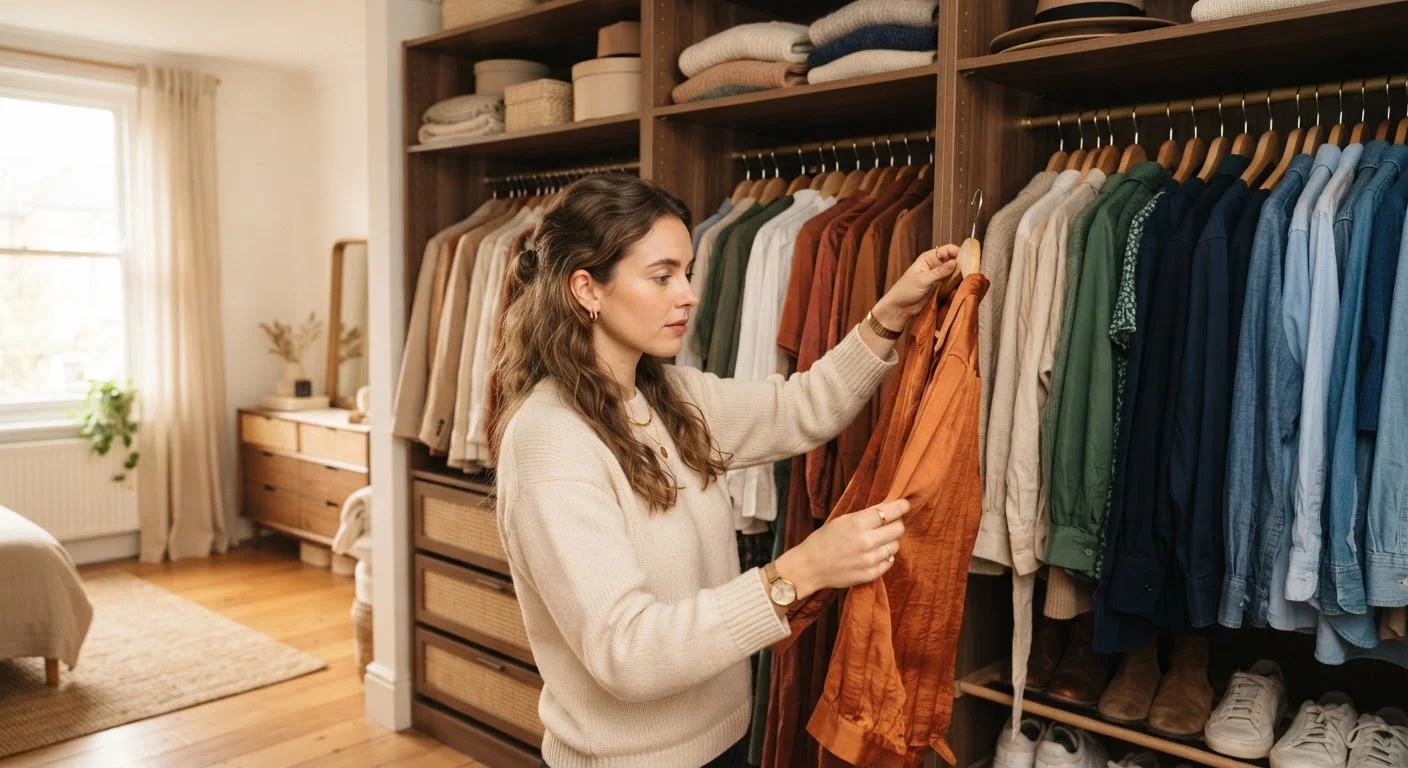
Before adding anything new, take stock of what's already in your closet. Most people find they already own two or three of these staples — sometimes in slightly different forms. Understanding why each piece works helps you recognize the versions you already have and use them more intentionally.
The Staples, Explained One by One
The White Button-Down Shirt
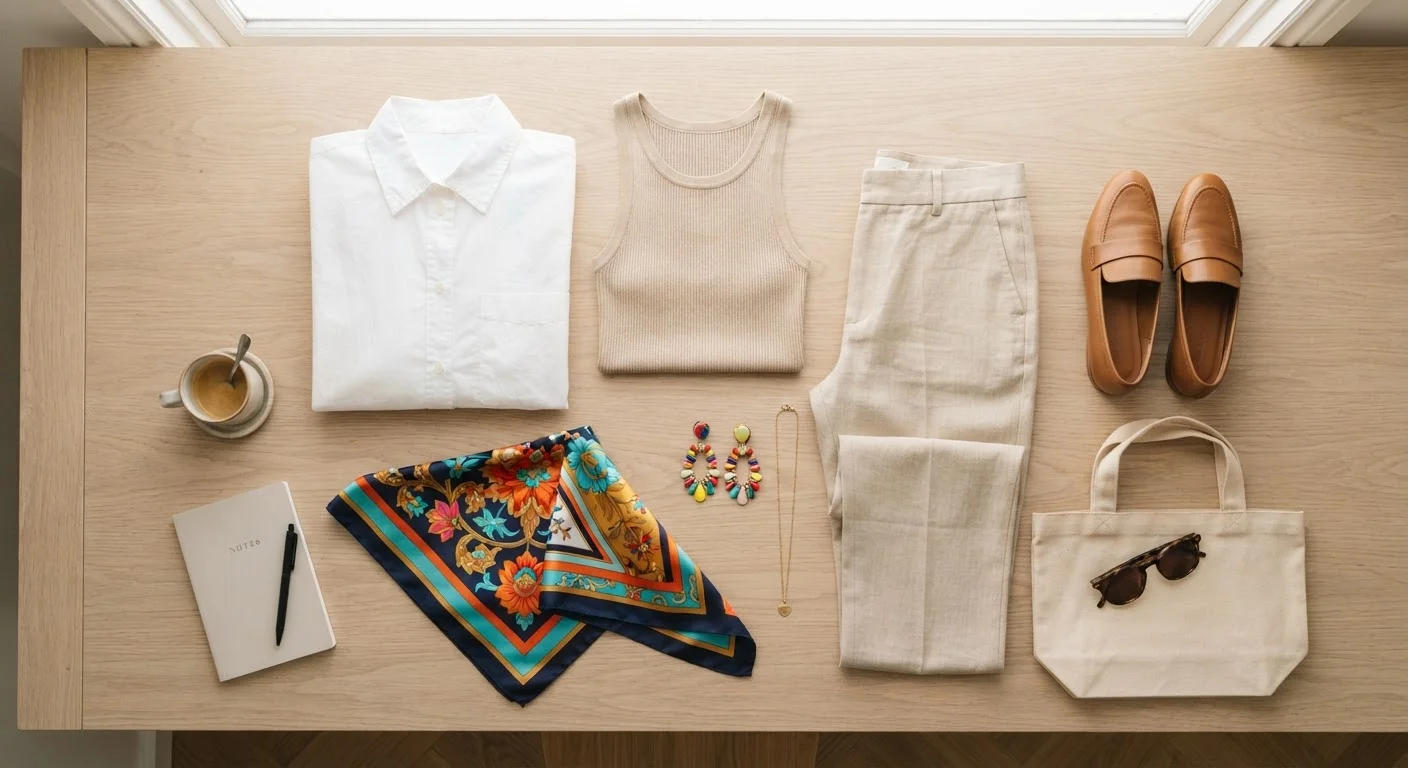
Few pieces travel as confidently between contexts as a well-fitted white button-down. Tucked into trousers for a meeting, left open over a plain tee on the weekend, or tied at the waist with jeans — it reads as intentional in almost every configuration. The key variable is fit: a shirt that pulls across the shoulders or bunches at the waist loses most of its versatility. Look for one that skims your frame without restricting movement.
A white button-down reads as intentional in almost every configuration — the key variable is fit.
Dark Wash Straight-Leg Jeans
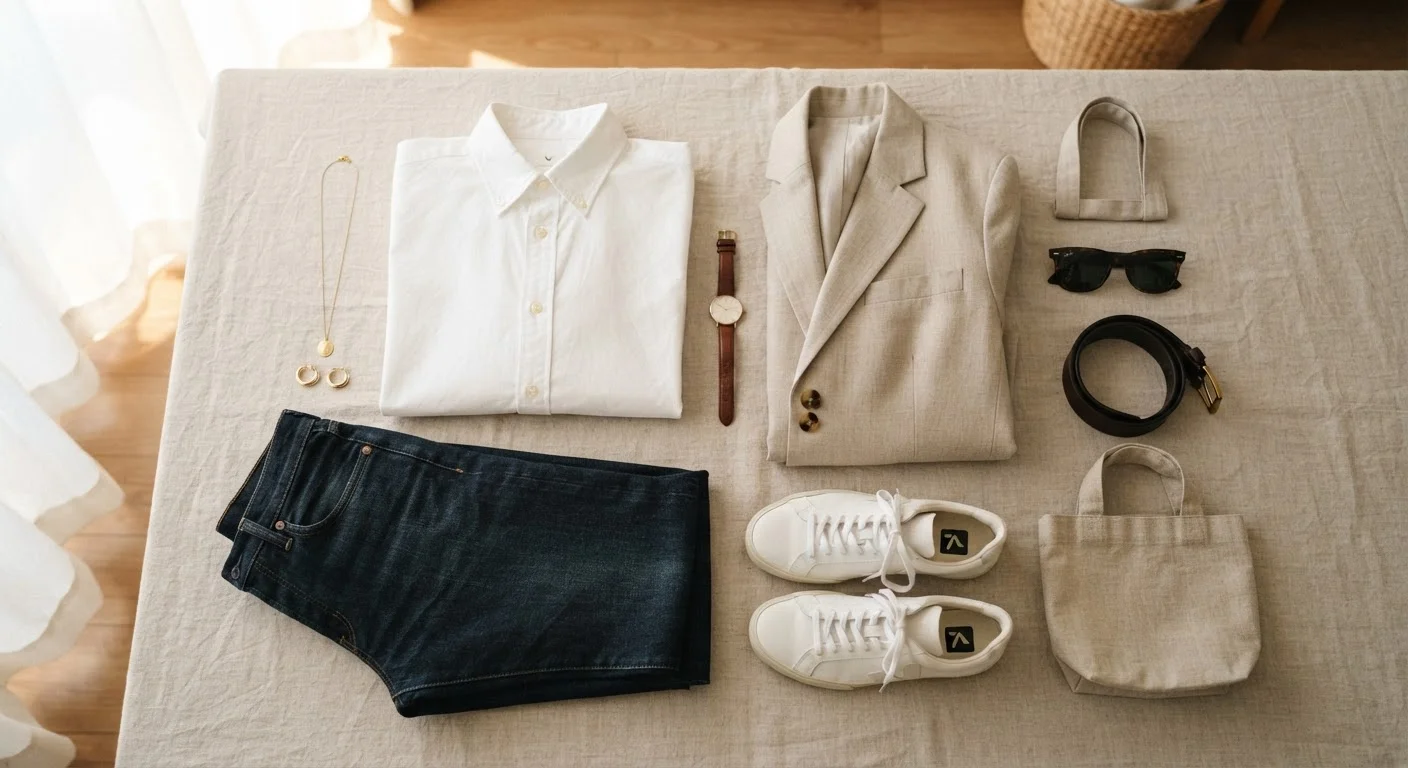
Denim in a deep, even wash with minimal distressing occupies a rare middle ground: it's casual enough for everyday wear but polished enough to pair with a blazer or dress shoes without looking out of place. Straight-leg cuts tend to be the most broadly flattering across body types and work with both tucked and untucked tops. This isn't about any single silhouette being universally correct — it's about choosing a cut that gives you maximum flexibility.
Deep wash, minimal distressing — these jeans work from casual weekends to near-business settings.
A Tailored Blazer in a Neutral Tone
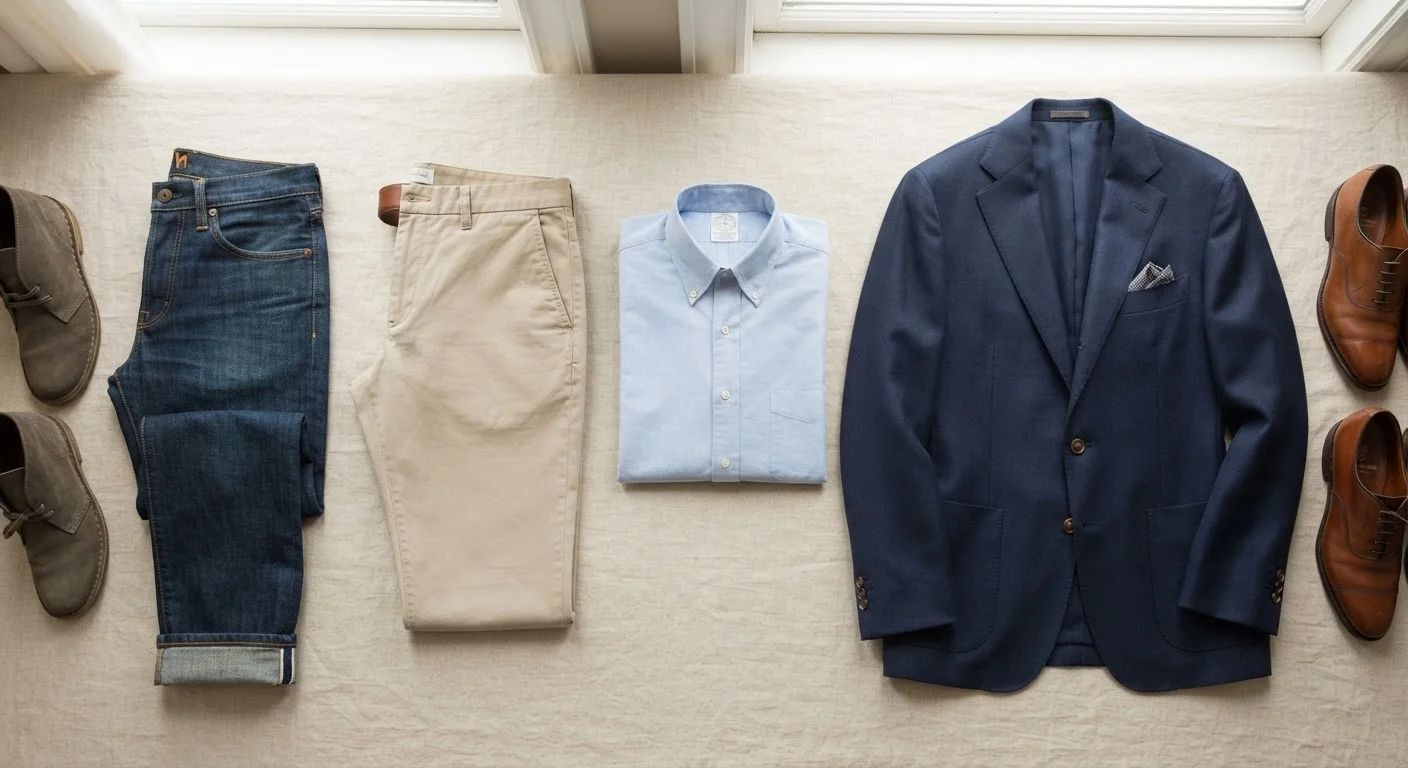
A blazer in navy, charcoal, camel, or black is essentially a shortcut to looking pulled-together. It adds structure to an outfit without requiring much effort — throw one over a plain shirt and dark jeans and most people will assume you planned the look carefully. The word "tailored" here doesn't mean custom-made; it means the shoulders sit properly and the body doesn't hang shapeless. That distinction matters more than the price tag. For help navigating when and where a blazer applies, dress codes decoded is a useful plain-language reference.
A blazer in a neutral tone is a shortcut to looking intentional — structure does the work for you.
White or Neutral Sneakers
Clean, low-profile sneakers in white, cream, or light gray have become one of the most reliably versatile footwear choices available. They pair with jeans, chinos, casual dresses, and even tailored trousers in relaxed settings. The "clean" part matters — heavily scuffed or yellowed soles read as neglect rather than casual style. A regular wipe-down keeps them working harder for longer.
Clean, low-profile sneakers pair with almost everything — keeping them tidy extends their versatility considerably.
A Plain Crewneck or V-Neck T-Shirt
The humble plain tee is the connective tissue of a functional wardrobe. It layers under blazers and open button-downs, stands alone under a leather or denim jacket, and forms the base of almost any casual outfit. In a neutral — white, gray, black, navy — it disappears into an outfit in the best possible way, letting other pieces do the talking. Fabric quality and fit are worth paying attention to here; a tee that stretches out after three washes or sits awkwardly at the neck will get skipped over quickly.
In a neutral color, a plain tee disappears into an outfit in the best possible way.
Chinos or Tailored Trousers
Chinos — flat-front, mid-weight cotton trousers — offer something denim can't always manage: a slightly elevated look that still reads as relaxed. In khaki, olive, navy, or stone, they pair naturally with casual shirts and sneakers while also working with dress shoes and a collared shirt for smarter occasions. For readers building from very little, our guide to building a versatile wardrobe on a budget covers how to sequence these kinds of purchases without overspending.
Chinos offer a slightly elevated look that denim can't always achieve — without demanding more effort.
A Layering-Friendly Knit or Sweater
A medium-weight crewneck or V-neck knit in a muted tone — oatmeal, charcoal, burgundy, forest green — layers over shirts and under coats with minimal friction. It handles the transition between seasons efficiently and adds texture to an otherwise flat outfit. Wool blends tend to hold their shape better than pure acrylic over time, though the right choice depends on your budget, climate, and how frequently you'll wear it.
A medium-weight knit in a muted tone handles seasonal transitions and adds texture without demanding attention.
These pieces form a connected system. Mix them freely, lean on them when you're short on time, or use them as the backdrop for bolder accessories and statement items. For more on striking that balance, neutral vs. statement pieces breaks down how to keep your wardrobe dynamic without letting it become chaotic.
Fit Matters More Than Anything Else
No staple on this list works well if it doesn't fit. An affordable piece that fits your body well will almost always outperform a pricier one that doesn't. If you're unsure about fit principles, our complete guide to everyday American style covers the basics in accessible, practical terms. Alterations from a local tailor can also transform a near-miss into a piece you actually reach for.