Why This Behavior Happens — and Why It's Not Spite
When a cat begins eliminating outside the litter box, many owners assume their pet is acting out of revenge or stubbornness. This interpretation is incorrect and can delay appropriate care. Cats lack the cognitive framework for premeditated retaliation. What looks like defiance is almost always a signal — either that something is physically wrong, or that the litter box setup no longer meets their needs.
The reasons fall into two broad categories: medical and behavioral/environmental. A cat straining to urinate outside the box may be experiencing a urinary tract infection, bladder stones, or in male cats, a potentially life-threatening urethral blockage. Feline idiopathic cystitis — inflammation of the bladder without an identifiable cause — is also common, particularly in stressed cats. Before addressing any behavioral hypothesis, a veterinary exam should come first.
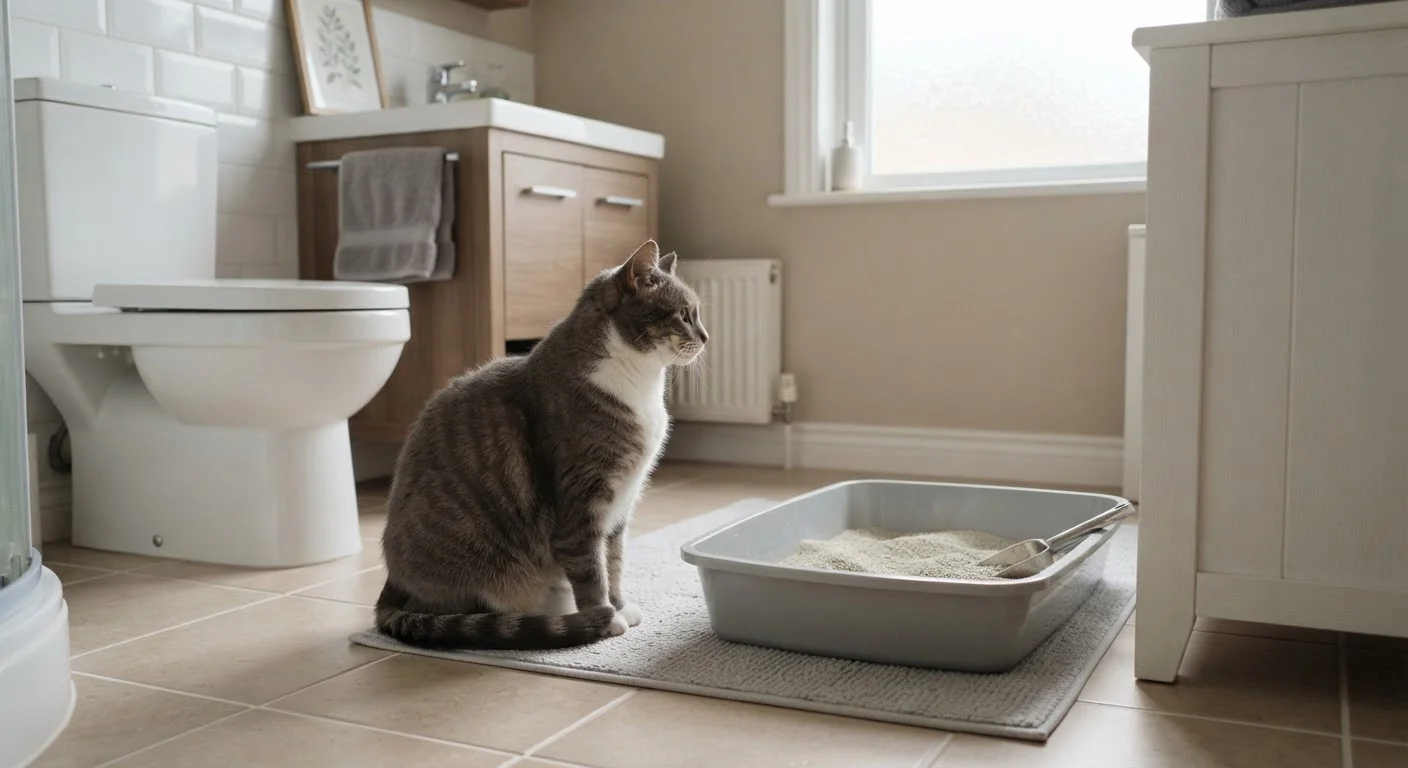
On the behavioral side, triggers include a dirty box, an unfamiliar litter scent, an inappropriately small or covered box, an inconvenient location, or stress from household changes. Understanding which category applies to your cat is the essential first step. For a broader look at how feline stress drives problem behaviors, see what drives feline problem behaviors.
This article is general educational information, not veterinary advice. Always consult a licensed veterinarian for your cat's health concerns.
Common Mistakes Cat Owners Make — and How to Fix Them
The following mistakes cover the most frequent errors owners make when managing litter box problems. Addressing these systematically gives you the clearest path to a solution.
Waiting too long to see a veterinarian when the problem begins suddenly.
Why it happens: Owners often assume the issue is behavioral and try home fixes first, losing valuable time when a medical condition may be progressing.
Not scooping the litter box frequently enough.
Why it happens: Cats have a far more acute sense of smell than humans, so a box that seems acceptable to an owner can be overwhelmingly off-putting to the cat.
Using a box that is too small or too enclosed for the cat's size and preference.
Why it happens: Covered boxes are often chosen for the owner's aesthetic preferences, not the cat's comfort, and standard commercial boxes are frequently undersized for larger or older cats.
Placing the litter box in a noisy, high-traffic, or difficult-to-access location.
Why it happens: Owners prioritize hiding the box for convenience, placing it in laundry rooms, garages, or basements — areas a cat may find startling or hard to reach.
Switching litter types abruptly or using heavily scented litters.
Why it happens: Owners choose scented litters to mask odor for themselves, not realizing these fragrances can actively deter cats, who prefer subtle or unscented substrates.
Not providing enough boxes in multi-cat households.
Why it happens: Owners assume cats will share resources the way dogs might, underestimating how strongly cats respond to territorial competition.
~10%
Cats affected by house soiling
House soiling is reported to affect roughly 10% of cats at some point in their lives, making it one of the most common feline behavioral complaints seen by veterinarians.
1 in 3
Cases linked to medical causes
Veterinary behaviorists estimate that a significant proportion of elimination problems have an underlying medical component, reinforcing the importance of a vet evaluation before behavior modification.
Male Cats Straining to Urinate Need Immediate Care
A male cat that is repeatedly attempting to urinate, producing little or no urine, or crying in the litter box may have a urethral blockage — a life-threatening emergency. Do not wait to see if it resolves. Contact a veterinarian or emergency animal hospital immediately. Female cats experiencing similar straining should also be evaluated urgently, though blockages are far less common.
When to Involve a Veterinarian or Behaviorist
If you've corrected the environmental factors and your cat still avoids the box, or if the avoidance started suddenly without an obvious trigger, schedule a veterinary visit promptly. Sudden onset house soiling in a previously reliable cat is a red flag for an underlying medical condition — particularly lower urinary tract disease, kidney issues, arthritis (which can make stepping into a high-sided box painful), or cognitive decline in senior cats.
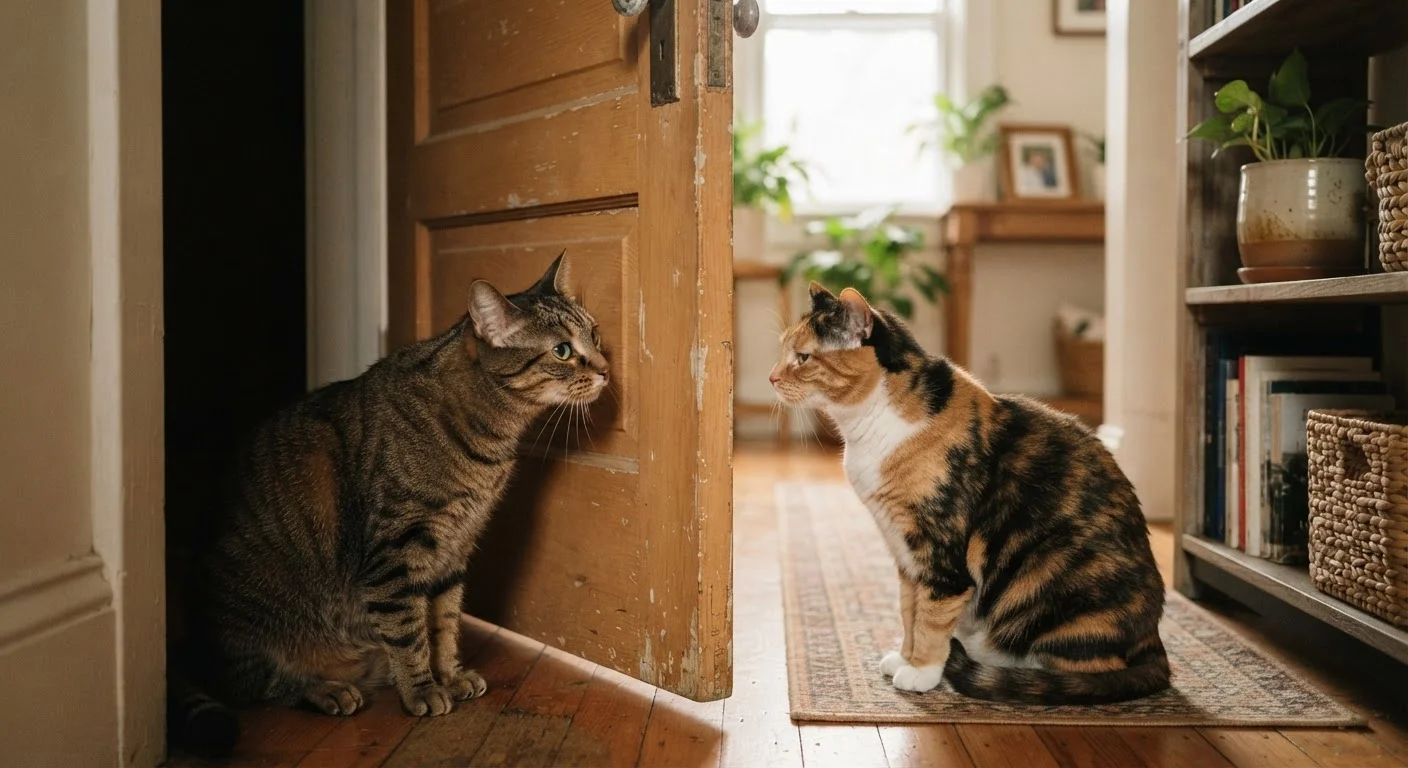
Once medical causes are ruled out, a board-certified veterinary behaviorist or a veterinarian with behavior training can help identify and address anxiety-based elimination. This is especially relevant if you've recently added a new pet — introducing a second cat carefully is a critical factor many owners underestimate. If you're setting up your home for the first time with a cat, the foundational guidance in bringing your first cat home covers litter setup from the start.
Punishment Makes Litter Box Problems Worse
Scolding, startling, or physically correcting a cat for eliminating outside the box does not work. Cats cannot connect punishment to a past event, so they learn only to fear you or the specific location — not to use the box. Punishment reliably increases anxiety, which is itself a leading driver of inappropriate elimination. Focus on identifying and removing the cause, not correcting the cat.
The goal is always to identify the specific driver — not to rely on punishment, which cats do not associate with past behavior and which reliably worsens anxiety-driven elimination.