Why Small Expenses Deserve Big Attention
Most people budget for rent, utilities, and groceries without much trouble. The harder category to manage is everything else — the purchases that feel negligible individually but quietly compound into hundreds or thousands of dollars annually. A $4 coffee every weekday adds up to roughly $1,000 a year. A $12 impulse snack a few times a week clears $1,500. None of these feel significant at the point of purchase, which is exactly why they persist.
This isn't about guilt or deprivation. It's about visibility. When you can see where the money actually goes, you're in a position to make conscious choices rather than unconscious ones. The list below highlights the categories that tend to accumulate fastest — not to suggest you cut them all, but to help you decide which ones are worth the spend and which ones are simply habit.
If you want a reliable process for catching these patterns month over month, see our monthly budget review guide for a practical framework.
Daily Coffee and Beverage Purchases
Buying a single coffee drink on workdays — roughly 250 days a year — at an average of $5 each adds up to $1,250 annually. Factor in afternoon drinks, bottled water, or energy drinks and that figure can double. The cost per transaction is low enough that it rarely registers as a budget item, but it easily rivals a monthly utility bill when annualized.
This doesn't mean eliminating the habit. It means deciding intentionally how often it's worth the spend versus a home-brewed alternative that costs a fraction as much.
A $5 coffee five days a week costs over $1,200 a year — more than most utility bills.
Convenience and Delivery Fees
Food delivery platforms typically add a service fee, a delivery fee, and an optional tip — often totaling $8–$15 on top of the food cost itself. If someone orders delivery twice a week, the fees alone can exceed $1,000 annually, separate from what they spent on the actual meal. Convenience store markups follow a similar pattern: paying $3 for an item available at a grocery store for $1.20 is a 150% premium for proximity.
Batching grocery runs, using pickup options, or designating specific "delivery nights" can significantly reduce this category without removing the convenience entirely.
Delivery fees alone — not the food — can quietly exceed $1,000 in a single year.
Unused or Forgotten Subscriptions
Streaming services, app subscriptions, gym memberships, news paywalls, and cloud storage plans often charge monthly fees that go unreviewed for months or years. A household with five active subscriptions at an average of $12 each pays $720 annually — and research consistently finds that most people underestimate how many subscriptions they're actually paying for. The auto-renewal model is specifically designed to minimize friction, which means cancellations rarely happen unless you actively look for them.
For a step-by-step approach to finding and evaluating these charges, conducting a subscription audit is a worthwhile exercise at least twice a year.
Most people underestimate their active subscriptions — and the auto-renewal model counts on that.
Impulse Snacks and Vending Purchases
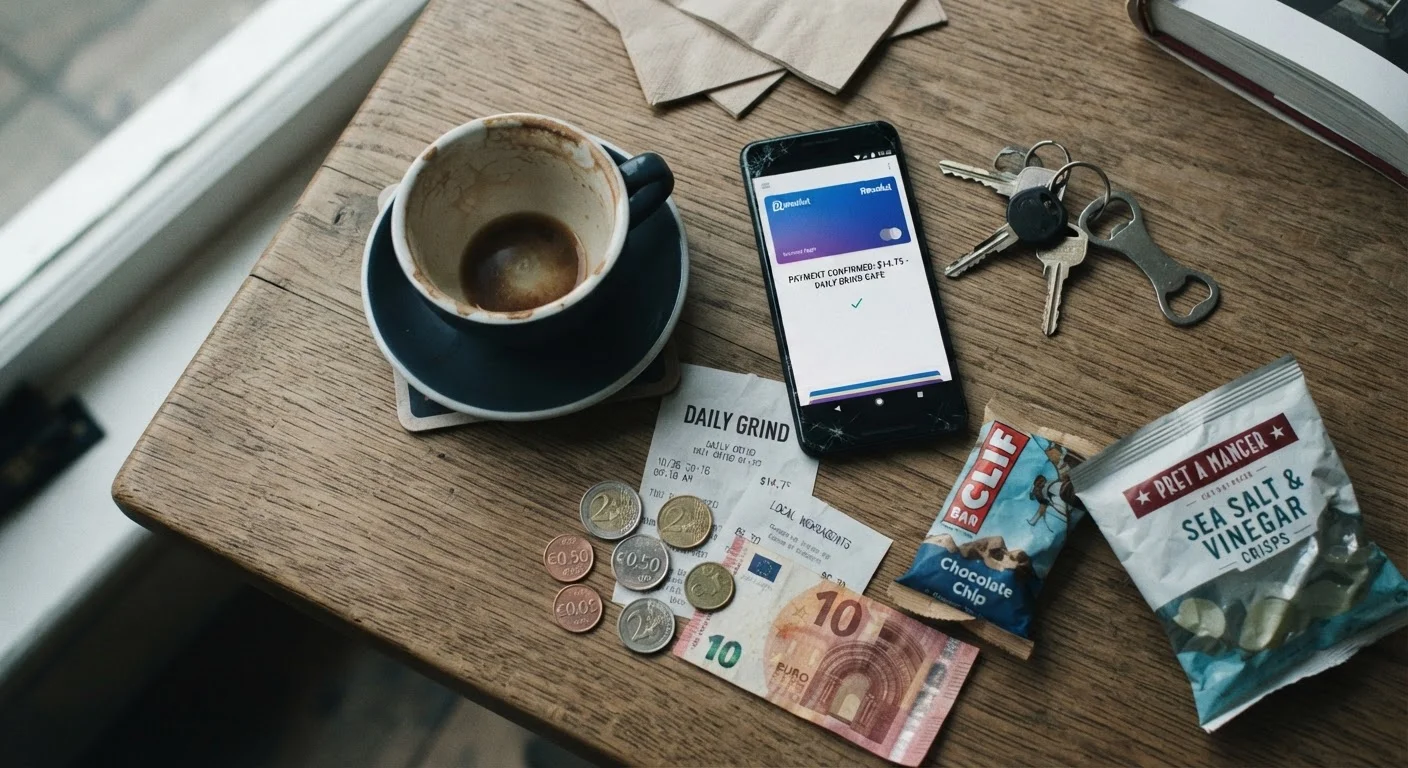
A $2.50 vending machine snack three times a week totals nearly $400 a year. Grab-and-go items at checkout, gas station snacks, and office vending all fall into the same pattern: small transactions that feel trivial but are purchased frequently and without planning. Because they're not categorized in most people's mental budgets, they tend to be invisible in spending reviews.
Keeping inexpensive snacks at a desk or in a bag doesn't eliminate snacking — it just shifts the cost to a fraction of the current amount.
Vending and grab-and-go snacks are rarely budgeted, which is exactly why they accumulate unnoticed.
ATM and Banking Fees
Out-of-network ATM withdrawals typically incur two fees: one from the ATM operator and one from your own bank. Combined, these can run $4–$6 per transaction. A person who makes two out-of-network withdrawals per week could pay $500 or more in fees annually — for access to their own money. Overdraft fees, minimum balance fees, and wire transfer charges pile on in the same quiet way.
Many checking accounts waive these fees under certain conditions or reimburse ATM charges. Reviewing your account terms periodically can eliminate this category almost entirely.
ATM fees can cost over $500 a year — purely for accessing money you already own.
Unused Gym Memberships and Wellness Apps
A gym membership that goes unused for eight months of the year still charges for all twelve. At $40–$60 per month, an underused membership can cost $480–$720 annually for something providing minimal value. Wellness apps, meditation platforms, and fitness trackers follow a similar pattern — purchased with intention, then used inconsistently, but rarely cancelled.
Auditing which health and wellness services you actively use versus which ones you're paying for aspirationally can free up meaningful budget without sacrificing actual habits.
Paying for a gym you rarely visit can cost $600 a year — the definition of spending without benefit.
Turning Awareness Into Action
Identifying problem categories is only half the work. The other half is deciding what to actually do about them. A few practical approaches tend to work better than across-the-board cutting:
- Annualize everything. When you're evaluating a habit, multiply the daily or weekly cost by 52 or 365. The annual number is almost always more motivating than the per-unit price.
- Prioritize by feeling, not just dollars. Some small spending genuinely improves your quality of life — a morning coffee ritual, a lunch with a colleague. Others are pure habit with no real satisfaction attached. Cut the latter first.
- Set a weekly check-in. A 15-minute weekly money review can catch accumulating costs before they become a monthly surprise.
Try the Annual Price Tag Test
Before committing to any recurring expense — no matter how small — multiply the monthly or daily cost by 12 or 365. If the annual number gives you pause, that's useful information. Many people find this single habit changes how they evaluate habitual spending without requiring a detailed budget overhaul.
It's also worth understanding how small spending increases layer onto each other over time. Our piece on lifestyle creep and savings explains why earning more doesn't automatically translate to saving more — and how gradual spending drift compounds the problem. Similarly, if you're working on debt, some of these small habits may be silently slowing your progress; financial habits that stall debt repayment covers the patterns worth recognizing early.
This article is for general informational purposes only and does not constitute personalized financial advice. Consult a qualified financial professional for guidance tailored to your specific situation.